Low water pressure in coastal homes usually has one of four causes.
Lime scale and mineral buildup
Hard water is common on the Mediterranean coast. Minerals accumulate inside pipes and especially inside tap aerators (the small mesh screen at the end of your tap). Over months, deposits thicken and restrict flow. This is the single most common cause of low pressure at a single tap. Cleaning the aerator costs nothing and takes five minutes.
Communal supply issues
In an urbanisation, the community water system serves all homes. If the communal pump is failing, or if the water tank is being drained faster than it refills (common in summer), pressure drops across all homes. This is not your responsibility to fix—the community must repair it. But pressure usually returns to normal within a few hours.
A partially closed or stuck stopcock
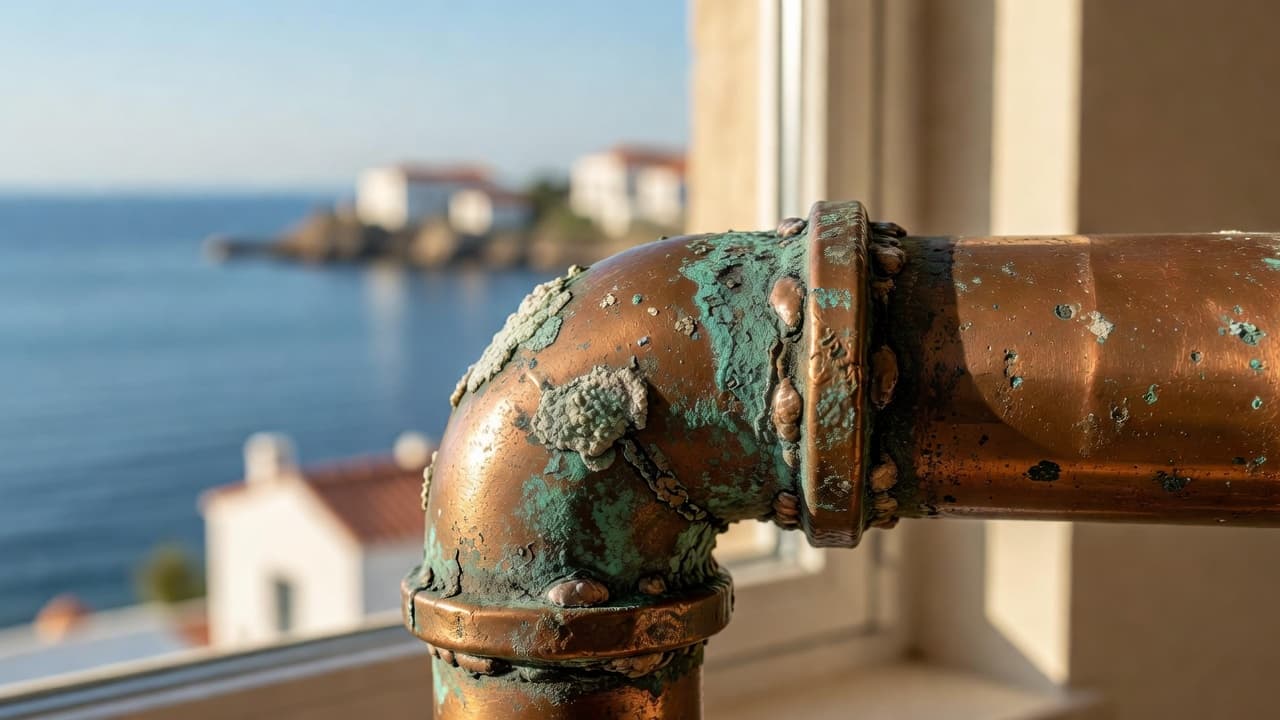
Your main stopcock may have been turned down (perhaps by a previous owner or a maintenance visit you've forgotten about), or it may be corroded and stuck midway. Reopening it fully restores supply.
A leak in your private pipes
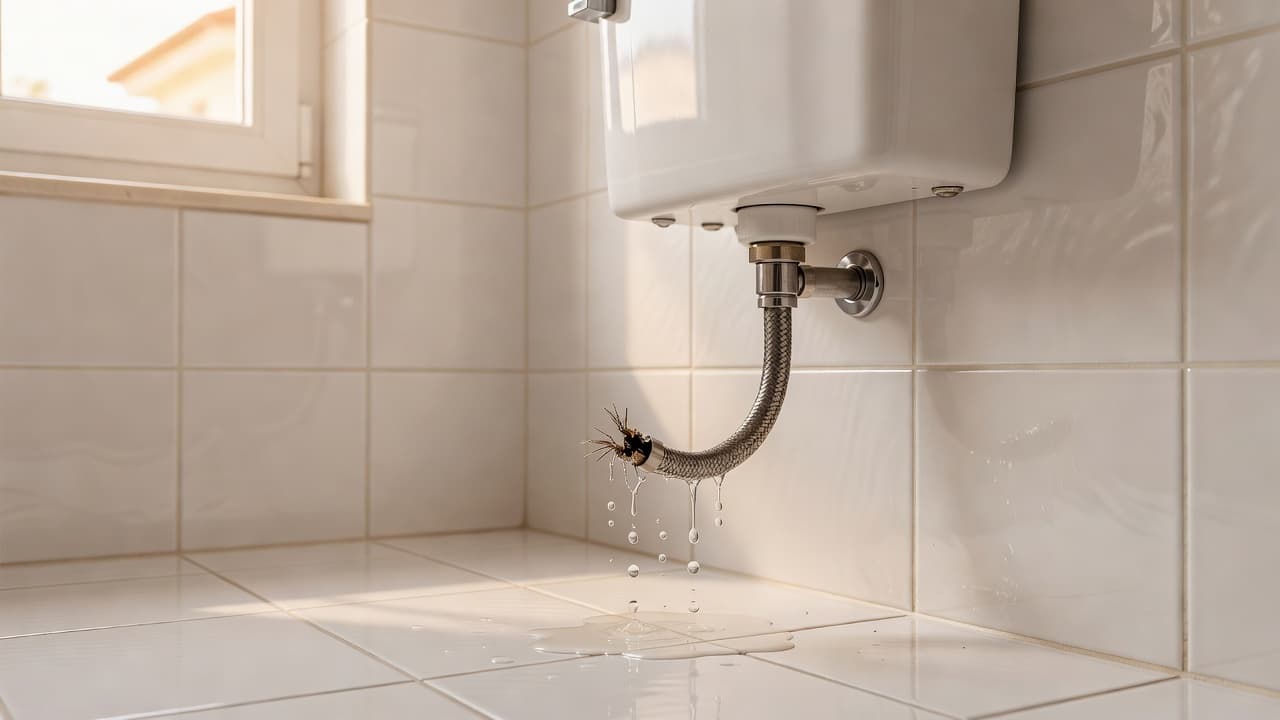
If pressure has dropped suddenly and no other explanation fits, there may be a leak in your home's pipes. Water escaping into walls or under the floor will reduce the pressure at your taps. This is less common but more serious and requires a professional.
Air in the pipes
If work has been done on the communal or your private supply recently, air may be trapped in the lines. This causes weak pressure and sometimes sputtering at taps. Bleeding the air out (opening low taps) usually solves it instantly.
Clean the tap aerator
If low pressure is only at one tap or shower head, the aerator is almost certainly blocked with lime scale.
- Unscrew the aerator from the end of the tap (turn anticlockwise). On some mixer taps, you may need to unscrew a small collar first.
- Soak it in white vinegar for 15–30 minutes. This dissolves mineral deposits.
- Use an old toothbrush to scrub away any remaining residue.
- Rinse under running water and screw it back on.
If the aerator is heavily calcified and won't unscrew, soak it longer or wrap it in a cloth and use pliers gently. Do not force it—you'll strip the thread.
Open the stopcock fully
If the stopcock is only partially open, turn it fully anticlockwise. This is completely safe and takes 10 seconds. If pressure improves, your problem is solved.
Bleed trapped air from the pipes
Open the lowest tap in your home and let water run freely for 30 seconds to 1 minute. You may hear air hissing or see sputtering water. This is normal. Keep the tap open until flow smooths out. Then open all other taps briefly to release air throughout the system.
Turn off and restart the boiler (if you have a gas boiler)
Some boilers have a water pressure gauge. If you have a gas boiler and pressure is low everywhere, turning the boiler off for 2 minutes, then back on, can sometimes reset the system. Consult your boiler manual for the exact procedure—every model is different.
Reduce hot water use temporarily
If low pressure affects only hot water, your electric water tank (termo eléctrico) or gas boiler may be struggling. Use less hot water for a day or two and see if pressure recovers. If it doesn't, the boiler or tank needs professional attention.
Stop immediately and call a professional plumber if:
- Pressure drops suddenly and doesn't improve within an hour, even after trying the steps above. This suggests a leak or a serious communal failure.
- You see water leaking from pipes, walls, or ceilings, or damp patches appear suddenly. This is a leak and needs urgent repair to prevent structural damage.
- Only the hot water pressure is low, and it's been low for more than a day. Your boiler or water tank may be faulty.
- The entire building has lost pressure. This is a communal system failure. Contact your community office and a plumber immediately. Individual action won't help.
- You smell gas or see gas escaping near the boiler. Stop immediately, turn off the gas supply at the meter (or the valve on the boiler itself), open windows, and call your gas supplier's emergency line.
- The stopcock is stuck and won't turn, or you hear water running inside walls after trying the fixes above. Do not force the stopcock. Call a plumber.
When you call our plumbers on the Mediterranean coast, here's what they'll typically do.
Initial inspection
They'll turn on taps throughout your home and measure pressure with a gauge. This tells them whether the problem is in your private pipes or the communal system. If communal, they'll advise you to contact your community office; if private, they'll investigate further.
Check for leaks
They'll look for visible leaks under sinks, around pipe joints, and in cupboards. If they suspect a hidden leak (indicated by sudden pressure loss with no visible water), they may use listening equipment to locate it inside walls. This is non-invasive.
Inspect the stopcock and meter
They'll confirm the stopcock is fully open and check the water meter to see if it's spinning (indicating a leak). They'll also examine the condition of the stopcock itself—if it's corroded or stuck, it may need replacing.
Test the boiler (if you have one)
If the problem is hot water only, they'll check the boiler's pressure gauge and reset procedures. Most boilers have a simple repressurisation valve that can be adjusted without replacing parts.
Clean or replace pipes if necessary
If the problem is lime scale in pipes (less common but possible in very hard water areas), they may flush the line with a descaling agent. If a pipe is badly corroded or damaged, they'll advise replacement.
Issue a receipt and invoice
They'll hand you a receipt with a detailed description of what they found and what they did. Keep this for your records. If you rent the property or it's in an urbanisation, you may need to report the visit to your landlord or community office.
Descale your tap aerators quarterly
Remove the aerator from taps you use most frequently every three months and soak in white vinegar for 20 minutes. This prevents lime scale buildup.
Encourage the community to flush the water system
In an urbanisation, ask your community office if they flush the communal water pipes annually. This removes sediment and mineral deposits. If they don't, propose it at the next owners' meeting.
Install a water softener (if you have very hard water)
If you live on the coast and hard water is a persistent issue, a water softener can reduce lime scale throughout your entire home. This is a bigger investment (typically €800–2,000 fitted) but pays for itself over years in reduced maintenance. Ask a plumber for advice before deciding.
Maintain your boiler annually
If you have a gas boiler, have it serviced once a year. The engineer will check pressure and identify problems early.
Keep the stopcock accessible
Make sure nothing blocks access to your main stopcock. You may need to turn it off quickly in an emergency.
If you've tried these steps and pressure hasn't improved, or if you've found a leak, contact our plumbers on the Mediterranean coast. They'll diagnose the issue and fix it with no surprises. Most low pressure problems are solved within an hour.