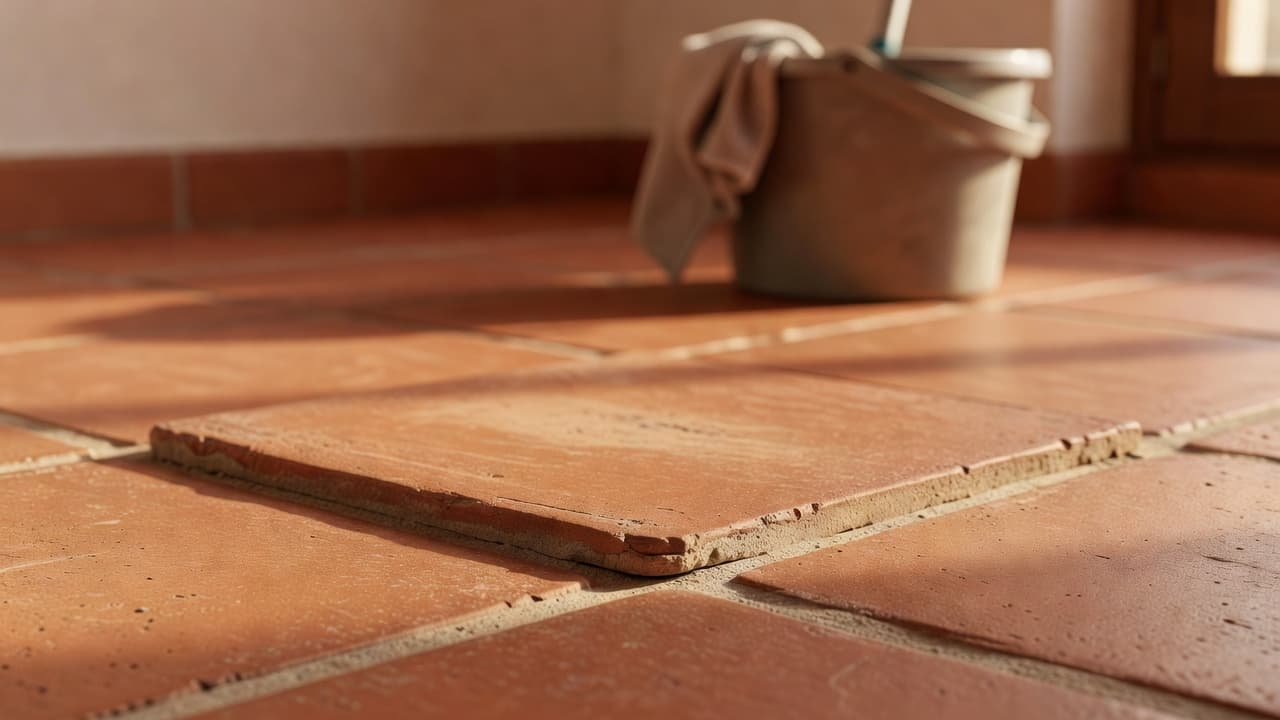
Loose tiles come down to a few common causes.
Poor original installation. Older Spanish properties — and some newer ones — were sometimes tiled without enough adhesive underneath, or with a base that wasn't properly prepared. If the subfloor wasn't level or clean, the tile never had a good bond.
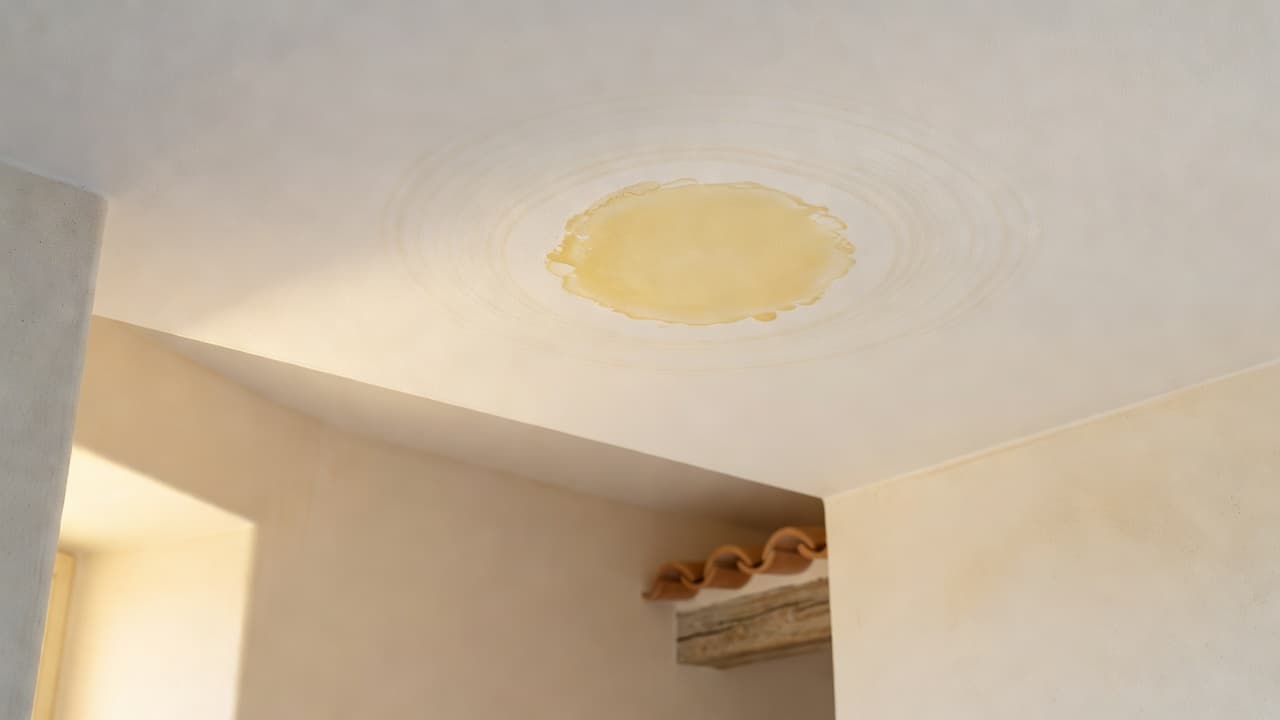
Moisture underneath. Water seeping from a leak, condensation, or capillary rising from a damp substrate weakens the bond between the tile and the adhesive. This is especially common in bathrooms, kitchens, and ground-floor rooms in coastal properties where salt damp is present. Once water gets under a tile, the adhesive gradually fails.
Expansion and contraction. Tiles expand and contract slightly with temperature changes. On the Mediterranean coast, daily temperature swings — especially in summer when air conditioning is running — create movement. If the original adhesive wasn't flexible enough, or if tiles are laid too tightly against walls, this movement can pop tiles loose.
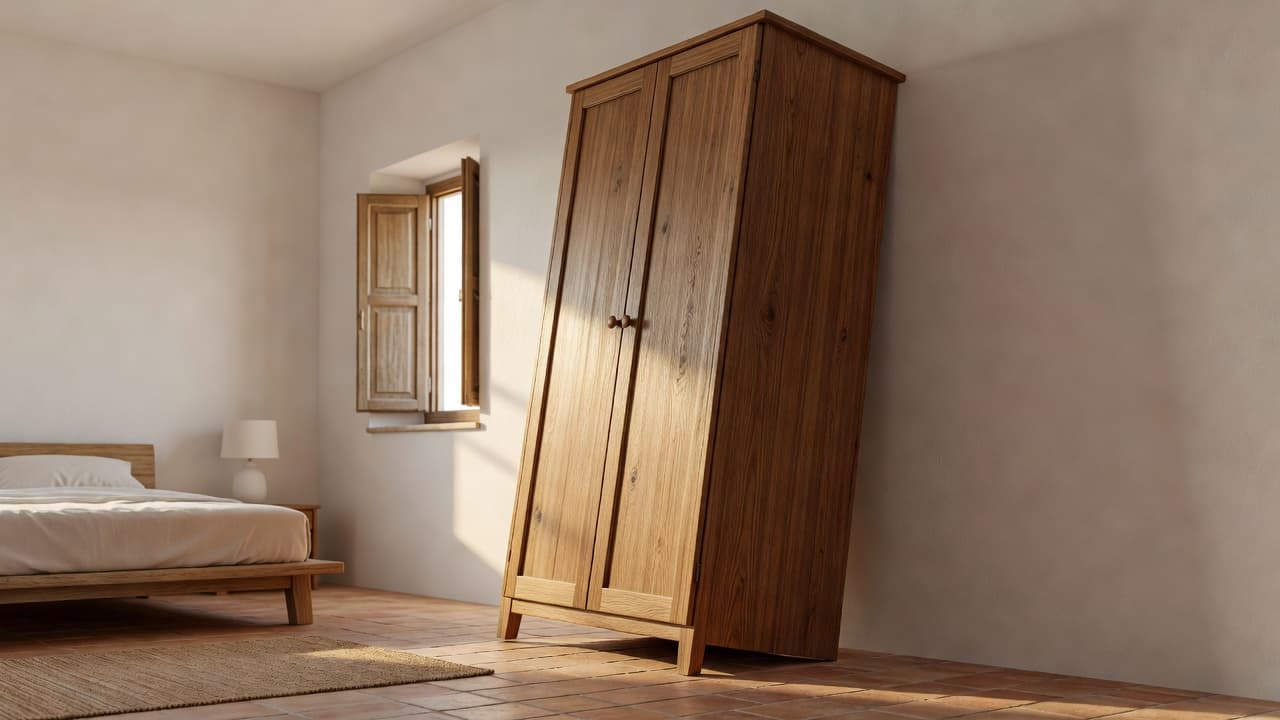
Settling or structural movement. Older homes and some urbanisaciones (residential complexes) experience minor settling over years. A crack in the floor substrate or slight movement in the structure can transfer to the tiles above, loosening them.
Impact damage. A heavy object dropped on a tile, or repeated impact in a high-traffic area, can break the adhesive bond.
Double-sided adhesive tape method (fastest).
Buy heavy-duty waterproof double-sided tape from a DIY shop (brands like Scotch or equivalent). Cut 4–6 strips about 5 cm long. Remove the backing from one side and apply them to the underside of the loose tile, near the edges where the gap is. Press the tile down very firmly for at least 30 seconds, applying steady pressure across the whole tile. This method usually holds for 2–4 weeks in normal domestic conditions.
Temporary grout or sealant (longer-lasting but slower to cure).
If the tile is only slightly loose and you want a more durable temporary fix, you can use flexible tile sealant or temporary grout around the edges. Clean out the gap as described above, then apply a flexible waterproof sealant (the kind used for shower joints, not rigid grout) around the edges of the tile using a caulking gun. Smooth it with a wet finger. Let it cure for 24 hours before walking on it. This will last longer than adhesive tape — often 8–12 weeks — but it's still temporary, because the tile isn't properly bedded underneath.
Weight and pressure (temporary and minimal).
If the tile is barely loose and you're confident the movement is minimal, you can place a heavy, flat weight on it (a stack of books, a plant pot, a board) for a few days to press it down. This won't fix it, but it may re-compress the old adhesive slightly. Remove the weight before the handyman arrives, as it will only get in the way.
What NOT to do:
- Don't use instant adhesives like super-glue or epoxy. They won't hold under foot traffic and can damage the tile surface.
- Don't grout over a loose tile. The grout will just crack again when the tile moves.
- Don't sand or scrape the tile surface to remove old adhesive. You'll damage the glaze.
- Don't seal the entire top surface of the tile. This traps moisture underneath and makes the problem worse.
Stop and call a professional in these situations:
- Multiple tiles are loose in a pattern. This suggests a structural issue (movement in the subfloor, a leak, or poor original installation affecting a wide area). A handyman needs to assess whether the substrate is damaged.
- You see water pooling or dampness around the tiles. This indicates a leak or moisture rising from below. The tiles need to be lifted and the underlying problem fixed before re-laying.
- The tile is cracked or broken. A temporary fix won't help — it needs replacing, which requires removal and re-laying.
- The floor is noticeably uneven or sagging. Loose tiles may be a symptom of a more serious structural problem. Get the floor assessed before proceeding.
- The tiles are in a wet room or shower enclosure. These require specialist waterproofing and proper installation. Don't attempt temporary fixes — call a professional.
- The adhesive underneath has completely hardened and the tile is sitting proud of the surrounding floor. Temporary fixes won't work. The tile must be removed and re-laid.
When you call a handyman or tiler to fix loose tiles, here's what to expect.
They'll remove the loose tile or tiles carefully (using a grout saw and chisel) and clean away the old adhesive and grout from the back of the tile and the substrate underneath. This is important: any old adhesive left behind will prevent the new adhesive from bonding properly.
They'll inspect the substrate. If it's damp, damaged, or uneven, they may recommend further work (like treating damp, repairing the subfloor, or levelling it). If the substrate is sound, they'll apply new tile adhesive (usually a flexible, waterproof variety) and press the tile back down, checking that it's level with the surrounding floor. They'll grout around the edges using waterproof grout suitable for the tile type and location.
Most adhesives take 24 hours to cure fully, and grout can take up to a week (depending on humidity and the product used). The professional will tell you when the floor is safe to walk on normally.
If multiple tiles need re-laying, the cost depends on how many and the complexity of the job — usually between €80 and €250 for a small repair. If the substrate is damaged or damp, the cost will be higher because additional work is needed.
You'll receive a receipt. If the floor is in a community of owners (urbanisation or flat), keep this for your records — it may be relevant to maintenance claims.
Once the tiles are fixed, a few simple habits can help prevent them coming loose again.
Keep the floor dry. Wipe up spills promptly, especially in kitchens and bathrooms. Ensure bathrooms have adequate ventilation — use the extractor fan during and for 20 minutes after showers.
Avoid sudden temperature shocks. Don't pour ice-cold water on hot tiles, and don't run air conditioning and heating simultaneously in the same room. This kind of thermal stress can eventually loosen tiles.
Check for leaks. If you notice water pooling, dampness, or discolouration around floor tiles, investigate immediately. A small leak will cause tiles to loosen quickly.
Avoid heavy, repeated impact in one spot. If you rearrange furniture regularly, pad the feet to reduce impact on the tiles.
Regular inspection. Every few months, walk around and listen for hollow sounds. Catching a loose tile early makes the fix cheaper and faster.
Loose floor tiles aren't a problem you can ignore, but they're also not an emergency if you stabilise them properly first. Use adhesive tape to make the floor safe, keep it dry, and contact a local handyman within the next 1–2 weeks to have them re-laid. Once fixed correctly, the problem shouldn't return — as long as you keep an eye on moisture and address any new issues early.
Ready to get your loose tiles fixed? Browse our handyman services across the Mediterranean coast and get a quote from a professional who knows your area.