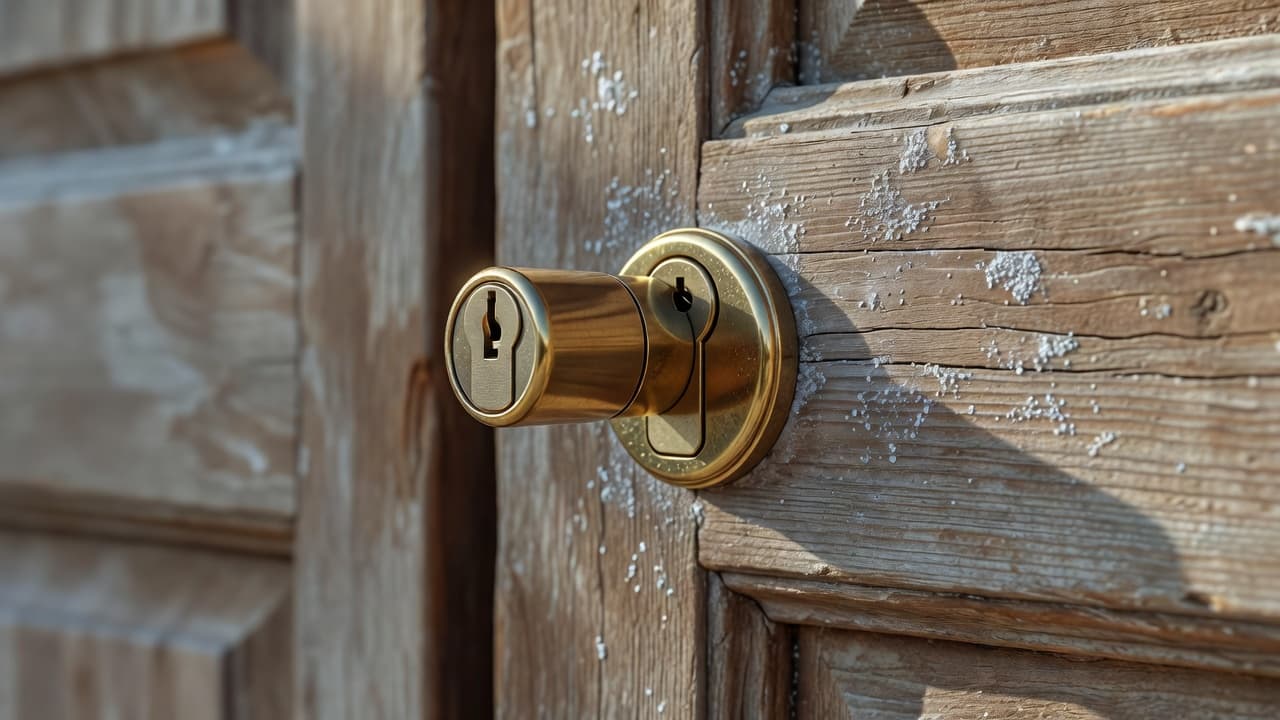
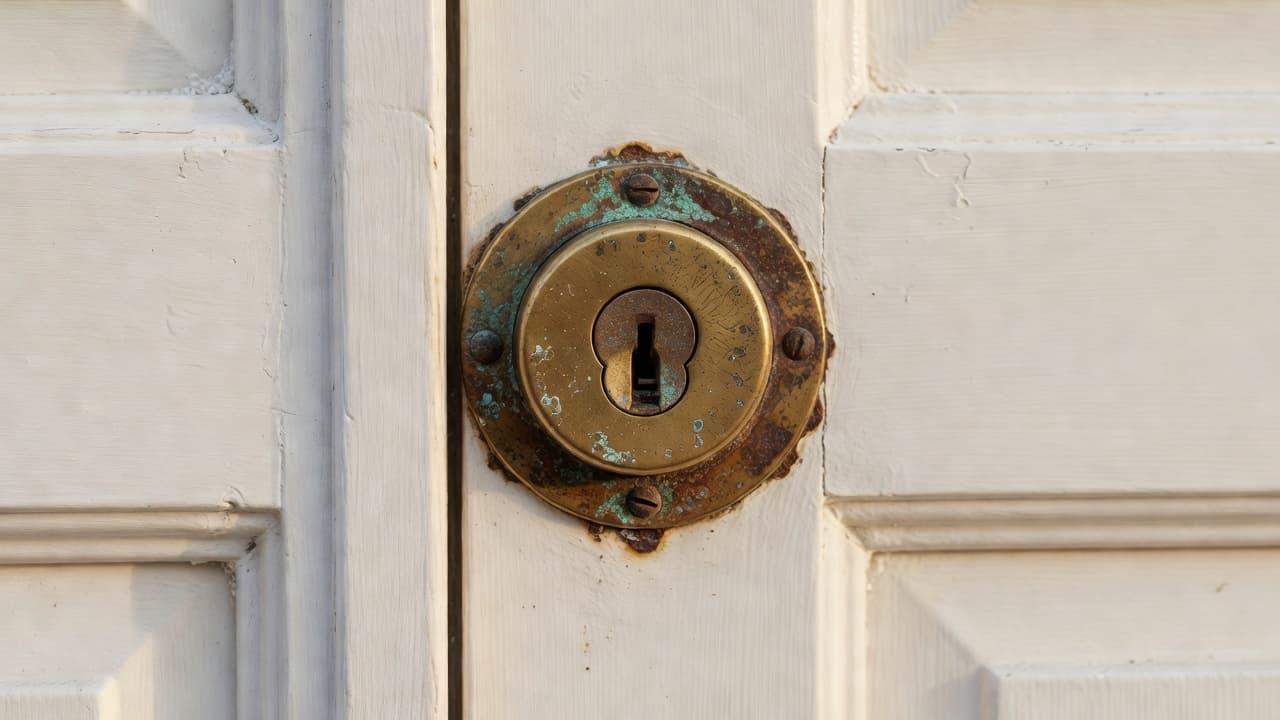
A lock cylinder contains several small pins and springs that must align precisely when the correct key is inserted. When any of these become stiff or misaligned, turning the key becomes difficult. Here are the most common causes:
Dust and debris accumulation. Locks on the Mediterranean coast are exposed to salt air, sand, and moisture. Over time, fine particles enter the keyhole and settle inside the mechanism. This is especially common in coastal properties, urbanisations with shared entrances, or homes near construction. The debris doesn't usually block the lock completely; instead, it increases friction.
Internal corrosion. Salt air and humidity corrode the metal pins, springs, and cylinder walls. Corrosion doesn't necessarily cause rust you can see; often it's a microscopic roughness on the metal surfaces that increases drag when the key turns.
Dry mechanism from lack of use. If the lock hasn't been used for a while (common with holiday homes or rarely-used doors), the internal metal-to-metal contact points can develop a slight binding resistance, especially in humid climates.
Misaligned cylinder or latch. If the door frame has settled (normal in older Spanish properties) or the door itself has warped slightly, the cylinder can shift fractionally inside the lock body. This creates binding without visible signs of damage.
Worn key. If the key itself has worn down unevenly, it won't engage the pins with the same precision. The lock mechanism has to work harder to align with a worn key. Try an old spare key if you have one; if it works more smoothly, the problem is key wear rather than the lock itself.
Graphite powder application (safest option). As described above, this is the only lubricant that won't make the problem worse. Work it into the keyhole gently and let it sit for a few minutes before trying the key again. Repeat if necessary, but stop after two applications. If it doesn't help, the problem is mechanical, not lubrication.
Gentle key manipulation. Insert the key slowly and stop if you feel resistance. Don't force it the last millimetre; withdraw it slightly and try again. Sometimes the pins are slightly misaligned and a gentler approach allows them to reset. This is not a permanent fix, but it might get you into your home if you're locked out.
Spare key. If you have a spare, try it. If the spare turns more smoothly, you've confirmed the problem is either key wear or the lock has become particular about key geometry. If both keys are equally stiff, the problem is definitely the lock mechanism.
Temporary access via alternative door. If this is not your main entrance, use another door temporarily. This removes the risk of you damaging the lock further in frustration or hurrying to get inside. Holiday homes and properties with multiple entrances: this is your best short-term option.
Do not use liquid lubricants. Oil, WD-40, 3-in-1 oil, and general-purpose sprays will make the problem worse. They attract dust, which sticks to the oil and compacts inside the mechanism, turning a stiffness problem into a jammed lock.
Do not disassemble the lock. If you're not a locksmith, don't attempt to take the cylinder out or open the lock body. You'll likely damage the mechanism irreversibly and may make the lock unusable until a professional replaces it.
Do not use excessive force. If the key won't turn after gentle, patient attempts, stop. Forcing it risks snapping the key inside the lock (expensive to remove) or breaking internal components. At that point, a locksmith will have to drill out the lock and fit a replacement.
Do not use incorrect keys. Never try to turn the lock with a key that's similar but not an exact match. It will bind and potentially damage the pins.
Do not heat the lock. Don't use a hair dryer, lighter, or other heat source on the cylinder. This can damage plastic components inside some locks and won't solve the problem.
A professional locksmith will typically follow this process:
Step 1: Diagnosis. They'll try the key themselves, feel where the resistance is, and ask whether this is recent or gradual. They'll also check whether your spare key works differently. This tells them whether the problem is in the key, the cylinder, or the latch mechanism.
Step 2: Extraction and cleaning. If the lock is salvageable, they'll remove the cylinder from the lock body (this requires a special tool and the correct key). They'll disassemble the cylinder, clean out all accumulated debris and corrosion using specialized solvents and brushes, and inspect the pins and springs for wear or damage.
Step 3: Lubrication with proper products. They'll apply a dry lubricant (usually graphite or a PTFE-based specialist product) to the cleaned mechanism. This is different from what you can do at home because it's applied internally to all the contact points, not just sprayed into the keyhole.
Step 4: Reassembly and testing. They'll reassemble the cylinder, test the key multiple times to confirm smooth operation, and reinstall it into your lock body.
Step 5: Replacement (if necessary). If the cylinder is too corroded, the pins are damaged, or the mechanism can't be restored, they'll fit a new cylinder. This takes longer but ensures your lock works reliably again. They'll usually offer you a choice of cylinder types — European cylinders (bombín europeo) are standard in Spain and come in different security grades.
You'll receive a receipt and, if applicable, documentation of the work done. Many locksmiths on the Mediterranean coast keep inventory of common cylinder types, so replacement is often possible the same day.
Annual maintenance for coastal properties. If you live on or near the coast, have your locks professionally serviced once a year. Salt air accelerates corrosion, and preventive cleaning is cheaper than waiting for a lock to jam.
Use your locks regularly. A lock that's turned frequently stays cleaner than one that sits unused for months. If you own a holiday home, try to use all the doors occasionally, or ask a neighbour to check on them.
Keep the keyhole dry. Don't pour water near the lock, and if it gets wet, let it dry naturally. Don't blow into it or use compressed air, which can drive moisture deeper inside.
Protect exterior locks from direct spray. If your lock faces the sea or a communal garden hose, consider installing a small weather shield or keeping it covered when not in use.
Replace the key if worn. If you notice your key is visibly worn or bent, replace it before it damages the lock. A locksmith can cut a new key from your spare in minutes.
A stiff lock is a nuisance, but it's usually fixable with minimal cost if you address it before forcing the mechanism. The key is to stop trying to force it and call a professional. Our network of locksmiths across Spain's Mediterranean coast can diagnose the problem and have your lock turning smoothly again, usually within a day. Don't let a small problem become an emergency.
If your lock is suddenly stiff or won't turn smoothly, contact one of our professional locksmiths today for a same-day or next-day visit.