A fallen door handle is usually caused by one of three things.
Loose mounting screws. Over time, vibration from closing the door, temperature changes (especially on the Mediterranean coast where it's hot), or simply age can loosen the small screws that hold the handle to the spindle. This is the most common cause and the easiest to fix.
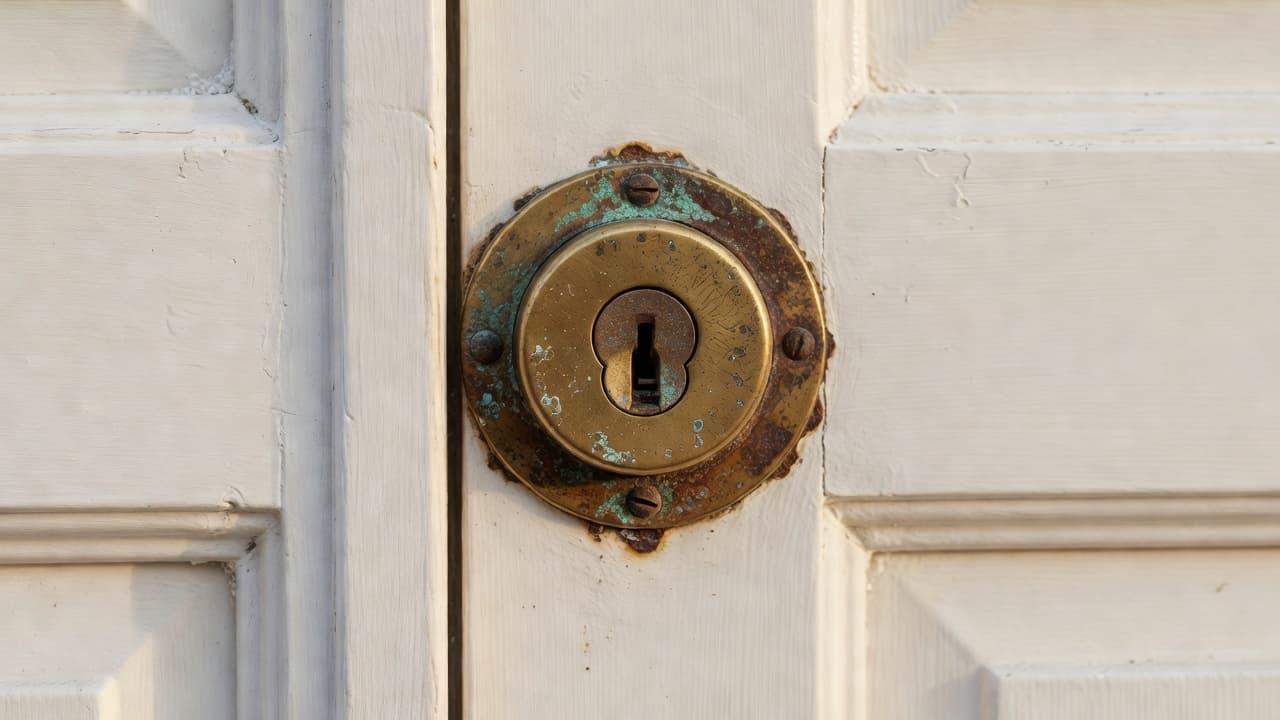
Corrosion or salt air damage. If your home is near the coast, or even a few kilometres inland on the Costa Blanca or Costa del Sol, salt air and humidity corrode metal fittings. The screws rust and weaken, or the metal itself becomes brittle and cracks. Stainless steel handles resist this better, but even they can suffer if not maintained.
Worn or broken internal mechanism. Sometimes the metal plate or collar that sits inside the door (the part the screws thread into) breaks or wears down. When this happens, the handle can't be held in place securely, no matter how tight the screws are. This usually means the entire handle assembly needs replacing.
Age. Older Spanish homes often have older door hardware. Brass and mild steel handles from 20+ years ago are more prone to failure.
Tighten the screws (if they're loose).
Use a screwdriver that fits snugly into the screw head. Don't force it or you'll strip the head. Turn gently and evenly. If a screw won't tighten (it just spins) the hole is probably stripped; move to the next option.
Use a rubber band as a temporary grip.
If the handle is gone or can't be reattached, find a wide, strong rubber band (the kind used for bundling vegetables, or a bike inner tube cut into strips). Wrap it tightly around the spindle (the metal rod protruding from the door). The friction will let you grip and turn the lock mechanism. This is not a permanent solution — it looks untidy and will degrade — but it works for a few days.
Improvise with a cloth or rag.
If you don't have a rubber band, tear a sturdy cloth into a strip, dampen it slightly so it doesn't slip, and wrap it tightly around the spindle. Grip it firmly to turn the lock.
Support the door with a wedge if it won't close properly.
If the door sags or won't close flush because the handle is missing, place a wooden wedge or a folded cloth under the edge to hold it level. Make sure the latch still engages when you close it.
Call a locksmith immediately if:
- The lock won't turn. If the key won't go in, or turns but doesn't move the latch, the internal mechanism is damaged. Don't force it; you could break the lock further.
- The door won't close at all. If it hangs open or swings wide, the entire mechanism may be misaligned. This is beyond a temporary fix.
- The spindle (the metal rod) is bent or broken. If you see a twisted or snapped rod where the handle was attached, the whole assembly needs replacing.
- You see water damage, rust, or corrosion inside the mechanism. This suggests the lock itself is compromised. A temporary fix won't restore security.
- You can't lock the door from the outside. If the key doesn't work, or the deadbolt won't engage, your home is not secure. Don't leave it unattended.
- The door frame is cracked or splintered. If the damage extends to the wooden frame, a loose handle may be a sign of a bigger structural problem.
In any of these cases, close the door, use your key to lock it from outside if possible, and call a locksmith the same day. On the Mediterranean coast, locksmiths are usually available within a few hours, especially for security issues.
A locksmith will start by assessing the damage. They'll examine the handle, the spindle, the internal mechanism, and the door frame. If the problem is just loose screws, they'll tighten them and test the lock — this takes 5 minutes and costs €40–50.
If the handle or internal mechanism is broken, they'll order or fit a replacement. Most locksmiths stock common sizes — European lever handles, knobs, and cylinders (bombín europeo) are standard — so replacement usually happens on the same day. They'll remove the old fitting, check the spindle for damage, fit the new handle, and test it thoroughly. The whole job typically takes 15–30 minutes.
If the spindle is bent or the door frame is damaged, they may recommend a carpenter as well; a locksmith can usually spot when the issue is structural and not just the handle.
Before they leave, a professional locksmith will hand you a receipt (comprobante) showing what was done and what parts were used. In Spain, they should also provide a written guarantee (garantía) on any new fittings, usually 12 months. If they don't, ask for one.
Tighten the handle every few months if you live on the coast or in a humid area. A quick check with a screwdriver takes 30 seconds and prevents most failures.
Replace mild steel or old brass fittings with stainless steel. If your door is older and the handle is corroded, upgrade to stainless steel handles when the locksmith replaces it. They resist salt air much better and last 10+ years longer.
Keep the mechanism dry. If your door is near a balcony or exposed to salt spray, wipe the handle and lock with a dry cloth weekly, especially after rain or windy coastal weather.
Don't pull the door shut by the handle alone. Use your palm on the door frame. Pulling by the handle puts strain on the mounting screws and can loosen them over time.
Check the hinges as well. If a door is sagging, it puts uneven stress on the handle. Ask the locksmith to check hinge alignment while they're there.
If your temporary fix hasn't worked within a day, or if you're not confident the door is secure, contact a professional locksmith. On the Mediterranean coast, they understand salt air damage and can usually visit within hours for security issues. Get the door properly fixed before you leave your home unattended.