Spain's Mediterranean coast—the Costa Blanca, Costa del Sol, Balearic Islands, and parts of Valencia—sits on mineral-rich limestone bedrock. Water percolating through the ground dissolves calcium carbonate and magnesium salts. By the time it reaches your home through the mains supply, it's "hard" by any standard.
Hardness is measured in degrees of French hardness (°f). Anything above 15°f is classed as hard. Most coastal areas measure between 25 and 45°f. Some inland areas and rural properties relying on boreholes can hit 60°f or higher.
The minerals aren't dangerous—in fact, hard water doesn't make you ill. But calcium and magnesium form solid deposits (limescale or calcium carbonate) when water is heated or left standing. This is why your kettle furs up, your shower head clogs, and your boiler's internal passages narrow over time.
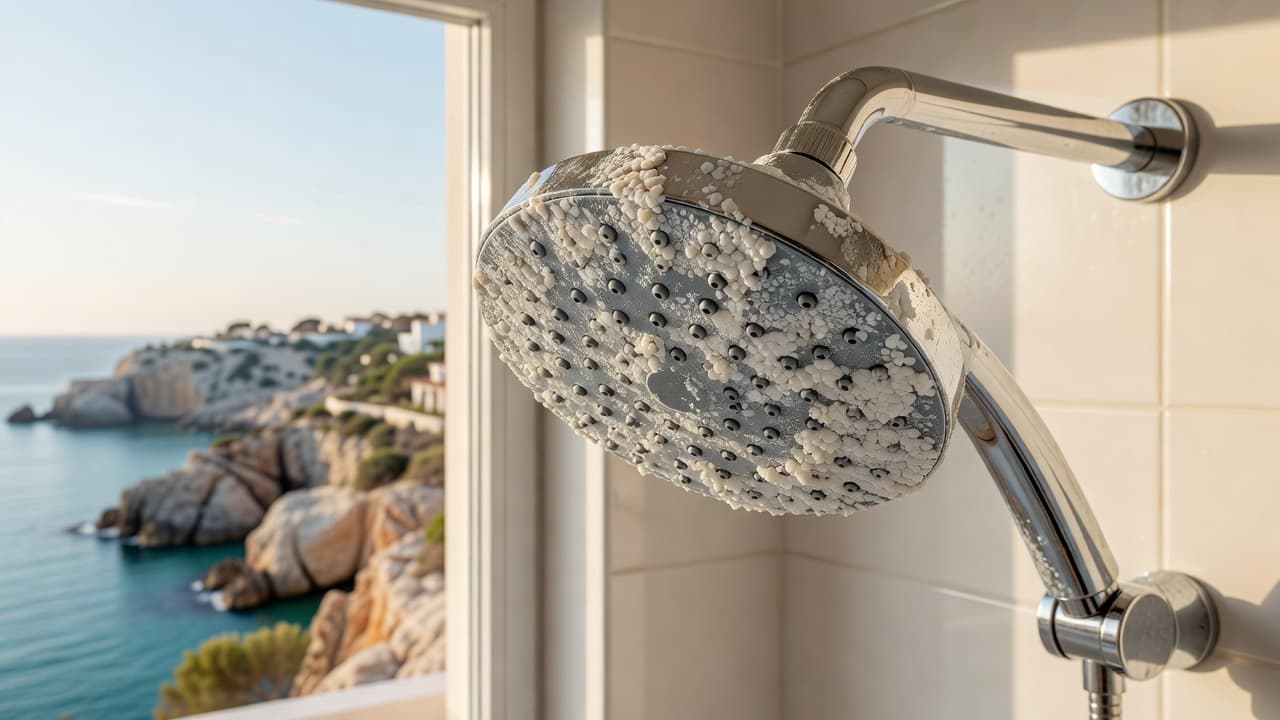
The first place to check is your shower head. Unscrew it and hold it up to the light. White, chalky buildup blocking the holes is a clear sign. The same happens inside tap aerators (the little filters at the end of the spout). When these clog, water pressure drops and the water spreads into an uneven spray.
Limescale builds up inside your pipes slowly and invisibly. A pipe that was 20mm wide when installed may narrow to 15mm over a few years in a high-hardness area. You won't see this, but you'll feel it: water pressure drops, especially on upper floors or in the evening when demand is high.
If your home has an electric storage tank (common in flats and holiday homes without a main boiler), limescale coats the heating element inside. The element has to work harder to heat the same amount of water, using more electricity. Eventually, the element fails.
Inside a boiler's heat exchanger, limescale deposits reduce efficiency dramatically. A kettle with limescale is annoying; a boiler with limescale is dangerous. The element overheats, pressure builds, and safety valves start to weep. The boiler may shut down on a safety cutout, leaving you without heating and hot water in winter.
Limescale clogs the spray arms and heating elements. Clothes don't rinse properly, dishes come out cloudy, and the appliances run noisier and longer. They also consume more water and energy because the heating is less efficient.
In properties with central heating, limescale narrows the pipes carrying hot water to radiators. Some radiators stay cold while others overheat. Bleeding radiators (removing air) becomes a frequent chore.
These appliances are safe to descale yourself. Use a 50/50 mix of white vinegar and water. Boil, turn off, and let soak for 30 minutes. Empty, rinse thoroughly with fresh water twice, and boil again with fresh water before using.
Unscrew it (usually by hand, sometimes with a spanner on the connector). Soak it overnight in a bowl of white vinegar. Use an old toothbrush to scrub away soft deposits. For stubborn buildup, leave it for longer or use a proper descaling product from a supermarket (follow the label for safety). Rinse thoroughly and screw back on.
The tiny filter at the end of your tap unscrews (usually by hand). Soak in vinegar, brush gently, rinse and screw back. This restores water flow immediately.
If you want to slow the problem while you plan a longer-term solution, a jug filter (like a Brita) will soften water for drinking and cooking. It doesn't solve the problem in your pipes, but it protects your kettle and reduces mineral intake in tea and coffee.
Stop and call a professional immediately if:
- Your boiler is making unusual noises (banging, whistling, or kettling sounds). These indicate pressure buildup from limescale and risk damage or safety failure.
- Your hot water tank is constantly hot or the pressure gauge on your boiler is creeping above 2 bar. The system may be overpressurised from scaling.
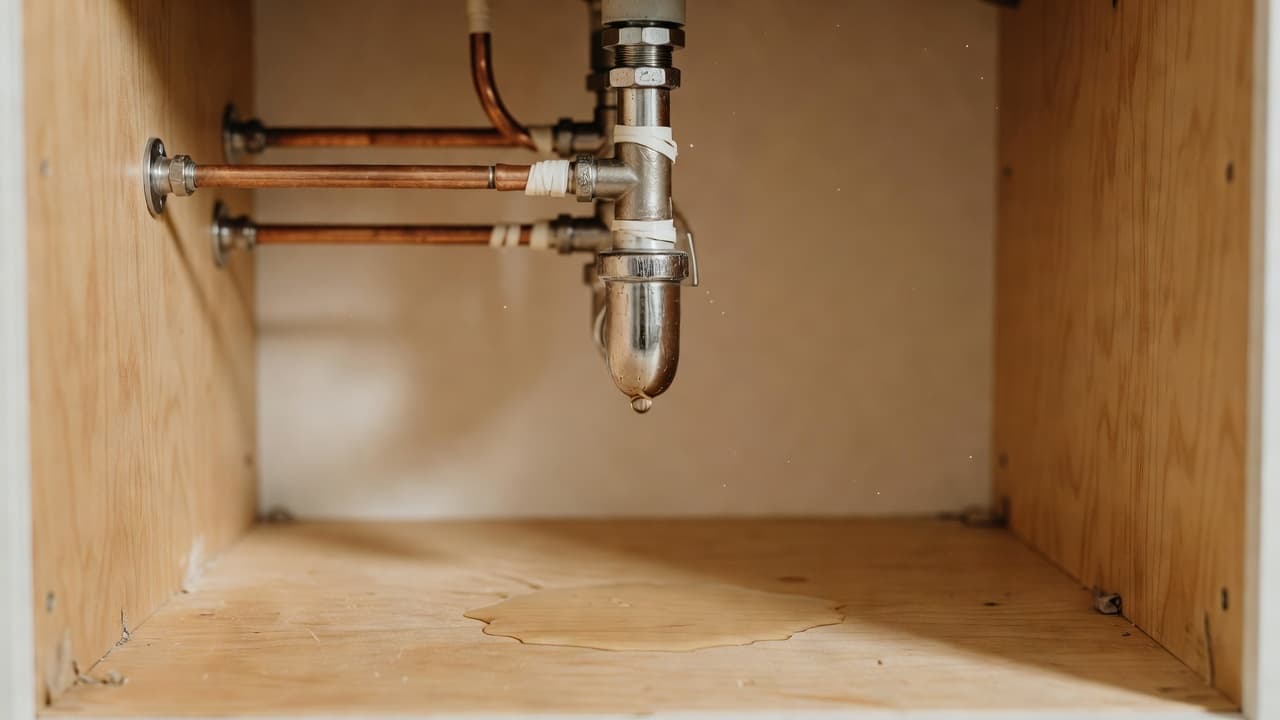
- Water is leaking from your boiler or the pressure relief valve (a small copper or plastic pipe that runs down the side). This is a safety issue.
- You notice rust-coloured or orange water coming from taps, especially if it smells metallic. This suggests corrosion of internal pipes, not just limescale, and needs professional assessment.
- Your boiler is over 10 years old and you've never had a professional descale or chemical treatment. In hard water areas, boilers fail suddenly without warning.
- You have an oil boiler (common in rural properties) and suspect scaling. Oil systems are complex and scaling can block fuel lines and burners.
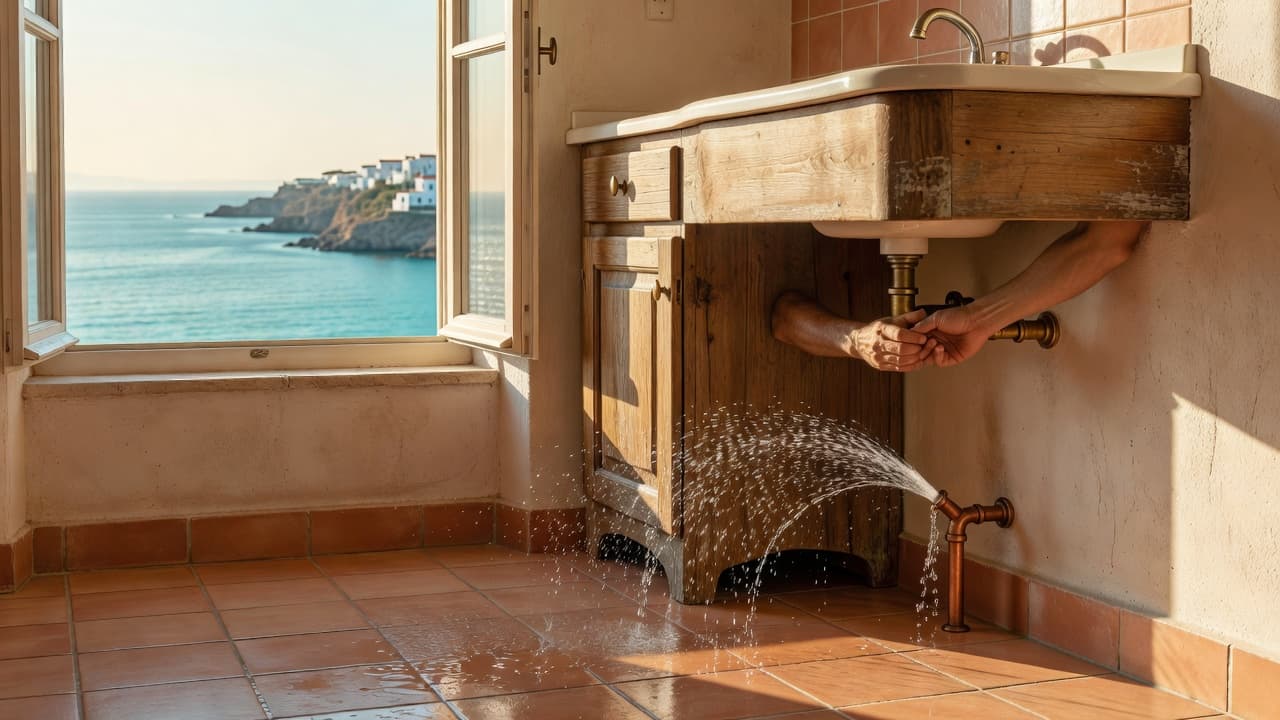
In all these cases, close the water supply to the appliance (usually a valve under the sink or behind the boiler) or the main stopcock (normally under the kitchen sink in flats, or in a utility cupboard or on the landing in villas) and call a plumber the same day. Do not attempt descaling by force or with abrasive tools.
A qualified plumber will usually start with a water test to confirm hardness levels. A simple test kit costs €20–40 and tells you the exact °f rating. This helps them recommend the right solution.
For an existing boiler or heating system with suspected limescale, they have three main options:
Chemical descaling: They flush a mild acid solution (usually citric acid or proprietary descaler safe for the system) through the pipes and boiler. This dissolves existing buildup. The process takes 2–4 hours and costs between €150 and €400 depending on the system size. After descaling, the boiler is flushed with clean water multiple times.
Installation of a water softener: A whole-house water softening system removes hardness before water enters your home. The softener uses an ion exchange resin that swaps calcium and magnesium for sodium. A professional installation costs €1,000–€2,500 for the unit and pipework, depending on your water hardness and flow rate. Running costs are around €10–20 per month for salt refills. The payback is usually achieved within 3–5 years through reduced boiler repairs and appliance replacement.
Magnetic or electronic conditioners: These devices claim to alter the properties of minerals so they don't stick to pipes. Evidence of their effectiveness is mixed, and they're not a substitute for proper descaling or softening. A plumber can advise if one might help your situation, but expect scepticism from most professionals.
After any descaling, the plumber should provide a certificate confirming the work and recommending a maintenance plan (usually an annual check).
If you own your home (as opposed to renting), a water softener is the most reliable long-term investment in hard water areas. It protects your entire system and saves money on boiler repairs and appliance replacement.
Maintain your boiler annually
In hard water areas, ask your boiler engineer to include a limescale inspection in the annual service. They can spot early buildup and recommend chemical treatment before it becomes a problem.
If you have central heating, a qualified engineer can add a corrosion and limescale inhibitor to the radiator water. This is inexpensive (€20–50) and slows scale formation significantly.
In a high-hardness area, these components clog quickly. Keeping spares on hand means you can swap them out when pressure drops, rather than waiting for a plumber.
A quick vinegar soak keeps these appliances working efficiently and extends their life.
Check it monthly when the heating is on. If it's creeping upwards, call a plumber. Early intervention costs far less than a boiler replacement.
Hard water isn't evenly distributed across the coast. The worst areas are typically:
- Costa Blanca: inland Alicante and the foothills of the interior. Coastal flats are often slightly softer due to desalination plant use in the mains supply, but still hard by UK standards.
- Costa del Sol: Málaga province, especially areas inland from the coast, consistently measures above 30°f.
- Balearic Islands: Mallorca and Ibiza have very hard water, often 35–45°f.
- Valencia region: Some inland areas exceed 40°f.
If you're in a holiday home or recently moved, ask neighbours or your letting agent about their experience. They'll tell you immediately if limescale is a known issue.
Hard water on the Mediterranean coast isn't a dramatic emergency, but it's a slow, invisible threat to expensive systems. Catching the early signs—white deposits on fixtures, dropping water pressure, boiler noise—means the difference between a €200 descale and a €3,000 boiler replacement.
If you've spotted any of these warning signs, don't wait. Get a quote from a qualified plumber who can test your water hardness, inspect your boiler and pipes, and recommend the right solution for your home. Early action costs less and protects your investment.