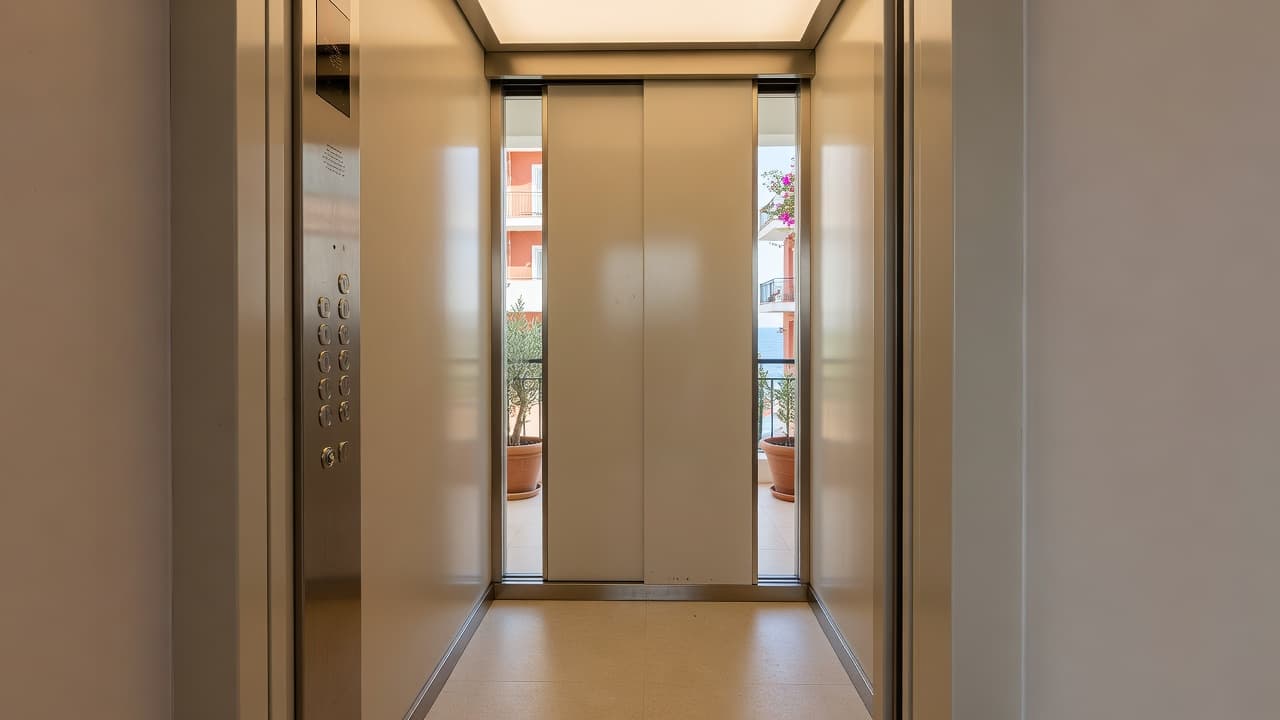
A lift that is powered but won't move can be stuck for several reasons:
Door obstruction or failure. The lift doors may be jammed by a bag, shopping, or a child's toy wedged in the gap. If the door sensors detect an obstruction, the lift will not move for safety. Or the door motor itself has failed.
Brake or motor fault. The lift motor or the electromagnetic brake (which holds the cabin when stopped) may have lost power or suffered a mechanical failure. The light is on because it's on a separate, more robust circuit than the motor.
Overload protection. Lifts have weight sensors. If too many people or too much cargo is inside, the system will not move and the doors will not open. This is a safety feature. People should exit the lift, but if they're trapped, the emergency button will alert the engineer.
Fault in the control system. The lift's electronic brain (the controller) may have suffered a power glitch, component failure, or water damage. This is why the light is on (low current) but the motor is off (high current not being supplied).
Power supply issue. A tripped circuit breaker or a fault in the building's electrical supply can prevent the lift from moving. The light is still on because it's on a different circuit or backed by a small battery.
Mechanical jam. The lift cabin or counterweight may be physically jammed in the shaft. This is rare but serious and requires professional disentanglement.
You can do almost nothing to fix a stuck lift safely. Lifts are heavy, the electrical currents are high, and the mechanics are complex. Do not open the hatch on top of the cabin, do not climb into the shaft, do not pry open the doors, and do not disconnect any cables.
The only safe action is the power reset described above: turn off the main lift switch for 30 seconds, then turn it back on. If that doesn't work, stop and wait for the engineer.
If the lift is empty and stuck on a high floor, you can use stairs for now. If it's empty and stuck between floors, close the outer doors or place a "out of order" sign on them so no one tries to call it. If someone is inside, stay calm and stay nearby. Do not leave them alone.
Call an engineer immediately and do not attempt any fix if:
- Someone is trapped in the lift, even if they're calm.
- The cabin is stuck between floors with the doors not fully closed.
- You see or smell burning, smoke, or sparks near the lift motor or cables.
- The emergency button is not working or no one is responding to it.
- The lift has been stuck for more than 15 minutes and you've already tried one power reset.
- The lift is making unusual grinding, grinding, or banging sounds.
- Water is leaking into the cabin or near the motor room.
- The lift has been struck by lightning or the building has experienced a major power cut.
- You don't know where the lift's main electrical switch is or how to operate it safely.
In all these cases, the cost and time of a professional call is far less than the risk of injuring yourself or making the fault worse. Call immediately.
The lift engineer will start with a visual inspection of the cabin, doors, and mechanical components. They'll check for obvious obstructions, test the emergency button, and note any sounds or smells. They'll review the lift's diagnostic display (if it has one) to see what fault code it's showing.
If someone was trapped, they'll open the cabin door manually using a specialist key or tool, or they'll lower the cabin to the nearest floor using a manual control. Once the cabin is accessible and safe, they'll conduct a full electrical and mechanical test.
The engineer will check the door sensors, the motor, the brake, the control electronics, the power supply, and the weight sensors. Depending on what they find, they may:
- Clear an obstruction.
- Reset the control system.
- Replace a faulty sensor or relay.
- Repair or replace the door motor.
- Repair or replace the main lift motor.
- Check the building's electrical supply (if your electrician needs to be involved).
Once the lift is working again, the engineer will test it with several up-and-down cycles, usually with no one inside, to make sure the fault is gone. They'll hand over a report detailing what was wrong and what was fixed. Keep this for your records and for your building's maintenance log.
If the engineer finds a serious fault (such as a failing motor), they may advise that the lift needs more extensive work or parts replacement, which could take a second visit or longer. They'll give you a cost estimate before starting.
Most lift faults are not preventable by residents. But you can reduce risk:
- Don't overload the lift. If it feels crowded, wait for the next one or take the stairs.
- Don't jam doors with your hand or foot. Let them close naturally.
- Don't leave rubbish or toys in the lift. They can jam door sensors.
- Report small problems early. If the doors are slow to close or the cabin seems to jerk, tell your building manager. Early repairs are cheaper and safer than emergency callouts.
- Keep the lift door clear of clutter outside. Don't stack boxes or items in front of the lift entrance.
- In coastal areas, corrosion can affect lift mechanisms over time. Ensure your building arranges regular (yearly) deep servicing, especially if the lift is exposed to salt air or moisture.
The building's community of owners should have a maintenance contract with a lift company for regular servicing. If yours doesn't, suggest it at the next assembly. Preventive maintenance is far cheaper than emergency repairs.
Don't wait and hope it fixes itself. A stuck lift is usually a straightforward repair for a trained engineer, but every hour it's out of service is an inconvenience for everyone. Call a lift maintenance company today. If your building doesn't have a regular contract, ask your administrator for a trusted engineer's number, or contact us at MyCasa Spain. We can connect you with qualified electrical fault specialists who understand apartment buildings on the Mediterranean coast and can often arrange a same-day visit.