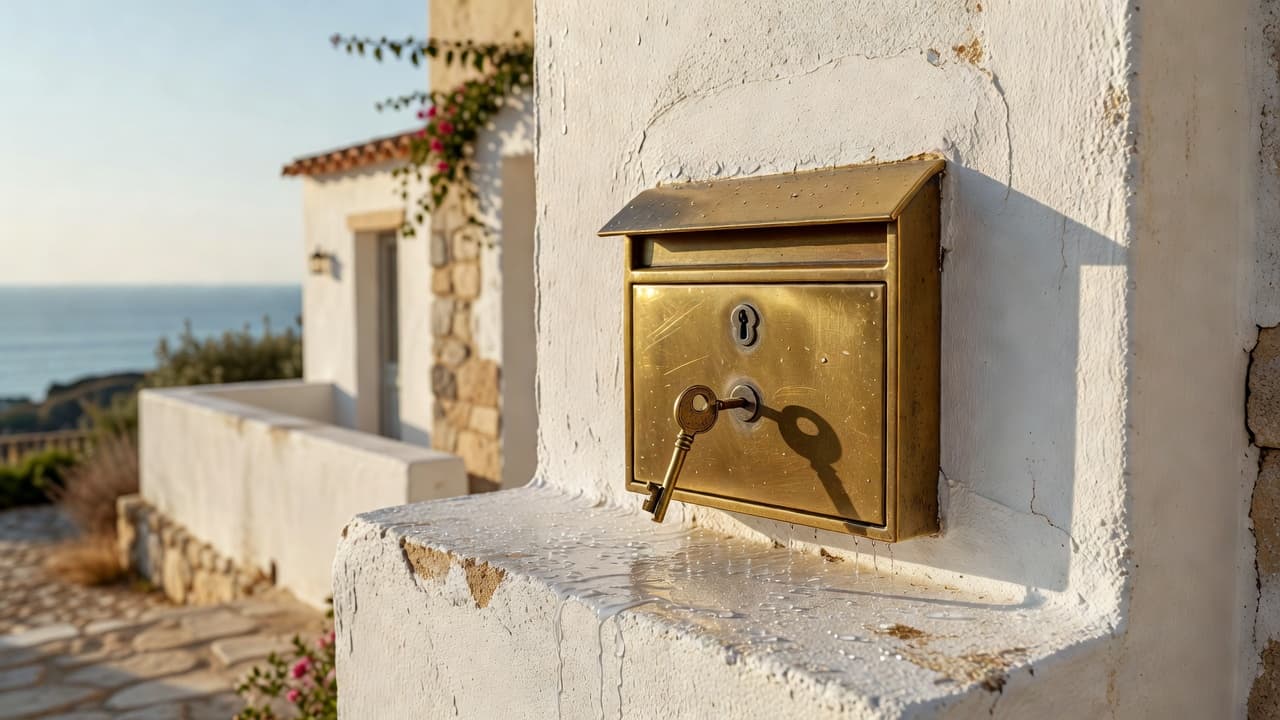
Letterbox locks jam for a handful of predictable reasons, especially in Mediterranean coastal homes where salt air and humidity are constant problems.
Rust and corrosion are the most common culprits. Salt spray from the sea, or simply the damp coastal climate, corrodes the lock's internal springs and pins over months or years. The mechanism becomes stiff and locks up.
Debris inside the lock—dust, sand, or fragments of a broken key from a previous attempt—physically blocks the mechanism. This is more common in older buildings or those near the beach.
Worn or misaligned pins inside the cylinder can cause the key to jam partway through a turn. This usually happens gradually, but one day it suddenly won't budge.
A broken key left inside will prevent any key from entering. You'll feel resistance immediately.
Dirt on the key itself can also cause temporary sticking. Wipe the key clean before trying again.
On the Spanish coast, the combination of salty air and the fact that many communal letterboxes are rarely serviced makes jammed locks surprisingly common. It's not usually a sign of a break-in attempt—it's just wear.
While you wait for a locksmith (or while you're deciding whether to call one), here's how to safely free a mildly stuck letterbox.
Penetrating oil is your first weapon. Spray it generously into the keyhole and let it sit for 10 minutes. Don't spray and immediately try turning the key; the oil needs time to work into the mechanism. Then try turning very gently. If the key starts to move, continue smoothly and slowly—don't jerk it.
Heat can help slightly. If you have a hair dryer, warm the lock for a minute or two on a low setting. Metal contracts and expands slightly with temperature, and this can sometimes free a stuck mechanism. Don't use boiling water directly on the lock (thermal shock can crack it), and definitely don't use a blowtorch.
Graphite powder (from a pencil or a specialist product) can work if you have it. Rub a soft pencil around the key teeth and in the keyhole. The dry lubricant sometimes helps where oil doesn't. Wipe away excess graphite afterwards.
If the key is stuck inside the lock, don't try to pull it out by force. If you can turn it slightly either way, that's progress—keep trying gently. If it won't budge at all, leave it and call the locksmith. Pulling hard risks snapping the key or damaging the lock cylinder.
Post left outside won't go anywhere. If the letterbox has been jammed for a few days, your neighbours will understand, and your post can wait another day for a locksmith to open it.
Stop and call a professional if:
The key snaps or breaks while you're trying to turn it. A broken key left inside makes the job harder. A locksmith will need to drill out the cylinder.
The key is completely stuck and won't wiggle at all after oil and 10 minutes. You risk snapping it or breaking the lock irreparably.
You see visible rust, corrosion, or damage to the lock body. The mechanism is likely damaged beyond what penetrating oil will fix.
The letterbox itself is dented or the lock is loose. This suggests impact damage. Don't force it—a locksmith will assess whether the lock can be salvaged.
It's a building's main communal letterbox and multiple residents can't access their post. This is urgent and needs professional attention quickly. Contact your building's administrator (administrador) immediately, as they usually arrange and pay for repairs.
You've already tried opening it once and the key felt like it might snap. Your instinct is right. Stop.
A locksmith visit costs far less than replacing a broken lock or paying for a new key if you snap the old one inside.
When you call a locksmith, they'll usually ask: is this your own flat's letterbox, or a communal building letterbox? This affects the approach slightly.
For a single flat letterbox, they'll inspect the lock, try gentle penetrating oil treatment, and then assess whether the lock can be freed or needs replacement. If it's just rust or stiffness, they'll clean it, lubricate it properly, and test the key. If the mechanism is damaged or the key is broken inside, they'll drill out the lock cylinder and fit a new one—usually a European-standard cylinder (bombín europeo) that takes about 20 minutes.
For a communal building letterbox, the locksmith will do the same assessment, but with one added step: they'll check whether other residents are also locked out. If multiple people can't access their post, the fix becomes a priority for the whole building, and the cost (typically covered by the community of owners) is higher because more work is involved.
The locksmith will hand you:
- A receipt (recibo) with the work done and the cost.
- If they've replaced the lock, a new key (or two). Keep one spare in a safe place.
- A small bottle of lubricant and a note on how often to maintain the lock (usually once a year with a light spray).
Most letterbox locks can be freed or replaced in a single visit. The whole job usually takes 30–45 minutes.
Once the letterbox is working, a little maintenance prevents another jam.
Once a year, spray a small amount of penetrating oil or light machine oil around the keyhole and the moving parts of the lock. This is especially important on the coast. Winter (December) or early spring (March) is a good time, when humidity is highest.
Keep the key clean. Wipe it occasionally with a dry cloth. If you notice rust forming on the key itself, clean it with a soft cloth and fine steel wool, then dry it completely.
Don't force the key if you feel resistance. A stiff turn is a warning sign. Clean and lubricate before it jams completely.
If your building's letterbox is communal, mention to the building administrator if it feels stiff. Many communities neglect letterboxes until they jam completely—regular maintenance is much cheaper.
On the coast, salt air is relentless, so a yearly maintenance spray is less "nice to have" and more "necessary". The small cost of a can of oil beats a locksmith call.
A jammed letterbox is frustrating, but it's rarely an emergency. Give penetrating oil a fair chance, and if that doesn't work, a locksmith will sort it quickly. Find a local locksmith in your area who can visit the same day or next morning, and your post will be flowing again.