An occupied home with the power on is fine. An empty home is different.
Fire risk from wear and failing components. If a wire inside your walls has a hairline fracture (from age, rodents, vibration, or damp), it might only fail under load. With no one home to notice, a small electrical arc can smoulder for hours before igniting insulation. Summer heat on the Mediterranean accelerates deterioration. Switching everything off removes the risk.
Power surges during storms. Mediterranean thunderstorms are common and fierce. A lightning strike on the power lines outside can send a surge through your home's wiring, damaging electronics and potentially igniting components in the consumer unit itself. With the main switch off, the surge cannot enter.
Theft and squatting. A property with the power on, air conditioning running, and lights on looks occupied. Burglers and illegal occupants are less likely to target a home that's clearly dark and inactive. More importantly, if someone does break in, you don't want them to have access to live electrics—it's a hazard for them and increases your liability.
Wasted energy and cost. Leaving the air conditioning, boiler, or water heater running in an empty home burns money for months. Even a single circuit running unnecessarily adds €10–20 per month.
Corrosion and damp damage. Salt air on the coast accelerates corrosion of wiring and terminals. Without ventilation or heating (a dehumidifier running on a timer is different from continuous conditioning), damp enters the walls. Electrical components rust faster in those conditions, especially if they're under load.
If you genuinely need to leave part of your electrical system active, do it this way:
Fridge or freezer: Empty it completely. Defrost and clean it. Either turn it off entirely, or if you want to preserve food, leave it on at minimum thermostat setting. Install a simple 24-hour timer switch on its circuit (about €15 from a hardware shop, or ask an electrician to fit one for €50–80). Set it to run for 2 hours every 5 days — enough to keep the interior cold without continuous operation.
Security system or alarm: Leave its dedicated circuit on if the system is battery-backed. Check with your installer first. Most modern systems have a battery backup that keeps them armed for days even without mains power.
Dehumidifier: If damp is a concern in your home (common in coastal properties), a small dehumidifier can run on a timer. Set it for 1–2 hours per week during your absence. Turn it off completely before you leave, and ask an electrician to fit a time-delay switch if you're unsure.
Water pump (if you have a private supply): If your home draws water from a private tank or well, the pump may need to stay live. Discuss this with your water provider before you leave. A pump failure could mean burst pipes on your return.
In all cases, make sure the appliance is in perfect working order before you leave. Don't leave a faulty fridge hoping it'll survive three months—it won't.
Do not attempt any of this if:
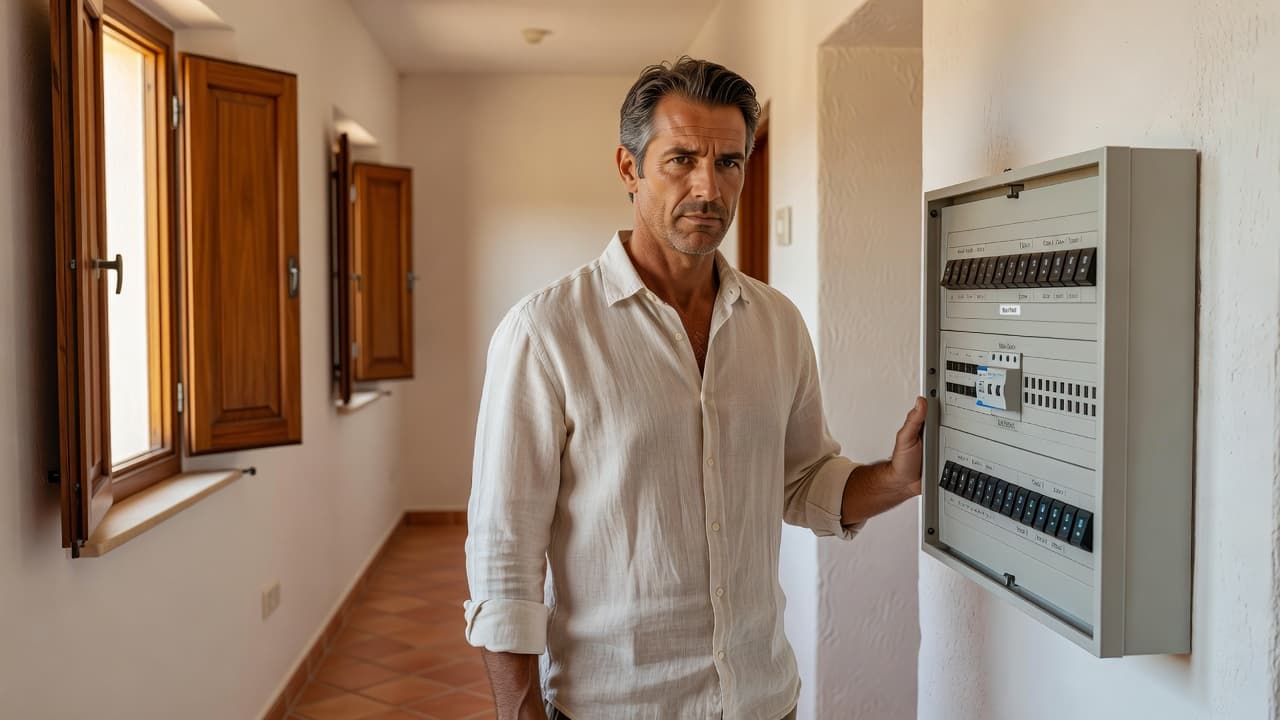
- You don't know where your consumer unit is or are unsure which switches control which circuits.
- Your consumer unit smells of burning, has scorch marks, or feels warm to the touch.
- You notice flickering lights, buzzing sounds, or circuit breakers that trip repeatedly even when nothing is plugged in.
- You're not confident turning off the gas or electrical supplies.
- Your electrical installation certificate (boletín eléctrico) is more than 10 years old and you've never had it updated.
In any of these cases, call a qualified electrician before you leave. A 1-hour inspection costs €80–120 and is worth every euro. They'll spot hazards you can't see—loose connections, overloaded circuits, or failing components—and fix them before you go. You'll leave with genuine peace of mind instead of worry.
If you hire an electrician to inspect your home before you leave, here's what they'll do:
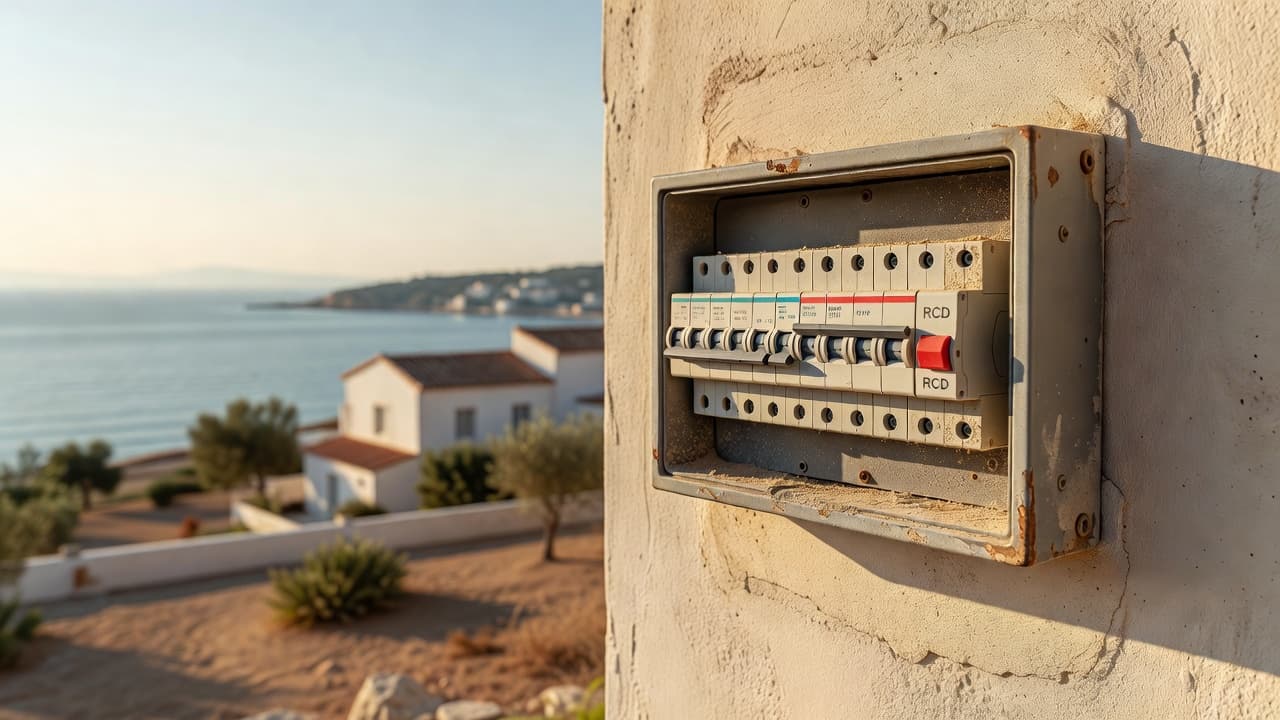
They'll examine your consumer unit for loose terminals, signs of overheating, corrosion (common in coastal homes), and check that the main switch and all individual circuit breakers move freely. They'll trace circuits to identify which appliances are on which breaker, so you don't accidentally switch off the wrong thing later.
They'll inspect visible wiring for damage, chew marks (rodents), or wear. They'll test your RCD (the combined circuit breaker and residual current device on many European installations) to confirm it's protecting you. They'll check that your boiler and water heater are safely isolated.
They'll give you a written list of what's safe to leave on and what must be switched off. If they spot anything that needs fixing, they'll explain it clearly and give you options—repair it now, or leave it isolated until you return.
Most importantly, they'll photograph the consumer unit and any hazards they find, so you have a record. This protects you if anything goes wrong while you're away.
One week before departure:
Run a full check of the consumer unit. Open it (if you're comfortable) and look for scorch marks, loose wires, or anything obviously wrong. If you see anything, photograph it and call an electrician before you go.
Check all outdoor electrical items. If you have outdoor lighting, a pool pump, or garden sockets, turn off their circuits and inspect for water ingress or corrosion. Coastal salt air accelerates rust—a single exposed terminal can become a fire hazard in months.
Test your main water stopcock and gas valve. Before you rely on them in an emergency, make sure they turn freely. A stopcock stuck for years can be impossible to move when you need it. If it's stiff, ask your plumber to free it.
Leave a list. Photograph your consumer unit with all breakers clearly labeled. Leave a printed copy on the kitchen counter and email yourself a copy. When you return or if an emergency arises, you'll know exactly which switches do what.
Inform your neighbours. If you live in an urbanisation (residential community), tell the community manager or a trusted neighbour that you're leaving. They can spot break-ins, unusual activity, or smoke from your home. In the case of a genuine electrical fire, they can call emergency services immediately.
Leaving your home properly takes 20 minutes and protects you from months of risk. Do it methodically, take photos of your consumer unit with everything switched off, and leave before you have any doubt. If you find anything unusual—loose wires, burn marks, or switches that won't move—don't guess. Call a qualified electrician on the Mediterranean coast and have them inspect it. A one-hour visit before you go is cheap insurance against a catastrophe while you're away.
When you return, the only surprise should be dust. Everything else should be safe, secure, and exactly as you left it.