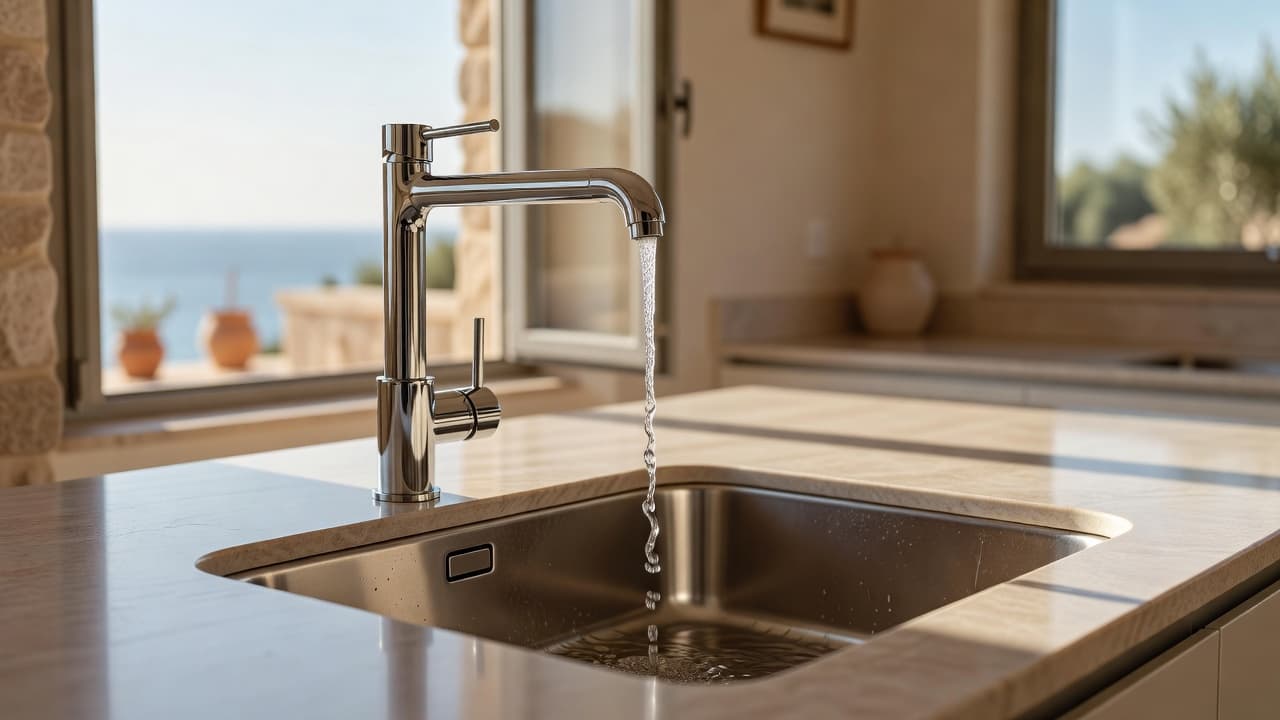
The aerator is the first culprit because it's the most exposed part of the system. In older homes or properties near the coast (common on the Mediterranean), sediment and mineral particles can accumulate there. If you've had recent water works—even at your neighbour's place or on the street—debris can lodge in the aerator or even in the internal valve of the tap itself.
The second most common cause is the main stopcock. If someone has been working on your water supply, or if there's been a main water cut in your area, the stopcock may have been partially closed and not fully reopened. This affects all taps equally, but if you've checked other outlets and only the kitchen tap is affected, you can skip this step.
Less commonly, the problem sits inside the tap itself. Modern kitchen taps have a replaceable cartridge (a small cylinder inside the tap body that controls the flow). Over time, mineral deposits can slow the cartridge, or debris can jam it slightly. This isn't something you can fix yourself—a plumber will need to replace it.
If you need to use the tap while waiting for a plumber:
- Fill a jug directly from the tap and pour it into a bowl or saucepan. It takes longer, but you can still wash vegetables or fill a kettle.
- If the tap is a mixer (one spout with two controls, hot and cold), try opening just the cold control fully and the hot control halfway. Sometimes one side has better pressure than the other.
- Avoid using the dishwasher or running a bath until the plumber has visited, as these use high volumes of water and may strain a system with an internal blockage.
Stop and call a plumber immediately if:
- The low pressure appeared suddenly and affects all taps in your home. This suggests a mains water problem, a major leak, or a fault with the main stopcock. Do not attempt to open or adjust the stopcock yourself if you're unsure—it's brass, often stiff, and can break.
- You notice damp patches on walls, ceilings, or under floors, or you hear water running inside the walls. This is a sign of a hidden leak, and a plumber needs to locate it before it causes structural damage.
- Your water bill has jumped significantly for no obvious reason (extra guests, garden watering, etc.). Again, this points to a leak.
- The tap is leaking from the base where it connects to the sink, or from the spout when it's turned off. The internal seal has failed, and the cartridge or washers need replacing.
- The tap is old and corroded, or the aerator cannot be unscrewed. Forcing it could crack it, and you'll have a bigger problem.
In any of these cases, call a plumber. It's not worth the risk of damaging the tap or missing a hidden issue.
A qualified plumber will first check the aerator and clean it if necessary (if you haven't already). They'll then test the pressure at the stopcock and other outlets to confirm where the problem lies.
If it's internal to the tap, they'll either flush the tap through to clear debris, or if the cartridge is damaged, they'll replace it. A replacement cartridge costs between €80 and €250 depending on the tap model, plus labour. The whole job usually takes 30–60 minutes.
If the problem turns out to be a leak or a mains supply issue, they'll investigate further and may need to access your stopcock or the external water pipes. They should provide you with a written quote before proceeding with any major work, and a receipt once it's done. Keep receipts for your records—they're useful if you ever need to claim on household insurance.
- Once a year, unscrew the aerator and rinse it. This takes 2 minutes and prevents buildup.
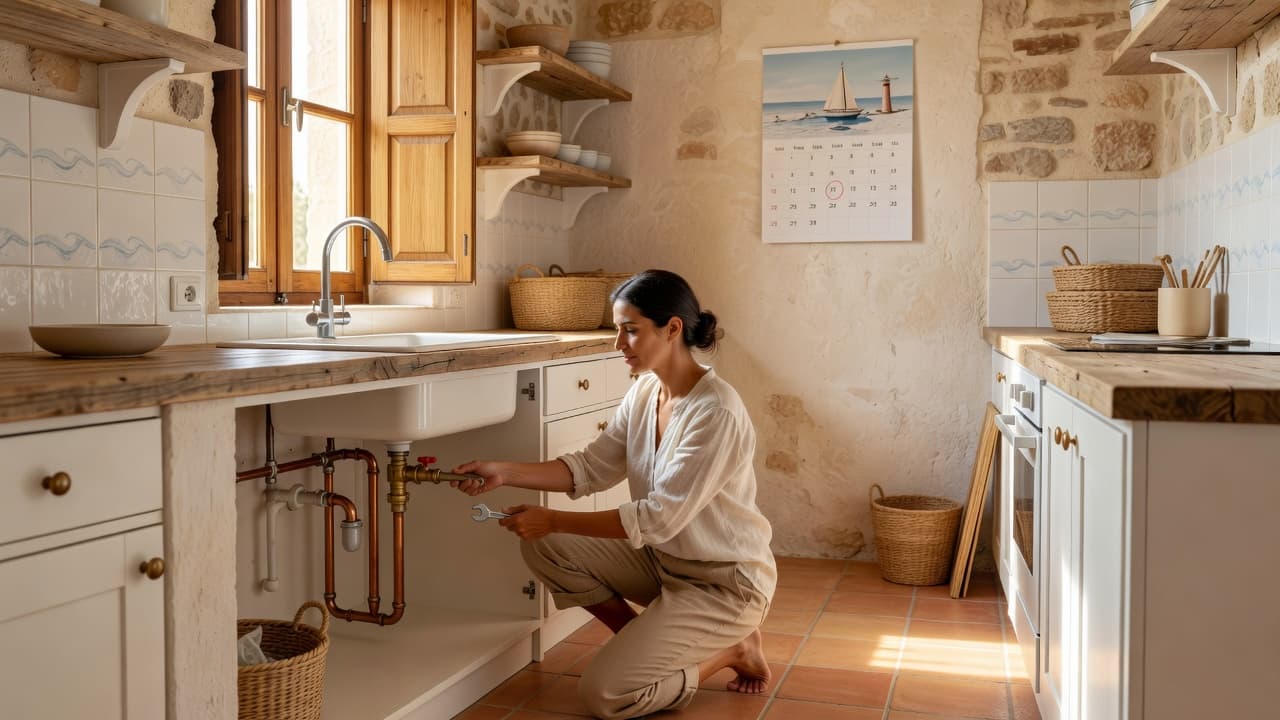
- Check your stopcock location now. It's usually under the kitchen sink (in a cupboard), in a downstairs bathroom, or on the landing. Make sure you can access it and that it moves smoothly. If it's stiff, a plumber can free it off during a routine visit—don't force it yourself.
- If you live by the coast or in an area with hard water (which causes mineral deposits), consider installing a water softener. It's a bigger investment, but it protects your entire plumbing system and your appliances. A plumber can advise.
- After any water works on the street or in your building, run all your taps for 30 seconds to flush out any debris that may have entered the system.
If you've cleaned the aerator and checked the other taps, but the kitchen tap is still running slow, it's time to call in our plumbers on the Mediterranean coast. They can diagnose the problem in minutes and have you back to full pressure—usually on the same day.
Contact a qualified plumber in your area now.