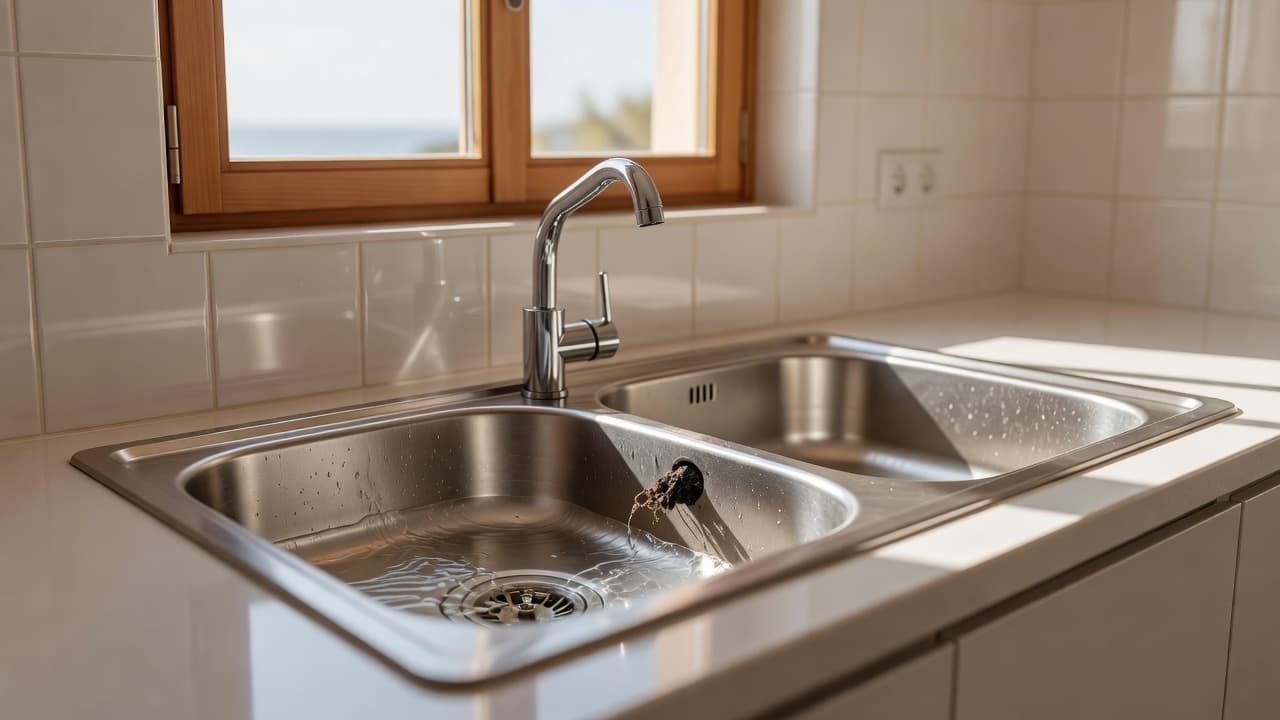
Most kitchen sink blockages are caused by a buildup of grease, soap scum, and food particles. Cooking oil is the biggest culprit—when it cools, it solidifies inside the pipes and traps other debris. Hair, crumbs, and fibres from cleaning cloths also accumulate, especially if you don't have a sink strainer.
In older Spanish properties, particularly villas with original 1970s or 1980s plumbing, the pipes may be narrower or have corrosion inside, making them more prone to blockages. In flats within a comunidad de vecinos (a building with shared facilities), the blockage might not be in your own pipes at all—it could be in the main building drain serving several homes.
Sand and mineral deposits from hard water are less common in blockages but can contribute in areas with very high water hardness. Coastal properties sometimes see saltwater corrosion if there's been a leak or damage to the external water supply.
If you've tried the steps above and the sink is still blocked, here's how to keep the problem contained while you wait for a plumber.
Use the other sink if you have one. If you have a double sink, avoid using the blocked side until it's cleared.
Catch water before it overflows. If you must use the sink, place a bucket underneath to catch the water, or block the plughole and use the water for mopping or watering plants.
Don't try chemical drain cleaners yet. If you've had no luck with hot water and a plunger, a chemical drain cleaner might work, but it's risky in older properties or if the pipes are already damaged. Many professionals prefer to avoid them because the fumes are harmful, and if the blockage is severe, the chemical can cause pressure to build and damage the pipes further.
Don't force anything. If the trap won't come free, don't use excessive force. You'll crack the plastic, and that's a more expensive repair.
Stop immediately and call a plumber if:
- The sink won't drain at all after a plunger and hot water attempt. The blockage is either deep in the pipes or something is stuck that requires professional tools.
- The nuts under the sink won't budge. Forcing them can snap the plastic or strip the threads. A plumber has the right tools and won't damage them.
- There's a foul smell coming from the drain. This suggests a more serious buildup or even a problem with the building's main drain. Don't attempt to clear it yourself.
- Water is leaking from the pipes under the sink. If the trap is cracked or corroded, removing it will make the leak worse. Call a plumber to replace the pipe section.
- The blockage keeps returning within a few days. This usually means there's a deeper problem in the building's plumbing. A professional needs to investigate.
- Your neighbours also have slow or blocked drains. This is a sign the blockage is in the shared building drain, not your flat. Contact your building management (comunidad de vecinos) or a plumber who can advise on shared liability.
- You're unsure about anything. If you're uncomfortable reaching under the sink, don't do it. A plumber charges less than the cost of a burst pipe.
When you call a plumber for a blocked kitchen sink, expect them to start with the same methods you've already tried—a plunger and possibly removing the trap. But they have additional tools and experience.
If the blockage is deeper in the pipes, they'll use a drain snake (a long, flexible metal tool that can push or hook out debris) or, in some cases, a high-pressure water jet that forces the blockage through. For very stubborn blockages in older properties, they might use a drain camera first to see exactly where the blockage is and what's causing it. This helps them choose the best method and avoid damaging the pipes.
If the pipes are cracked, corroded, or damaged, they'll explain the situation and give you options. In older Spanish properties, this is not uncommon. The plumber will issue you a certificate or report detailing the work done, which is useful for your records and for insurance purposes.
Most straightforward blockages—grease and food debris in the trap or the first section of pipe—take about 30 minutes to an hour. Deeper blockages or those requiring a water jet may take longer. The cost depends on the complexity, but a simple blockage clearing is usually one of the cheaper plumbing jobs.
The best defence against a blocked kitchen sink is prevention.
Never pour cooking oil or grease down the sink. Let oil cool in the pan and wipe it out with kitchen paper, then bin it. If you've already poured oil down the sink, run very hot water immediately afterward to help it flow through, but this isn't a reliable method—binning it is always better.
Use a sink strainer. A simple plastic or mesh strainer over the plughole costs a few euros and catches food particles before they enter the pipes.
Run hot water after washing up. Finish each wash by running hot (not boiling, to avoid damaging the pipes) water through the drain for 10–15 seconds. This helps flush away loose debris and soap scum.
Every two weeks, use the boiling water method. Boil a kettle and slowly pour it down the drain. This is preventative maintenance and takes seconds.
Don't put rice, pasta, or other starchy foods down the sink. Even if they're soft, they swell in the pipes and trap other debris.
Be mindful of what else goes down. Cleaning cloths, tea bags, and coffee grounds should go in the bin, not the drain.
If your kitchen sink is still blocked after you've tried these steps, don't wait—a blocked drain won't clear itself, and using the sink will make it worse. A professional plumber on the Mediterranean coast can clear it quickly and check for any underlying damage to the pipes. Get a quote today.