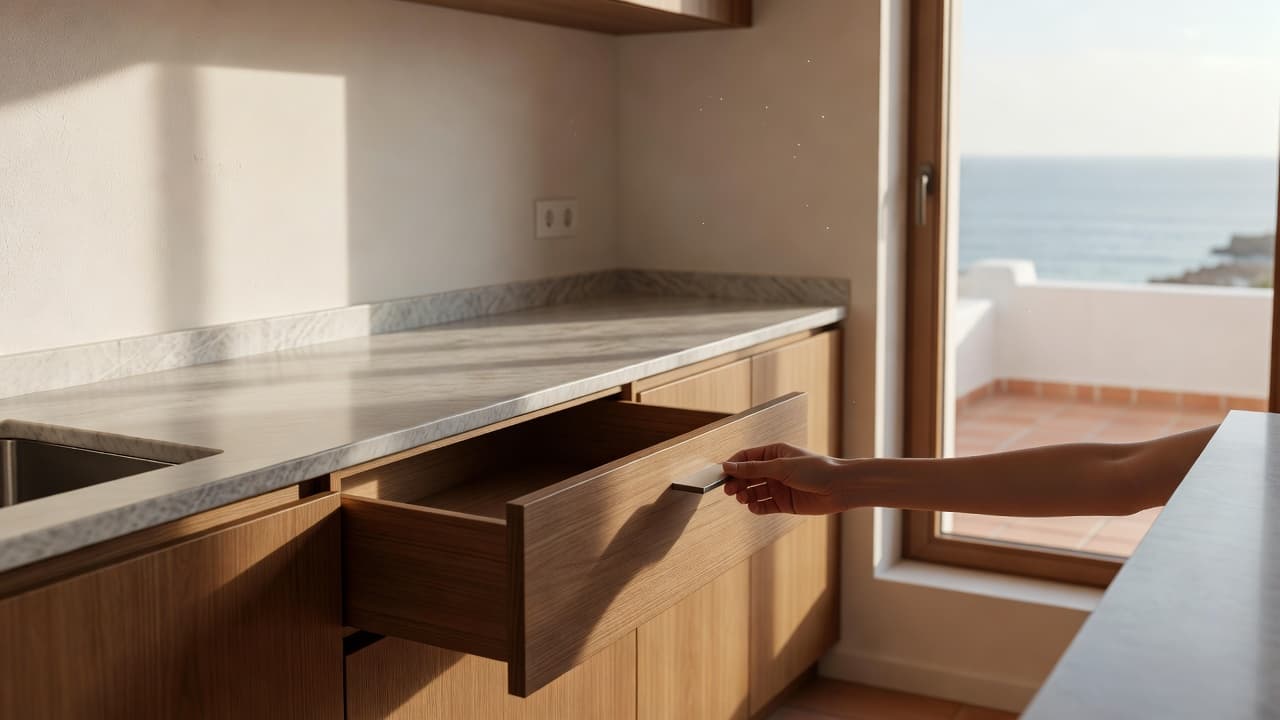
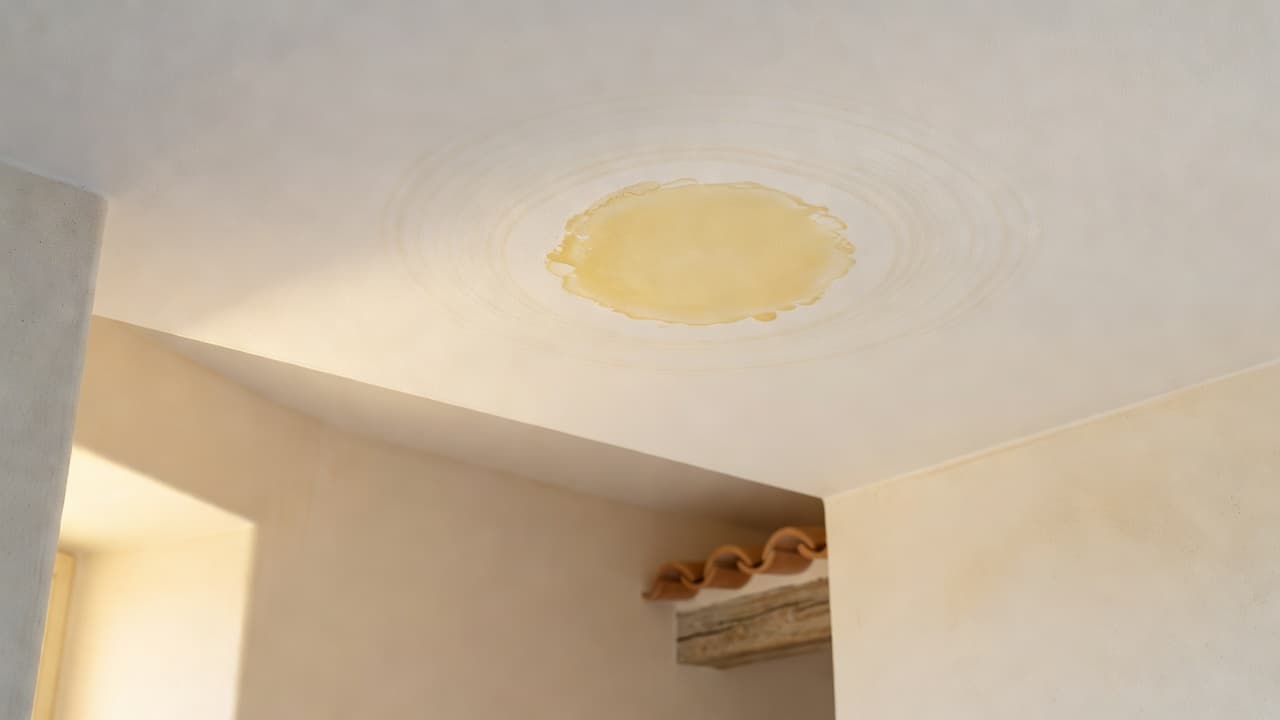
Moisture and swelling is the most common culprit, especially in a Mediterranean climate. Wood absorbs humidity, expands, and the drawer no longer slides freely. If you live near the coast, salt-laden air accelerates this. Coastal kitchens — whether in the Costa Blanca, Costa del Sol, or Balearics — are particularly prone to this problem.
Debris in the runners is the second most common cause. A small piece of food, a splinter, a loose screw, or even dust accumulation can jam the mechanism. This is easy to spot and fix.
Misaligned runners or a warped drawer box happens after years of use or from impact damage. The drawer may have shifted on its tracks or the cabinet frame itself may have settled unevenly. This requires more careful handling.
Poorly fitted replacement runners can also cause jamming. If the drawer was recently repaired, the new runners may not be installed correctly.
Lubrication is your friend. A light machine oil or silicone spray lubricant applied to the runner tracks will help. Avoid thick grease or WD-40 (which is a penetrating oil, not a long-term lubricant) — these attract dust and make the problem worse over time. PTFE dry lubricant sprays leave no residue and work well for kitchen drawers.
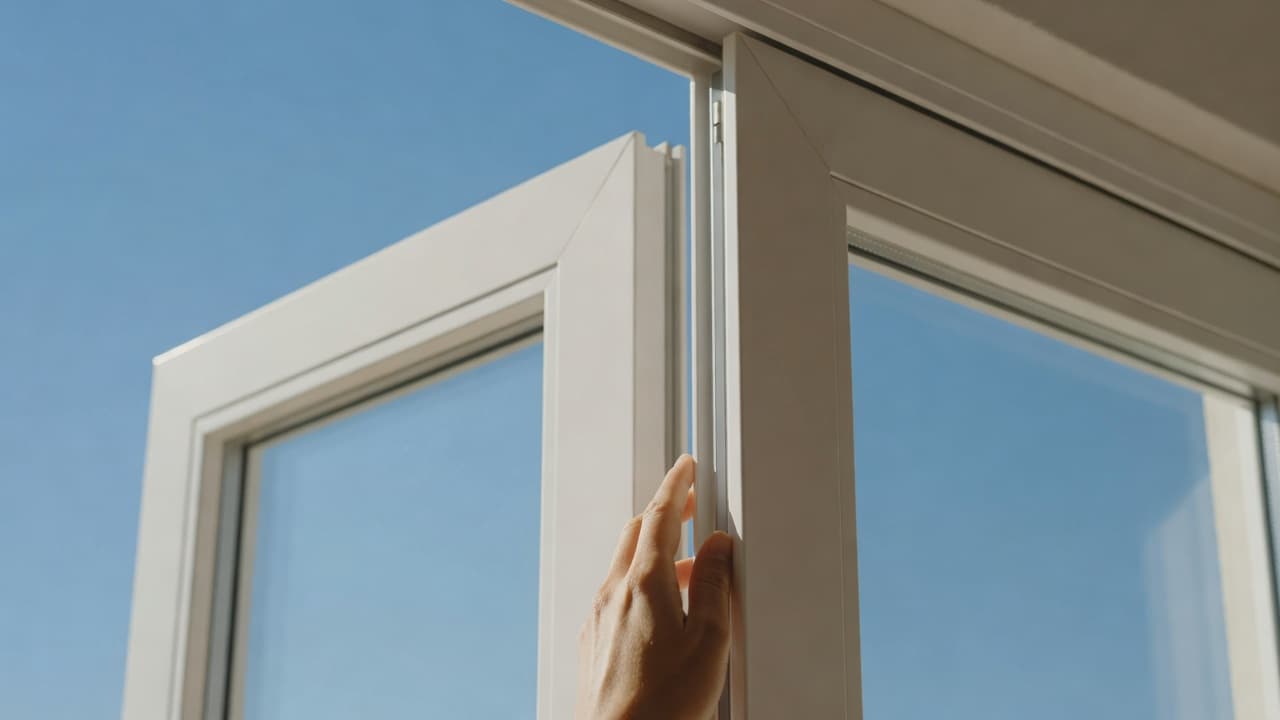
Gentle heat can help with wood swelling. If the weather permits, open nearby windows to lower humidity in the kitchen. In dry conditions, slightly expanded wood can shrink back. This is slow and doesn't always work, but it's safe and free.
Partial opening is progress. If the drawer opens 10–15 cm but won't go further, the jam may be further back. Remove any loose items from inside the drawer through the opening, then try again. Less weight inside sometimes helps.
Do not use water or steam to "unstick" a swollen wooden drawer. This adds more moisture and makes swelling worse.
Stop immediately and call a handyman if:
- You hear cracking or splintering sounds. This means wood is breaking, not just stuck.
- The cabinet frame flexes or moves when you pull the drawer. The cabinet itself may be unstable or damaged.
- The drawer is warped visibly — you can see the box is no longer rectangular.
- The runners are bent or broken. If you can see the metal tracks are dented or snapped, the drawer won't slide properly even when freed.
- The drawer still won't budge after three gentle attempts with rest periods between. Forcing it now risks serious damage.
- The drawer is blocking access to something you need urgently (medication, documents, etc.) and forcing it is tempting. Call a professional instead.
A handyman arriving at your kitchen drawer problem will follow a process similar to yours, but with professional tools and experience.
First, they'll assess the problem from outside the cabinet, checking for visible damage or misalignment. They'll remove any debris from the runners using compressed air or careful hand tools. They'll then apply appropriate lubricant — usually a light machine oil or silicone spray — and work the drawer gently, often using a small wooden block to avoid marking the cabinet finish.
If the drawer has swollen slightly, they may leave it to dry out for a few hours in a well-ventilated space, then try again. If the runners are misaligned, they'll loosen the screws holding the runners and realign them carefully, often using a spirit level to ensure the tracks are truly parallel.
In cases where the runners are damaged or the drawer box is warped beyond recovery, they'll advise on replacement. Modern replacement runners are inexpensive and often fit standard cabinet widths. A handyman can usually install new runners in under an hour. You'll receive a written report of what was done, and often a receipt for any new components fitted.
Maintain airflow in your kitchen. Poor ventilation allows humidity to build up. Open windows regularly, especially after cooking. If your kitchen has an extractor fan, use it during and for 10–15 minutes after cooking.
Wipe spills promptly. Food and liquid left in runners attract pests and encourage wood swelling. A quick wipe with a dry cloth after use keeps the mechanism clean.
Lubricate runners once or twice a year with a light machine oil or silicone spray. This is especially important if you live on the coast. A thin coat applied annually keeps the mechanism sliding smoothly and protects against moisture.
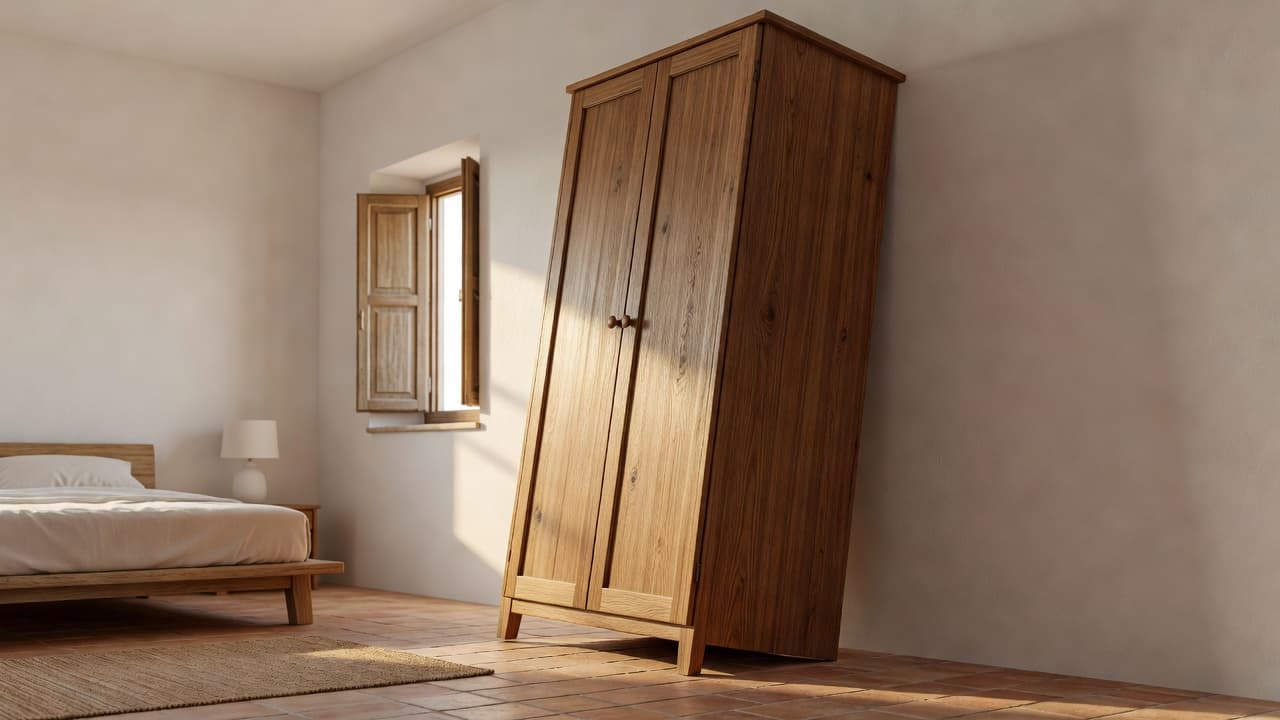
Check that drawers sit level when closed. If a drawer looks tilted, the cabinet may have settled. A handyman can realign runners or, if needed, shim the cabinet feet to level it properly.
Avoid overloading drawers. Kitchen drawers aren't designed to carry extreme weight. Heavy tools or stacked crockery forces the runners to work harder and wears them faster.
A stuck kitchen drawer is frustrating, but it's rarely an emergency. Gentle pressure, patience, and a bit of lubricant solve most cases. If those don't work, or if you suspect damage, find a reliable handyman on the coast who can diagnose and fix the problem properly — usually in under an hour.