The most common causes are:
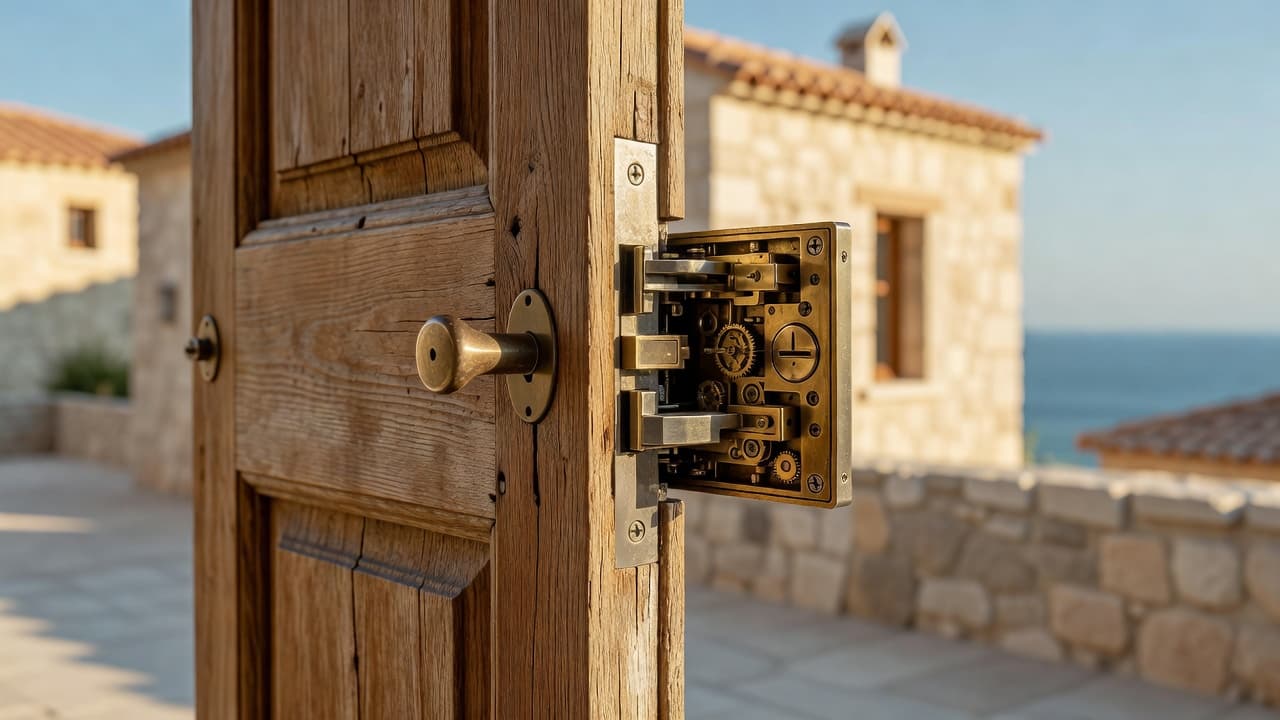
The latch is physically jammed. The bolt inside the lock that retracts when you turn the key has corroded, swollen, or is being blocked by the frame. This is especially common in coastal properties where salt air causes metal to expand and corrode. The key turns because it's not part of the jammed mechanism—but it doesn't open the door because the bolt won't move.
The lock cylinder is worn or corroded. The internal pins or springs have seized. The key rotates the cylinder, but nothing inside responds to push the latch back. Again, salt-air corrosion is the usual culprit.
The door frame has warped. In Mediterranean heat or after humidity swings, wooden or aluminium door frames can shift slightly. The latch retracts, but the frame blocks it from opening. This is why pushing on the frame while turning the key sometimes works.
The handle mechanism is broken. The internal linkage between the cylinder and the handle has snapped or disconnected. The key turns the cylinder, but the handle doesn't receive the signal to push the latch back.
The wrong key is in the lock. Rare, but it happens. A key from a similar lock can turn fully without actually engaging the mechanism, and the door stays locked.
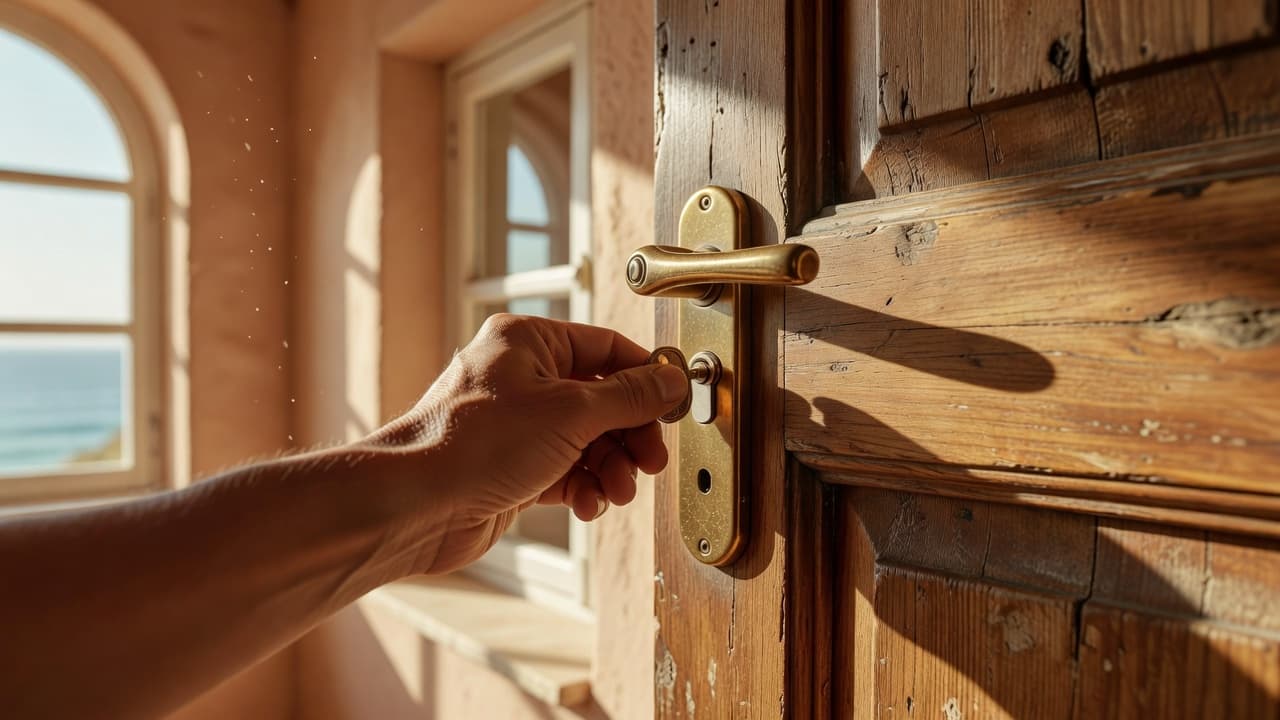
If the key turns and you can feel some movement in the mechanism:
Spray light penetrating oil around the cylinder (not inside it—around the edges where it meets the frame). Let it soak for 15–20 minutes. Then try gently again. If it starts to budge, repeat. This can sometimes free up minor corrosion enough to open the door, at least once.
If the door frame is warped and you can see a gap:
Close all windows. If you're locked outside and the property is coastal, check for any open window or door you can reach safely. If you're locked inside, opening a window is not an emergency—call a locksmith calmly. If you're locked inside a ground-floor room with a sturdy window, you could open it and climb out safely (no more than 1 metre drop, clear landing), but only if you're confident and able-bodied. Otherwise, wait for help.
If the handle moves but the door won't open:
The latch is jammed but the mechanism is responding. Don't force the handle or the door. Forcing will snap the handle or splinter the frame. Call a locksmith.
Stop and call a locksmith immediately if:
- The key is stuck and won't turn at all, no matter how gently you try. Forcing it will break the key inside the cylinder.
- The key turns, but you hear a grinding or crunching sound inside the lock. This is metal-on-metal damage—continuing will worsen it.
- The door handle is cracked, loose, or moves independently of the lock. The handle mechanism is broken.
- You smell burning or see smoke near the lock (extremely rare, but stop immediately if this happens).
- You're locked inside and there's no safe way out (no accessible windows, upper floor). Call a locksmith, not the fire service unless there's an actual fire.
- The lock is a keypad, biometric, or smart lock. Don't attempt to manipulate these. Call the installer or a locksmith who specialises in electronic locks.
- The door is made of reinforced glass or security material. Forcing or damaging it is unsafe.
A professional locksmith arriving at your property will first ask which side of the door you're on and confirm your identity and right to access the property. Then they'll assess the lock:
They'll inspect the cylinder and handle from outside to determine whether the problem is internal corrosion, frame warping, or a broken mechanism.
They'll try gentle manipulation with specialised tools to nudge the mechanism without force. If the lock is just stiff, this can free it.
If gentle methods don't work, they'll drill out the cylinder. This is non-destructive to the door but destroys the lock, which will then need replacing. They'll fit a new Euro cylinder (standard across Spain, costs usually €20–€60 for the part plus labour) or repair the handle mechanism if that's the problem.
They'll give you a new key and ensure the door opens and locks smoothly before they leave. If they've fitted a new cylinder, they'll explain how it works and give you spare keys.
They'll provide a receipt and, if applicable, a certificate of work. Keep this for insurance and records.
The whole process usually takes 20–40 minutes. If the locksmith needs to wait for parts (rare on the same day), they'll let you know.
Lubricate your locks annually. Use a light silicone or PTFE spray (not WD-40, which evaporates and can trap dust over time). Spray it into the cylinder slot, work the key in and out a few times to distribute it, then use the lock normally. Do this especially if you live near the coast or in humid areas—salt air and moisture corrode metal fast.
Don't force stiff locks. If a lock is slow to turn, lubricate it immediately. Forcing a stiff lock damages the pins inside.
Check your door frame for warping every 6 months, especially after hot summers or prolonged damp. Minor warping can be adjusted by shims (thin wedges) under the door frame—a handyman can do this quickly.
Consider upgrading old cylinders. If your property is more than 10 years old and near the sea, the original cylinder has probably corroded inside. Replacing it preemptively (costs €50–€150 total, including labour) is cheaper than an emergency callout and door damage.
You're locked out of your property or stuck inside with a jammed door—it's stressful, but it's almost always fixable quickly. If the simple steps above don't free the lock within 10 minutes, or if you hear grinding or feel resistance, stop trying and call a professional locksmith in your area. A 20-minute callout costs far less than a broken lock, a splintered door frame, or a snapped key stuck in the cylinder.
Most locksmiths on Spain's Mediterranean coast—from the Costa Blanca to the Costa del Sol—offer same-day emergency response. Have your address, phone number, and proof of ownership or tenancy ready when you call. And remember: never force a lock mechanism. It's a small object with intricate internal parts, and once you damage it, the repair becomes much more expensive.