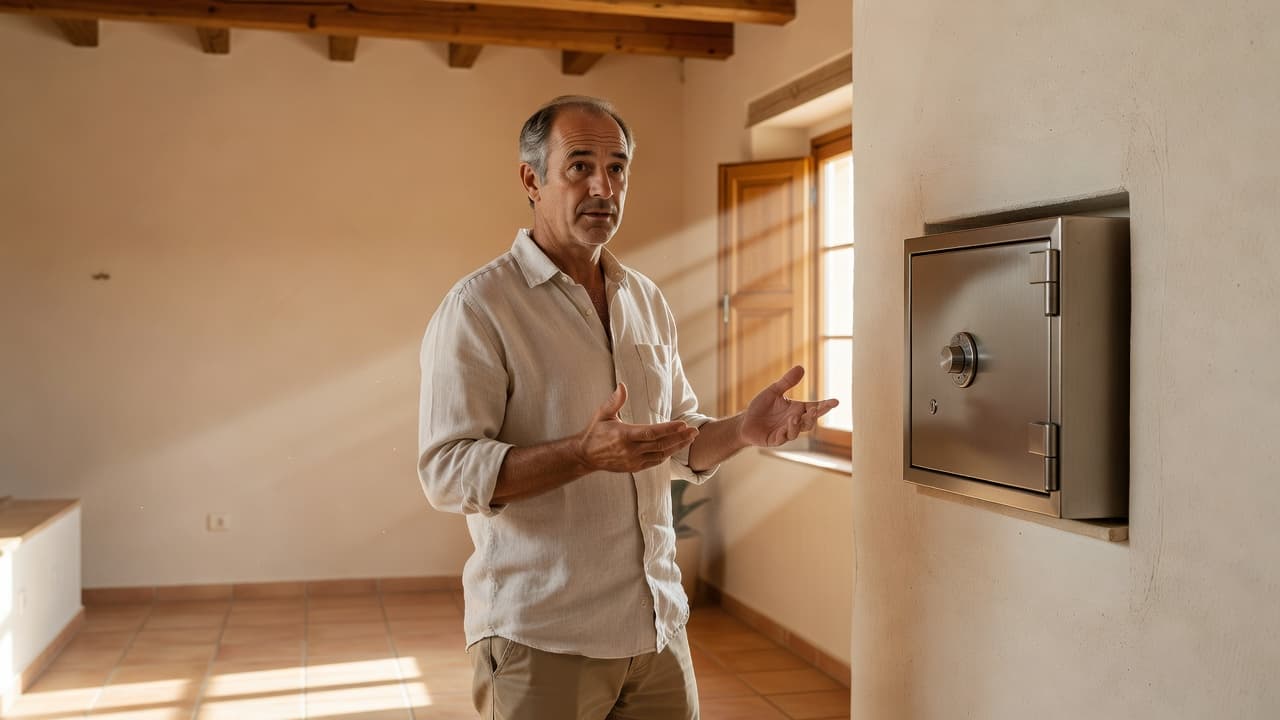
Domestic safes jam for a handful of predictable reasons:
Dust and debris inside the lock. Coastal air carries salt and moisture. Over time, particles accumulate inside the keyway and bolt mechanism, binding the parts. This is the most common cause, especially in villas near the sea.
Metal expansion. Safes in direct sunlight or near radiators can expand slightly, causing the bolt to bind against the frame. Summer on the coast makes this worse.
Worn key or lock cylinder. If the key has been copied multiple times or the lock is 15+ years old, tolerances wear. The key may no longer align properly, blocking movement.
Dry or sticky lubricant. If someone has oiled the lock in the past, old oil can gum up and trap the mechanism. This is counterintuitive but common.
Bent bolt or frame damage. If the safe has been bumped or the door pushed, the bolt may be very slightly bent, catching the frame. This requires professional inspection.
Electronic lock failure (if electric). The motorised bolt won't retract because the electronic control has failed. This can't be fixed with manual methods.
These methods are low-risk if done gently. Stop immediately if you feel any resistance.
Graphite powder only. If you have a tube of dry graphite lubricant (sold for locks), apply a tiny amount into the keyway. Do not use oil, WD-40, or other sprays. Graphite is inert and won't attract dust. Turn the key very gently and slowly a few times. Leave it for 15 minutes and try again.
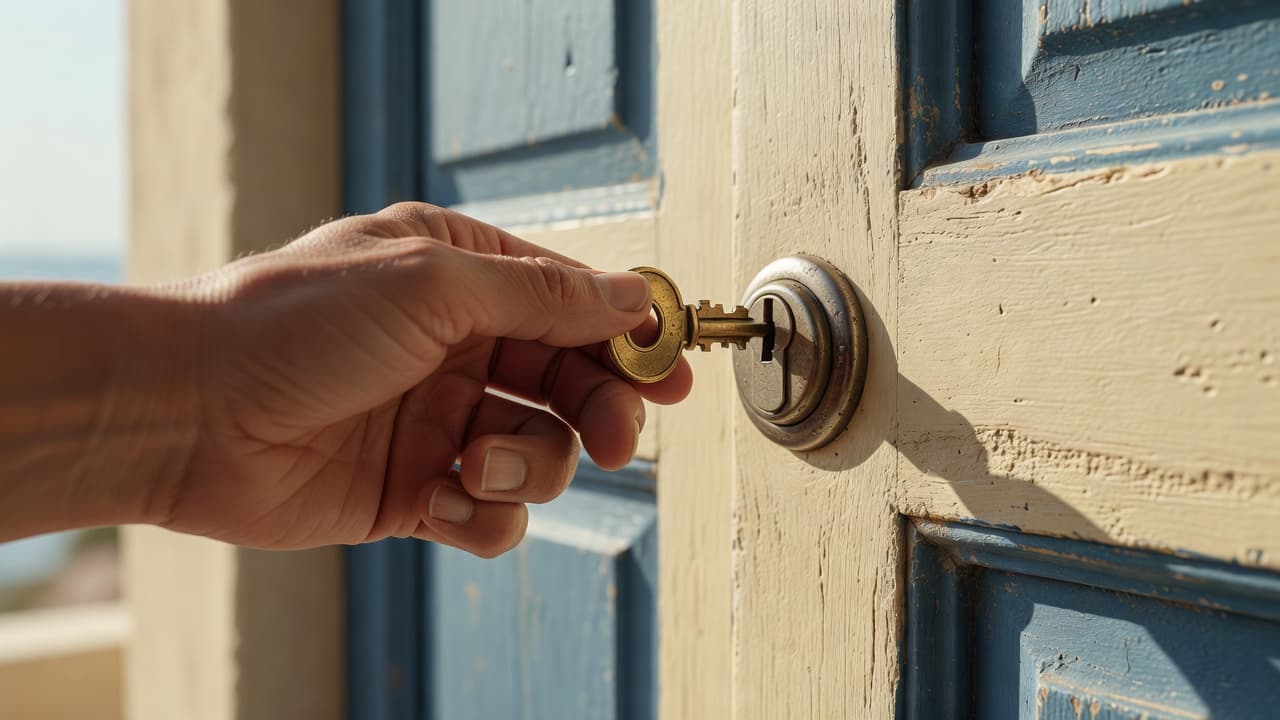
Gentle wiggle technique. Insert the key fully into the lock. Apply very slight forward pressure (don't turn). Wiggle the key left and right gently, as if loosening a stuck key in a door. The micro-movements can dislodge particles. Remove the key, wait a minute, reinsert, and try turning slowly.
Heat method (minimal). If the safe is in a cold room, a hairdryer on low heat, held 20 cm away from the lock area for 2–3 minutes, can help metal expand slightly and ease binding. This is safe if done briefly. Don't overheat the safe.
Moisture check. If the safe is in a damp room (bathroom, basement), moisture may have entered the lock. Open windows and let the area dry. Wait 24 hours. Don't apply heat to a damp lock.
These are all you should try. If none of them work after 2–3 gentle attempts each, stop. Continued effort risks permanent damage.
Stop immediately and call a locksmith if:
- The key turns but the bolt won't move. This suggests internal lock pin binding or bolt misalignment. Further manipulation will break the lock mechanism.
- The key won't turn at all. Forcing it will snap the key inside the lock or strip the cylinder. This makes professional extraction much harder.
- You hear grinding or clicking sounds when you try to turn the key. Metal is grinding against metal—stop now.
- The handle is completely immobile. The bolt is likely seized against the frame. Force will damage both.
- You've already tried the above methods more than once and nothing has changed. Repeated attempts don't magically unstick it; they just increase damage risk.
- The safe is old (pre-2000) or of unknown origin. These locks are fragile and often can't be repaired—only drilled. A locksmith needs to assess before you damage it further.
- You're not 100% sure of the safe type or brand. Unknown safes may have unusual mechanisms. Guessing and forcing is dangerous.
- The safe contains valuables or documents you can't afford to lose. If what's inside is irreplaceable, don't risk it. Call a professional immediately.
The safest rule: if you've waited, tried one gentle method, and nothing improved, call a locksmith. It's far cheaper than replacing a ruined safe or losing contents.
A professional locksmith specialising in safes will follow a standard protocol.
Inspection and diagnosis. They'll examine the safe externally and try the key themselves, feeling for the exact point of resistance. This tells them whether it's a keyway jam, bolt bind, or electronic failure. Most jamming takes less than five minutes to diagnose.
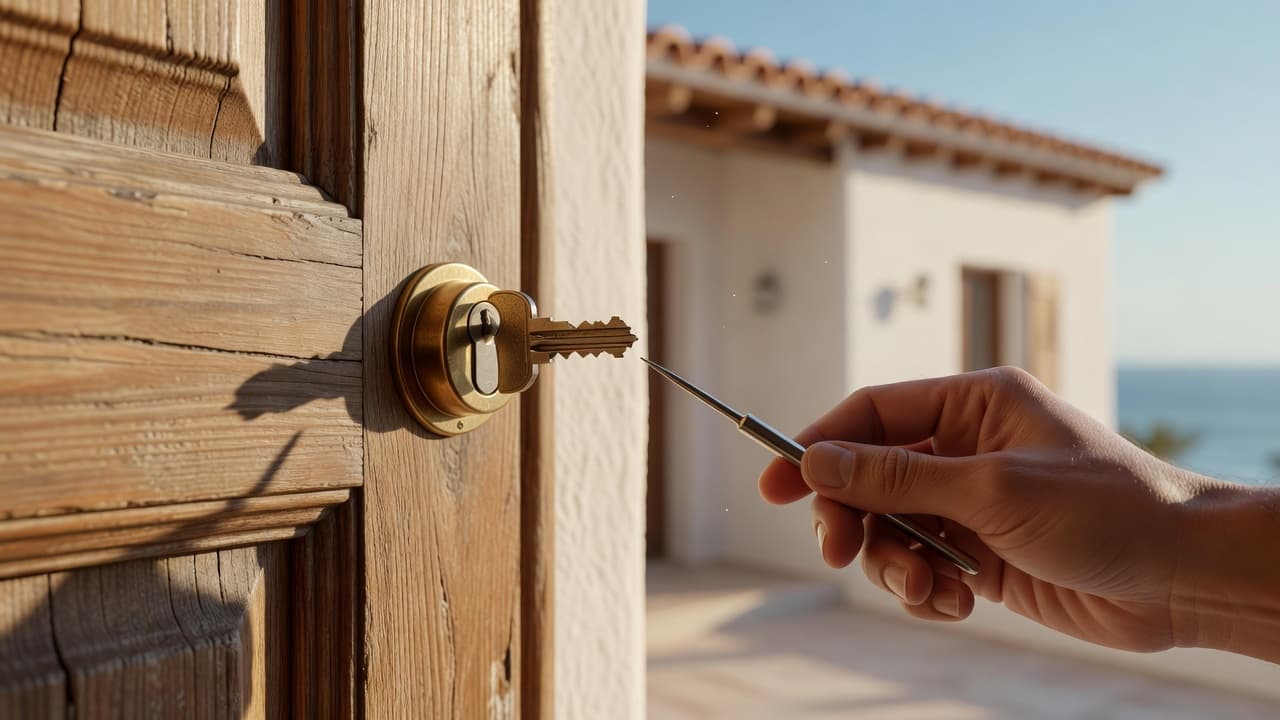
Non-destructive methods first. For mechanical safes, they'll use a pick set or tension tools to manipulate the lock pins and bolt, or apply controlled impact techniques (gentle tapping, never hammering). For electric safes, they'll check the battery, try override codes, or use a bypass if it's a known model. This approach preserves the safe.
Lubrication under control. If debris is confirmed, they may flush the lock with compressed air or apply specialist solvents (not oil) that dissolve gum without leaving residue. They'll then work the mechanism gently back to life.
Drilling as a last resort. Only if the safe is genuinely unfixable will they discuss drilling the lock cylinder or bolt. They'll explain what this means for future use (you'll need a new lock and key, or the safe may become hard to close or lock). They'll ask permission in writing before doing this.
Documentation and advice. Once open, they'll document the safe type, the cause of the jam, and any damage observed. They'll advise on whether the mechanism has been compromised and what maintenance it needs. If the safe can't be fully repaired, they'll discuss replacement options.
Cost. For a straightforward jam on a common domestic safe, expect €80–€200 in labour, depending on your location and how long the work takes. If drilling is needed, add €50–€100. Get a quote before they start.
Annual inspection. Once the safe is open and working, have a locksmith inspect the lock and bolt mechanism once a year. They'll spot wear early and can apply protective lubricant (graphite only) to prevent jamming.
Keep it dry. If your safe is in a bathroom or near a coastal window, use a small silica gel packet or dehumidifier pouch inside. Moisture is the enemy of locks.
Avoid copying keys unnecessarily. Each copy introduces tiny wear. Keep your original key and make only one backup.
Don't force it when it's new. If you buy a new safe and the key is stiff (common from manufacturing), apply graphite powder and work it in gently. Forcing a new lock can damage it immediately.
Shield from heat and sun. If your safe is on an outside wall or in direct sun, consider a thin wood or fabric shield to reduce temperature swings. This is especially important in summer on the Costa Blanca or Costa del Sol.
Test it monthly. Open and close the safe once a month, without storing anything. You'll catch a developing jam early, before it's critical.
A jammed safe is frustrating, but it's almost always fixable. The key is to stop forcing it now and either wait a little while or call a professional. If you've tried the gentle methods outlined above and nothing has worked, a locksmith will have your safe open within the hour, without damage. Don't let a stuck safe sit for weeks—the longer it's jammed, the higher the risk of permanent damage. Find a professional locksmith in your area who can assess and fix it today.