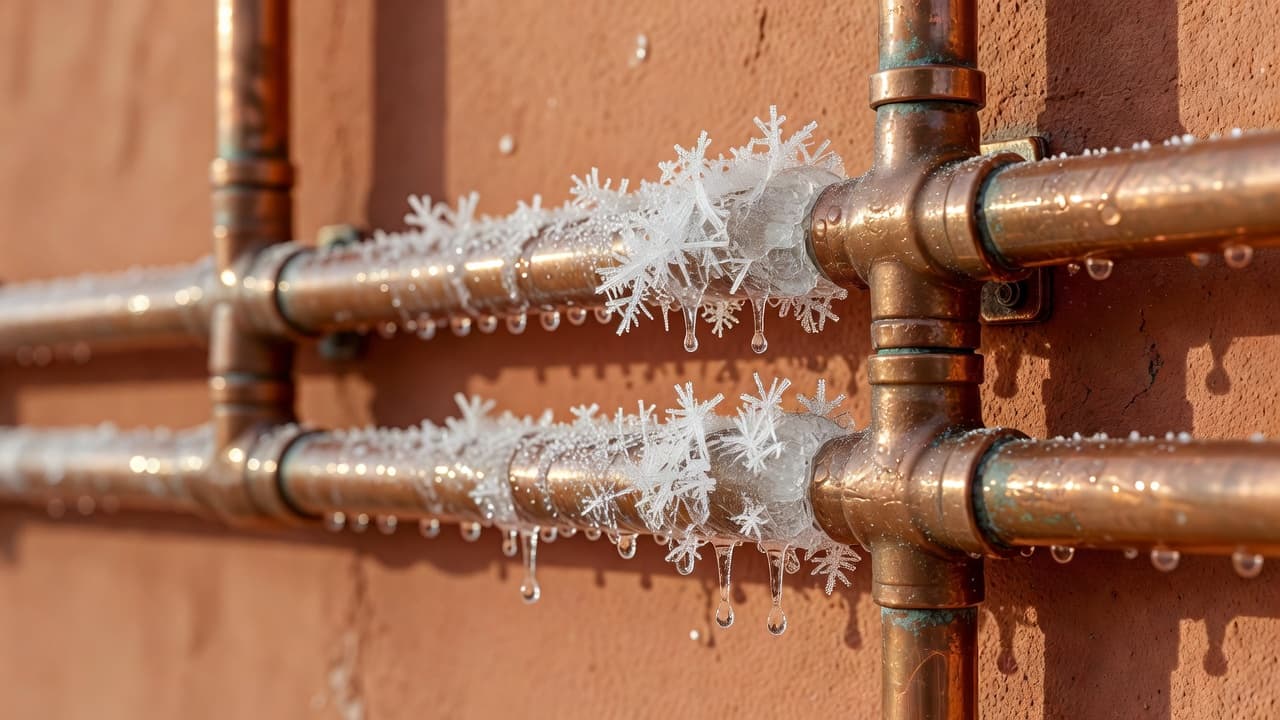
Ice forms on AC pipes when the refrigerant inside drops to freezing temperature, even on a hot summer day. This happens for three main reasons:
Refrigerant leak. A small hole or loose joint in the copper pipe network allows the refrigerant gas to escape. With less refrigerant circulating, the pressure inside the remaining pipes plummets, and the liquid that does flow freezes solid. This is the most common cause and always requires professional repair.
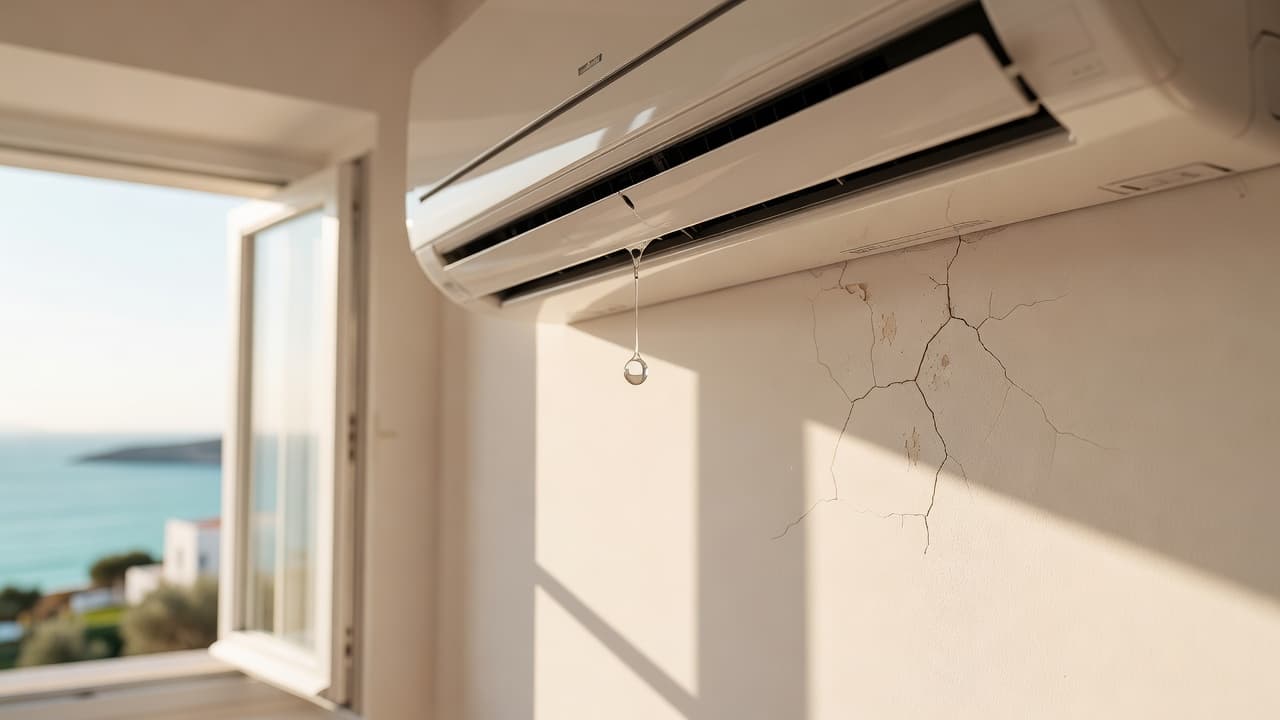
Clogged air filter. The mesh filter in your indoor unit (usually a removable panel near the unit) traps dust and pet hair. When it's blocked, air can't flow across the cold evaporator coil inside the unit. The coil gets colder and colder, and ice starts to form on the pipes running out to the external unit. A dirty filter is an easy fix, but the ice means the problem has been ignored for a while.
Faulty compressor or expansion valve. The compressor pumps refrigerant around the system; if it's failing, pressure drops and ice forms. The expansion valve controls how much refrigerant flows through the pipes; if it gets stuck, the same result occurs. These are internal faults that only a technician can diagnose.
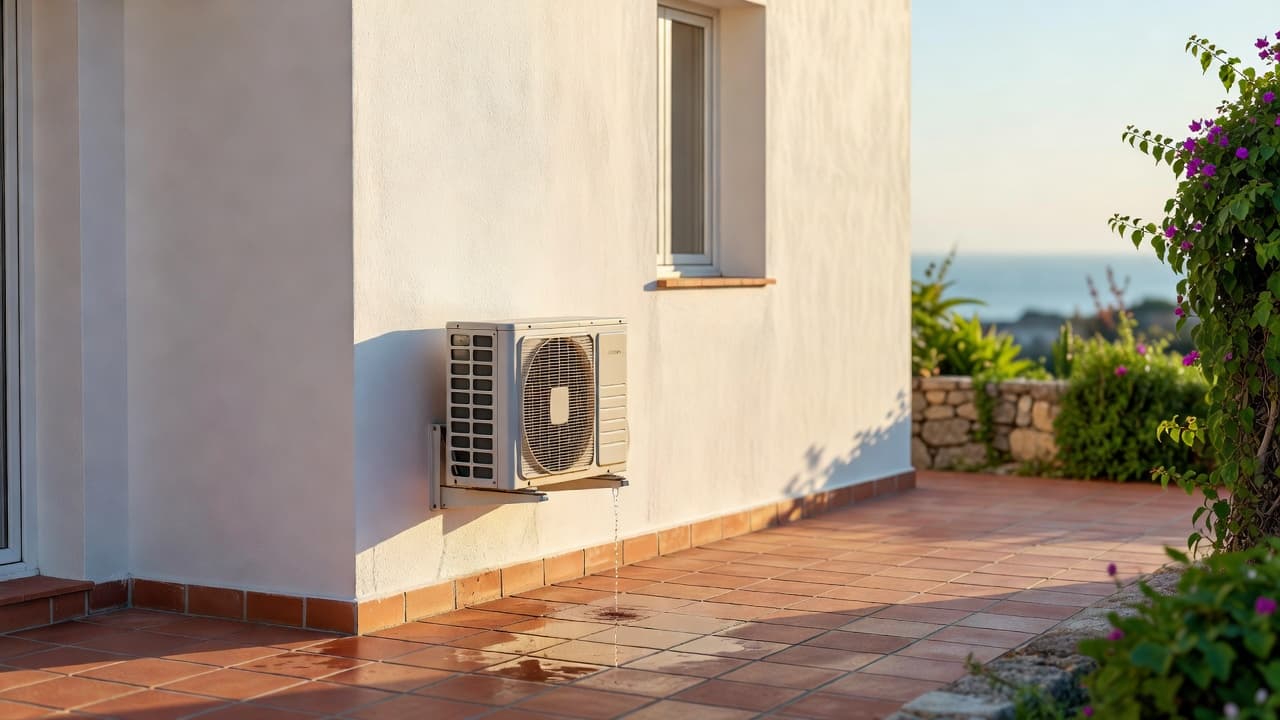
Blocked outdoor unit. In coastal areas (especially on the Costa Blanca, Costa del Sol, or if you're in the Balearics), salt spray and sand can clog the outdoor condenser coil. This makes the whole system work harder, pressure drops, and ice forms. Less common than the others, but watch out for it near the sea.
Until the professional arrives, here's what you can safely do to protect your system and keep your home as cool as possible without using the AC:
Leave windows open in shaded rooms. Especially early morning and evening when outside temperatures are lower. Even without AC, natural ventilation helps. Close windows during the hottest hours of the day.
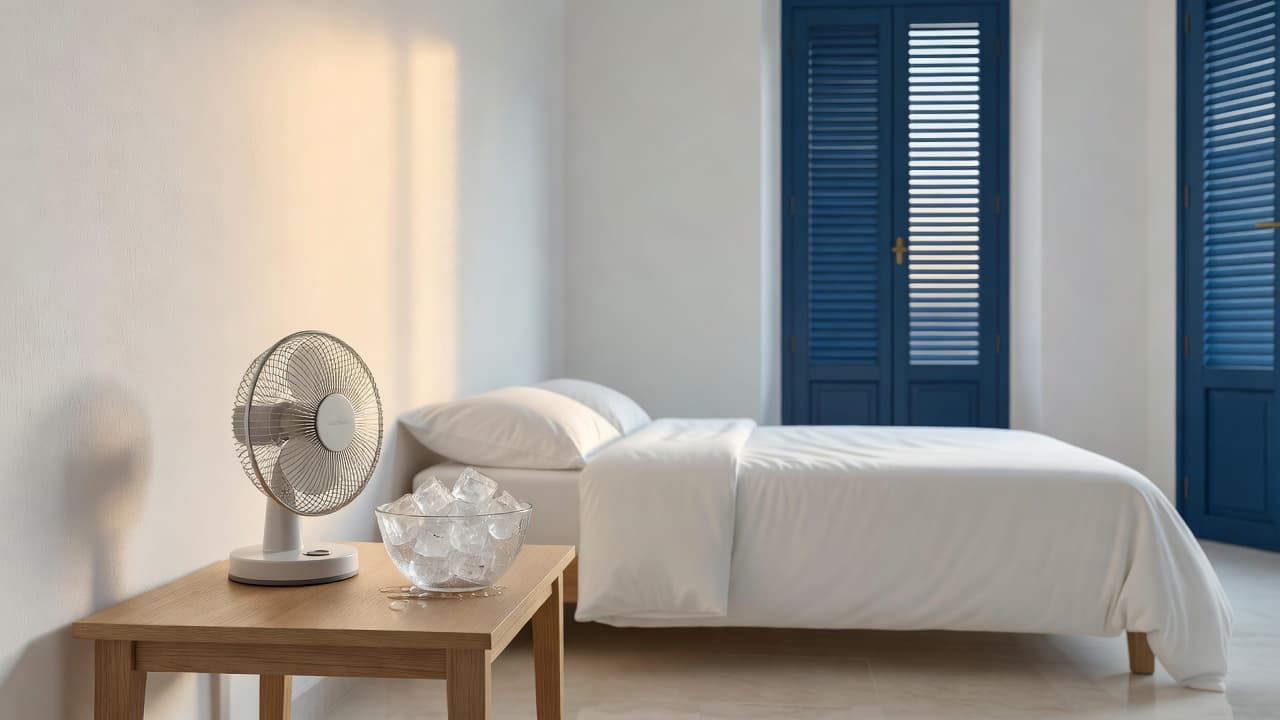
Use portable fans. Position a fan to push air from a cooler room (perhaps a north-facing bedroom) into the main living space. Fans don't cool air, but they make rooms feel cooler by moving it.
Close blinds and shutters during the day. Spanish-style shutters (persianas) and internal blinds block direct sunlight and reduce heat gain. Open them at night when it's cooler outside.
If the filter is clogged and you know how to access it safely, you can remove and rinse it with water (let it dry fully before reinstalling). But if you're unsure, don't touch it. It's a £20–50 job for the technician and not worth the risk of breaking something.
Run a dehumidifier if you have one. High humidity makes rooms feel hotter. A portable electric dehumidifier helps.
Avoid using ovens, hobs, or other heat-generating appliances during the hottest part of the day.
Do not try to recharge the refrigerant yourself. Refrigerant is a pressurised gas. Handling it requires special equipment (a manifold gauge set) and certification. Incorrect pressure can damage the compressor or cause injury. Always call a professional.
Do not open any part of the outdoor AC unit. The compressor and condenser coil contain high-pressure refrigerant. Opening it will release the gas, destroy your system, and is illegal in Spain and the EU under environmental regulations (the F-Gas Directive).
Do not use a heat gun or hairdryer on the pipes. Excessive heat can warp copper pipes or damage the insulation around them, leading to leaks.
Do not leave the system running while iced up. Every minute it runs with ice on the pipes risks compressor damage. A compressor replacement costs £1,500–2,500 or more. It's not worth the gamble.
Do not block the outdoor unit while trying to help it cool faster. The unit needs air circulation. Don't cover it with fabric or position furniture against it.
If your system has been icing repeatedly over several days, or if the ice reforms within hours of thawing, there's definitely a major fault. Stop using it and book a technician immediately.
When you call an air conditioning technician, describe what you've seen: "Ice has formed on the pipes running from my outdoor unit. I've turned the system off and let it thaw." This tells them it's likely a refrigerant or pressure-related fault.
The technician will arrive with a manifold gauge set, leak detection equipment, and spare refrigerant. Their first step is to connect the gauges to the service ports on the outdoor unit (small metal valves, usually covered with plastic caps) and check the system pressure. Low pressure confirms a leak or internal fault.
If it's a leak, they'll use leak detection fluid or an electronic detector to pinpoint the hole. Small leaks in pipes can sometimes be sealed with a specialist connector; larger leaks or damage to the coil usually means replacing that section of piping or the entire outdoor unit. Once repaired, they'll vacuum out the system (to remove air and moisture) and recharge it with the correct amount of refrigerant. This process typically takes 1–2 hours and costs £200–500, depending on the fault.
If it's a clogged filter, they'll replace it (£20–50). If it's a faulty compressor, they'll recommend replacement of the outdoor unit, which is a larger job costing £1,200–2,500 or more, depending on the capacity of your system.
The technician should hand you a receipt and ideally a certificate confirming the work (especially if refrigerant was added or replaced). Keep this for your records; it's proof that the system was serviced professionally and can help with insurance claims if needed.
Check your air filter monthly during summer. Most indoor units have a removable filter behind a panel on the front. If it looks grey or clogged, rinse it under a tap, let it dry fully, and pop it back. A clean filter prevents ice from forming due to restricted airflow.
Keep the outdoor unit clear. Make sure nothing is blocking it—no plants, boxes, or debris. In coastal areas, rinse the condenser coil gently with a garden hose once a month during summer to remove salt spray and sand buildup.
Don't set the thermostat too low. Setting it to 16–18°C puts the system under strain in very hot weather. A setting of 22–24°C is comfortable and reduces the risk of pressure drops and icing.
Have the system serviced annually before the summer season (ideally May or June). A professional clean and pressure check costs £80–150 and catches small leaks or filter problems before they become ice buildup.
If you notice the system is struggling to cool, call a technician promptly. Don't wait for ice to form. Early diagnosis of small faults is cheaper than emergency repairs.
Your air conditioning system is warning you that something is wrong. Ice on the pipes is a red flag, not a minor glitch. Turning it off and calling a professional now costs far less than ignoring it and replacing a damaged compressor later. Contact an air conditioning service professional today to book a diagnostic visit. Most technicians can attend within 24–48 hours, and knowing what's wrong will give you peace of mind and a clear repair quote.