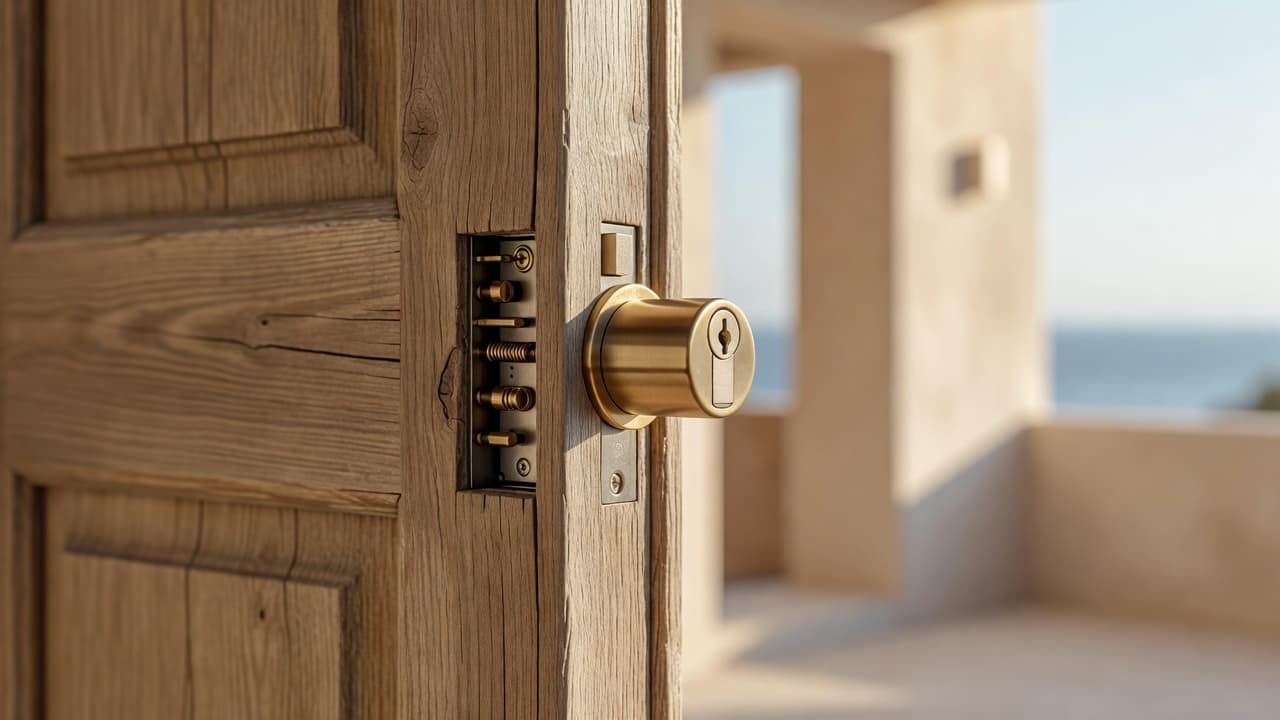
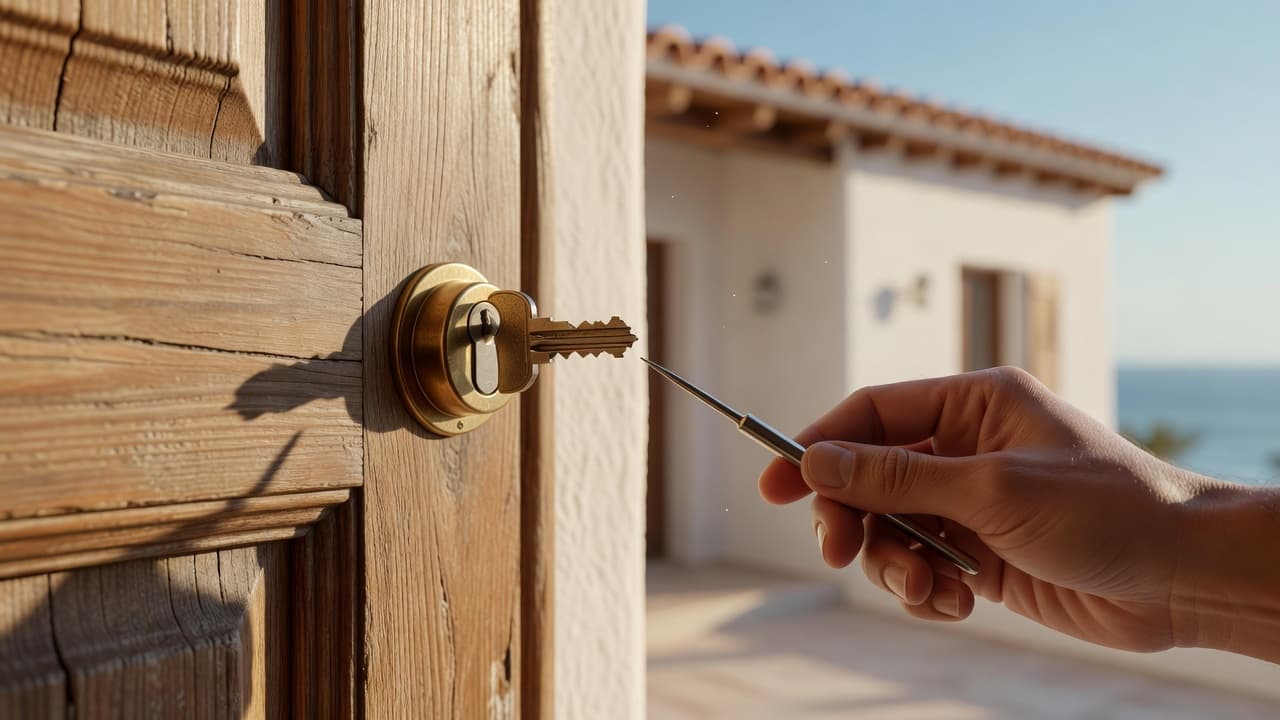
Insurers use lock standards as a proxy for security. A lock that's easy to snap, bump, or pick is a financial liability to them. If you've left your home vulnerable, and then you're burgled, the insurer can argue that the break-in was easier because you didn't maintain the minimum security standard they asked for. In Spain, where many properties are second homes or holiday lets that sit empty for months, this matters a lot.
The UNE 16107 standard is a European specification that tests how resistant a cylinder lock is to:
- Snap attacks (trying to break the key part off the lock).
- Picking (manipulating the internal pins).
- Bumping (a technique using a specially cut key and a hammer blow).
- Drilling (trying to breach the mechanism with a drill).
A compliant lock must resist these attacks for a defined period under controlled force. It's not about being "the best lock in the world" — it's about meeting a minimum baseline that insurers have agreed is reasonable.
Older cylinder locks (particularly those in homes built before 2010) often don't meet UNE 16107. They were never tested to this standard because the standard itself only became widespread in the last 15 years. If you're in an older property or have inherited a lock from the previous owner, there's a decent chance it doesn't comply.
This is the step you cannot skip. Insurance policies vary, and different underwriters have different security clauses.
Where to look:
- Open your policy document and search for keywords: "lock", "security", "burglary", "cylinder", "standard", "UNE", "protection".
- Look in the "General Conditions", "Exceptions", or "Conditions Precedent" sections.
- If you have a digital policy, use Ctrl+F (or Cmd+F on Mac) to search.
What you're looking for:
- Does it mention a specific standard (e.g., "UNE 16107", "EN 1303", "BS 3621")?
- Does it require locks on all external doors, or just the front door?
- Does it specify a minimum number of pins (e.g., "5-pin cylinder minimum")?
- Does it say locks must be changed every X years?
- Are there exceptions for certain door types (e.g., patio doors, secondary properties)?
If you can't find this information:
Call your insurer directly. Have your policy number ready. Ask specifically:
"What lock standard or specification does my home insurance policy require for the main entrance and any other external doors?"
Write down their answer and ask them to send it to you in writing (email is fine). This creates a record if there's a dispute later.
You may see several standards mentioned in Spain and across Europe. Here's what they mean:
UNE 16107 — The Spanish/European standard for anti-snap cylinders. Tests resistance to snapping attacks, picking, bumping, and drilling. Most common requirement on Spanish insurance policies.
EN 1303 — An older European standard. Still acceptable to some insurers, but UNE 16107 is now preferred.
BS 3621 — British standard. Some UK expats with UK insurance might see this. Not always recognised by Spanish insurers.
5-pin cylinder minimum — A rough measure of lock complexity (more pins = harder to pick). UNE 16107 locks are typically 5-pin or higher, but pin count alone doesn't guarantee compliance.
Grade 2 or Grade 3 locks — American grading system. Less common in Spain, but sometimes mentioned. Grade 3 is better than Grade 2.
The practical point: If your policy says "UNE 16107" or "anti-snap cylinder", you know exactly what to ask the locksmith for. If it's vague ("a good quality lock"), that's a red flag — push back and get a clear standard in writing from the insurer.
If your lock is damaged and you're waiting for a replacement, you need to secure the door in the meantime.
- Use a temporary padlock or chain lock on the inside of the door if possible. This is only suitable for a few hours or overnight, not a permanent solution.
- Close internal doors and lock them if your insurance allows you to claim a loss if only a room is entered (some policies require this).
- Don't leave the door unsecured, even for an hour. If you're burgled while a lock is broken and you haven't notified your insurer, they may refuse the claim entirely.
- Contact a locksmith immediately. Most locksmiths on the Mediterranean coast can attend within 24–48 hours, even for non-emergencies.
Do not attempt to:
- Drill out a broken lock yourself unless you're confident you won't damage the door frame. If you damage the frame, you may have to replace the entire lock assembly, not just the cylinder.
- Force a stiff lock with oil or lubricant spray as a permanent fix. This masks a mechanical problem and may make it worse.
- Install a lock you're unsure meets UNE 16107 standard. If you fit a non-compliant lock and your insurer later rejects a claim, you've created a costly problem.
- Ignore a lock that's sticking, grinding, or partially seized. This is a sign of internal wear. Get it inspected by a professional.
When to call a locksmith immediately:
- Your lock is broken and you cannot secure the door.
- Your lock has been forced or shows signs of tampering.
- Your key no longer turns smoothly or requires excessive force.
- You've lost all keys and have no idea where the spare is.
- You're moving into a property and don't know who has copies of the keys.
A professional locksmith will:
- Inspect the current lock and photograph it for your records. They'll identify the type, approximate age, and whether it appears to meet UNE 16107.
- Ask you to provide your insurance policy requirement (ideally in writing, or they'll note what you tell them).
- Discuss options: Replace just the cylinder (the rotating barrel), or replace the entire lock assembly. A cylinder replacement is cheaper and often sufficient. A full lock replacement is necessary if the door frame is damaged or if the lock body itself is worn.
- Remove the old lock carefully so the door isn't left unsecured. This usually takes 10–20 minutes.
- Install the new lock, test it with the new keys, and provide you with the invoice showing the lock standard (e.g., "UNE 16107 anti-snap cylinder").
- Hand you the invoice and any warranty documentation. This is your proof of compliance for your insurer.
The entire job typically takes 30–60 minutes for a single lock. Cost varies by region and lock type, but a UNE 16107-compliant cylinder replacement usually costs between €60–150, or €150–300 if the entire lock assembly needs replacing.
Notify your insurer:
Send them a written message (email or letter) that says:
"I have replaced the lock on [property address] with a UNE 16107 anti-snap cylinder lock on [date]. Attached is the locksmith's invoice as proof. I am writing to confirm that the property now meets the security requirements of my policy."
Attach a copy of the locksmith's invoice. Keep copies of everything.
Why this matters: If you ever make a claim and there's any dispute about the lock, you have documentary proof that you complied with the policy requirement at the time of the incident. Without this, the insurer has leverage to argue non-compliance.
Update your records: If you have a home inventory or security log, note the date and type of lock installed. If you ever sell or rent the property, this information will be valuable to the new owner or tenant.
Get on a maintenance schedule:
- Every 3–5 years, have your external locks inspected by a locksmith. They can spot wear that you'll miss. This is especially important in coastal areas (Costa Blanca, Costa del Sol, Balearics, etc.) where salt air corrodes metal faster.
- If you're renting the property or using it as a holiday let, inspect locks before each season.
Know who has keys:
- Keep a list of who you've given keys to (family, cleaners, gardeners, etc.).
- If someone moves out or leaves your employ, ask for the key back and change the locks if there's any doubt.
- Never assume the previous owner has returned all copies when you buy a property. Change the locks.
For holiday homes or long absences:
- Consider a secondary security device (e.g., a door brace or wedge) that you can fit from the inside on arrival.
- Ask a trusted neighbour or property manager to check the property monthly if it's empty for extended periods.
- Take a photo of your locked door each time you leave, as a record of the lock's condition.
A compliant lock is not a luxury or a bureaucratic hassle — it's the foundation of your insurance protection. If you're unsure what your policy requires, contact your insurer today and get a clear answer in writing. If your current locks don't match, a professional locksmith on Spain's Mediterranean coast can inspect them and advise on the quickest, most cost-effective upgrade. Once it's done, keep the paperwork. It's the evidence that will protect you if something goes wrong.