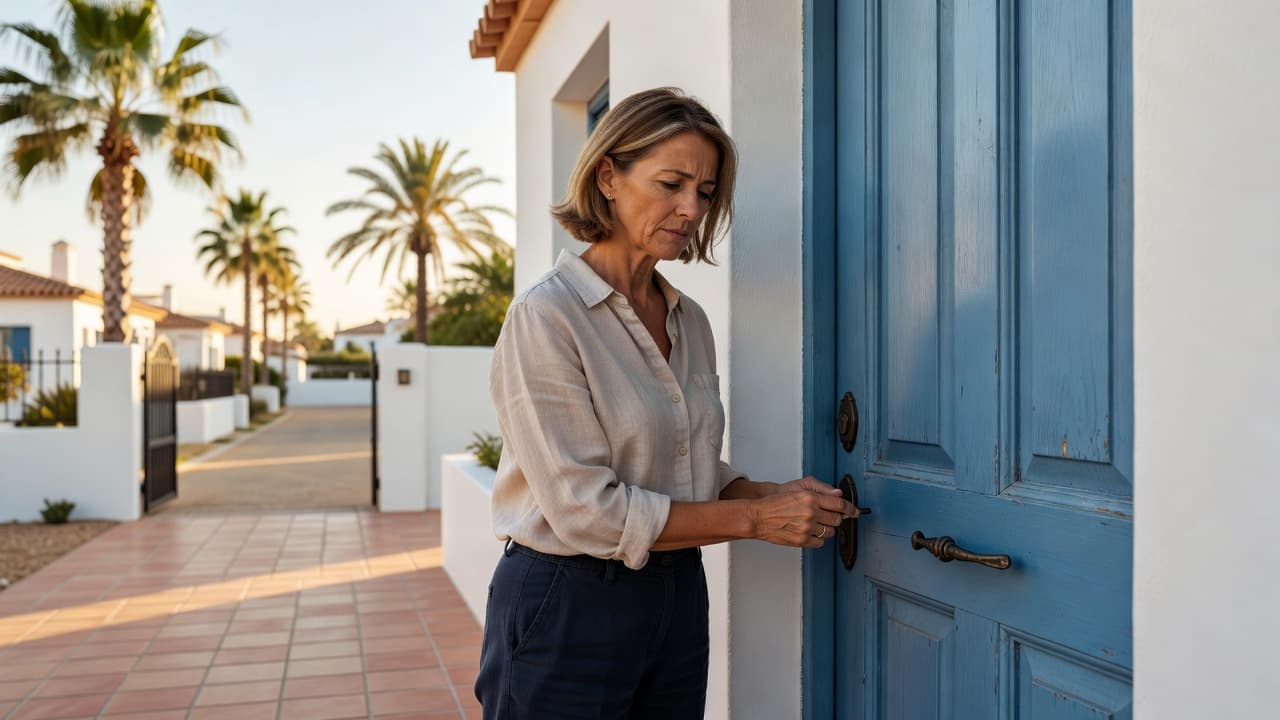
Holiday home doors fail to open for a handful of predictable reasons, especially on Spain's Mediterranean coast.
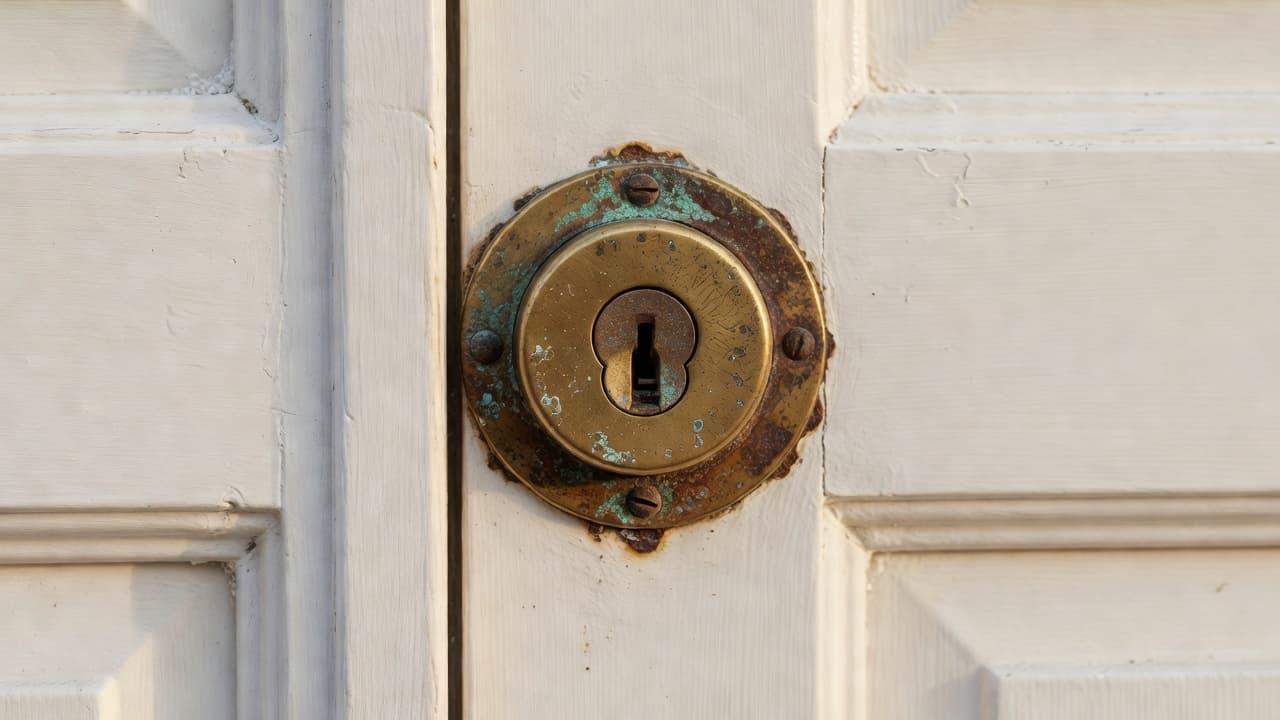
Salt air corrosion. If your property is within 2–3 kilometres of the sea—and most Costa Blanca and Costa del Sol homes are—airborne salt particles settle on metal parts. Over weeks of absence, they corrode the fine pins and springs inside the lock cylinder. The key still fits, but it can't move the internal mechanism smoothly. This is the most common cause in coastal urbanisations.
Key wear. If you've used the same key for years, the teeth flatten slightly. The older the key, the more likely this is. When corrosion or debris is also present, a worn key won't grip the internal pins firmly enough to turn the cylinder.
Debris or dust inside the lock. Holiday homes unused for weeks accumulate fine dust. If moisture is present—from a burst pipe, condensation, or nearby irrigation—dust turns into a paste that blocks the mechanism.
Lock cylinder misalignment. If your door frame has settled or expanded due to heat and humidity (common in older Spanish villas), the door may press slightly harder against the frame. This can tilt the internal lock cylinder just enough that the key won't slide in fully or won't turn.
Humidity and moisture. Closed Mediterranean homes in summer can reach 70–80% relative humidity inside. Moisture inside the lock promotes rust on the pins and corrosion of the keyway.
You can take steps to free up a stuck lock without risking damage.
Dry graphite spray. This is your safest bet. Unlike oil-based lubricants, graphite doesn't attract dust and won't worsen corrosion. Spray a short burst into the keyhole, wait 30 seconds, and try the key with gentle, steady pressure (not force). Repeat once more if needed.
Wiggle the door frame slightly. Sometimes the door frame has swollen from humidity, pressing the lock slightly out of alignment. Try pushing gently upward on the door while turning the key—this can ease pressure on the cylinder. Do this cautiously; don't force it.
Heat the key gently. If the key is extremely cold and the lock is corroded, thermal expansion can help. Warm the key under your arm or in your pocket for a minute, then try again. Don't use hot water or a lighter—you risk damaging the key or yourself.
Clean the keyway. If you can see debris in the lock opening, use a clean, dry cloth or soft brush to gently clear the visible part of the keyway. Don't insert anything hard or pointed—you could scrape the cylinder.
Stop immediately and call a locksmith if:
- The key breaks or snaps inside the lock.
- The key turns but the door doesn't open (the lock is working but the mechanism behind it is broken).
- You see visible rust, corrosion, or crystalline deposits in the keyway.
- The key gets stuck halfway in and won't come out.
- You've tried the spare key and it also won't work—this suggests a problem with the lock itself, not the key.
- The key turns but there's a grinding or crunching sound inside the lock.
- You're renting the property or it's managed by a community (comunidad de vecinos) and you should notify the owner or manager before attempting anything.
In any of these cases, forcing the issue will almost certainly cause damage you'll have to pay to repair. A locksmith visit costs 80–150 euros on average; a damaged lock mechanism can cost 200+ euros to replace.
When you call, have these details ready: your address, which door (front, patio, garage), and roughly when you last opened it successfully. Most locksmiths on the Mediterranean coast work in Spanish, English, German, and Dutch—but confirm when you call.
A locksmith will arrive with tools to open the door non-destructively. If the lock is simply jammed, they'll apply specialist lubricants or gentle pressure techniques to free it. If the lock cylinder is corroded beyond use, they'll remove the old lock and fit a replacement—usually a European cylinder lock (bombín europeo), which is standard in Spanish homes. The process typically takes 15–45 minutes depending on severity.
They'll hand you new keys and, if necessary, a document showing the lock type and your new key code. If the lock was damaged, take photographs for your insurer if relevant. Ask the locksmith to recommend preventive measures for next time, such as a protective spray for coastal properties.
If the door itself is also damaged (forced hinges, cracked frame), you'll need a handyman for repairs, but the locksmith will assess this and advise.
Prevention is simple for holiday home owners.
Before you leave, clean and dry the lock area thoroughly. If you have a dry graphite spray, apply a light coat to the lock cylinder. This creates a barrier against salt and moisture.
Every few months, especially if you live on the coast, apply a protective spray designed for coastal metal fixtures. These are inexpensive (5–15 euros) and available online or at Spanish DIY retailers.
Spare keys. Keep one spare with a trusted neighbour or friend in Spain, and one at home. Don't leave spares in the property itself—a stuck door won't help you access them.
Test your key on arrival or departure, before you're in a rush. If it's starting to stick, mention it to a local handyman or locksmith who can service it before it becomes unusable.
Humidity control. If you're away for extended periods, ensure windows and doors are slightly ajar for ventilation (if security allows), or use a small dehumidifier. High humidity accelerates corrosion dramatically.
Consider a keypad or smart lock if you visit frequently. Modern battery-operated locks are weatherproof and eliminate key wear. Installation costs 200–400 euros but pays for itself in saved locksmith calls.
Stuck doors are frustrating, but they're rarely emergencies. Most can be freed safely within the hour if you don't force them. If you're on Spain's Mediterranean coast and need a locksmith who speaks your language and understands the specific challenges of holiday homes in coastal areas, our network of professional locksmiths across Spain's coast is here to help. Get in touch for a quick assessment and a fair quote.