Before investigating faults, understand what drives AC costs up naturally.
Heat waves last longer. A particularly hot summer means your AC runs more days and more hours. If your region experienced record temperatures in July, your bill will reflect that — it's not a fault, just climate.
Your usage habits changed. Perhaps someone is working from home now, or a guest stayed for weeks, meaning the AC ran during the day instead of only in the evening. Or you've set the temperature lower than before without noticing.
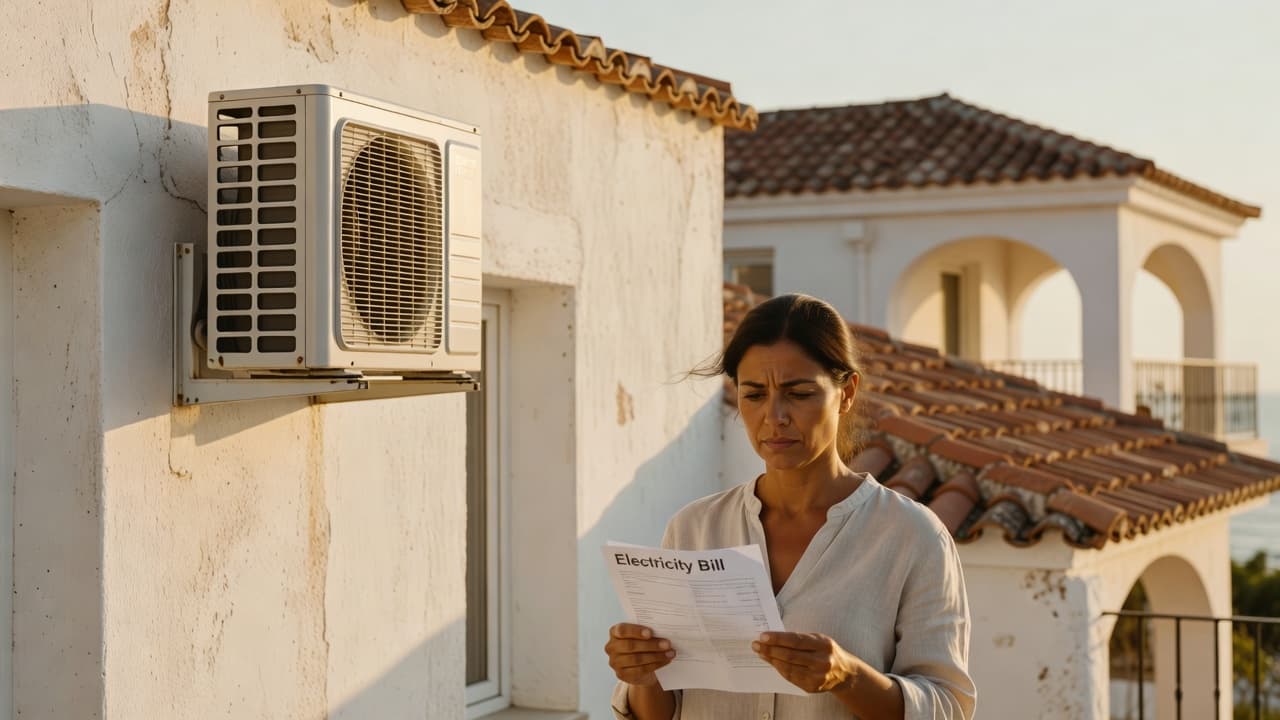
The outdoor unit is in direct sun all day. If your air conditioner's condenser (the outdoor box) sits in full sun or against a hot wall, it works harder because it can't dissipate heat efficiently. This is normal but wasteful. Temporary shade (a parasol, a light cover) can help until autumn.
The filters are clogged. Coastal air contains salt and dust. Mediterranean homes can accumulate debris in filters quickly, especially if you live near the sea or in a busy area. A blocked filter forces the compressor to work harder to push air through, using more electricity.
The refrigerant is low. This is an actual fault. Refrigerant doesn't "run out" under normal use — if levels are dropping, there's a leak. This forces the compressor to cycle longer and harder to achieve cooling.
The unit is old. Older air conditioning systems, especially those 10+ years old, lose efficiency. They run longer to reach the same temperature. If your unit is original to the property and you don't know its age, this could be the cause.
The thermostat is faulty. If the thermostat no longer switches the unit off when the room reaches the set temperature, the AC runs all the time. You may not hear the difference in sound, but your bill will scream it.
Clean or replace the indoor filter. Most wall-mounted split units have a removable filter panel at the bottom or side. Open it — the filter will be white, gray, or black with dust. If it's visibly clogged, gently vacuum it with a soft brush attachment, or replace it with a new filter of the same size (usually cost 10–20 euros, available from electrical suppliers or online). This alone can restore efficiency by 15–20%.
Check that nothing is blocking the outdoor unit. If you can see the condenser (the chunky outdoor box, usually on the ground, a balcony, or mounted high on the wall), make sure there are no leaves, debris, or furniture within 50 cm of it. The unit needs air flow to release heat. Clear any obstructions.
Ensure the indoor unit's air outlets aren't blocked. Check that curtains, furniture, or closed vents aren't restricting air flow from the wall unit. Open the room fully so the cooled air can circulate.
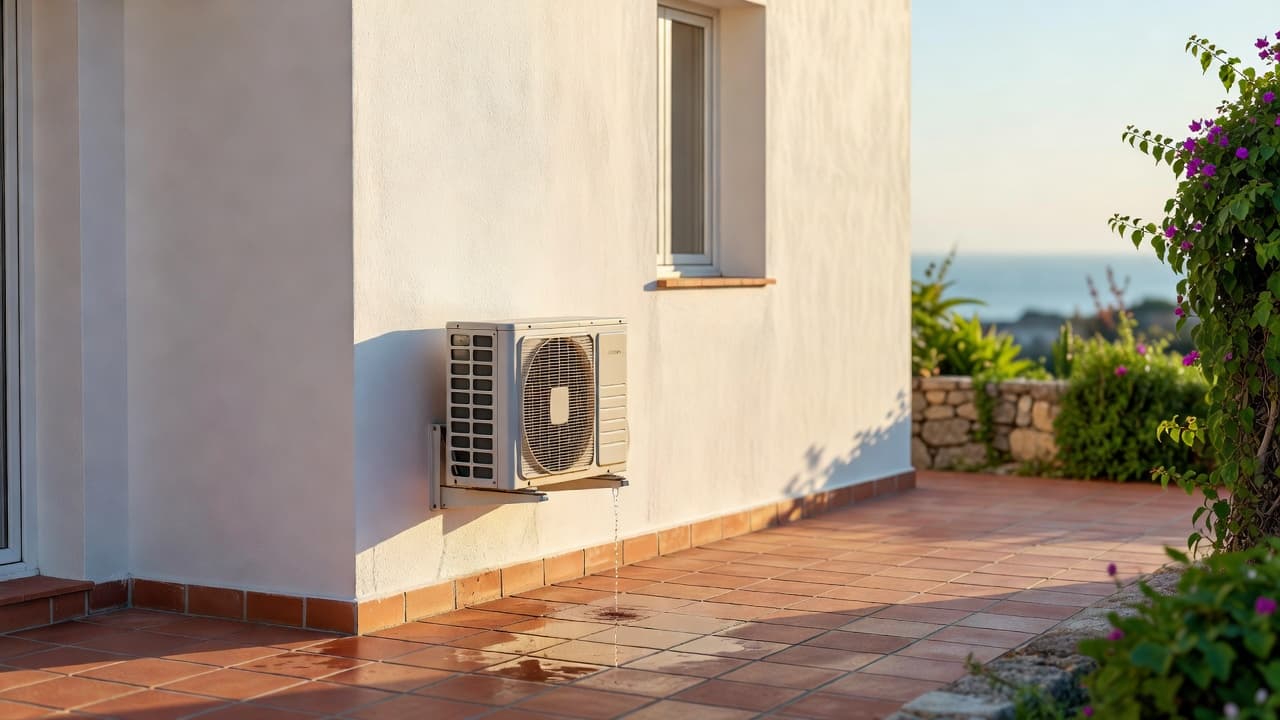
Check the drainage outlet. Most indoor units have a small pipe or drain hole (often at the bottom edge) that lets condensation escape. If this is blocked, water backs up inside the unit and the system shuts down or runs very inefficiently. Look for water pooling or a blocked drain pipe. If you see a blockage, you'll need a technician to clear it safely.
Make sure all windows and doors are closed. AC units are very inefficient if you're cooling a space while a door or window is open. Check all rooms in regular use — sometimes a window is left ajar and you don't notice.
Use the eco or sleep mode. Most modern units have an economy setting that runs the compressor less aggressively, saving 20–30% electricity with barely any impact on comfort. Check your remote control or app for this option.
Stop immediately and call a technician if:
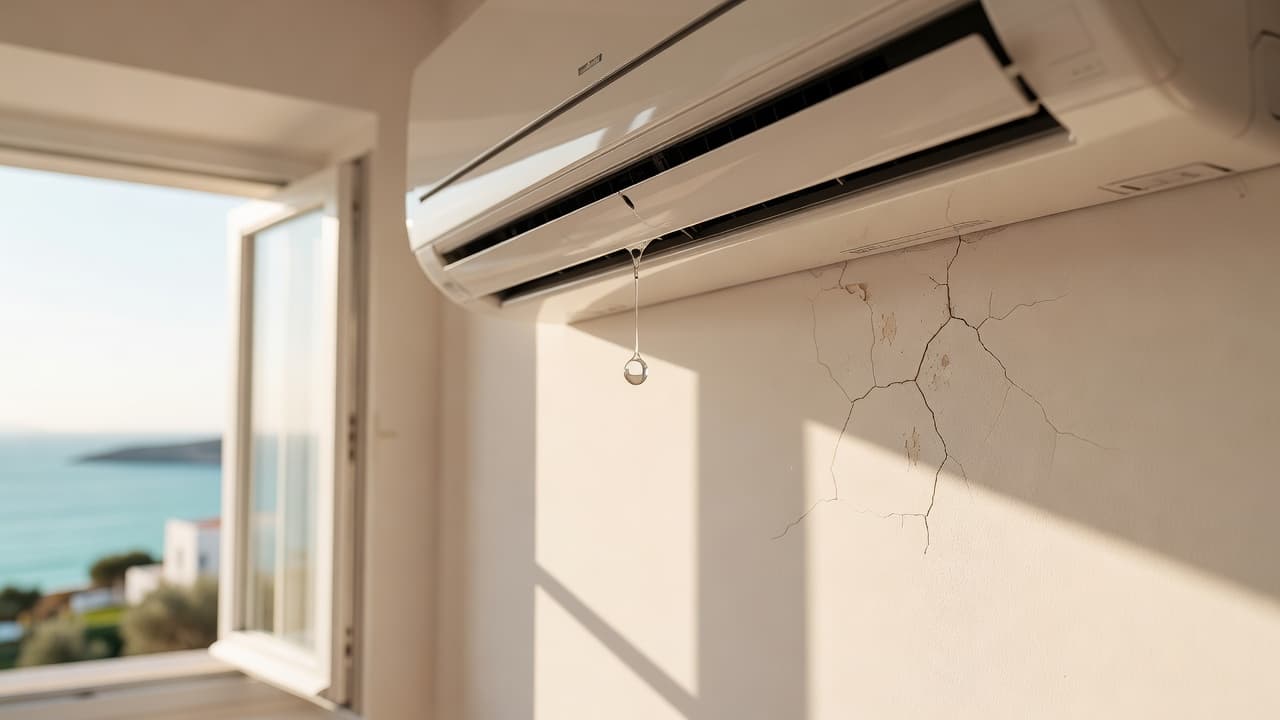
- You see water pooling inside the unit or dripping from joints. This suggests internal corrosion, frozen coils, or a failed condensation pump. Don't pour water or attempt to clear it yourself.
- The unit makes grinding, squealing, or rattling noises. These signal bearing problems, internal component failure, or loose parts. Running it further risks expensive damage.
- You detect a chemical smell (sweet, sharp, or like rotting food) from the indoor unit. This can indicate refrigerant leaks or mold in the system. Refrigerant is hazardous and must be handled by a licensed technician. Mold requires professional cleaning.
- The outdoor unit is visibly cracked, corroded, or dented. Salt air on the Mediterranean coast can damage the condenser casing. Don't attempt to repair it — the risk of electric shock or gas exposure is real.
- The compressor (outdoor unit) doesn't make any sound when the AC is set to cool. This may indicate an electrical fault or a failed compressor. Turn the unit off and wait for a technician.
- You notice the electricity meter spinning noticeably faster than usual when the AC is on. This suggests an electrical fault beyond the AC unit itself — call an electrician, not just an AC technician.
In any of these cases, turn off the AC at the wall switch, note what you observed, and contact an air conditioning technician. Do not attempt to open the unit, touch refrigerant lines, or reset internal components yourself.
When you call in a professional, they'll follow a standard diagnostic process.
First, they'll check the filter, coils, and drainage. A blocked filter or clogged drain is the easiest fix — clean or replace, done in 15 minutes. If the coils are dirty, they'll clean them with specialised equipment (this is why you can't do it yourself — it requires pressurised water and care not to bend the delicate fins). This alone often restores the unit's efficiency and cuts electricity use noticeably.
Next, they'll use a gauge to check the refrigerant pressure. If it's low, they'll test for leaks using a leak detector. They may add refrigerant as a temporary measure, but if there's a leak, they'll need to locate and seal it (usually a joint or the condenser) before refilling. Refrigerant handling is strictly licensed work — you'll be asked for your ID and they'll issue a certificate.
They'll also test the thermostat, check electrical connections, and listen to the compressor. If the compressor is failing, replacement is usually the most expensive outcome, often 500–1,500 euros depending on the unit's age and size. Most technicians will help you decide whether to repair or replace based on the unit's age and the cost of repair.
Finally, they'll set the unit to default settings, run it for 15 minutes, and give you a written report and any spare parts or documentation (such as a refrigerant certificate if they've added gas). Keep this paperwork.
Set the thermostat to 23–24°C and leave it there. Every degree lower increases running costs by roughly 8%. At 23°C, most people remain comfortable, especially with air flow from the unit.
Service the unit every 18 months. A professional clean, filter check, and condenser inspection cost around 100–150 euros but will save you far more in wasted electricity. It also catches small issues before they become expensive faults.
Use a timer or the unit's sleep function. If you're away during the day, set the AC to come on 30 minutes before you return home rather than running all day. Many modern units have app controls that let you switch this on from anywhere.
Close blinds or shutters during the hottest hours. This reduces the heat your AC has to fight, especially in rooms with south-facing windows. Mediterranean homes often have shutters (persianas) — use them between 11:00 and 17:00 on very hot days.
Have the outdoor unit cleaned once a year. In coastal areas where salt spray settles on the condenser, a yearly rinse and inspection help the unit release heat more efficiently. Some installers offer maintenance contracts at 50–70 euros annually.
Don't run multiple units simultaneously. If your home has two AC units (one in the living room, one in the bedroom), cool only the rooms you're using. Running both units together can double your costs.
If your checks show that your filters are clean, the outdoor unit is unobstructed, and your thermostat settings are reasonable — yet the electricity bill is still far higher than last year — it's time to call an air conditioning technician. A refrigerant leak, a failed compressor, or a faulty thermostat won't improve on their own, and running an inefficient unit wastes money every single day.
Contact an air conditioning technician in your area to arrange a diagnostic visit. Most offer free initial assessments, and a professional can pinpoint the fault in under an hour. The cost of fixing a small leak or servicing the unit now is far less than paying inflated bills all summer long.