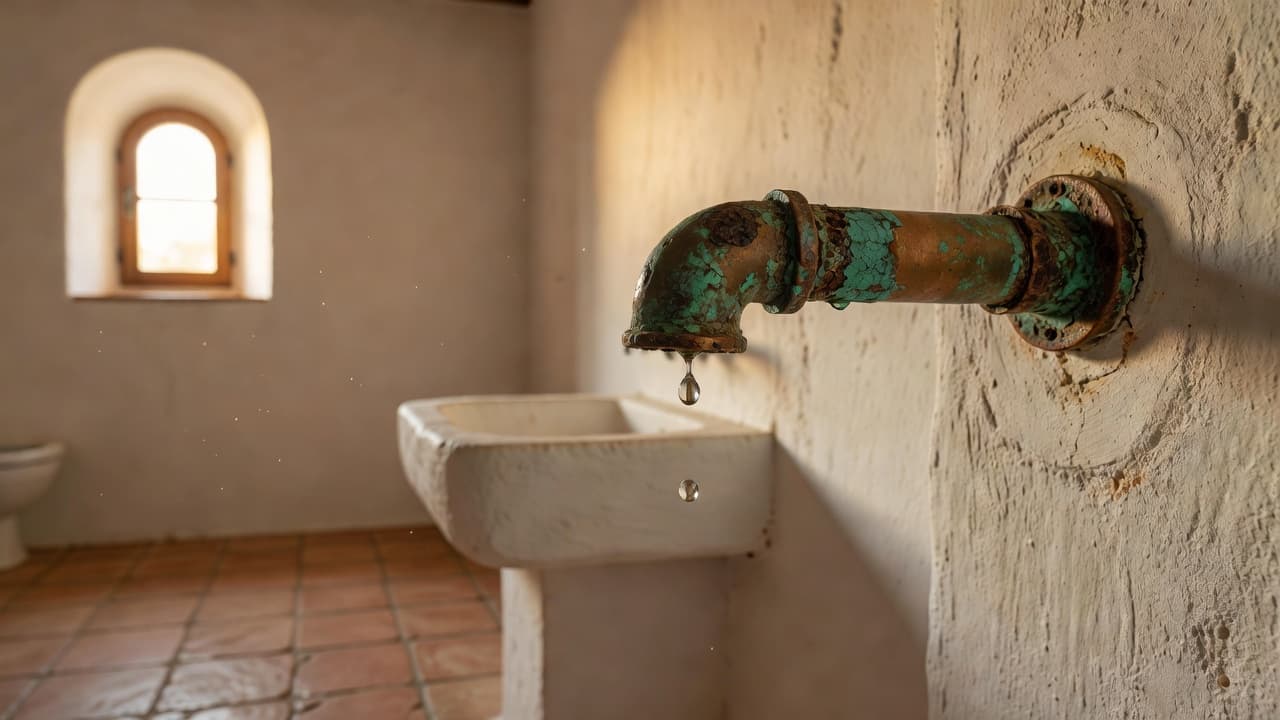
Water leaks in Mediterranean homes tend to appear in predictable places because of how old properties are constructed and how climate and corrosion affect pipes.
Under the floor. Many Spanish villas and older flats have water pipes embedded in concrete floors or buried in sand beneath ground-level rooms. When these corrode or come loose, water pools underneath without you seeing it until it seeps up through the tiles or causes soft patches in the floor.
Behind bathroom and kitchen walls. Pipes run inside walls to supply taps and showers. A pinhole leak or a cracked fitting inside a cavity wall can leak for months before water stains appear on the other side.
In external pipework. Pipes that run outside to a garden tap, or along the side of a villa, are exposed to UV, salt spray (if you're near the coast), and temperature extremes. Connections at joints corrode and split.
Under the property. In rural properties or villas with basements, supply pipes buried in the ground can crack from ground movement or tree root damage.
In the main stopcock itself. The stopcock (llave de paso general) — the valve that controls the main water supply to your home — can develop a slow leak at its seal, especially in older properties.
A hidden leak usually leaves traces before the water bill tells you there's a problem. Train yourself to spot them.
Damp patches on walls or ceilings. Irregular brown, yellow, or dark staining on plaster or paint often indicates water running down from a leak above. In bathrooms, check the ceiling below the floor where pipes might be.
Soft or bubbling plaster. Press your palm gently on walls and ceilings. If the plaster feels spongy or you can hear a soft crackle, water has saturated it from behind.
Tiles that feel loose or hollow. Tap gently along tiled surfaces. A normal tile sounds crisp; a loose or wet tile beneath sounds dull and hollow.
An unusually green or lush patch in your garden or on your patio. Water from a burst underground pipe will feed grass and plants directly above it, creating an obviously greener zone than the rest of the lawn.
A musty or damp smell. Hidden water encourages mould growth. If a room or cupboard smells unpleasantly damp even when it's not humid, investigate.
The sound of running water when taps are off. If you hear a faint hissing or trickling sound from within walls or floors when everything is switched off, water is escaping somewhere.
Hairline cracks in walls or ceilings. Water inside cavities can weaken plaster and drywall. New cracks, especially in interior walls, may point to water damage.
Do not attempt to dig, drill, or open walls to find or repair a hidden leak. Here's why:
- You might make it worse. Drilling through a wall to investigate could puncture a pipe, turning a small leak into a major flood.
- The damage might be structural. Water weakens concrete and plaster. If you see significant soft patches, cracking, or bulging, the wall integrity is already compromised.
- Mould may be present. Trapped water encourages toxic mould growth inside walls. Disturbing it without proper ventilation is a health risk.
- You won't know where the leak actually is. Without professional equipment, you're guessing. A plumber uses acoustic leak detectors or thermal imaging to pinpoint the exact location without destruction.
If you suspect a leak behind a wall, under a floor, or in the garden, call a professional immediately. The cost of leak detection now is far less than the cost of repairing water damage, replacing rotted timber, or dealing with mould remediation later.
Until the professional arrives, take these precautions to limit water damage.
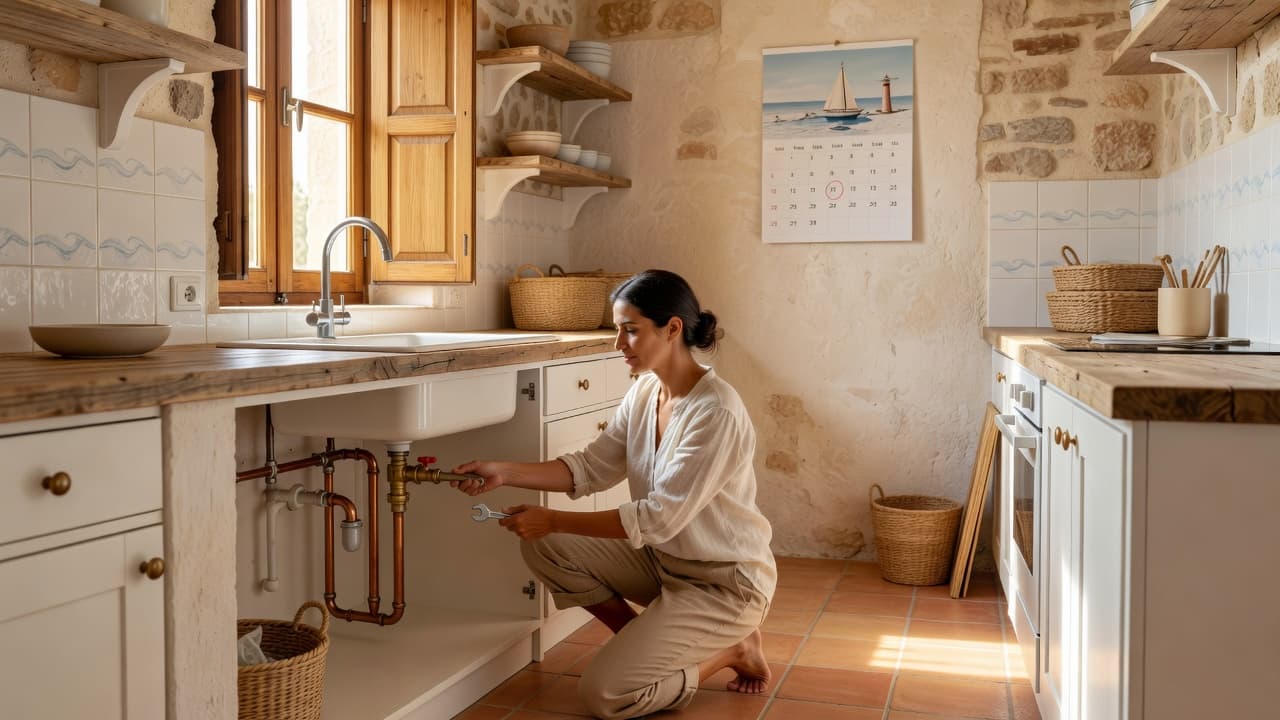
Turn off the main stopcock if the leak is inside the house. The stopcock controls water to the entire property. Opening it stops all water flow, preventing the leak from continuing to damage walls or floors. It's usually a small tap or lever under the kitchen sink, in a bathroom cupboard, or on the landing near where the water pipe enters the property. Turn it clockwise (or pull the lever handle towards the pipe) to close it. If you can't find it, ask your neighbours or check your property paperwork.
Take photographs of any damp, staining, or damage. Document the extent of the water damage with dates. This is useful for insurance claims and gives the plumber a record of the problem's progression.
Open windows and doors to promote air circulation. This slows mould growth while you wait. If you have portable dehumidifiers, use them in affected rooms.
Do not use hot water. If the leak is in a hot water pipe, using hot water will continue to feed the problem.
Move belongings away from affected areas. Books, electronics, furniture, and personal items absorb water. Get them away from damp spots.
When the plumber arrives, they'll follow a logical process to find and repair the leak.
First, they'll confirm the leak location. Using acoustic detection equipment (which listens for the sound of escaping water through pipes) or thermal imaging cameras, they'll narrow down the exact location without needing to open walls unnecessarily. This is the step that saves money by eliminating guesswork.
They'll access the leak. Depending on where it is, they may need to carefully remove a section of floor, open a wall cavity, or dig a small trench in the garden. They'll work to minimise damage.
They'll repair or replace the damaged pipe. Small pinhole leaks can sometimes be repaired with specialised couplings; larger damage typically requires a section of pipe to be cut out and replaced with new copper or plastic pipe. For garden leaks, they may re-route the pipe above ground or replace buried sections.
They'll test the system. Before leaving, they'll run water through the repaired section and check the meter to confirm the leak has stopped.
They'll issue documentation. Ask for an invoice and a description of what was repaired. If the repair involved significant work, ask whether a certificate (boletín) is available.
Hidden leaks are sometimes unavoidable in older homes, but you can reduce the risk.
Check your meter monthly. Set a reminder to photograph the meter reading on the same day each month. A sudden jump indicates a new leak.
Have old copper pipes inspected if you're in a coastal property. Salt air accelerates corrosion. If your home is more than 20 years old and near the sea, ask a plumber whether your external pipework should be replaced or upgraded.
Don't ignore damp or soft patches. The moment you notice unusual dampness, investigate. Early detection saves tens of thousands in repair costs.
Know where your stopcock is. In an emergency, you need to be able to shut off water immediately. If you don't know, find it now and practice opening and closing it.
Register for your water company's online account. Most Spanish water utilities let you view daily consumption. You'll spot leaks faster than waiting for a bill.
A hidden leak is frustrating, but it's not a problem you should ignore or try to solve alone. The meter test takes five minutes and gives you a definitive answer. If the meter moves when nothing is running, you have a leak, and a qualified plumber with leak detection equipment will find it faster and cheaper than you trying to guess.
The sooner you act, the sooner you stop wasting water and money, and the less damage your home will suffer.
If you suspect a hidden leak in your Mediterranean home, get in touch with a plumber now. Most of our approved professionals can attend within 48 hours and carry acoustic detection equipment to pinpoint the problem without unnecessary damage.