A gas boiler burns fuel to create heat, which it delivers to radiators and hot water via pipes. It's a direct, straightforward system you've probably used for decades.
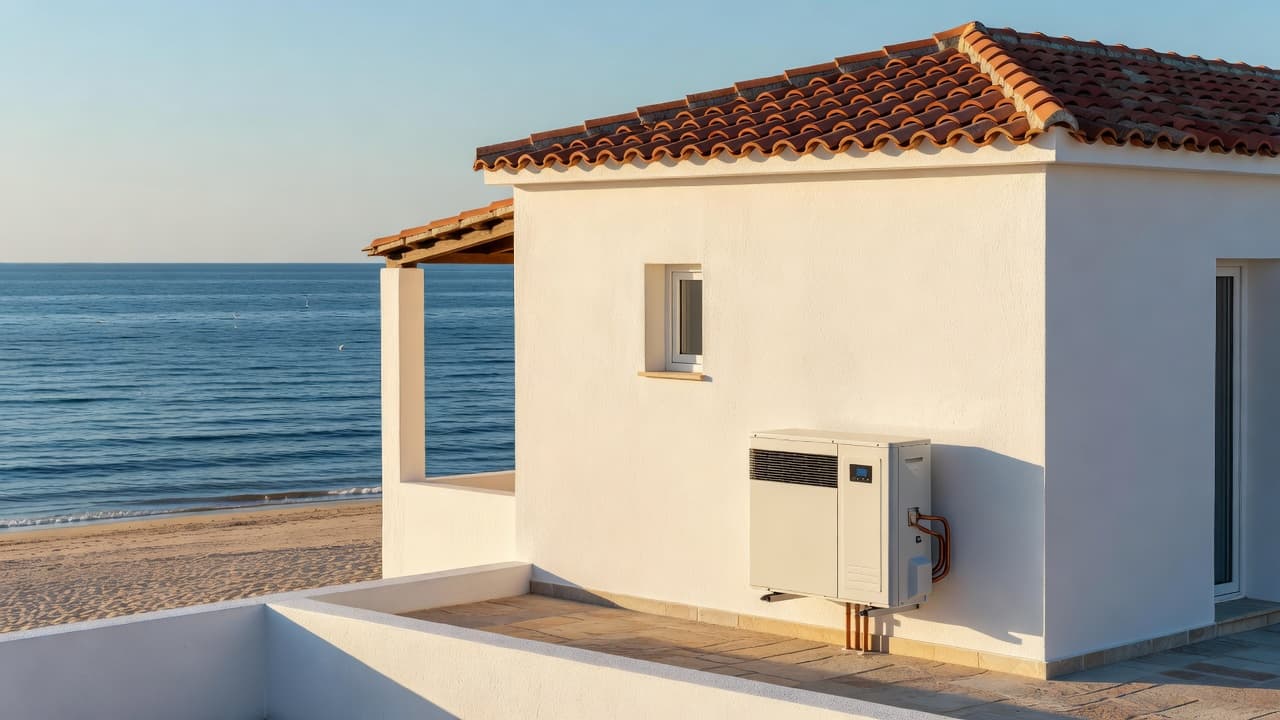
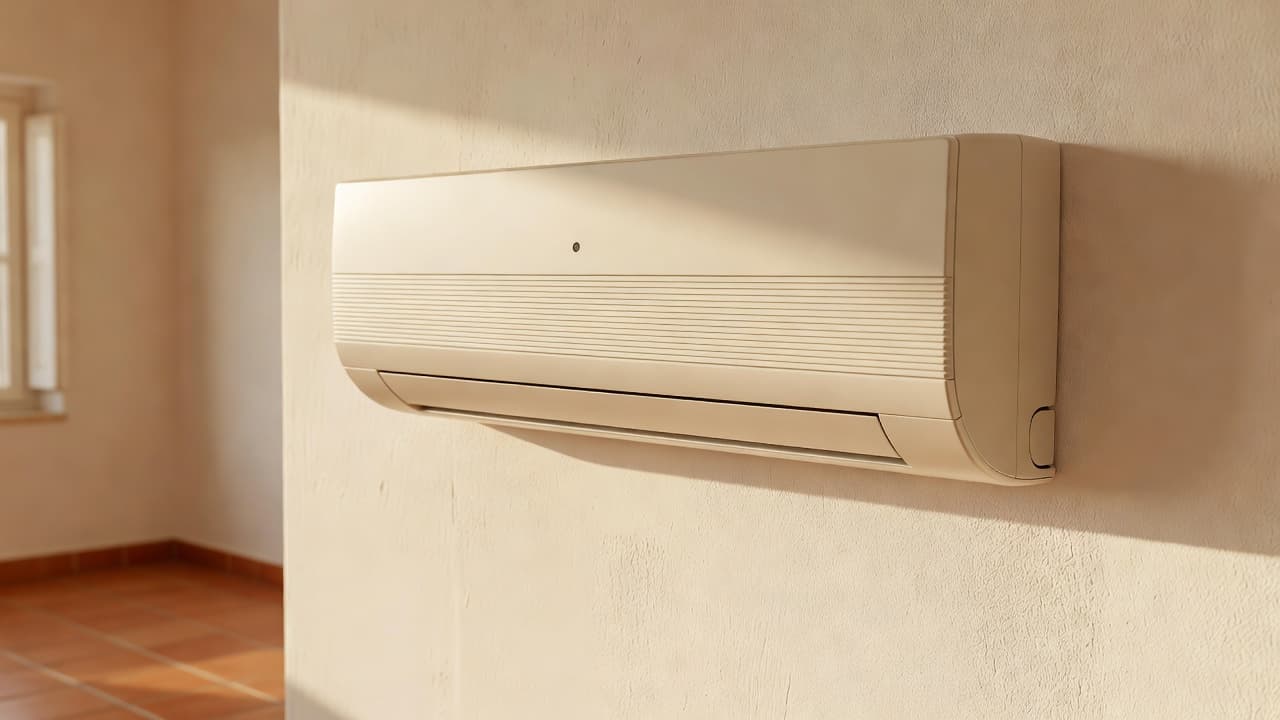
A heat pump is an air-conditioning unit reversed. It extracts heat from outside air (even cold air) using refrigerant, concentrates it, and delivers it to your home via radiators, underfloor heating, or a fan coil unit. In summer, it reverses to cool. In winter, it heats.
This fundamental difference affects almost everything else.
A heat pump's efficiency depends on the temperature difference between outside and inside. In northern Europe, where outdoor temperatures drop to −5°C or below, the system has to work harder and uses more electricity to extract and concentrate heat. In the Mediterranean, winter temperatures rarely drop below 5°C on the coast, and daytime highs often reach 12–16°C. This is the ideal operating range for a heat pump.
A gas boiler, by contrast, works equally hard whether it's −10°C or 10°C outside. It burns fuel at the same rate.
In practical terms: on the Mediterranean coast, a heat pump typically runs at 70–80% of the energy it would use in northern Europe for the same heating output. Your electricity bill for heating drops significantly compared to gas.
Gas boilers, meanwhile, produce the same running costs regardless of climate.
Let's use a typical 3-bedroom villa in an urbanisation on the Costa Blanca as an example. Heating demand is moderate: roughly 6–7 months of occasional use, with winter temperatures mild.
Heat pump system:
- Electricity cost (assuming a heat pump COP of 3.5–4.0 in mild climates): approximately €400–€550 per heating season.
- Low maintenance: annual checks recommended, but no expensive servicing.
- Summer cooling included (no separate air-con cost).
Gas boiler system:
- Gas cost (mains or cylinder): approximately €600–€800 per heating season.
- Annual maintenance required: around €150–€250 per year for safety checks.
- No summer cooling; if you need it, add a separate unit (€3,000–€6,000 installed).
Over 5 years, assuming no major breakdown, a heat pump will cost approximately €2,000–€2,750 in fuel and maintenance combined. A gas boiler will cost €3,750–€5,000 (and you'll likely need to add air-con). The heat pump is ahead by €1,500–€2,250.
These figures assume UK-level electricity prices. Spain's rates are competitive, so the advantage widens.
Heat pump: €4,000–€8,000 fitted (air source unit, pipework, new fan coil or radiator modifications, electrical upgrades).
Gas boiler: €2,000–€4,000 fitted.
The heat pump costs more upfront, but the payback period on your lower running costs is typically 5–8 years. After that, you're saving €200–€300 per year.
However, installation cost varies widely depending on:
- Your home's existing radiator system. If you have modern aluminium radiators and good pipework, the cost is lower. Old cast-iron radiators work with heat pumps but at reduced efficiency; you might want to upgrade some, adding €2,000–€3,000.
- Electrical upgrades. Heat pumps draw more power than boilers. If your home's electrical installation (cuadro eléctrico) is old or already overloaded (especially if you run air-con heavily), the electrician may need to upgrade the main supply, adding €1,000–€2,500.
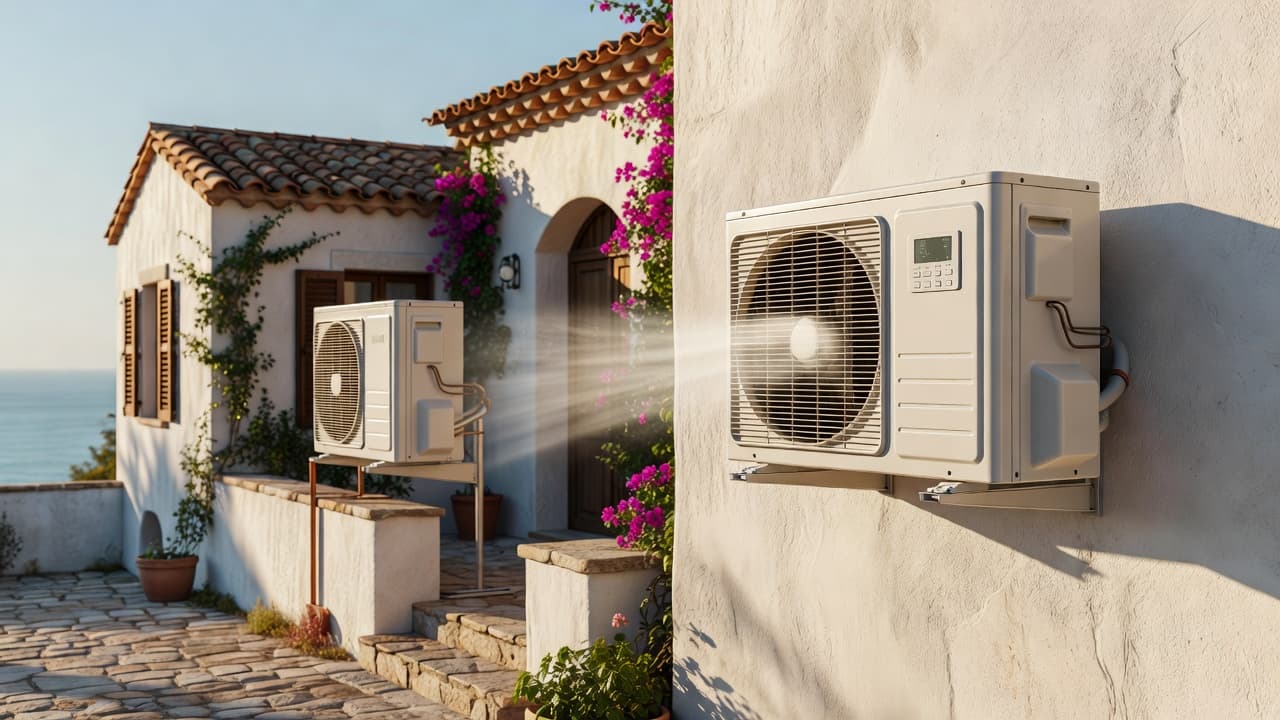
- Outdoor space for the unit. The compressor needs a spot on an external wall with airflow. If you have a small balcony or no spare wall space, installation is more complex.
- Grants and tax relief. Some Spanish regions (Valencia, Andalucía) offer subsidies for heat pump installations (up to 30% in some cases). Check your local community authority (comunidad autónoma).
If your boiler has failed and you're considering a heat pump but installation takes weeks:
- Portable electric heaters (1,500–2,000W): safe if used on a dedicated outlet. Never use two at once on the same circuit. Cost: €30–€100, running cost €1–€2 per day.
- Infra-red panel heaters (wall-mounted): safer than fan heaters, no moving parts. Cost: €100–€300, lower running cost per room.
- Underfloor heating mats (if you have a small area like a bedroom): around €200–€500 installed, excellent for targeted warmth.
- Temporary gas heaters: only if well-ventilated and approved for indoor use. Not recommended in flats.
Do not:
- Leave portable heaters unattended.
- Use gas cookers or ovens for heating.
- Block heater vents.
- Run multiple high-wattage heaters on the same circuit.
Gas boilers require a qualified, licensed engineer (ingeniero instalador autorizado). Gas work is dangerous. Do not:
- Attempt to light the pilot yourself if it's gone out.
- Open any gas connections.
- Ignore a smell of gas (call the emergency gas line: 900 200 007 in Spain).
Heat pumps also require qualified installation. Do not:
- Open the refrigerant circuit.
- Attempt repairs yourself.
- Block the outdoor unit with plants or covers.
Warning signs that need immediate professional attention:
- Gas smell or hissing from the boiler.
- No spark or ignition after pressing reset.
- Water leaking from the boiler unit.
- Radiators not heating even if the boiler is on.
- Electrical breaker tripping repeatedly.
- Heat pump making unusual grinding or squealing noises.
- Frost accumulating on the heat pump's outdoor unit (normal in cold weather, but if excessive, the defrost cycle may be failing).
In any of these cases, cut off the supply (turn off the electrical isolation switch on the boiler or the main electrical panel), and call a professional within 24 hours.
A qualified heating engineer will:
- Drain and disconnect the old boiler (30–60 minutes).
- Install the new unit, connect it to pipework, gas supply, and electrical controls (2–3 hours).
- Commission the system: ignite the boiler, adjust pressure, bleed air from radiators, and test all controls.
- Provide an installation certificate (boletín de instalación) and a safety record. Keep this; you'll need it for insurance and future resale.
- Explain basic operation: how to reset if needed, where the main gas stopcock is, what the pressure gauge should read.
A new gas boiler typically warrants 2–5 years' parts and labour.
An air-con technician will:
- Install the outdoor compressor unit on a secure external wall (1–2 hours).
- Run refrigerant pipework inside the house (if not already present from an old air-con system).
- Install the indoor unit (usually a wall-mounted fan coil) or modify radiator connections (2–3 hours).
- Connect electrical controls and thermostat.
- Commission: test heating and cooling modes, check refrigerant pressure, verify controls.
- Provide a gas safety certificate (Boletín de gas), an electrical compliance certificate if wiring was upgraded, and operation instructions.
- Explain how to set the thermostat, what seasonal maintenance is needed (filter cleaning every 2–4 weeks during heavy use), and defrost-cycle behaviour in cold weather.
Heat pumps typically warrant 3–5 years on parts and labour, and 7–10 years on the compressor.
Both engineers should also:
- Advise on thermostat settings to maximize efficiency.
- Explain bleeding radiators or balancing the system.
- Provide emergency contact details.
If you want maximum flexibility and peace of mind, a hybrid system combines a heat pump and a gas boiler. The heat pump runs most of the year; on the coldest days (rare on the Mediterranean coast), or if the heat pump develops a fault, the gas boiler takes over automatically.
Cost: €6,000–€10,000 installed.
Benefit: you're not wholly dependent on one system. If the heat pump fails, you still have heat. If gas prices spike, you can rely on the pump.
Trade-off: higher upfront cost, slightly more complex maintenance, more wall space needed.
For most people on the Mediterranean coast, a hybrid is overkill. But if you're risk-averse or plan to stay long-term, it's worth considering.
Choose a heat pump if:
- You plan to stay 8+ years (the payback window).
- Your home is well-insulated or you're willing to improve insulation.
- You want summer cooling as well as winter heating.
- You have external wall space for the outdoor unit.
- Your electrical panel can handle the extra load (check with an electrician).
Stick with gas (or upgrade to a new boiler) if:
- You're in the property short-term (under 5 years).
- You want the lowest upfront cost.
- Your electrical system is old and upgrades would be expensive.
- You prefer a familiar, simple system.
- You have no suitable external wall for a heat pump unit.
Choose hybrid if:
- You want maximum reliability and flexibility.
- You have the budget and space.
- You're unsure about your long-term plans.
For a heat pump:
- Clean or replace the indoor filter every 2–4 weeks during heating or cooling season. Clogged filters reduce efficiency by 30%.
- Ensure the outdoor unit has at least 50cm clearance on all sides. Don't block it with plants, shutters (persianas), or rubbish bins.
- Have an annual service (around €80–€150) in autumn, before the heating season. The technician checks refrigerant pressure, electrical connections, and thermostat calibration.
- In very cold spells (rare), the system enters defrost mode, temporarily redirecting hot gas to the outdoor unit to melt frost. This is normal; the indoor heating pauses for 5–10 minutes. It's not a malfunction.
For a gas boiler:
- Have an annual safety inspection and service in autumn (€150–€250). It's often a legal requirement for insurance.
- Bleed radiators at the start of the season if they're cold at the top.
- Check the boiler's pressure gauge monthly. It should read 1.0–1.5 bar when cold. If it's lower, you may have a slow leak; call an engineer.
- Keep the boiler's air inlet and flue outlet clear (don't block with shutters or plants).
For either system:
- Install a good thermostat (programmable or smart, €50–€200). It's the single biggest factor in efficiency and comfort.
- Insulate hot water pipes, especially in an older property. Cheap foam pipe insulation (€5–€20) pays for itself in a season.
- Bleed air from radiators at the start of each season.
- Zone your heating: close radiator valves in rooms you don't use regularly.