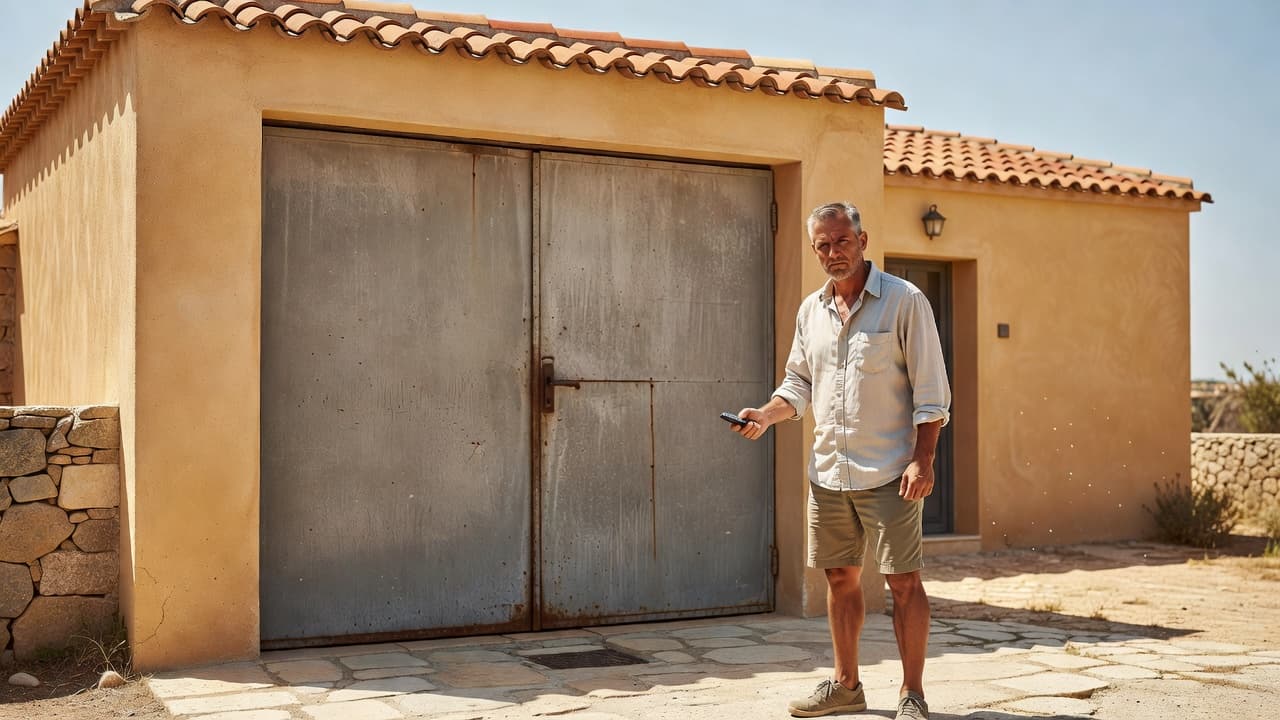
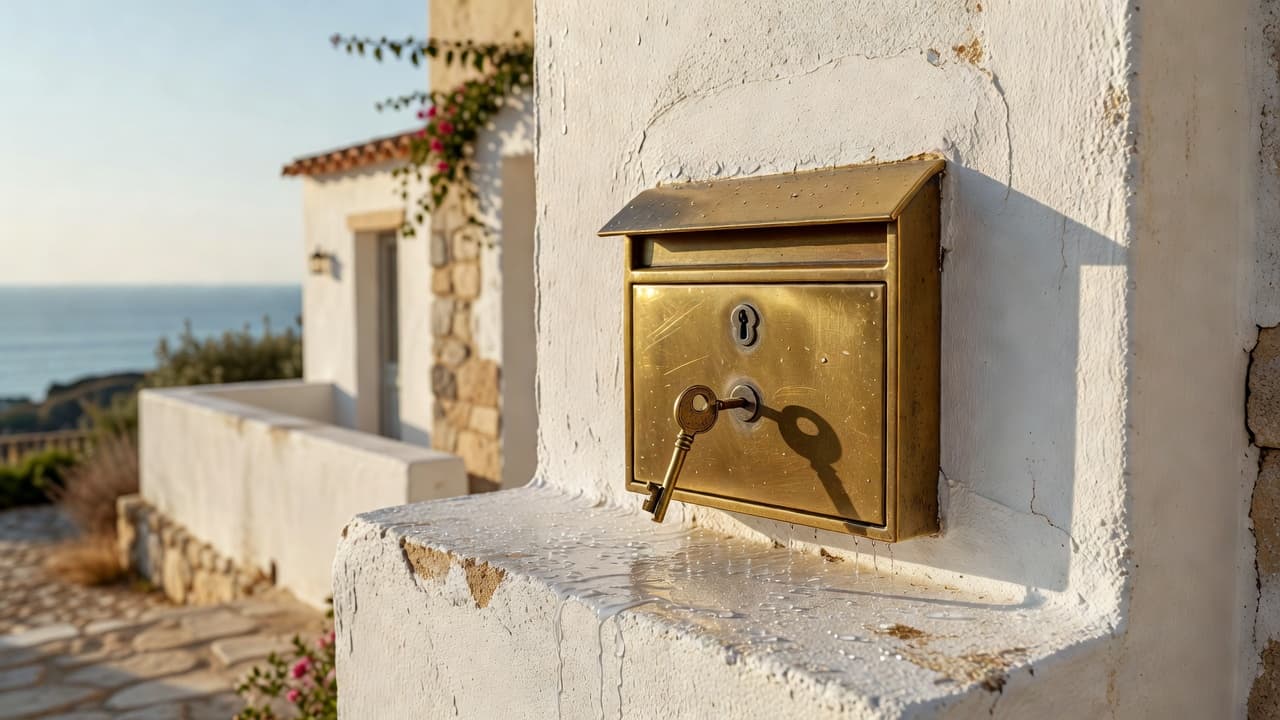
Try the key first. If you have a manual key lock on the garage door, try unlocking and opening it by hand.
- If the key turns smoothly and the door opens, your remote battery is probably dead. Replace the batteries and test the remote. If it still doesn't work, the remote receiver inside the garage may have failed (electrical, not mechanical).
- If the key turns but the door won't budge, the door is mechanically stuck or the lock is broken.
- If the key won't turn at all, the lock cylinder is jammed or broken.
If you have only a remote (no key), skip to the next section.
1. Replace the remote batteries.
Open the battery compartment on the remote and replace the batteries with fresh ones. Use the exact type and voltage specified on the back of the remote (usually AA or 9V). Test the remote while standing close to the door and the motor unit. If it works, the problem is solved.
2. Check the safety sensors.
Most modern electric garage doors have two small sensor eyes (usually infrared) mounted on either side of the door frame near the ground. If the beam between them is blocked—by a parked car, a box, or dirt—the door won't open as a safety feature.
Walk around the door and look for anything obstructing the space between the sensors. Remove it. Check that each sensor lens is clean (wipe gently with a cloth). Test the remote again.
3. Try the wall-mounted button inside the garage (if you can access it).
If you can get inside the garage through another route (side door, window), press the wall button directly. If the door opens using the wall button, your remote is faulty but the door mechanism is fine. You can continue using the wall button or contact an electrician to repair or replace the remote receiver.
If the wall button also doesn't work, the problem is mechanical or the power is off.
4. Check the power supply to the motor.
Look at the motor unit (usually mounted on the garage ceiling or wall). Is there a red light on? Is the motor making any noise when you press the remote or button? If there's no light and no sound, the motor may have lost power. Check that the power cable is plugged in securely. If your garage has a separate circuit breaker, check that it hasn't tripped.
If power is on but nothing is responding, the receiver or motor has failed. Stop here and call a professional.
1. Check if the door is partially derailed.
Look at the tracks on either side of the door (the metal channels the rollers run in). Are they bent, misaligned, or obstructed by dirt or debris? Can you see a gap between a roller and the track? If so, the door is partially off its track and needs a professional.
2. Try to open the door by hand (safely).
If it's a manual or electric door that might be manually operable, try pushing or pulling it firmly but smoothly upward. Do not yank or jerk. If it moves slightly and then stops, don't force it further—something is caught or the mechanism is damaged.
3. Listen for binding or grinding sounds.
As you try to move the door, does it make a grinding, scraping, or straining noise? This suggests the rollers, tracks, or spring are damaged.
4. Look for any visible obstructions.
Is something caught in the mechanism? Is there a rope, cable, or piece of debris tangled near the motor or spring?
If you find an obvious obstruction (like a rope caught), you might carefully remove it. Everything else—binding sounds, misaligned tracks, damaged rollers, springs—requires a professional.
If you need access to your car:
If the garage door won't open and you have a manual release, use it:
- Look for a red cord or handle hanging from the motor unit or door mechanism. This is the emergency release.
- Pull it firmly to disengage the door from the automatic opener. The door should no longer be connected to the motor.
- You can now push the door up manually (it may be heavy; don't strain yourself or go it alone if it's difficult).
- Do not try to drive through if the door is only partially open. Get out and open it fully first.
- Once you've released the manual override, the automatic system is disengaged until you reconnect it (usually by pressing the wall button or remote once power is restored).
If you're locked out of the house:
- Treating the garage door as blocked, not as your emergency exit, is safer. Use your house key or call a locksmith to enter through another door or window.
- Do not attempt to break the garage door or its lock yourself.
If the door is only partially open:
- Do not park or position yourself under it.
- Leave it as it is until the professional arrives. Attempting to close it could make it worse.
Stop immediately and call a professional if:
- The door has springs visible above it and they look damaged, or you hear a loud snap. Garage door springs are under extreme tension and can cause serious injury. Do not touch them.
- The door is partially off its track or visibly bent. Do not try to manipulate it.
- The key lock won't turn and the door won't open any other way. The lock may be broken internally, which requires a locksmith or specialist.
- You smell gas (if it's a gas-powered door opener, which is uncommon but possible in Spain). Evacuate, call the utility company.
- The door is hanging unevenly or sagging on one side. This indicates cable or spring failure.
- The remote receiver has obviously failed (no light, no sound, no response after checking power). This is an electrical issue.
Do not attempt any of the following:
- Adjusting, tightening, or replacing springs (extremely dangerous).
- Bending or adjusting tracks yourself.
- Replacing the motor or wiring.
- Opening the lock cylinder if it's stuck (you'll damage it further).
A locksmith or garage door specialist will first diagnose the problem, which usually takes 10–15 minutes.
If it's an electronic issue (remote not working, sensor blocked, receiver failed), they'll clean or replace the sensor, test the receiver, replace the remote if needed, or replace the motor receiver unit. An electrician might also be needed if there's a power supply problem.
If it's mechanical (stuck door, jammed lock, damaged tracks or springs), they'll assess whether the door can be safely repaired. If the spring is broken, they'll replace it (this is typically the most expensive repair, €150–250). If a roller is damaged, they'll replace it (€50–100). If the lock cylinder is stuck or broken, they'll pick or break out the lock and fit a new one (€80–150).
They should provide you with a quotation before starting work. Request an itemised invoice once the job is done, especially if you need to claim on insurance.
- Test your remote monthly. Replace batteries before they're completely flat. Store the remote away from heat, moisture and direct sunlight (which is plentiful on the Mediterranean coast—salt air also corrodes electronics).
- Clean the sensor lenses quarterly, especially if your garage is near dusty or sandy areas.
- Listen to the door. If it starts grinding or moving slowly, have it checked before it fails completely. Small problems are cheaper to fix early.
- Lubricate the rollers and tracks annually with a silicone spray (not WD-40, which attracts dust). Check that the tracks are clean and aligned.
- Keep the garage clear so nothing obstructs the sensors or gets caught in the mechanism.
- Test the manual release cord occasionally so you know it works if you ever need it.
- If you have a key lock, keep it clean and don't force the key. If it's stiff, apply a little graphite powder lubricant (not oil, which attracts dirt).
A stuck garage door is frustrating, but it's usually fixable without major expense—as long as you don't force it. Start with the simplest checks: replace remote batteries, clear the sensors, and test the wall button. If none of that works, or if you spot anything damaged or dangerous, contact a professional locksmith. On Spain's Mediterranean coast, you'll find experienced technicians who speak English and can usually visit within a day. Get a quote in writing before they start work, and you'll know exactly what it costs.