Wood is hygroscopic — it naturally absorbs and releases moisture depending on the humidity around it. On the Mediterranean coast, humidity regularly reaches 70–80%, especially in winter and spring. When a house is shut up for months, humidity gets trapped inside, and wooden furniture starts absorbing water from the air.
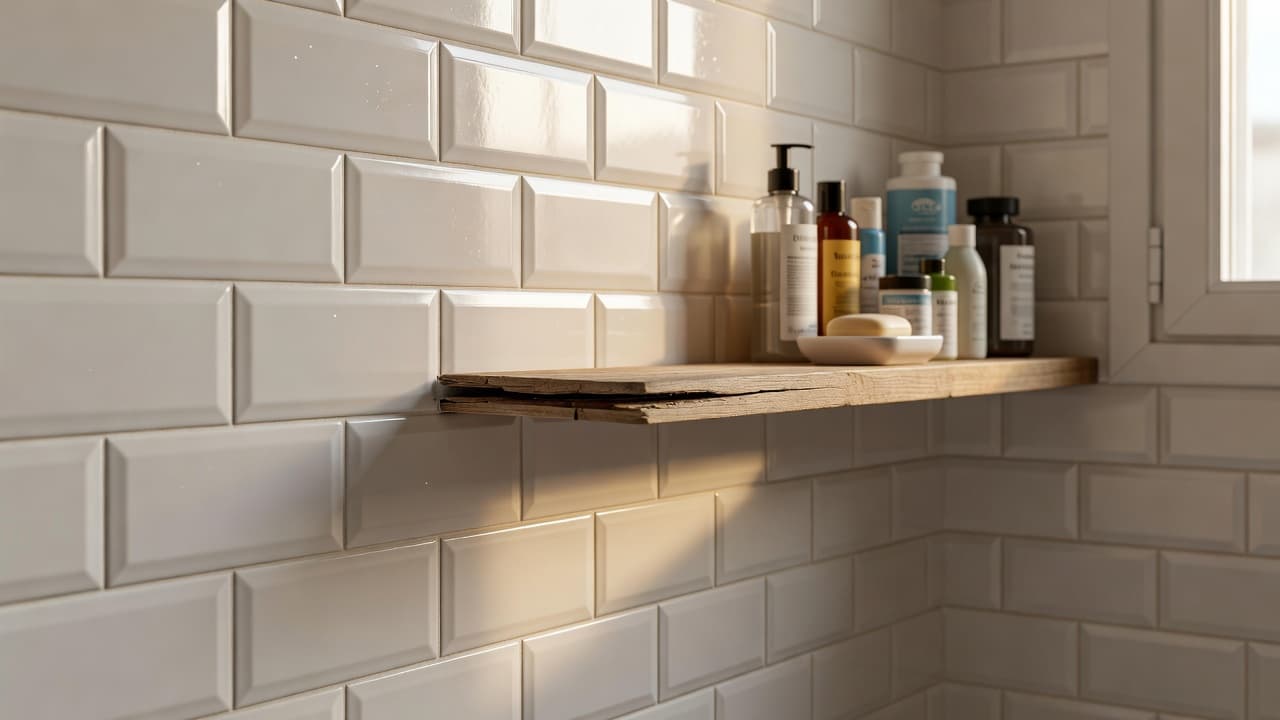
As the wood absorbs moisture, its fibres swell. This swelling isn't uniform: it's stronger across the grain than along it. This uneven expansion causes the wood to warp, cup (curve), and crack. Fitted drawers swell and jam. Veneered surfaces (thin layers of expensive wood glued onto cheaper wood) bubble and peel because the base wood and veneer swell at different rates.
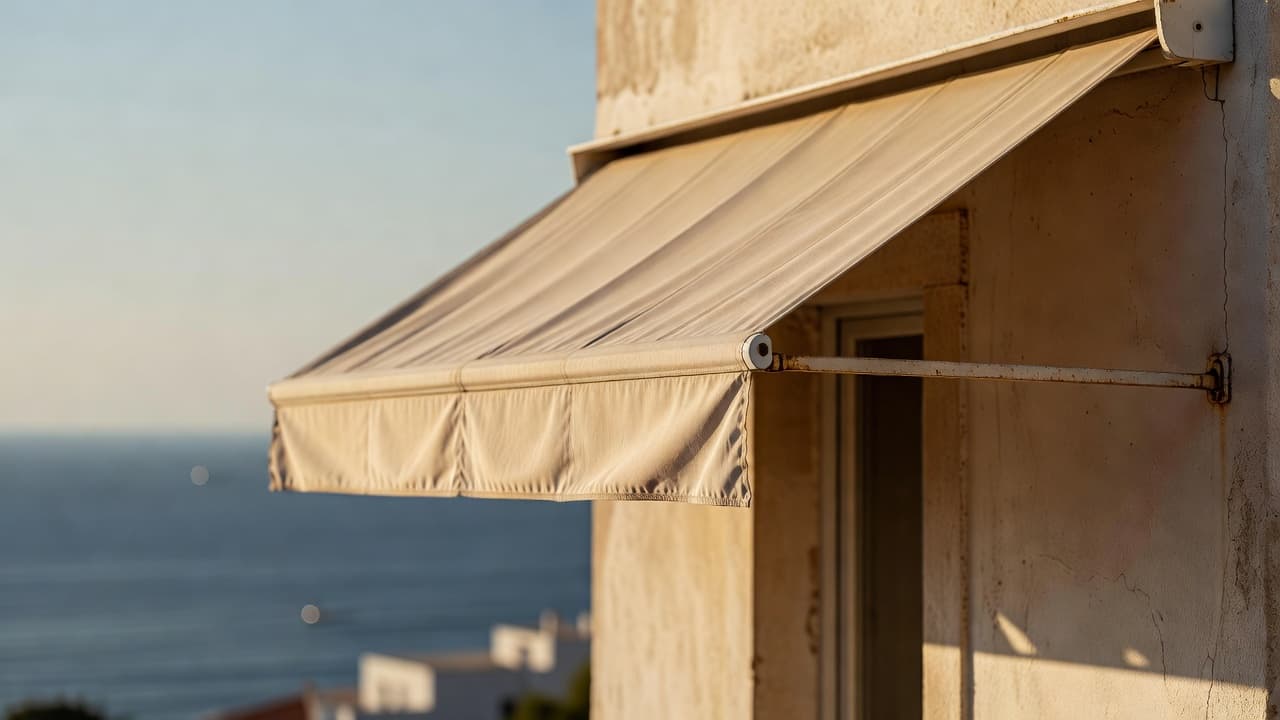
The problem is compounded if the house has been sealed badly. Poor window seals, cracks in the brickwork, or rising damp from the ground all trap humidity inside. On the coast, salt spray in the air also accelerates corrosion and damage to metal hardware (hinges, handles, locks).
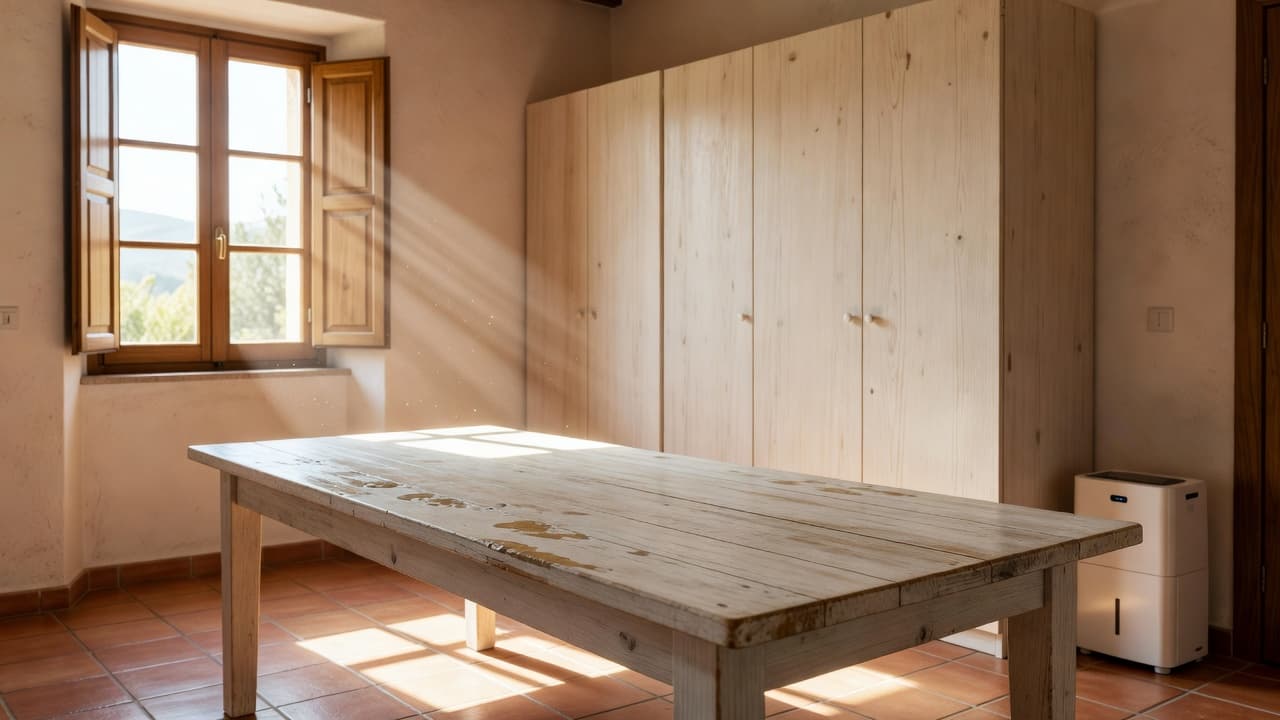
Get a dehumidifier into the house immediately. This is the single most effective temporary measure. A portable dehumidifier (rented from a local tool hire shop or bought for €80–200) will extract litres of water from the air per day. Place it in the largest room or in a central hallway where it can cycle air from the whole house.
Open windows only when conditions allow. If the outside humidity is lower than inside (rare on the coast, but it happens in late morning on a dry day), open windows fully. If outside is more humid than inside, keep windows closed and rely on the dehumidifier. Use a small humidity meter (€10–20) to check if you're unsure.
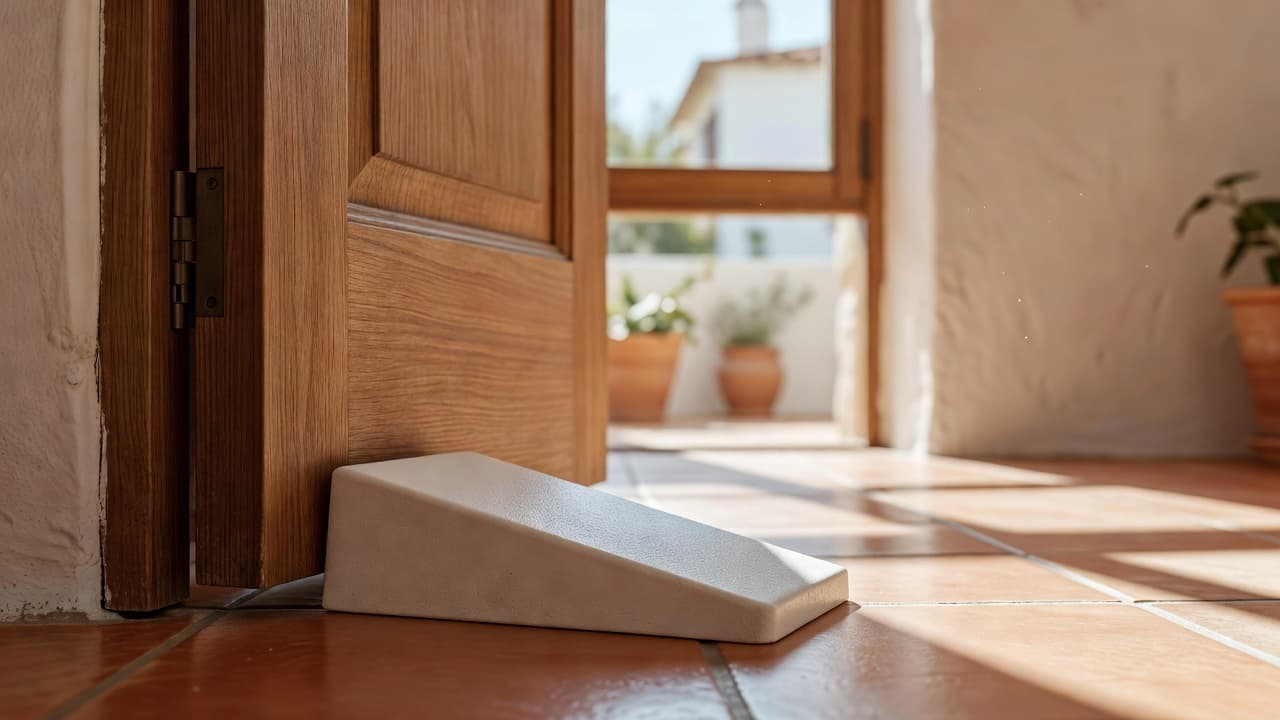
Leave all furniture open. Every drawer, every door, every cupboard. Interior surfaces need air circulation. Prop open wardrobe and cabinet doors with blocks so they can't swing shut overnight.
Remove loose items from inside furniture. Clothes, books, papers and bedding absorb and hold moisture. Take everything out and air it separately in a dry room.
Wipe down hard surfaces carefully. If there's condensation on wood, use a soft, barely damp cloth to wipe it away. Don't saturate the wood further. Do this once a day if condensation is heavy.
Do not sand, refinish or attempt repairs yet. The furniture is still swelling. Any work done now will be wasted once the wood stabilises.
Do not force swollen drawers or doors. You will crack the wood and cause irreversible damage. Even experienced carpenters work gently with swollen furniture.
Do not use heat to speed up drying. Hairdryers, heaters, direct sunlight and ovens all cause rapid, uneven drying that cracks and warps wood further. It will look worse, not better.
Do not sand or plane down swollen edges. The furniture hasn't finished swelling yet. In 2–3 weeks, it may shrink slightly, and edges you've sanded down will then be too small and gaps will appear.
Do not apply varnish, wax or oils to speed drying. These seal in moisture and prevent the wood from drying at all. Wait until drying is complete and a professional assesses the damage.
Do not ignore mould or musty smells. If the smell is strong, or if you see any black, green or white growth inside drawers or cavities, this is mould colonisation. Mould spores are a health risk, especially for older residents and those with respiratory conditions. Close the drawers and call a handyman or restorer — do not use the furniture until it's been cleared.
Stop immediately if:
- You see structural cracks in solid wood.
- Veneer has lifted or buckled across large areas.
- The smell is overwhelming or you feel unwell after entering the room.
- Hardware (hinges, handles) is rusting or seized.
- The frame of a chair or table feels loose or unstable.
All of these warrant professional inspection before the furniture is used again.
A handyman or furniture restorer will first assess the damage by checking:
- How much the wood has swollen (measured with calipers or by comparing to unswollen parts).
- The presence of mould, woodworm or other biological damage.
- Structural integrity: whether joints are loose, veneer is separating, or the frame is weakened.
- The type of wood and finish, to determine what restoration is possible.
If the swelling is moderate and there's no mould, the process is straightforward. The professional will:
- Ensure the dehumidifier is running correctly and humidity is dropping.
- Monitor drying progress over 2–4 weeks. This can't be rushed.
- Once wood moisture content has stabilised (usually when interior humidity reaches 45–50%), carefully re-fit drawers and doors, sanding edges gently if needed.
- Repair any surface damage (scratches, bubbled veneer, minor cracks) with appropriate wood fillers and finishes.
- Check and treat any signs of mould or woodworm with approved products.
- Refinish if necessary, or simply wax and polish to restore appearance.
If mould is present inside cavities or behind veneer, the professional may need to disassemble parts of the furniture to treat and dry the interior properly. This is more time-consuming and costs more, but it's essential for health and durability.
A handyman will provide you with humidity readings and a drying schedule so you know what to expect. Professional restoration of heavily damaged pieces can take 4–8 weeks, depending on severity.
Install a wall-mounted humidity control system or ensure your dehumidifier is left running during any extended absence. On the Mediterranean coast, humidity doesn't drop naturally in winter, so continuous control is necessary.
Improve ventilation. Install trickle vents on windows or a simple bathroom extractor that runs on a timer. Even 10 minutes of extraction per hour makes a difference.
Check window and door seals regularly. Salt air corrodes seals quickly. Replace them every 2–3 years if you're on the coast.
Never fully close the house for more than 2–3 weeks without leaving a dehumidifier on. If you're away longer, consider having a neighbour or caretaker run it periodically, or invest in a smart dehumidifier that can be monitored remotely.
Use silica gel packets or portable moisture absorbers in wardrobes and drawers as a backup, but don't rely on them alone. They fill up quickly in high humidity.
Leave internal doors open when the house is unoccupied. Sealed rooms develop stagnant, humid air. Airflow (even slow) prevents pockets of high humidity.
If your furniture has been damaged by damp, or if you're unsure whether the swelling is permanent, an experienced handyman can assess the damage and plan a restoration strategy. Get in touch with a handyman today to discuss your specific situation and receive a quote for assessment and repairs.