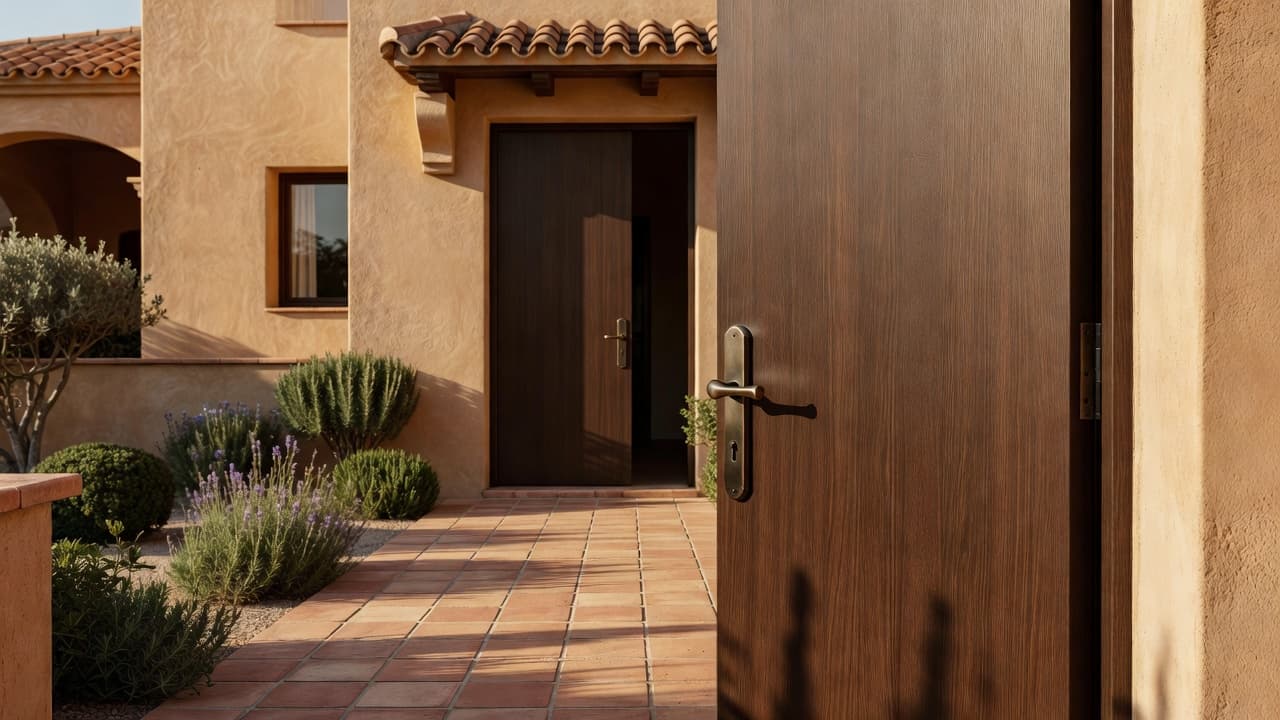
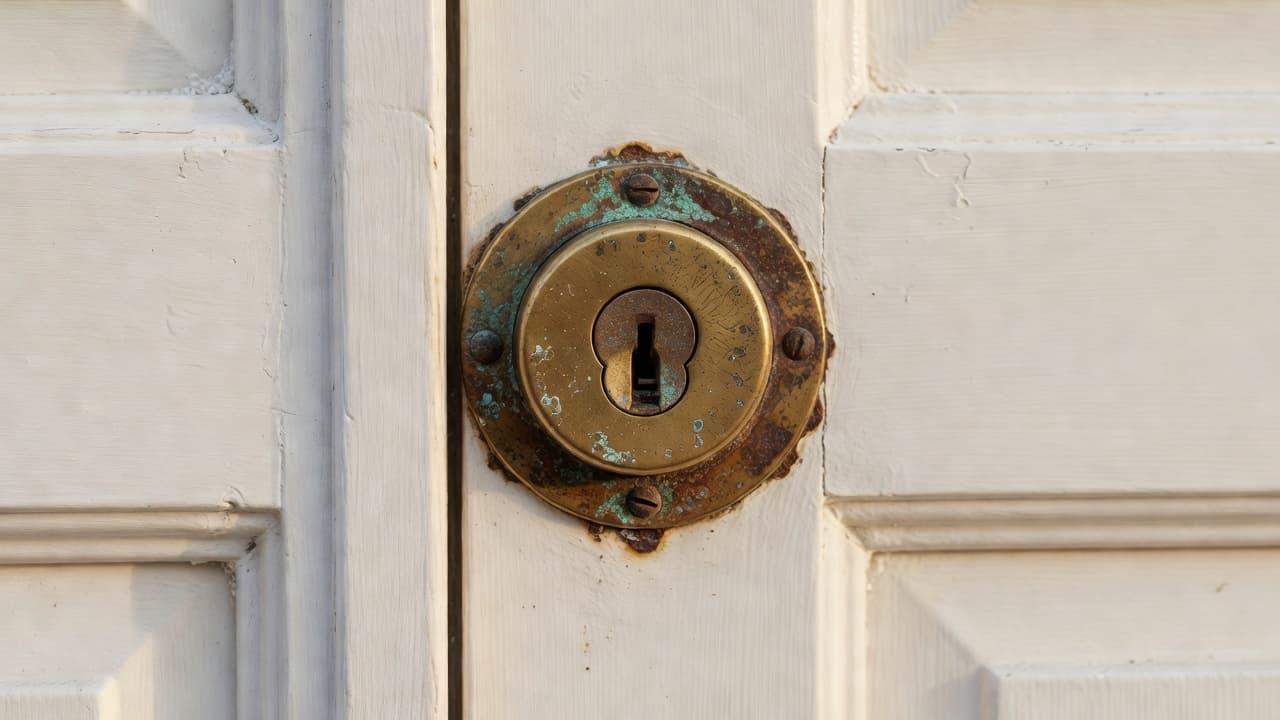
The small metal tongue (the latch bolt) should spring out and catch in a socket on the frame. If it's not catching, either the latch spring has weakened, the socket is misaligned, or something is blocking the mechanism. This is usually a 10-minute fix.
Spanish homes, especially properties near the coast or in holiday urbanisations, can settle unevenly over time. Salt-air humidity can also swell wooden door frames slightly. If the frame has shifted, the door and frame no longer align, and the latch won't catch properly. This requires a professional to assess.
If the door is tilted or droops on one side, the hinges holding it to the frame have either come loose or are worn out. You'll notice this particularly if the door is heavy (solid wood or composite) and has been in use for many years.
Dirt, salt spray corrosion (common on the coast), or a small object wedged in the latch recess can prevent the bolt from sliding in. This is the easiest problem to solve.
Use a door wedge or stopper. Slide a wooden wedge or rubber door stopper under the door from the inside. This won't lock the door, but it will prevent it from swinging open accidentally and will deter casual entry.
Use a portable door lock or chain. Some holiday homes and rental properties have removable security bars or chain locks that you can operate from the inside. If your door has one, use it now.
Close the door and place a heavy object against it. A chair or small table against the door from the inside will hold it shut, though it's not a security measure.
Lock the door from the inside with a key and avoid using the handle. If the latch mechanism works when the door is locked but the handle doesn't retract the latch properly, keep the door locked from the inside and only open it when you intend to.
Do not tape, glue, or nail the door shut. This will make professional repair much more difficult and may cause permanent damage.
- The frame is visibly cracked or splintered. Structural damage requires professional assessment. Forcing the door closed could worsen the damage and compromise security.
- The door is badly tilted and won't sit flush against the frame no matter how you adjust the handle. This indicates significant hinge or frame failure. Stop trying immediately.
- The hinges are visibly loose, bent, or missing screws. Do not tighten the screws yourself unless you are confident in your ability to do so without overtightening and stripping the holes. Even then, loose hinges usually indicate underlying frame movement, which requires a professional diagnosis.
- The door was damaged recently (by impact, by weather, or by attempted break-in). Security-critical components may be compromised in ways you cannot see. Have a professional inspect it.
- The latch mechanism is making grinding noises or feels stuck, not just weak. This suggests internal damage to the lock. Do not force it.
- You are renting the property. Even if the fix seems simple, inform your landlord or property manager immediately. They are legally responsible for maintaining the property's security.
If any of these apply, call a locksmith today. This is not a problem to leave overnight.
A qualified locksmith will first observe the door behaviour without touching it, then inspect the frame, hinges, and latch mechanism. They may gently try to adjust the hinges using an Allen key or screwdriver to bring the door back into alignment. Many simple misalignments are corrected by tightening hinge screws or shimming (inserting thin metal or plastic spacers) under the hinges to lift one corner of the door.
If the latch is the problem, they'll check whether the socket on the frame is aligned with the bolt. If not, they may chisel the socket slightly to accommodate the bolt position, or they may recommend replacing the latch entirely (a job that takes 20–30 minutes). If hinges are damaged, the locksmith will usually replace them — this costs more but is a permanent solution.
For frame damage, a locksmith will explain what they can and cannot do. If the frame is badly warped, they may recommend a handyman or carpenter for repair. Some locksmiths offer frame adjustment services, whilst others do not. The good news is that most frame problems on the Spanish coast are caused by settling rather than rot, so they're repairable.
You should receive a written report of what was done, a parts list if anything was replaced, and a warranty (usually 6–12 months on labour and parts). Keep this documentation for insurance purposes and for future reference if the problem recurs.
Check your door twice a year. Open and close it a few times, listening for any grinding or catching sounds. Look at the hinges for loose screws. In coastal areas, wipe the hinge and latch area with a dry cloth occasionally to remove salt spray residue, which can accelerate corrosion.
If your property is in a holiday urbanisation and sits empty for months, ask a neighbour or the property manager to check the door weekly. Temperature and humidity changes can cause wooden frames to swell and contract, and extended periods without use can cause the latch spring to weaken.
If you have a wooden door, monitor it after humid summers. The Mediterranean coast can be damp, especially in properties with limited ventilation. A swollen frame is easier to spot and fix early than a severely warped one.
Your front door closing properly is not a luxury — it's a fundamental part of your home's security and weather protection. The good news is that most door-closing problems are inexpensive and quick to fix. Contact a qualified locksmith on the Mediterranean coast for a same-day inspection if the door won't catch at all, or book an appointment within a few days if the problem is less urgent. In the meantime, use a wedge or portable lock to keep the door secure.