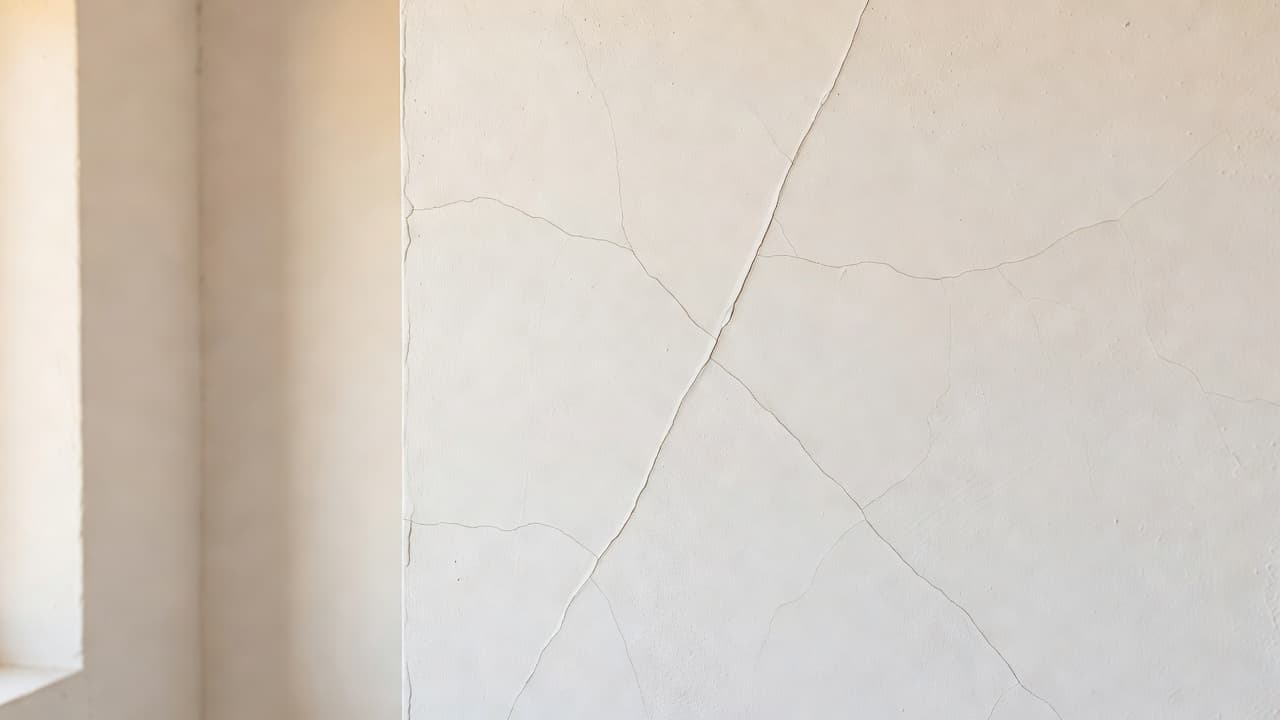
New-build homes crack for straightforward physical reasons, and almost all are harmless.
Plaster and render shrinkage is the most common cause. When plaster dries, it loses water content and contracts slightly. This is normal chemistry, not a defect. The process continues for up to a year, especially in your Mediterranean climate where heating, air conditioning and humidity swings are dramatic. New plaster is more prone to this than old, established plaster.
Concrete and block settling happens as the building structure adjusts to its own weight and load. The first few months are critical. Tiny movements (millimetres) are invisible to the naked eye but can create surface cracks as the hard finishes (plaster, paint) are more brittle than the structure underneath.
Moisture movement in coastal properties is worth noting. Salt air, humidity fluctuations and the contrast between heated interior spaces and cooler exterior walls create repeated expansion and contraction cycles. This can accelerate fine cracking in the first year or two, but it doesn't mean the structure is weak.
Temperature changes between seasons, and between air-conditioned interiors and hot Mediterranean summers, add extra stress to surface finishes. Again, this creates fine cracks, not structural failure.
None of these causes are defects. They're physics. New buildings experience them everywhere — Barcelona to Berlin.
Normal cracks (safe to monitor):
- Width: hairline to 1mm (thinner than a credit card edge)
- Direction: vertical or horizontal
- Location: single areas, especially where plaster meets brickwork or where walls meet ceilings
- Timing: appear in the first 6–12 months, then stabilise
- Associated signs: none — doors close properly, floors are level, no water seeping
Cracks to investigate (call a professional):
- Width: over 3mm (you can fit a coin into it)
- Direction: diagonal, especially in staircases, corners or across multiple walls in a line
- Location: multiple rooms, following patterns, or around window and door frames
- Timing: still appearing or growing after 2 years, or growing visibly month to month
- Associated signs: doors or windows jamming, uneven or sloping floors, water marks, cracks in mortar joints (not just plaster), visible movement in skirting boards
The key difference is consistency and isolation. One fine vertical crack in a bedroom corner is settling. Diagonal cracks spreading from a corner into two rooms is a structural question.
If hairline cracks bother you aesthetically (and many people don't notice them), you can fill them yourself without risk.
For cracks under 1mm:
Use a fine plaster filler (available at any Spanish DIY store — ask for "masilla de reparación fina" or "escayola fina"). Apply with a putty knife, overfilling slightly. Once dry, sand smooth and repaint. This takes 30 minutes and costs 3–5 euros.
For cracks 1–3mm:
Use flexible acrylic caulk (paintable, white) rather than rigid plaster filler. Flexible caulk accommodates slight movement during continued settling. Apply with a caulk gun, smooth with a wet finger, and paint over once dry. Flexible caulk is safer because rigid filler can crack again if the hairline widens a little more during the second year of settling.
Do not use these fixes if:
- The crack is wider than 3mm (it needs investigation first)
- The crack is in a corner and spreading diagonally
- There are other structural signs (doors jamming, floors uneven)
- Multiple cracks are appearing simultaneously
In those cases, stop, take photos, and call a professional.
Stop and call a handyman or surveyor immediately if:
- Cracks exceed 3mm in width. These need inspection to rule out structural movement.
- Cracks are diagonal, especially running from corners of windows or doors, or diagonally across stairs. These can indicate deeper settling or structural stress.
- Multiple cracks appear in a pattern — for example, diagonal cracks in several rooms, or cracks along the line where two different building materials meet (brick and concrete, for example). This suggests structural movement, not just plaster shrinkage.
- Cracks are accompanied by other signs: doors or windows sticking or jamming, uneven or sloping floors, stair treads cracking, skirting boards visibly separating from the wall.
- Water is seeping through the cracked area, especially on external walls or near the ground floor.
- Cracks appeared within months of purchase (suggesting a pre-existing structural issue rather than normal settling).
- The cracks are still appearing or growing noticeably more than 2 years after the building was completed.
In any of these situations, the cost of a professional survey (usually 150–300 euros) is far cheaper than fixing a structural problem that's been ignored for years. Coastal properties in particular can develop damp issues quickly if structural cracks are left unaddressed.
When a handyman or surveyor visits, they're looking for specific signs of genuine structural movement versus harmless settling.
They'll measure cracks precisely, photograph them, and check for patterns. They'll walk the building looking for diagonal cracks, especially in corners and around openings (windows and doors). They'll open and close doors and windows to see if frames are jamming. They'll check if floors are level using a simple spirit level or visual inspection. They'll look at the condition of external mortar joints (if the building is brick) — cracking in mortar is more serious than cracking in plaster.
If they suspect structural movement, they may recommend monitoring cracks with tell-tales (small plastic or glass markers placed across the crack to see if it grows further). They may also suggest a formal structural survey using a laser level or engineer's assessment, though this is rare for hairline cracking in buildings under 5 years old.
Most importantly, they'll give you a written assessment. This protects you and — if the issue is serious — triggers your builder's warranty obligations (most new-build warranties cover structural defects for 5 or 10 years, depending on the builder and region).
Once you understand that fine cracks are mostly cosmetic and caused by physical shrinkage, there's little you can prevent — but a few habits reduce the risk of additional cracks.
Avoid extreme moisture swings inside the home. In coastal Mediterranean properties, use air conditioning moderately rather than in sharp bursts, as dramatic temperature changes stress the plaster finish. Keep humidity stable — not bone-dry and not damp. A humidity level of 40–60% is ideal.
Don't apply heat directly to walls. Avoid positioning radiators or heaters against freshly plastered walls for the first year.
Be patient with painting. Wait at least 6 months before final interior decoration if the building is brand new. Some builders recommend waiting a full year. The plaster needs time to fully cure and settle before you commit to final finishes.
Monitor external render and sealants. If your home has external render (common in Mediterranean properties), check it annually for cracks. A small crack in render can allow water in, which causes larger problems. External cracks wider than 2mm should be resealed with flexible sealant.
Keep gutters and downpipes clear. Water running down exterior walls, especially near cracks, accelerates deterioration and can lead to damp inside.
These are habits for long-term care, not emergency measures. For the cracks you have now, the honest answer is: observe, photograph, and reassess in 3 months. If they've stabilised, you're done. If they're still growing or widening, that's the moment to get professional eyes on them.
Fine cracks in new-build walls are one of those home worries that feels serious but almost always isn't. The distinction is simple: hairline cracks that stabilise after a few months are settling, and diagonal cracks that grow are worth investigating. Photograph what you see, note the date, and check again in 3 months. If nothing has changed, you've learned your home is settling normally. If something has widened or spread, that's when to call a handyman professional on the Mediterranean coast for a proper assessment.
Most of the time, you'll be reassured. And if there is something to address, catching it early costs far less than ignoring it for years.