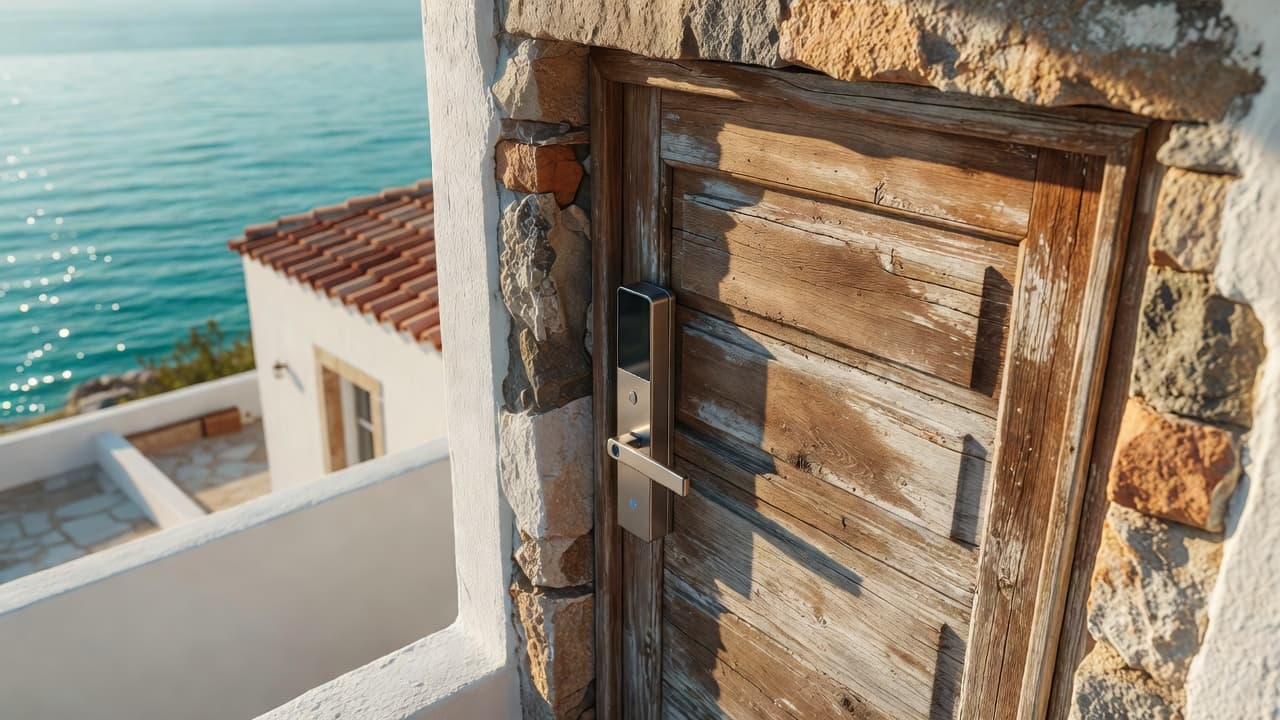
An electronic lock stops working for a few reasons:
Dead or dying battery is the most common. When the battery voltage drops below a threshold (usually around 20–30%), the lock's circuit disables the mechanism to prevent damage. It will not open, even partially. The lock is protecting itself.
Corroded battery contacts happen frequently near the coast, where salt air and humidity corrode metal. You may have battery power but poor electrical contact. The lock circuit detects this and blocks access as a safety measure.
Wet or damaged circuit board can occur if water entered the lock housing through a gap, condensation, or salt spray. The circuit board cannot process the code or signal, and the lock will not respond even if power is present.
Flat battery is by far the most likely cause if the lock worked fine yesterday. If the lock has never worked reliably or failed intermittently, the problem is usually corrosion or a faulty circuit.
If you're locked out and waiting for help, here's what you can do safely:
If you have access to an external power source and your lock has a USB or 9V terminal, a fresh 9V battery or a portable USB charger may give you enough juice to unlock temporarily. This is not guaranteed—it depends on whether the lock's circuit can boot on low power—but it's worth trying if you have the connector. Do not force the connector in; it should fit smoothly.
If you can access the battery compartment from the outside without tools or force, you can try replacing the batteries yourself. Alkaline batteries (AA or AAA, usually) are cheap and widely available. Take out the old ones, replace them with fresh ones from a shop or a neighbour, and try the keypad or card again. If it works, you're in; if not, stop and wait for the locksmith.
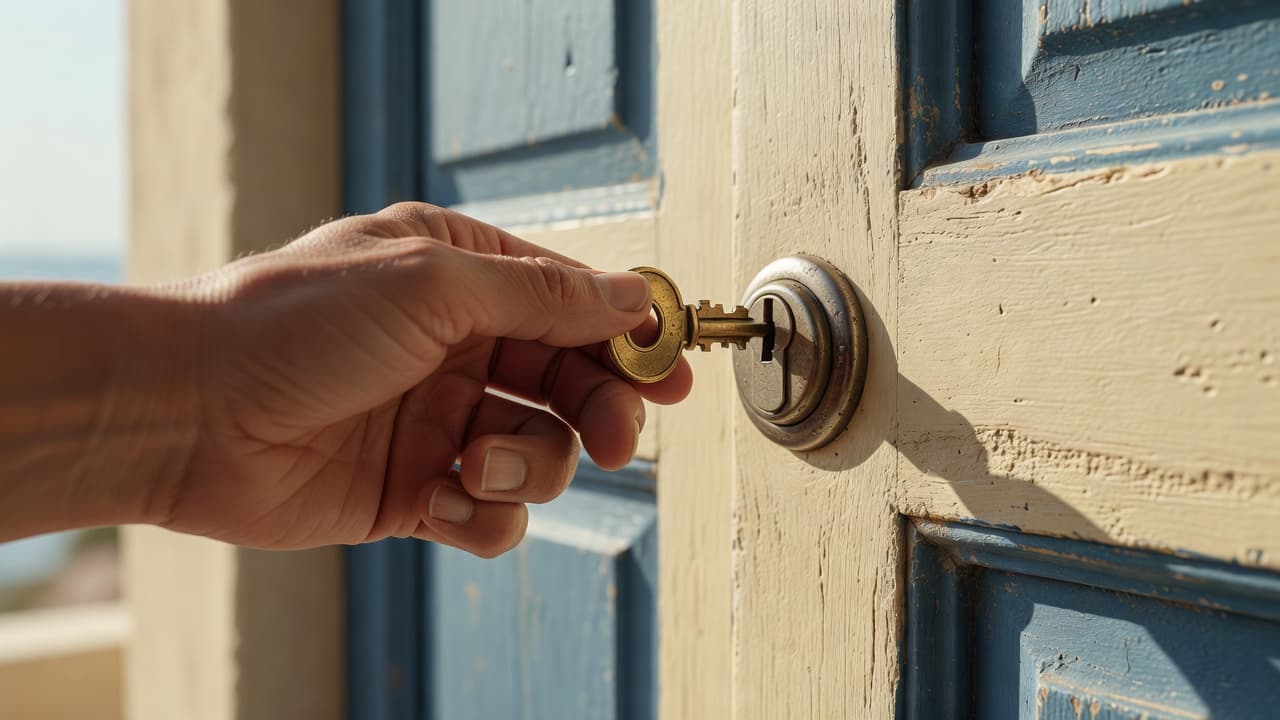
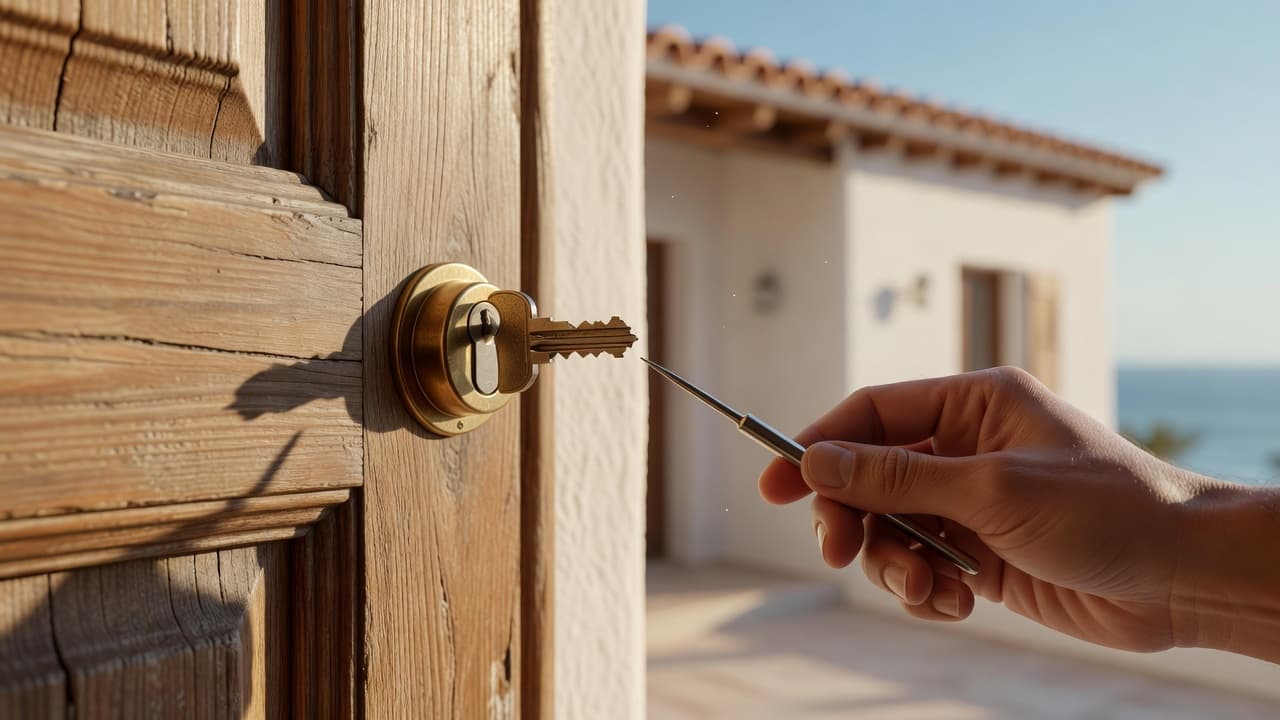
If the lock has a manual override keyhole and you can get the key, use it. That's what it's there for.
Do not attempt to access the battery compartment if it's inside your home. If the lock is integrated into the door mechanism and the battery cover is interior-only, you cannot reach it from outside. Trying to force it will damage the lock.
Do not try to short-circuit the lock or tamper with the wiring. This risks electrocution, fire, or permanent damage. Leave it alone.
Stop and call a locksmith immediately if:
- The lock shows no signs of life at all (no light, no beep, no response to any button or card). This suggests a deep electrical fault, not just dead batteries. Opening it yourself is impossible.
- Water is visibly leaking from the lock, or you hear water sloshing inside. The circuit board is likely damaged. Force will not help; you need a professional to dry it out and assess the damage.
- The lock is on your main entrance and you're in an unfamiliar property. Do not experiment with force or tools on a door you're not sure about. The lock may be triggered to an alarm, or the door may have security features you don't know about.
- You smell burning or see scorch marks on the lock body. This indicates an electrical short or fire risk. Do not touch it. Step back and call the emergency services as well as a locksmith.
- The lock is smart (app-controlled, connected to WiFi) and will not respond to any input. The battery is dead, but the circuit may be damaged or the app may be corrupted. A manual override or backup power is your only option; force will ruin the lock.
- Your lease or rental agreement says you must not tamper with the lock. Even if you think you can fix it, call the owner or manager first. Unauthorized repairs can breach the contract.
A professional locksmith experienced with electronic locks will:
- Assess the lock visually. They'll identify the brand, model, and type (keypad, card reader, biometric, smart lock). They'll check for visible damage, corrosion, or water ingress.
- Attempt to power or override the lock. If there's an external power inlet, they'll try a compatible battery or power supply. If there's a manual override, they'll use that if you have the key or if they can access it safely. If neither works, they'll move to the next step.
- Open the lock non-destructively if possible. For many electronic locks, a skilled locksmith can disassemble the exterior mechanism without damaging the door or internal components. This is quicker and cheaper than forced entry.
- If the lock must be replaced, they'll remove the broken mechanism, install a new one, and test it thoroughly. They may recommend a mechanical backup or a more robust electronic model suited to your home's environment (especially important near the coast).
- Provide documentation. A good locksmith will hand you a receipt, photographs of the work, and the manual for the new lock (if installed). Keep this for your insurance and for future reference.
The entire process usually takes 15–45 minutes. Costs vary: a simple override or battery replacement is €60–€90; forced opening and lock replacement is €200–€400 depending on the lock quality and the work needed.
Replace batteries every 6 to 12 months, not when the lock stops working. Most quality electronic locks show a low-battery warning (a flashing light, a beep, or a click that sounds different) weeks before they die completely. When you hear or see this, change the batteries immediately.
Keep spare batteries at home and in your car. AA and AAA alkaline batteries are the standard for most locks on the Mediterranean coast. Buy a pack of 8–10 and store them in a dry place. Check the date on the pack; old batteries may be weak.
Set a phone reminder for every April and October. Change the batteries twice a year as routine maintenance, like checking your boiler or cleaning gutters. This prevents emergencies.
Choose a lock with a backup power inlet if you're installing or replacing your lock. A USB-C or 9V terminal on the outside of the lock gives you an emergency option if you ever find yourself locked out with a flat battery.
If you live near the sea or in a salty-air zone (Costa Blanca, Costa del Sol, Balearics, Canaries), clean the lock quarterly with a dry cloth. Salt corrosion is common and speeds up battery contact degradation. Wipe away any white or green deposits.
Keep your spare key and the lock manual somewhere safe and accessible. If your manual is digital, print a copy or save it to a shared drive with someone you trust. In an emergency, you may not have your phone.
If your electronic lock is dead and you're locked out, don't delay. A locksmith visit now costs far less than a new door, forced entry repairs, or staying in a hotel tonight. Contact a qualified locksmith on the Mediterranean coast and describe your situation clearly—most arrivals are rapid, and the problem is usually solved in under an hour.