Most high bills are not caused by faulty meters. They're caused by one or more of these factors:
Air conditioning. Running an AC unit continuously in July and August can consume 20–30 kWh per day on its own. If you've increased AC use (new unit, different thermostat setting, cooler setting than before), your bill will jump noticeably.
Electric water heater. A termo eléctrico heating water to 60°C uses 3–5 kWh per day depending on size and frequency of heating cycles. If your tank is poorly insulated or ancient, it may be cycling more than it should.
Pool or Jacuzzi pump. These run 6–8 hours a day and consume 2–4 kWh per hour.
Old or inefficient appliances. An older fridge, freezer, or immersion heater works harder and longer than modern equivalents.
Seasonal change. Summer demand is typically 2–3 times higher than winter in coastal Spain due to air conditioning. Winter might be 15 kWh per day; July might be 45 kWh per day. This is normal.
Meter age. Meters are mechanical or electronic devices. An old meter can over-read, but this is genuinely rare (less than 2–3% of complaints when investigated). Corrosion from coastal salt air is possible, but meters are sealed and protected.
Rate change. Check your bill. Has your electricity distributor changed the rate per kWh? Sometimes what looks like over-reading is actually a rate increase.
Hunt for hidden consumption. Once you've ruled out the obvious (AC, water heating, pumps), look for secondary culprits:
- Walk around your home and check for devices in standby mode (red LED lights, anything plugged in and warm). These draw 2–5 watts each, and 20 such devices can add 1–2 kWh per day.
- Check that your fridge and freezer aren't running excessively. If the compressor runs constantly (you can hear it), the appliance is not maintaining temperature properly.
- Look at your water heater settings. If it's a termo eléctrico, is the thermostat set to the right temperature (50–55°C is usually enough)? Is it insulated? If the tank is old and uninsulated, heat loss is substantial.
- Ask whether any night-rate devices (night storage heaters, for example) have been left on during the day.
Compare against neighbours. If you live in an urbanisation or apartment block, ask neighbours in a similar-sized home what their average daily consumption is. This gives you a rough benchmark.
Check the meter seals. Look at the meter itself. Is there a tamper-evident seal intact? Spanish meters are sealed by the distributor. If the seal is broken, missing, or shows signs of interference, this is a problem—but not in the way you'd think. A broken seal suggests someone has accessed the meter unauthorised, which is a matter for the distributor.
Stop and contact your electricity distributor right away if:
- The meter display is flickering, unreadable, or not updating. This suggests a hardware fault.
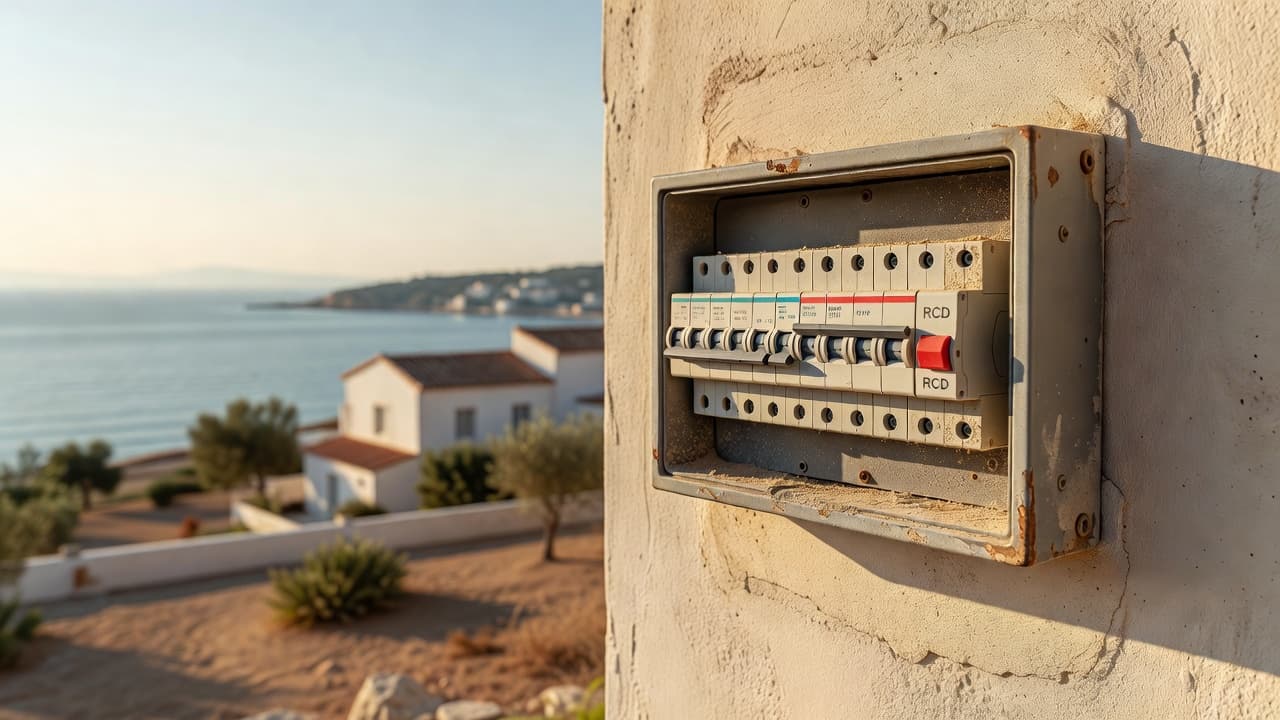
- The meter casing is cracked, discoloured, or shows signs of water ingress. Coastal homes are prone to damp and salt corrosion.
- You smell burning or see scorch marks around the meter or the cable entering it. This is a serious fault. Do not touch it. Call immediately and stay away.
- The meter seals are broken or missing. This is not an immediate safety risk, but it does mean the distributor needs to inspect.
- Your consumption test shows the meter advancing when absolutely nothing is on. For example, it advances 5 kWh in two hours with everything unplugged. This is abnormal.
In any of these cases, do not attempt any fixes yourself. The meter is property of the electricity distributor and is sealed for safety. Tampering with it is illegal in Spain and can result in fines and disconnection.
If your checks suggest a real fault (and not just high seasonal consumption), here's the process:
Contact your distributor. This is NOT your electricity supplier (like Endesa or Iberdrola for supply)—it's the local company de distribución listed on your bill under "distribuidor". Search online or call them. In English-speaking areas of the coast, they usually have English-speaking lines.
Report the fault in writing (email is fine) with:
- Your meter number and supply address.
- Copies of your readings and bills for the last 3 months.
- Photos of the meter.
- A description of the fault (e.g. "meter advanced 8 kWh in two hours with all devices off").
The distributor will inspect for free. They will visit, check the meter, and if they confirm over-reading, they are required to replace it and investigate whether you've been overcharged. You may be eligible for a refund of overcharges dating back up to one year (longer in some regions).
You'll receive a new meter. If a fault is confirmed, the distributor replaces it at no cost to you.
This whole process usually takes 1–3 weeks, depending on local workload.
If the meter is fine and the consumption is real, here are the most effective steps:
- Lower your AC thermostat by no more than 2°C. This reduces consumption by 5–10% and is barely noticeable.
- Set AC to run on a timer. Most units have a delay-start feature. Use it to cool your home in the early morning (cheapest rate), then switch to minimum cooling during the hottest hours, and avoid running overnight.
- Insulate your water heater. Wrap an old termo eléctrico with a blanket. This reduces cycling by 20–30%.
- Reduce standby consumption. Unplug chargers and non-essential devices, or use a power strip to cut standby drain entirely.
- Pool pumps. If you have a pool, reduce pump run time to 6 hours per day (usually sufficient on the coast).
Your electricity meter is almost certainly working correctly. But if you've run the simple consumption test and the numbers don't add up, you have clear grounds to report it. The distributor must investigate at no cost to you, and if a fault is found, you're protected by law. In the meantime, tackle the real culprits: air conditioning, water heating, and seasonal demand. That's where most of your bill lives.
If you need help checking your home's electrical installation or understanding why certain circuits are consuming more power than expected, our electrical professionals on the Mediterranean coast can visit, diagnose the problem properly, and advise on safe, affordable fixes. Most faults can be sorted in a single visit.