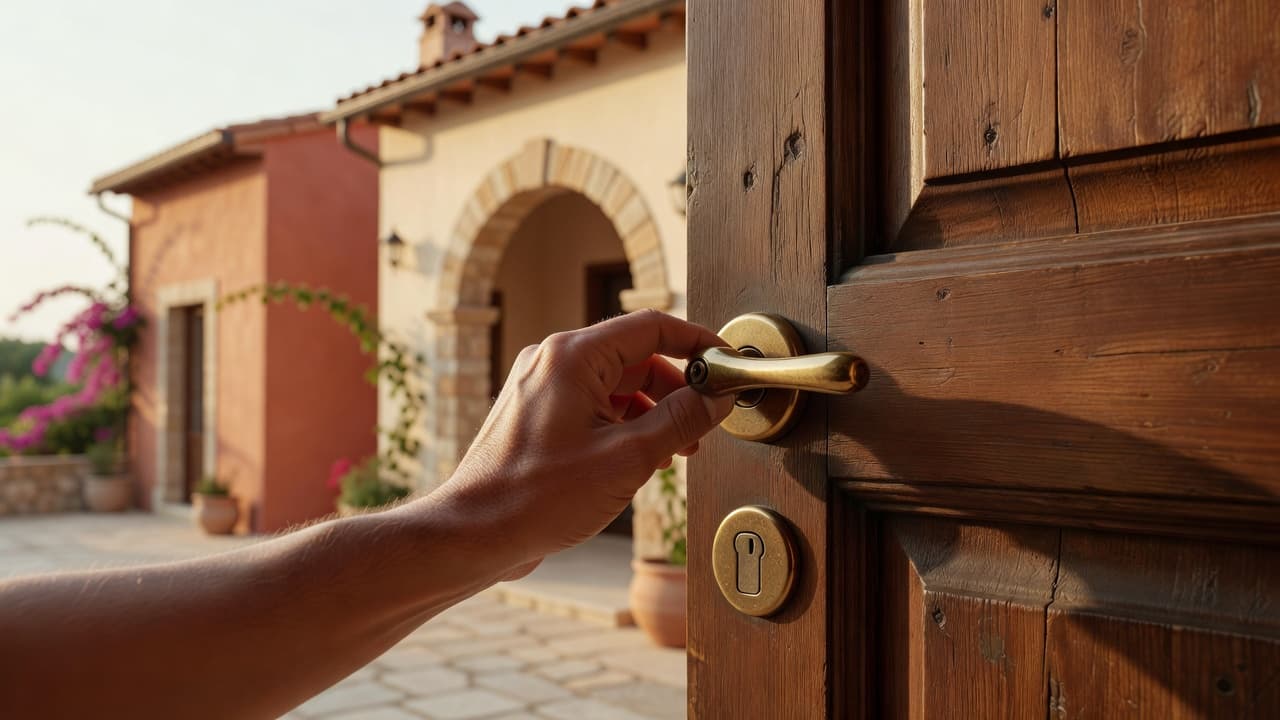
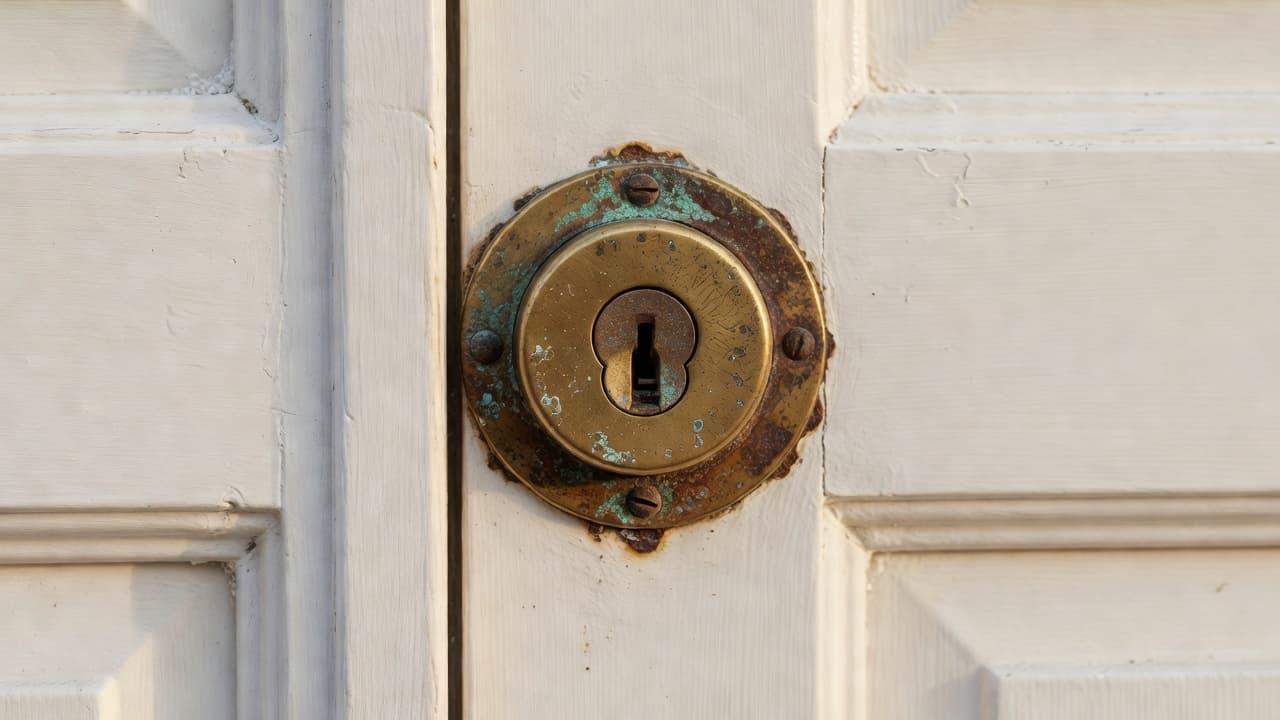
A door cylinder spins loosely for one of three main reasons.
The cylinder has come loose in the lock case. Over time, vibration from the door opening and closing, or from the wind in coastal properties (especially along the Costa Blanca or Costa del Sol), can cause the small fixing screw to work itself free. This is the easiest problem to solve: tighten the screw and the lock usually works again immediately.
The internal pins or tumblers are worn. Inside the cylinder are small metal pins that catch when the correct key is inserted. After 10+ years of use, or in homes near the sea where salt air corrodes metal faster, these pins wear smooth and no longer grip. The cylinder spins because there's nothing to stop it from turning. In this case, the cylinder needs replacing.
The cylinder has fractured internally. Forcing a stuck key, forcing the cylinder itself, or simply years of wear can cause the cylinder casting to crack or the pin mechanism to break. This looks like a worn cylinder from the outside, but the damage is internal.
Any of these means the same thing: the cylinder needs to be replaced by a locksmith. It's not a repair — the part itself is faulty.
You cannot safely repair a spinning cylinder yourself, but you can make the door more secure while you wait.
Use a portable door lock or chain. If you have a travel door lock or a chain lock, use it. This is a physical barrier that prevents someone from pushing the door open from outside, even though the cylinder won't work.
Position a heavy object or wedge against the inside of the door. A chair, a table, a suitcase — anything that would make the door difficult to push open from outside. Not a perfect fix, but better than nothing.
If you're leaving the house, lock a second entrance (back door, patio door, garage door) and ensure that one is working properly. If this is a second home and you need to leave before the locksmith can come, consider asking a trusted neighbour to check on the property, or arranging for someone to stay there.
Do not apply lubricant (WD-40, oil, grease) to the cylinder. This is a common mistake. Lubricants attract dust and can make the problem worse. The cylinder is not sticking because it's dry — it's spinning because the internal mechanism is broken.
Do not try to remove and reinstall the cylinder yourself. Cylinders are held in with a small clip or screw, but removing one requires knowing exactly how your particular lock is designed. Getting it wrong means the door won't close properly or the lock jambs. This is locksmith work.
Stop and call a locksmith immediately if any of these apply:
- The cylinder is visibly cracked or damaged on the outside.
- The key has broken off inside the lock or the lock and key together.
- The cylinder won't turn at all — it's jammed, not just loose.
- You forced the cylinder or key and now it won't move.
- Tightening the fixing screw didn't help and the cylinder still spins.
- You're not confident identifying the fixing screw or you're worried about damaging the lock further.
In any of these cases, tighten nothing and call a locksmith. The cost of a professional visit (usually 50–80 euros for a call-out, depending on your location) is less than the cost of breaking the cylinder further and needing a full lock replacement.
If your door is a communal entrance (in a flat with shared security), tell the building administrator or community of owners (comunidad de vecinos) immediately. They may have insurance coverage or preferred contractors, and in some cases, the cost might be shared.
A locksmith examining a spinning cylinder will first verify the problem by testing the key themselves. They'll then check the fixing screw — if it's loose, they'll tighten it and test again. If that works, the job is done and you might only pay a call-out fee.
If the cylinder is worn or broken inside, they'll remove the old cylinder and measure it. European cylinders come in standard sizes, but the exact dimensions matter (usually 30×10, 30×30, or 35×35 mm, depending on door thickness and lock design). They'll fit a new cylinder of the same size and type, usually a mid-range brass or nickel-plated steel cylinder. They'll test the key multiple times and hand you a receipt.
You should ask the locksmith for:
- A receipt showing the part replaced and the labour.
- Confirmation that you have two working keys (or more if you want spares).
- Their recommendation on whether any other locks in the property need attention (wear patterns are often consistent across a home).
The whole job usually takes 15–30 minutes. The cost of parts and labour together is typically 80–150 euros, depending on the cylinder type and your location. Some locksmiths on the coast charge a little more in high season (July and August) when they're busier.
Once your locksmith has fitted a new cylinder, the problem is solved — you've got a new part with years of life left.
To keep it working smoothly:
- Use your key gently. Don't force it into the lock if it doesn't slide in smoothly. If it's hard to turn, stop and call a locksmith rather than forcing it.
- Keep the lock clean. If dust or salt spray accumulates, gently blow the lock dry and clean with a soft cloth. Don't use water or lubricants.
- Check the fixing screw once a year. Every 6–12 months, give the small screw on the inside of the door a gentle check with a screwdriver to make sure it hasn't worked loose. This takes 30 seconds and can prevent problems.
- If the lock is near the sea, consider a stainless-steel cylinder replacement. Brass and standard steel corrode faster in salt air. On the Costa Blanca or other Mediterranean locations, stainless-steel cylinders last longer, though they cost slightly more (usually 15–25 euros extra).
A spinning door cylinder is not an emergency you can ignore, but it is straightforward for a professional to fix. The key is acting quickly — don't leave a non-functioning lock in place for days. Secure the door physically in the meantime, and book a local locksmith on the Mediterranean coast as soon as you discover the problem. Most repairs are complete within an hour, and your home is secure again.