Holiday homes in winter create the perfect conditions for damp because the building is closed, unheated, and empty.
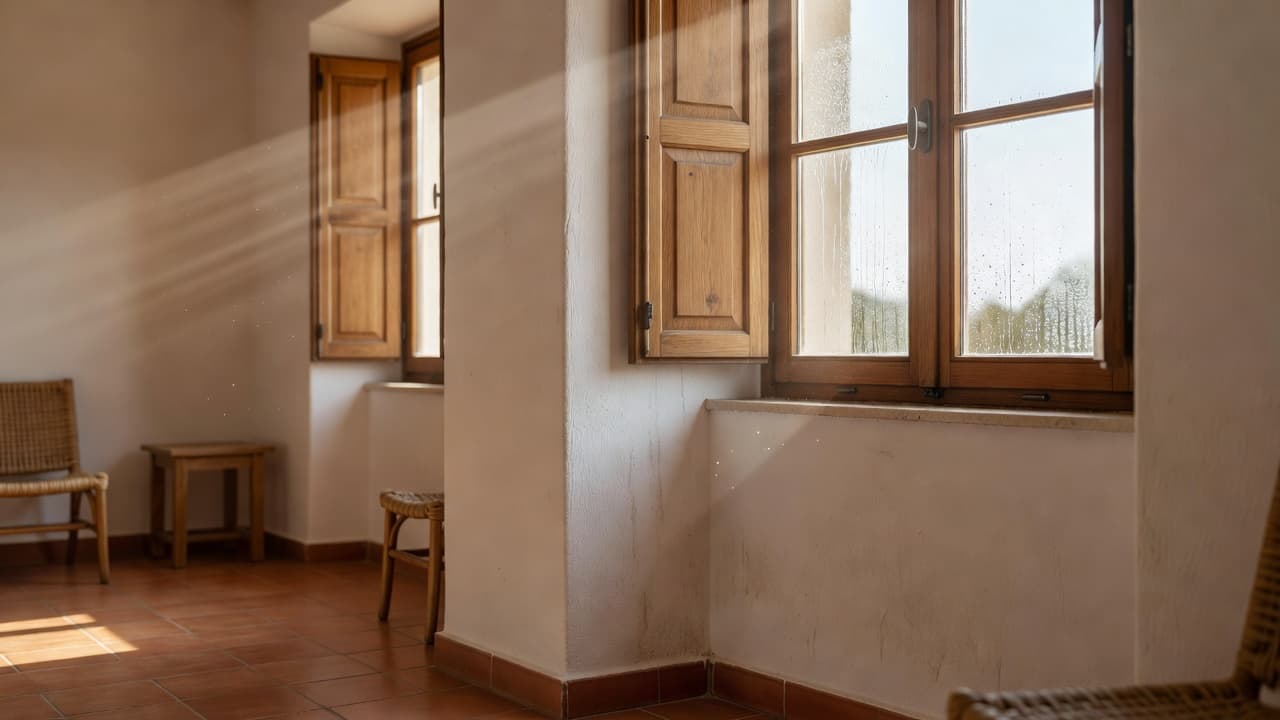
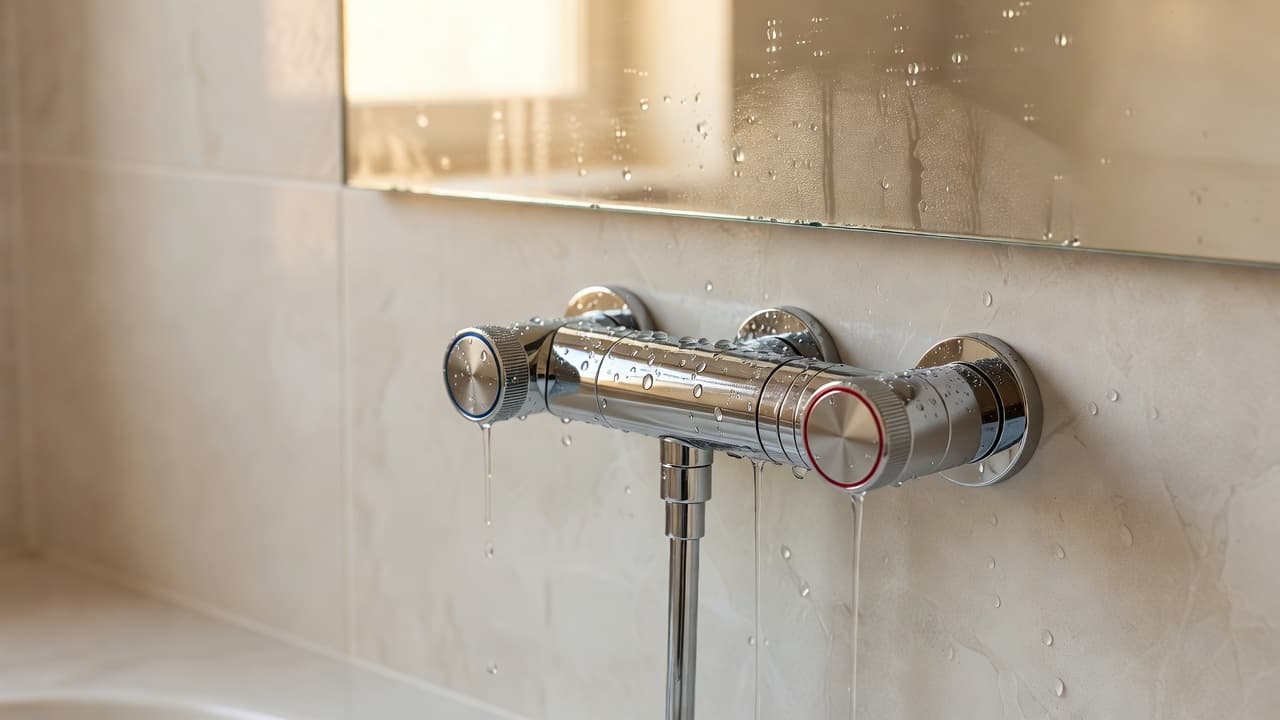
Condensation damp is the most common culprit. When a closed, unheated property cools overnight, the air inside can no longer hold moisture. That moisture condenses on cold surfaces — windows, mirrors, exterior walls — like droplets on a cold glass. On the Mediterranean coast, this is worse because sea air carries more moisture. Add salt spray from nearby, and you get corrosion and salt marks on walls too.
Rising damp happens when moisture travels up from the ground through the building's concrete or stone. You'll notice it as a horizontal band of damp on lower walls, usually with a distinct tide mark. It smells musty and feels damp (but not dripping wet). This is more serious because it's structural, not just a ventilation problem.
Leaks from pipes, radiators, or external walls are less common but more urgent. A slow leak in a hidden pipe can go unnoticed for weeks, damaging plaster, wood and electrics.
Poor ventilation makes all of this worse. If your property has no airflow and no way to shed moisture, damp will accumulate. Older Mediterranean homes sometimes lack proper ventilation, especially if windows are poorly sealed or shutters are always closed.
If you've identified the damp but can't get a professional immediately, here's how to stop it getting worse.
For condensation damp:
- Keep windows and doors open as much as possible, even if it's cold.
- Wipe condensation off windows and walls daily with a dry cloth.
- Leave internal doors open so air can circulate between rooms.
- If you have heating, run it at a low temperature continuously (12–15°C) rather than heating in short bursts. Steady warmth is more effective than boom-and-bust heating.
- If you can access a dehumidifier, place it in the dampest room and empty it daily. It's not a cure, but it helps manage moisture while you arrange repairs.
- Avoid drying clothes indoors — they release moisture into the air.
For rising damp:
- Don't use sealant, paint, or plastic sheeting to cover it. These trap moisture inside the wall and make it worse.
- Increase ventilation and heating as above.
- This needs professional assessment. Don't delay calling someone.
For suspected leaks:
- Stop using the affected area if possible (e.g., don't use a bathroom with a leaking pipe).
- Place buckets or towels to catch drips and protect flooring.
- If the leak is from the main supply pipe (under the sink, on the landing), turn off the main stopcock as described above and call a plumber urgently.
- Take photos of the leak for the professional.
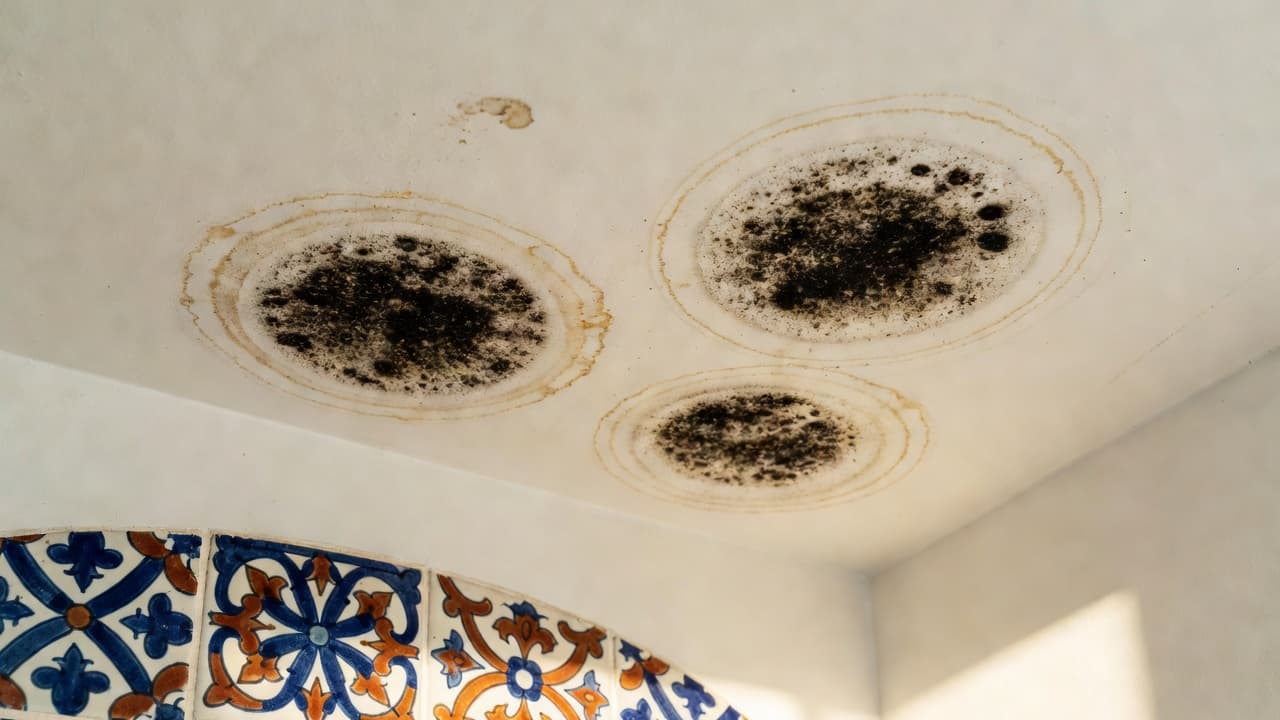
For salt deposits and mould staining on walls:
- Don't use bleach or harsh chemicals. These can damage the plaster and spread the problem.
- Wipe the affected area with a dry cloth to remove loose mould spores.
- Once the area is dry (after heating and ventilation), the professional can advise on treatment.
Stop and call a professional if:
- The damp is accompanied by a strong musty smell that doesn't improve after opening windows and heating for 24 hours. This suggests mould or rising damp.
- You see soft, spongy plaster or wood that crumbles when you touch it. The structure is damaged and needs expert assessment.
- There's water actively dripping or pooling inside the property. This is a leak and it needs urgent attention.
- The damp is on interior walls far from windows or external walls (e.g., in the middle of the room). This suggests a leak in hidden pipes, and you'll need a plumber to find and fix it.
- You can see mould growth (black or green spots, usually in corners or around windows). Don't attempt to clean large areas yourself. Mould spores are a respiratory hazard.
- The property has been unheated and unvisited for more than 8 weeks, and now half the walls are damp with a tide mark. This is likely rising damp, and you'll need a damp specialist or surveyor.
In all these cases, close the affected room, leave the main door open for ventilation, and contact a qualified plumber or damp specialist. The cost of addressing it early is far less than repairing structural damage later.
When a plumber or damp specialist arrives, they'll follow a systematic process.
First, they'll inspect the affected areas and ask questions: how long has the property been empty, is the heating on, have you noticed leaks elsewhere, has the damp appeared before? They'll check for active leaks by examining pipes, radiators, boilers and external walls. If they find a leak, they'll identify the source and repair or replace the damaged section.
If there's no active leak but damp persists, they'll assess whether it's condensation or rising damp. For condensation, they'll advise on heating, ventilation and temporary solutions like dehumidifiers. For rising damp, they may recommend specialist treatment such as damp-proof injection or improved drainage around the building's foundation. Some specialists use moisture meters to measure the water content in walls, which helps confirm the diagnosis.
If mould is present, they may recommend specialist cleaning or advise you to improve ventilation and heating first to dry the property naturally, then clean.
For leaks, they'll provide a written report of what they found and what they repaired. Keep this documentation for insurance purposes. If the leak has damaged plaster or wood, they'll advise whether that needs separate repair (sometimes a handyman or builder is called in after the plumber has fixed the leak).
The whole inspection usually takes 30–60 minutes. Budget for a call-out fee (typically €50–100 on the Mediterranean coast) and repair costs depending on what's found. If it's just condensation and you need advice on heating and ventilation, the cost is lower than if pipes need replacing.
The key is to break the cycle before you leave in autumn.
Before you close the property for winter:
- Run the heating for a full day at a comfortable temperature (around 20°C) to dry out the building.
- Leave windows open for an hour to clear stale air.
- If you have a dehumidifier, run it for a few hours.
- Check that all external doors and windows close properly. Draughty seals let in salt-laden sea air.
- Wipe down any obvious damp patches and let them dry completely.
While the property is closed:
- If you can visit every 4–6 weeks, do so. Open windows for an hour, heat the property gently for a day, and check for new damp or leaks.
- If you can't visit, ask a trusted neighbour or property manager to open windows and check on the property monthly.
- Leave the main stopcock accessible in case of emergencies.
- Consider installing a low-cost timer on the heating to run for a few hours every week, especially from November to February. This prevents the deep cold and condensation that builds in unheated properties.
Long-term solutions (worth discussing with a professional):
- Improve window seals to reduce draughts and condensation.
- Ensure gutters and downpipes are clear so rainwater drains properly away from the building.
- For properties near the sea, consider extra ventilation or a small continuous extractor fan to shift salt-laden air.
These steps cost little and pay for themselves in avoided damp repairs.
If you've found damp in your holiday home after winter and you're not sure whether it's condensation, rising damp or a leak, contact our local plumbers on the Mediterranean coast. They'll visit, diagnose the problem, and advise on the best solution. Most damp issues are manageable if caught early.
Don't wait for spring cleaning — damp gets worse, not better, when ignored.