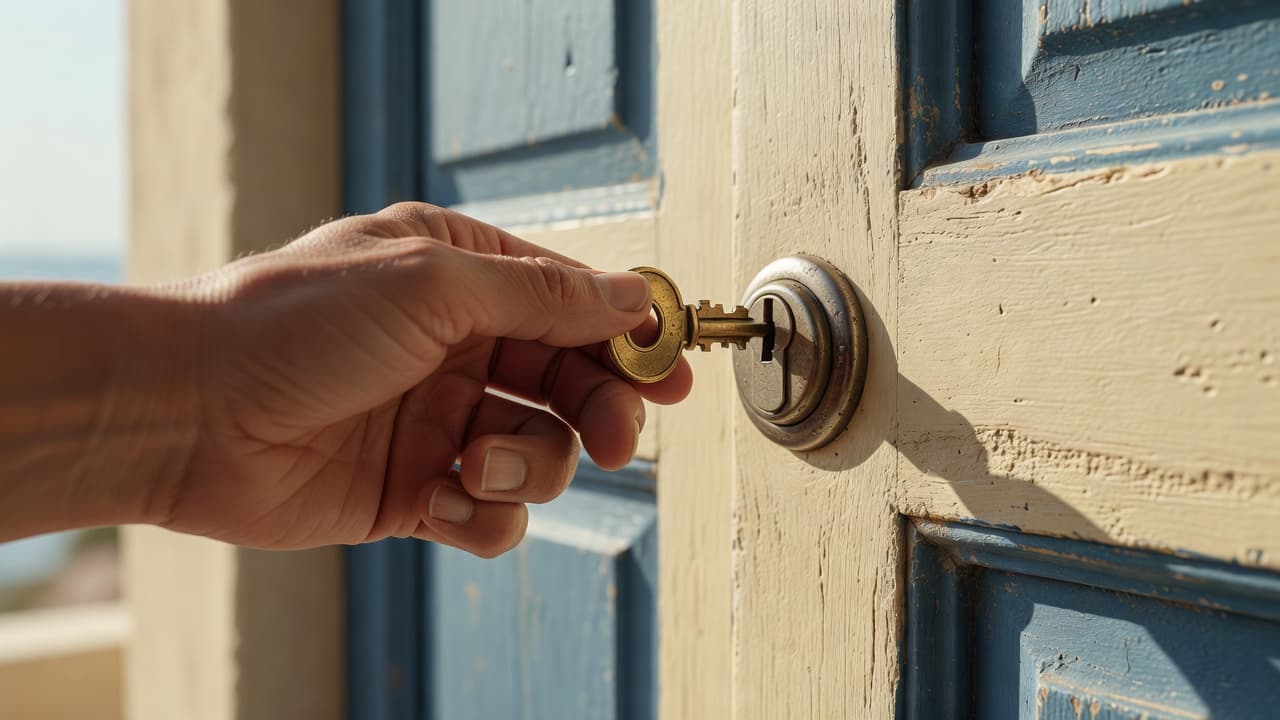
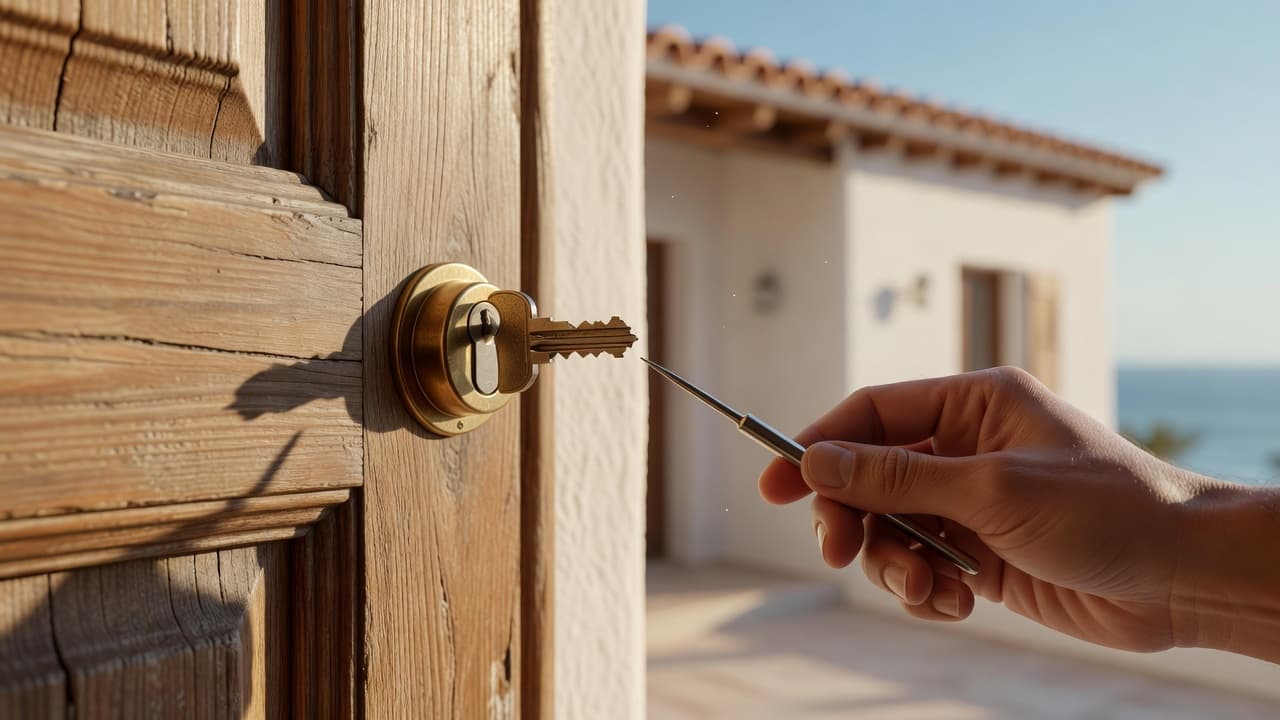
Your European cylinder lock (the part you insert your key into) is a precision mechanism with a series of spring-loaded pins inside. During manufacture, graphite powder was packed inside to help these pins move freely when you turn the key.
After years of daily use—especially in humid Mediterranean climates or where the air is salty—the internal components wear. Small metal particles from the pins and springs mix with the graphite, and as the fit between the cylinder and its housing loosens slightly, this powder begins to escape through the keyway.
This isn't a defect. It's wear. It happens to all cylinders eventually, though the speed depends on:
- How often you use the lock. A main entrance door sees more cycles than a guest bedroom door.
- Climate. Salt air near the coast, or extreme humidity, accelerates corrosion and wear.
- Lock age. Most cylinders start showing graphite after 5–10 years of normal domestic use.
- Previous lubrication. If someone applied oil-based lubricants to the lock before (common mistake), the mechanism wears faster.
Not usually. Black powder leaking is a wear indicator, not a failure. Your lock will probably keep working for months, possibly longer.
However, you should treat it as a gentle warning to inspect the lock soon. If left completely unaddressed, the graphite eventually runs out and the mechanism becomes drier and stiffer. Eventually—weeks, months, or even a year later—the lock can jam or become difficult to turn.
Act sooner if:
- The lock is already sticking or requires force to turn.
- You're renting and the landlord needs to maintain the property.
- The cylinder is very old and showing other signs of wear (rust around the outside, loose casing).
- You live in a coastal area where salt air accelerates corrosion.
What you can do yourself:
- Keep wiping away the powder with a dry cloth every week or two. This is purely cosmetic but keeps your key and door clean.
- Avoid forcing the key. If it feels stuck, don't push. Wiggle it gently and try turning it slowly. Forcing can break the key or jam the mechanism further.
- Keep the cylinder dry. If you have external doors, ensure rainwater doesn't pool around the lock. A small bead of silicone sealant around the outer edge of the cylinder can help (this is a 2-minute job if you're comfortable with a caulking gun, but optional).
What you must not do:
- Don't spray WD-40, 3-in-1 oil, or any wet lubricant into the lock. It will mix with the dust and create sludge that sticks to the pins.
- Don't use compressed air to blow out the powder. You'll force it deeper into the mechanism.
- Don't disassemble the cylinder yourself. European cylinders are precision-engineered and difficult to reassemble correctly.
Call a locksmith immediately if:
- The key is stuck inside the lock and won't turn or won't come out.
- The lock mechanism is making grinding or scraping noises.
- The cylinder has visibly corroded metal (orange rust, white salt deposits) all over its surface, especially if you're near the coast.
- The lock is leaking graphite and the key is becoming increasingly stiff or difficult to turn each week.
- Multiple locks in your home are showing the same problem (suggests a systemic issue worth investigating).
Why not DIY in these cases: A jammed or corroded cylinder can be damaged further by forcing it. A locksmith has the right tools to remove and inspect it without damaging your door or lock housing.
A locksmith will first test the lock with your key to assess how much play and friction is present. If the cylinder is still functioning smoothly but just leaking graphite, they have two options:
Option 1: Clean and reseal the cylinder.
They'll remove the cylinder from the door using a special tool, clean out the loose graphite and dust from the exterior, and inspect the internal mechanism for wear. They may apply a small amount of dry PTFE-based lubricant (graphite spray, not oil) or leave it dry. They'll then reseat the cylinder in the lock housing with a tight fit to prevent further leakage. This typically costs between €40–€80 and buys you another 2–5 years.
Option 2: Replace the cylinder.
If the cylinder is worn, corroded, or leaking heavily, replacement is cleaner and more reliable. A new European-profile cylinder costs between €25–€60, plus fitting (usually €40–€60). You'll keep your existing keys, as the locksmith will code the new cylinder to match your current key.
Before they start, they'll confirm which option is needed after inspecting it under good light. They'll also check that the lock housing itself isn't damaged—occasionally, leakage is a sign that the door frame or lock body has been forced or worn.
Once your cylinder is serviced or replaced, good habits will extend its life:
- Use your key gently. Don't force it or use rough, jabbing motions. A smooth, slow turn is kinder to the mechanism.
- Keep the lock dry. Wipe water off the keyway after rain, especially on external doors.
- Avoid oil-based lubricants. If you ever feel the need to lubricate, use a dry lubricant (PTFE-based graphite spray) sparingly, or ask a locksmith.
- Check it annually. A quick visual inspection every year—especially if you live by the sea—helps you catch wear early.
- Replace weather seals. If your door has a rubber gasket or draught excluder around the lock area, keeping it in good condition prevents moisture creeping in.
On the Mediterranean coast, salt air degrades locks faster than anywhere else. If you own a holiday home or live permanently in a coastal area, budget for lock servicing every 5–7 years as routine maintenance.
If your cylinder is leaking black powder and you'd like a locksmith to inspect and advise you, get a quote from a qualified locksmith in your area. They'll diagnose the problem, tell you whether cleaning or replacement is needed, and often complete the job the same day.