Air conditioning can fail for several reasons, and the breakdown pattern tells the technician a lot:
Unit is running but blowing warm air. The most common cause is low refrigerant (the cooling fluid that circulates through the system). If your air conditioner is 3–5 years old and you've never topped up refrigerant, a small leak is likely. The system still compresses and circulates, but without enough refrigerant, no cooling occurs. A filter blockage—dirt and dust accumulating on the indoor or outdoor unit—can also prevent cooling. When the filter is clogged, air can't pass properly through the condenser.
Unit is making noise but not cooling. The compressor (the heart of the system) might be struggling or failing. Electrical problems are also possible: a capacitor (a small electrical component) can fail, preventing the compressor from starting properly.
Unit is completely silent and won't switch on. Electrical supply issue. The thermostat might be set incorrectly, a circuit breaker has tripped, or there's a fault in the wiring. This is the most straightforward problem to resolve.
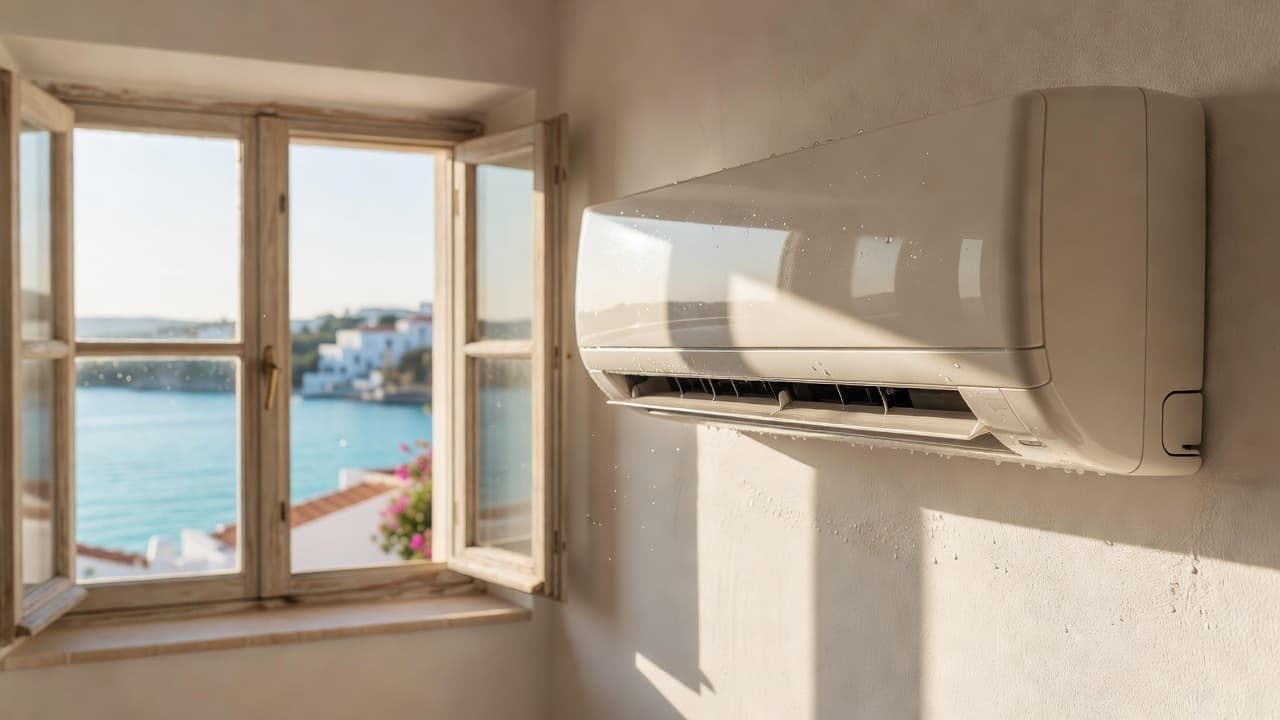
Unit is leaking water. The drainage pipe for condensed water is clogged. This doesn't stop cooling immediately, but it can damage interior walls and eventually cause the unit to shut off if water backs up inside.
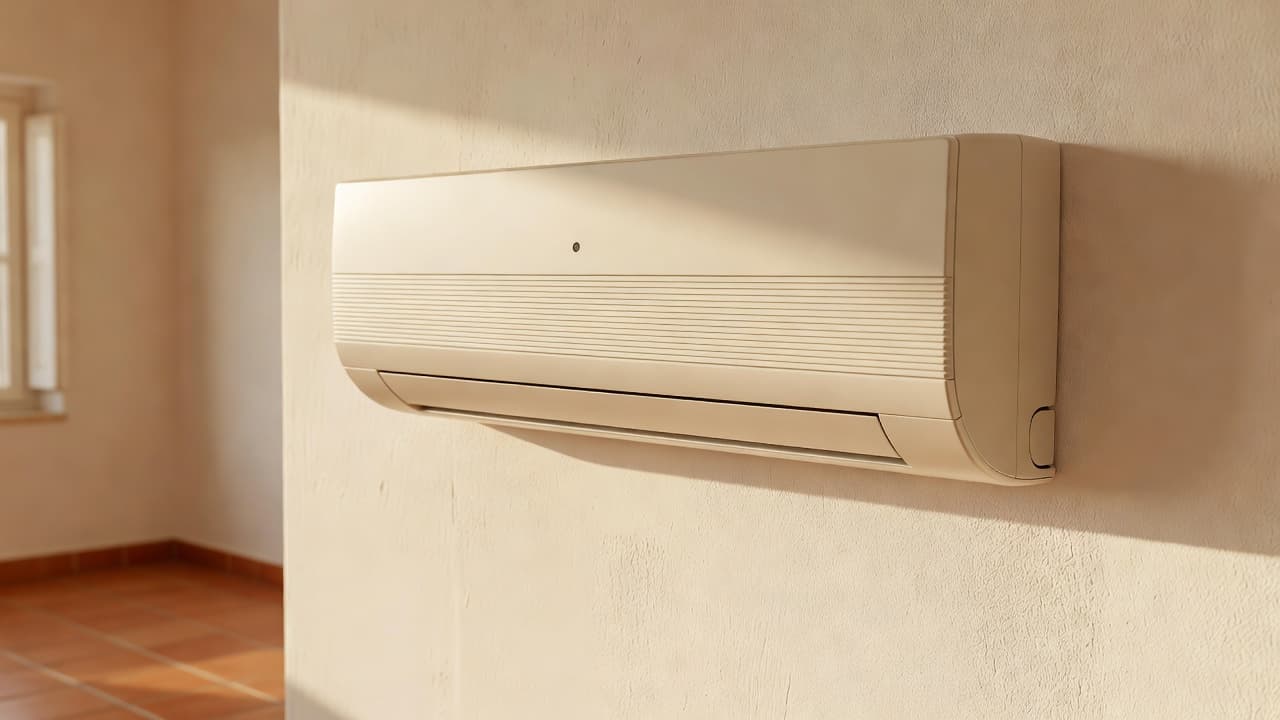
Check and clean the air filter if you can access it easily. Most residential air conditioning units have a replaceable filter behind a panel on the indoor unit (usually on the wall). Open this gently. If the filter is visibly clogged with dust and dirt, it's reducing airflow. You can vacuum it gently with the hose attachment or hold it under a tap to rinse. A clean filter can restore some cooling immediately. Once cleaned, reinstall it carefully. This takes 5 minutes and is completely safe.
Check that the thermostat is set correctly. The temperature dial should be set lower than the current room temperature, and the mode should be set to "cooling" (often marked with a snowflake symbol). If it's set to "off" or "heating", the system won't cool. Adjust the thermostat down by 2–3 degrees below the current room temperature and wait 10 minutes to see if the unit responds.
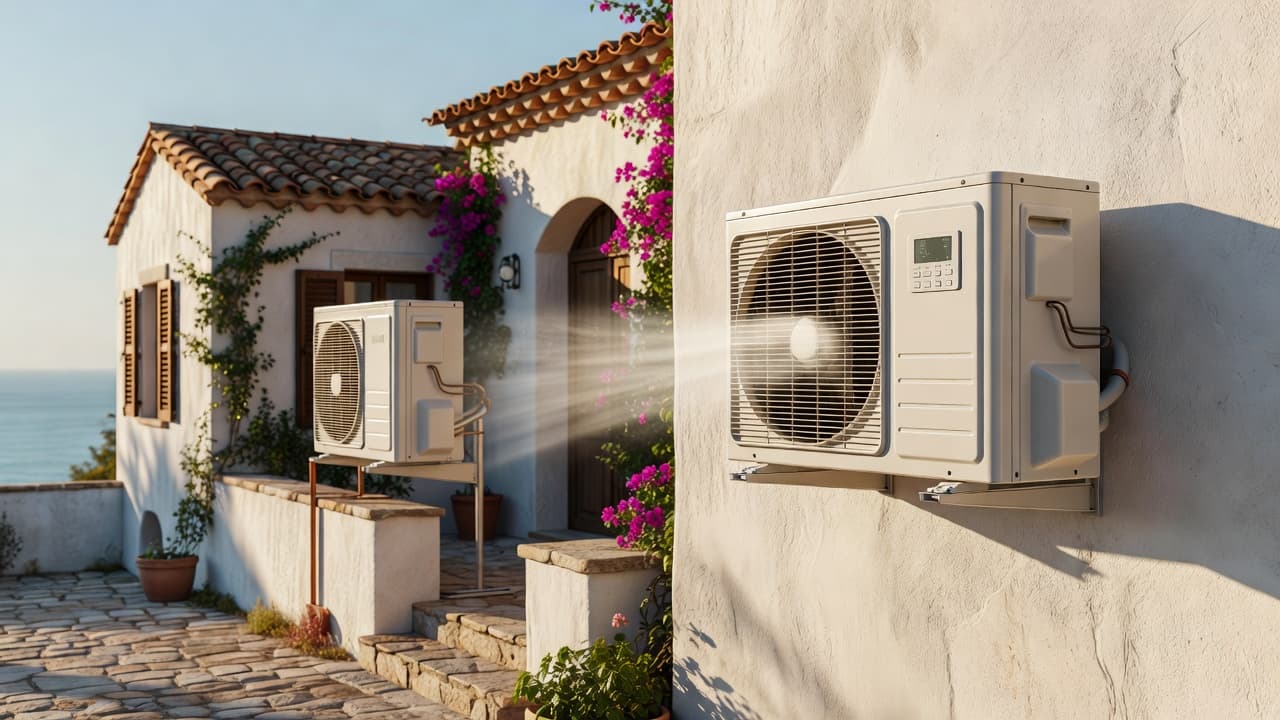
Ensure the outdoor unit isn't blocked. If your home is a ground-floor flat or villa with an outdoor air conditioning unit (usually mounted on the rear wall or on a balcony), check whether it's surrounded by objects, laundry, or vegetation. The outdoor unit must have airflow around it. Move any obstruction 50 cm away from the unit. Don't touch the unit itself or its pipes—refrigerant lines are pressurised and dangerous.
Do not attempt to refill refrigerant yourself. This requires pressurised equipment and certification. Even if you find a DIY refrigerant kit online, using it without proper training risks damaging the compressor and your health. Wait for the professional.
Do not attempt to open the unit or alter any pipes. Refrigerant is toxic if inhaled, and the system is under pressure.
If the unit is leaking liquid. If you see oil or clear liquid pooling near the indoor or outdoor unit, turn off the air conditioner immediately and call the technician. The liquid is either refrigerant or compressor oil—both require professional handling.
If the unit is sparking, smoking, or smells of burning plastic. Cut the power at the circuit breaker immediately (the consumer unit, cuadro eléctrico, usually found on a landing or in a cupboard). Do not touch the unit. Wait for the technician. This is a potential fire hazard.
If the thermostat won't respond to any adjustment. Turn off the unit and call the technician. An unresponsive control suggests an electrical fault.
If you hear loud grinding, squealing, or metal-on-metal noise. Turn the unit off immediately. This suggests internal compressor damage. Running it further will cause expensive damage.
If the outdoor unit is frozen solid in hot weather. This is unusual but signals a severe refrigerant problem. Turn off the unit and call the technician.
If anyone in your home is showing signs of heat exhaustion (extreme fatigue, confusion, dizziness, lack of sweating, rapid pulse), move them to the coolest available space, apply cool (not ice-cold) damp cloths to the skin, and drink cool water. If symptoms worsen, seek medical help. Heat exhaustion is a medical emergency.
The technician will begin by checking the thermostat settings and inspecting the filter. If either is the culprit, the problem is resolved in minutes. Next, they'll listen to the unit and check its electrical connections. If the compressor or a major component needs replacement, they'll explain the cost and timeline before proceeding.
If refrigerant is low, they'll use a pressure gauge to measure the refrigerant level, locate any leak (typically by dye injection into the system), repair the leak, and refill the refrigerant to the correct pressure. This takes 2–3 hours. Once refilled and sealed, your air conditioning should cool normally again.
If a capacitor, relay, or electrical component has failed, replacement is quick (30 minutes to 1 hour) and usually inexpensive. The technician will test the unit once the new part is installed.
You should receive a receipt and, ideally, a document listing the work done and the refrigerant volume added (if applicable). Keep this for your records—it's proof of maintenance and useful if issues recur.
Have your air conditioning serviced once a year, ideally before summer (May or June). A technician will check refrigerant pressure, clean filters, inspect electrical connections, and identify small problems before they become breakdowns. An annual service costs £60–150 and avoids the stress and cost of emergency repairs.
Clean the filter monthly during heavy use. A dusty filter reduces cooling efficiency and strains the compressor. Cleaning takes 5 minutes and dramatically extends the unit's lifespan.
Never block the outdoor unit. Keep a metre clear on all sides. Ensure drainage pipes aren't kinked or blocked. If you notice water pooling around the indoor unit, call a technician promptly—a blocked drain can escalate quickly.
Avoid extreme temperature swings. Don't set the thermostat to 16°C if the outdoor temperature is 38°C. Large temperature differences force the compressor to work harder and waste energy. A comfortable 22–24°C is efficient and sustainable.
If your air conditioning has broken and you need a prompt, professional repair on Spain's Mediterranean coast, contact an air conditioning specialist in your area. Most can arrange an emergency visit within a few hours during summer. In the meantime, use the steps above to keep your home manageable until they arrive.