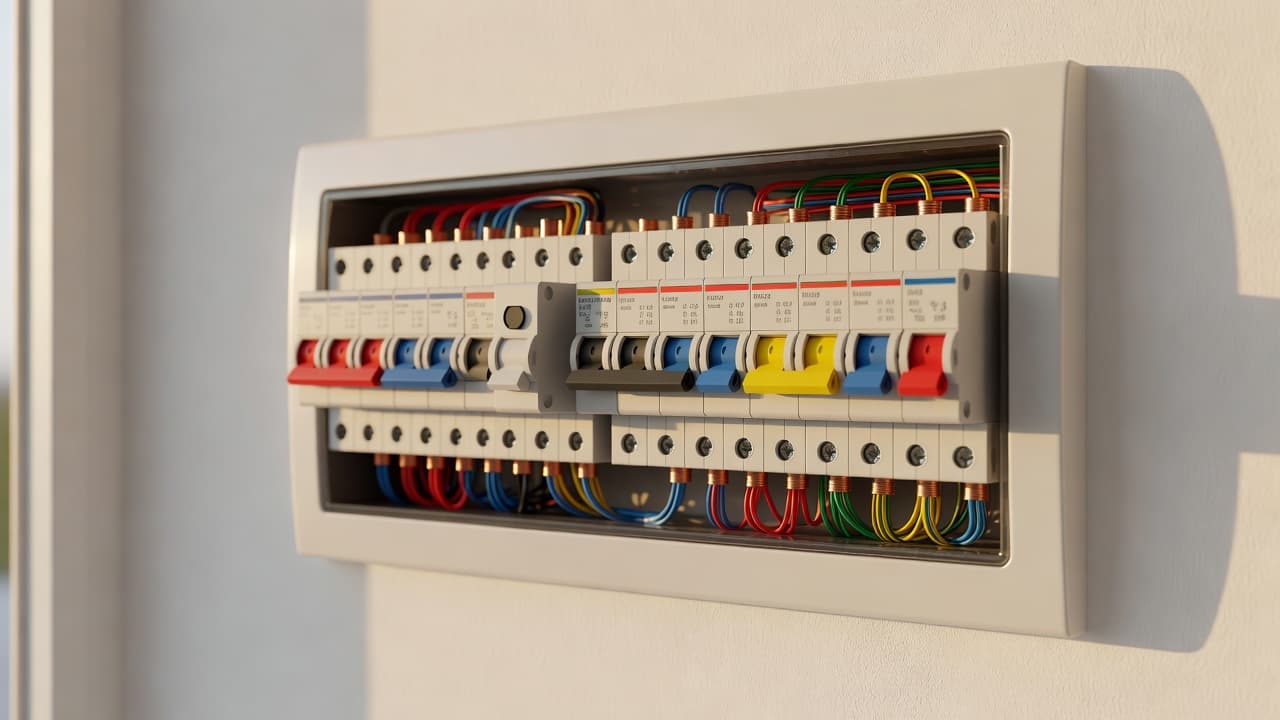
The ICP is a two-part switch at the very top of your panel. It has a small symbol that looks like two interlocking rectangles or a stylised lightning bolt. This switch is installed and sealed by your electricity company. It's set to your contracted power limit—typically 3.3 kW, 5.5 kW, or 10 kW for domestic properties.
What it does: if you plug in too many appliances at once and exceed your contracted power, the ICP trips and cuts off all electricity to your home. It's not a fault—it's a safety and billing device that prevents you from drawing more power than you pay for.
What it means if it trips: you have too many high-demand appliances running simultaneously. Unplug some devices (air conditioning, kettle, washing machine, dishwasher) and try again. If you frequently trip the ICP, your contracted power is too low and you need to contact your electricity supplier to upgrade it.
What NOT to do: the ICP is sealed for a reason. You cannot and should not try to reset it if it trips repeatedly. It's your supplier's responsibility. Call them. If the seal is broken, stop using it and contact them immediately.
The main switch (interruptor general): total power cut-off
Below the ICP, you'll find the main switch. It's usually the largest switch on the panel and often has a distinctive symbol—either a circle with a horizontal line (the universal on/off symbol) or the words "O" and "I".
What it does: flipping this switch up cuts off all power to your entire home. Flipping it down restores power.
When to use it: if you're doing any work on your home's wiring, if you smell burning or see sparks, if you're leaving your home for months, or if an electrician asks you to cut power. It's also a good idea to switch it off before you leave for more than a few days during summer—it saves energy and protects against surges during thunderstorms (common on the Mediterranean coast).
Is it safe to flip? Absolutely. You can flip the main switch as often as you like.
The RCD or differential switch (diferencial) is one of the most important safety devices in your home. It's usually a larger switch than the individual circuit breakers, and it has a symbol showing a wavy line or a square with "Fi" written on it.
What it does: an RCD detects an electrical fault—for example, if someone touches a live wire, or if water gets into a socket. It reacts in milliseconds and cuts off power to prevent electrocution. It's the difference between a minor shock and a fatal accident.
How to recognise it: look for a switch that's slightly wider than the others, often with a test button next to it.
Why it's there: Spanish building regulations require at least one RCD on the circuit feeding socket outlets (enchufes) in kitchens and bathrooms. Modern homes have one protecting the whole installation.
If it keeps tripping: water may be getting into a socket, or there's a fault in an appliance. Unplug everything connected to that RCD circuit (in the kitchen or bathroom), then try resetting it. If it still trips with nothing plugged in, do not use that circuit—call an electrician immediately. If it only trips when you plug in a specific appliance, that appliance is faulty and unsafe.
What NOT to do: never tape down the RCD or bypass it. That removes your protection against electrocution.
Below the RCD switches, you'll see rows of smaller switches. Each one protects a different circuit in your home. You might see labels next to them: "Cocina" (kitchen), "Baño 1" (bathroom 1), "Dormitorio" (bedroom), "Salón" (lounge), "Exterior" (outside), "Termo" (electric water tank), "Aire Acondicionado" (air conditioning).
What the symbol means: a circuit breaker has a simple icon—usually a small rectangle or a switch with an up and down position. Some also show a lightning bolt to indicate electrical protection.
What it does: if too much current flows through that circuit (because you've plugged in too many appliances), the breaker automatically switches off to prevent the wiring from overheating and causing a fire.
If one trips: simply flip it back up. It's safe. Then unplug some appliances from that circuit and try again. In summer, for example, if your kitchen circuit keeps tripping, it's probably because the kettle, toaster, and microwave are all running at once on the same circuit. Spread them out or unplug one.
If it keeps tripping even with nothing plugged in: there's a fault in the wiring or the circuit itself. Stop using that circuit and call an electrician.
Your consumer unit is designed to protect your home from electrical fires. Here's why breakers trip and what to do:
Too many appliances on one circuit (most common reason): this is called an overload. The solution is simple—unplug something and move it to another room or use it at a different time. In summer on the Mediterranean coast, air conditioning overloads are very common because they draw a lot of power.
A faulty appliance or wet socket: a damaged lead on an appliance, or water in a socket, can trigger a breaker. Unplug the suspect appliance and reset the breaker. If it trips again when nothing is plugged in, that socket or circuit has a fault.
Wear and tear in old wiring: in older properties or holiday homes that sit empty for months, corrosion from salt air (especially near the coast) or just age can cause breakers to trip. If breakers trip regularly for no clear reason, have an electrician inspect the installation.
If a breaker trips:
- Switch off the main switch (interruptor general).
- Unplug appliances from that circuit, especially high-power ones (air conditioning, kettle, washing machine, dishwasher).
- Switch on the main switch again.
- Flip the tripped breaker back up (it will be in the middle or down position).
- Plug appliances back in one at a time. If it trips again, you've found the culprit.
If the RCD trips:
- Unplug everything from sockets on that circuit (usually the kitchen and bathroom).
- Flip the RCD back up.
- If it stays up, you've solved it—dry the affected socket and try again later.
- If it trips immediately with nothing plugged in, do not use that circuit until an electrician checks it.
If you smell burning or see sparks: switch off the main switch immediately and call an electrician. Do not investigate further.
Stop and call an electrician if:
- A breaker trips repeatedly even when nothing is plugged in (sign of wiring fault).
- The RCD won't reset or trips immediately after resetting (sign of dangerous fault).
- You see scorch marks, melting plastic, or corrosion on the switches or around the panel.
- You smell burning or see sparks coming from the panel.
- The ICP seal is broken (sign of tampering; contact your supplier).
- A switch is stuck and won't move (don't force it).
- You're unsure which breaker controls which circuit and you don't have documentation.
In any of these cases, the panel itself may be damaged, or there's a hidden fault in the wiring. Attempting a DIY fix could be dangerous. An electrician will diagnose the problem safely and have the right equipment to repair it.
If you call an electrician because of a fault, here's what to expect:
First, they'll ask you what happened—when did it start, which breaker keeps tripping, was there a burning smell, etc. They'll inspect the panel without opening it (they won't remove covers or touch live parts unless it's absolutely necessary and the power is off). They'll check individual circuits by isolating them and testing for faults.
If the fault is in the panel itself, they'll need to turn off the main switch and may open the panel behind the switches to inspect the wiring and components. This is normal and safe when power is off.
Once they've found the problem, they'll explain it to you and give you options—repair, replacement, or upgraded components. If your installation is old or corroded (common in holiday homes near the sea), they might recommend replacing parts of the panel or upgrading your RCD protection.
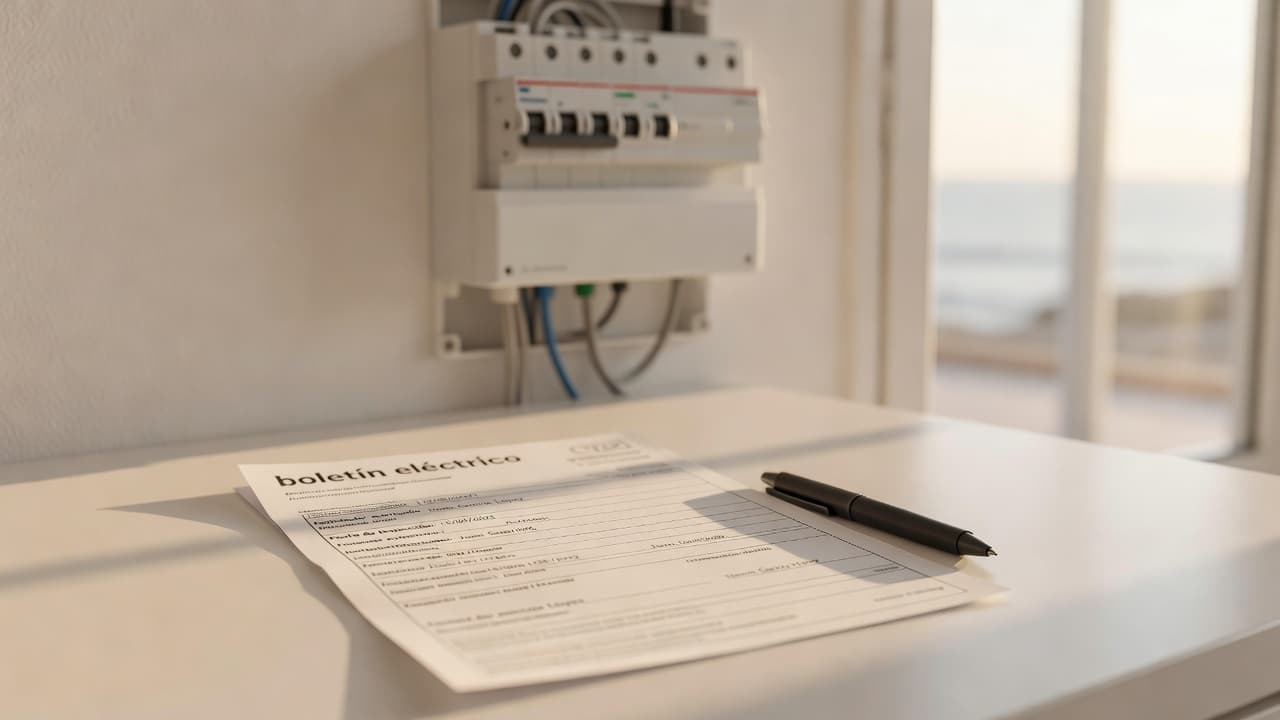
At the end, they'll give you a boletín eléctrico (electrical certificate) documenting what they've done. Keep this. If you ever sell or significantly upgrade your home, you'll need it.
Spread the load: don't plug multiple high-power appliances into the same circuit at the same time. If you're using the kettle, don't also run the dishwasher and air conditioning.
Protect sockets from moisture: in bathrooms and kitchens, keep sockets dry. If water splashes on a socket, dry it immediately and consider installing weatherproof covers.
Check appliance leads: damaged cables on kettles, hairdryers, or washing machines are a common cause of circuit trips. If you see a frayed lead, unplug the appliance and don't use it until it's repaired or replaced.
Have the panel inspected after major works: if you've had building work done (installing air conditioning, renovating a kitchen, adding a new bathroom), ask the electrician to inspect the panel to ensure it's rated for the new load.
Don't ignore repeated tripping: if the same breaker trips several times a week, something is wrong. Investigate and fix it properly rather than just resetting and hoping.
If you're ever unsure about a symbol, a switch, or what to do, the safest option is always to call a professional. That's what they're there for. But now when you open your cupboard and see that panel, you'll know exactly what you're looking at—and you'll feel a lot more in control.
If you need an electrician to inspect your consumer unit, diagnose a fault, or upgrade your installation, our network of qualified professionals across Spain's Mediterranean coast can help. They're experienced with homes like yours, they understand the climate challenges (salt air, heat), and they speak your language.
Browse our electricians