Sparking inside a consumer unit almost always indicates one of these faults:
Loose connections. The terminal contacts where wires connect to circuit breakers can loosen over time, especially in homes near the coast where salt air causes corrosion. A loose connection creates resistance, heat builds up, and the gap between the contact and the wire arcs (sparks).
Corroded or damaged contacts. In humid Mediterranean environments — particularly in coastal properties or flats exposed to sea air — moisture and salt can corrode the metal contacts inside the panel. Corrosion creates a poor electrical connection and sparking as current jumps the gap.
Overloaded circuits. If you've recently added high-power appliances (air conditioning in summer, electric water heaters, electric cookers), you may have exceeded the capacity of a single circuit. The circuit breaker tries to handle the load, the contacts overheat, and sparking begins.
Faulty circuit breaker. A circuit breaker can fail internally, causing arcing. This is a manufacturing or age-related fault and requires replacement.
Moisture inside the enclosure. In damp conditions or after water entry (flooding, burst pipe, rising damp), moisture can reach the live components inside. Water conducts electricity and causes arcing.
Damaged or worn components. Over many years, the internal components of a consumer unit wear. Contactors, relays, and switches can degrade and cause sparking.
All of these are electrical fire hazards. Arcing generates intense heat — enough to ignite surrounding material — and the longer it continues, the greater the risk.
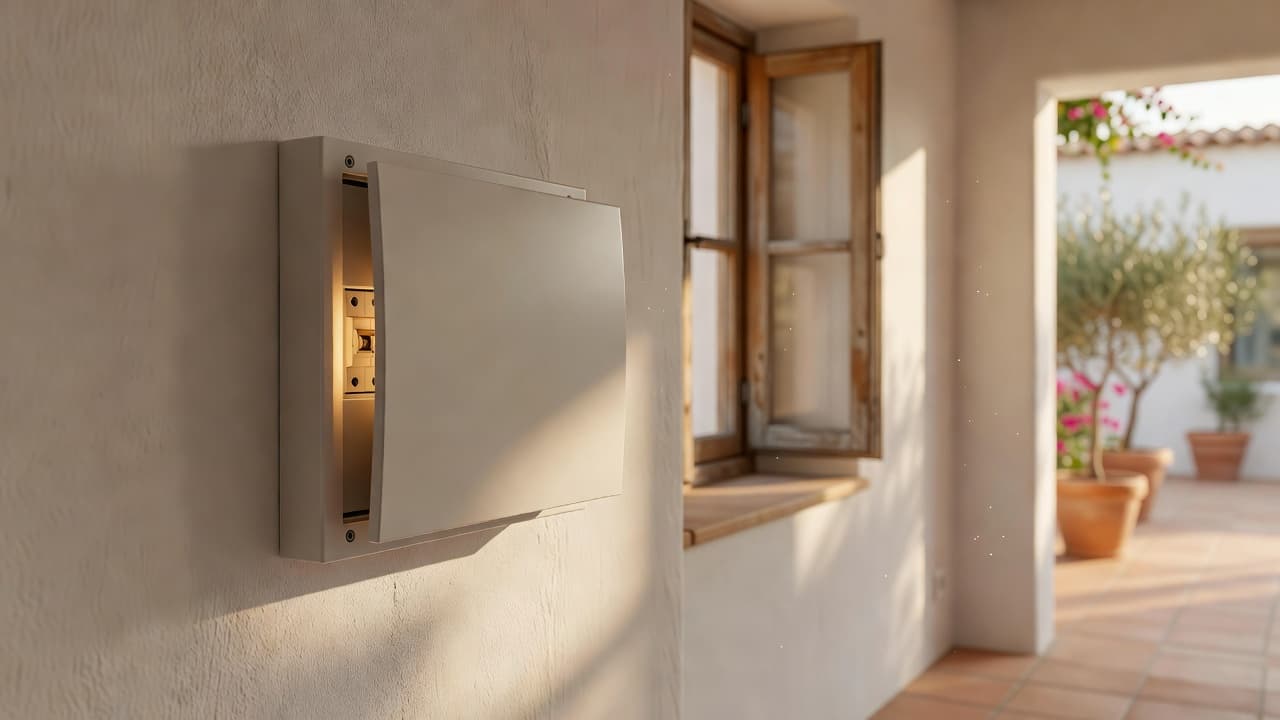
There are none. Do not attempt to fix, adjust, or inspect the consumer unit yourself. The door is a safety barrier, and inside are live electrical components at high voltage. Opening the panel or touching anything inside risks electrocution, arc flash burns, or fire.
The only safe action is to:
- Keep the area clear of people and pets.
- Avoid using electrical appliances if possible (run on battery power, use torches).
- Keep the consumer unit door closed.
- Wait for the electrician.
If the sparking is intermittent and has now stopped, do not be reassured. The fault is still present and will likely recur. The electrician must identify and fix it.
Never:
- Open the consumer unit door to look inside or adjust anything.
- Try to tighten connections or replace circuit breakers yourself.
- Use water to cool a sparking panel (water conducts electricity and increases the hazard).
- Cover the panel with anything to hide the sparking.
- Continue using power in the home if sparking is active.
- Assume the sparking will stop on its own.
Stop immediately and call an electrician if:
- You see or hear sparking or crackling from the consumer unit.
- There is a burning smell coming from the electrical panel.
- Any circuit breaker feels hot to the touch (check by holding your hand near, not on, the panel door).
- The main switch will not move to the OFF position or feels stuck.
- You see scorch marks, blackening, or discolouration around the panel.
- The sparking starts again after you've switched off the main switch.
In all these cases, your home has an active electrical hazard. Leave the property, close the door, and call an electrician or your local fire service from outside.
The electrician will first isolate the fault safely, usually by switching off the main switch and sometimes by using a portable RCD (residual current device — a portable safety switch) or by working from the external cut-out.
They will then open the consumer unit door carefully and inspect the internal components. Using a torch and inspection tools, they'll look for loose connections, corrosion, burnt contacts, or damaged circuit breakers. This inspection identifies the cause of the sparking.
Next, they will make the repair. This might involve:
- Tightening loose terminal connections.
- Cleaning corroded contacts (if safe to do so) or replacing damaged components.
- Replacing a faulty circuit breaker.
- Drying out the enclosure if moisture is present (and investigating why moisture got in).
- Upgrading the circuit if overload is the cause (by installing an additional circuit or a higher-rated breaker — though this requires care and must comply with Spanish electrical regulations, the Reglamento Electrotécnico para Baja Tensión or REBT).
Once the repair is complete, the electrician will test the system by switching power back on and monitoring the consumer unit to confirm no further sparking occurs. They may also perform additional safety checks using a multimeter or other test equipment.
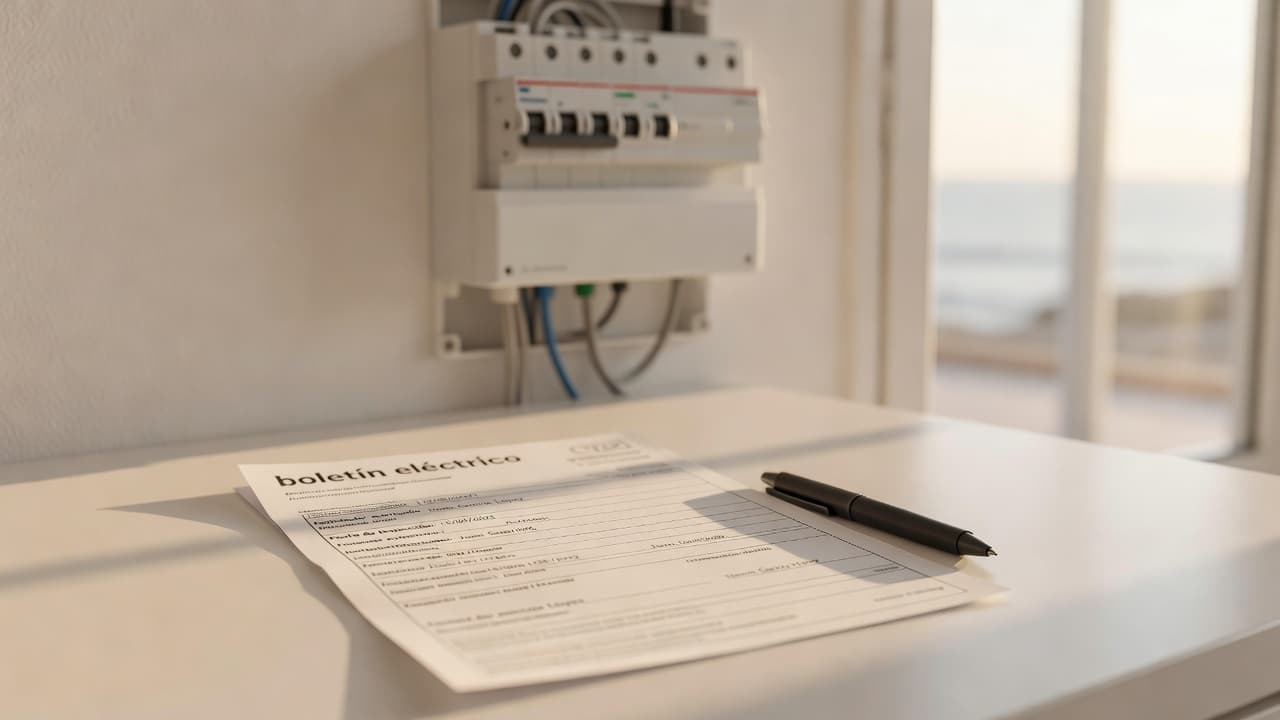
Finally, they will hand you a signed electrical certificate (a boletín eléctrico or certificado de instalación) documenting the work done, the date, and their professional credentials. Keep this document — you may need it for insurance claims or if you sell the property.
The whole process typically takes 1–2 hours, depending on complexity. If major components need ordering, the electrician will advise you on timing.
Regular inspection. Ask your electrician to inspect your consumer unit every 2–3 years, or annually if you live in a coastal property where salt air accelerates corrosion. They can spot loose connections or early signs of damage before sparking occurs.
Protect against moisture. Ensure the consumer unit is mounted in a dry location, away from direct exposure to external walls or water sources. If your home has rising damp or is prone to condensation, improve ventilation or install a dehumidifier in that area.
Do not overload circuits. Avoid plugging multiple high-power appliances into the same socket or circuit. Air conditioning, electric water heaters, and electric cookers should ideally run on dedicated circuits. If you're unsure, ask your electrician whether your circuits can handle your appliances safely.
Replace old equipment. If your consumer unit is more than 20–30 years old, consider a professional upgrade. Newer units have better protection and are less prone to corrosion and failure.
Keep the area clear. Store nothing against or directly in front of the consumer unit. It needs ventilation and should be accessible for inspection.
If you're seeing sparking in your consumer unit, do not delay. Find a qualified electrician in your area and call them today. They're trained to handle this safely and will protect your home from electrical fire risk.