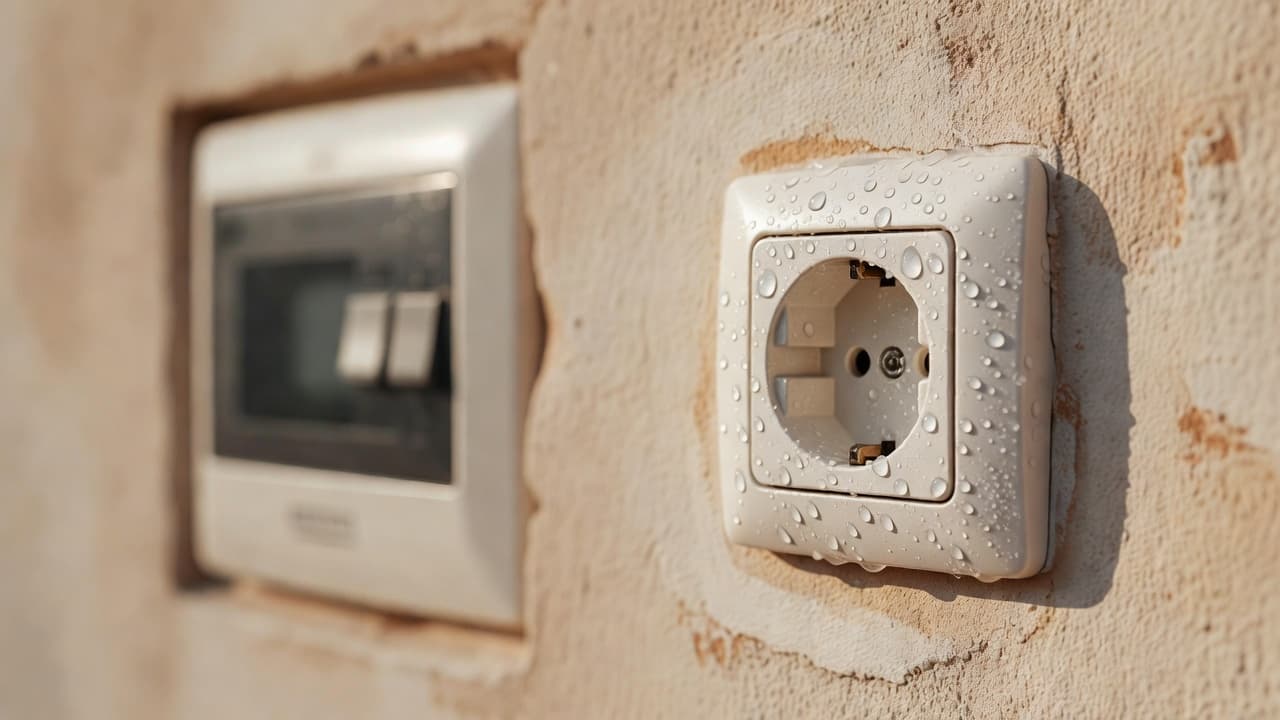
A burnt smell or black marking on a circuit breaker means one of these things is going wrong:
Arcing inside the breaker. When electrical current jumps across a gap inside the switch (instead of flowing smoothly through it), it generates intense heat and burns the metal contacts. This usually happens because the breaker is faulty and ageing, or because there's a short circuit on that circuit.
Overloaded circuit. If too many high-power appliances are plugged into the same circuit, the breaker may overheat. Circuit breakers are designed to trip (switch off) when this happens, but if the breaker itself is failing, it can burn instead of tripping safely.
Faulty appliance. A damaged kettle, washing machine, heater, or other device can send a short-circuit fault down the wire, causing arcing in the breaker. The breaker tries to cut the power but the fault is severe enough that the breaker itself overheats.
Loose wiring connection. If a wire connected to that circuit is loose or corroded (especially in damp homes or near the coast), it creates resistance and heat, which can cause arcing in the breaker switch.
Failing breaker component. Some older circuit breakers simply wear out. The internal mechanism degrades and loses the ability to trip safely. On the Mediterranean coast, salt air and humidity can accelerate this.
If the main power is off and you need to restore power to the rest of the house while waiting for the electrician, here's what you can safely do:
Leave the main switch off. Do not turn it back on. The whole house will have no power, but this is the safest option.
If you absolutely must restore some power: Turn the main switch back on, but immediately flip only the breakers for circuits you need (lights, fridge, perhaps one socket for a phone charger). Leave the burnt or discoloured breaker switched off. This isolates the faulty circuit but restores power elsewhere.
Do not plug high-power appliances into other circuits. Avoid using electric heaters, water heaters, air conditioning, or ovens while waiting. These draw lots of current and might overload other circuits if they're old or already strained.
Keep an eye on the other breakers. If another breaker feels warm to the touch, smells burnt, or trips repeatedly, turn the main switch off again and wait for the electrician.
Turn off the water heater (if electric). Most Spanish homes have an electric water tank (termo eléctrico) that runs on its own circuit. Turn it off at the breaker for the duration. You won't have hot water, but you'll reduce electrical load and risk.
Do not open the consumer unit. The metal bus bars inside carry live electricity even when the main switch appears to be off. Opening it risks fatal electric shock.
Do not try to clean, dry, or inspect a burnt breaker. Touching it, even if the main switch is off, is dangerous.
Do not assume the problem is solved if you reset the breaker and it stays on. If it was burnt, resetting it doesn't fix the underlying fault. The problem will return, often suddenly and under load. You need the electrician to find and fix the root cause.
Do not ignore a repeatedly tripping breaker that smells or looks abnormal. Repeated trips are a sign the breaker is struggling. Eventually it will fail catastrophically.
Do not delay calling an electrician if you see sparking, smoke, or hear crackling from the consumer unit. Leave the house immediately and call the emergency services and an electrician.
When the electrician arrives, they will:
Visually inspect the consumer unit. They'll look at the burnt or discoloured breaker, check for scorch marks or debris inside the unit, and identify which circuit has the fault.
Test the circuits with a multimeter and specialist equipment. They'll measure voltage and current on each circuit to identify short circuits, leaks to earth, or overload patterns. They'll also test the faulty breaker to confirm it's failed.
Replace the burnt breaker. They'll turn off the main switch, safely remove the old breaker, and install a new one of the same type and rating. In Spain, circuit breaker replacements must match the original specification — typically a 10A, 16A, 20A, or 32A switch depending on what the circuit supplies.
Check the circuit wiring and connected appliances. If the fault was caused by a short circuit in an appliance or loose wiring, the electrician will identify and report it. They may advise you to replace a faulty appliance or repair a damaged cable.
Test the new breaker under load. Before leaving, they'll check that the new breaker operates correctly and trips safely if there's an overload.
Provide a written electrical safety certificate (boletín eléctrico). After the work is complete, you'll receive a certificate signed by the electrician, confirming the repair was done safely and in compliance with Spanish electrical regulations (REBT). Keep this document — you may need it for insurance or future home sales.
Spread the electrical load. Don't plug too many high-power appliances into the same socket or circuit. Use different sockets on different circuits for heaters, air conditioning, and kettle use.
Have old consumer units checked. If your breakers are more than 20 years old, ask an electrician to inspect them. Ageing breakers lose their ability to trip safely and should be replaced.
Check for loose appliances and damaged cables. Faulty kettles, heaters, and washing machines are common sources of short circuits. If an appliance has a burned smell or visible damage to its plug, unplug it and don't use it.
Maintain your consumer unit. Keep it clean and dry. On the coast, check for corrosion on the metal frame or terminals. Salt air can degrade connections over time.
Don't overload new extensions. If you've recently added a lot of sockets or appliances, and suddenly a breaker is burning, the circuit may be undersized. The electrician can advise on upgrading the wiring or adding a new dedicated circuit.
A burnt or discoloured circuit breaker is your home's electrical system telling you something is seriously wrong. The good news is that it's fixable and the risk is containable if you act now: turn off the main switch, don't touch the breaker, and call an electrician. They'll diagnose the fault, replace the breaker if needed, and give you the safety certificate to prove the work was done correctly.
Get a quote from a qualified electrician today — most can attend the same day for urgent electrical faults like this.