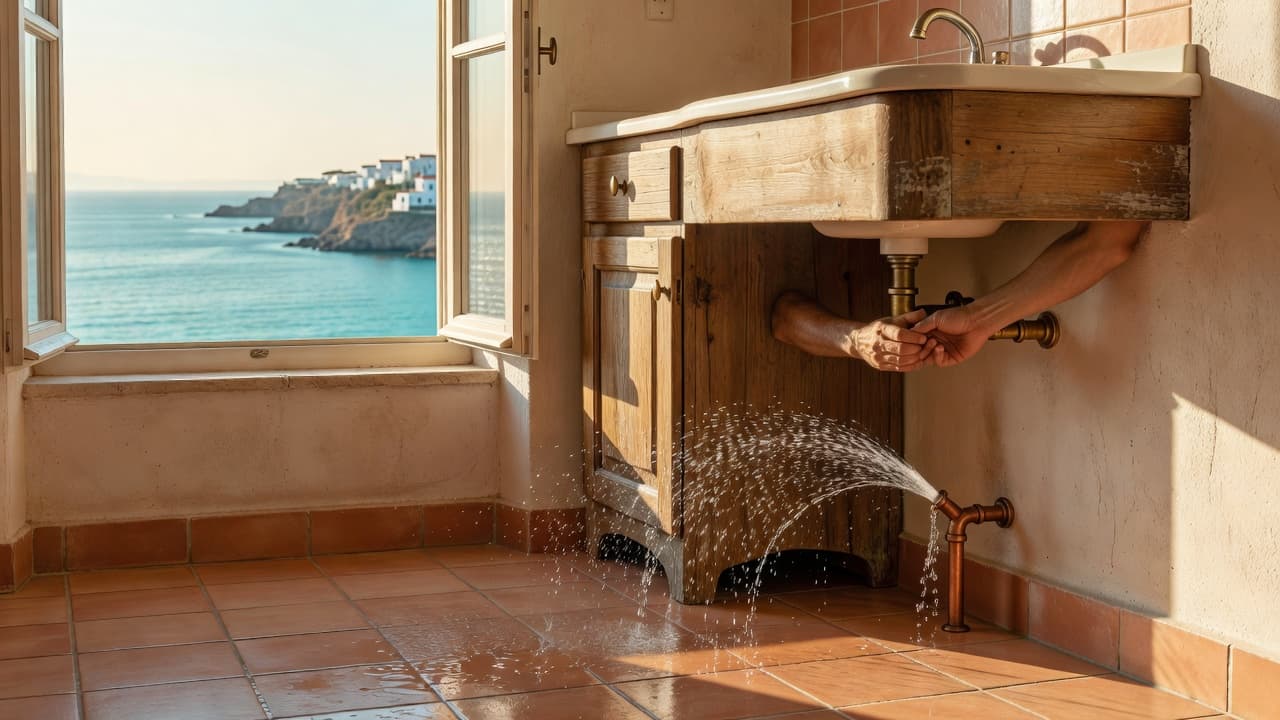
Burst pipes are almost always a result of one of these causes.
Freezing water. If temperatures dropped below 0°C overnight, water inside the pipe froze, expanded, and split the pipe from inside. This is rare on the Mediterranean coast, but does happen in winter in inland regions or at altitude. Once the ice melts, water pours out.
Age and corrosion. Old copper or galvanised steel pipes corrode internally and weaken. A weakened section ruptures under normal water pressure, usually without warning. This is common in properties over 30 years old, especially near the coast where salt air accelerates corrosion.
Water pressure spike. A sudden pressure surge—sometimes caused by a faulty pressure regulator or a neighbouring property's work—can split a weak section.
Physical damage. A pipe behind a wall can burst if the property has shifted (subsidence), or if renovation work nearby damaged it. You might not see evidence until water starts leaking.
Blockage and pressure build-up. A severely blocked pipe forces water pressure to build, which can eventually split the pipe downstream of the blockage.
On the Mediterranean coast, salt-air corrosion and pressure from summer air-conditioning overload are the most common culprits.
Once the main stopcock is closed, you can stabilise the situation further whilst waiting for the plumber.
For a small spray or pinhole leak, wrap the damaged section tightly with waterproof tape (duct tape or plumber's repair tape). Start 5 cm before the hole and spiral the tape overlapping itself for at least 10 cm past the damage. This is a temporary seal only, not a permanent fix, but it can slow a drip significantly.
For a split section, if the break is visible and the pipe is exposed (not behind a wall), you can wrap it, but this rarely holds completely. Focus on directing water away from electrics and valuables instead.
Never attempt to solder, glue, or compress a burst pipe yourself. These require specialised equipment, the right materials, and safe handling (soldering involves heat and flux fumes). The risk of incomplete repair, weakening a surrounding joint, or causing a worse break is high. Leave this to the professional.
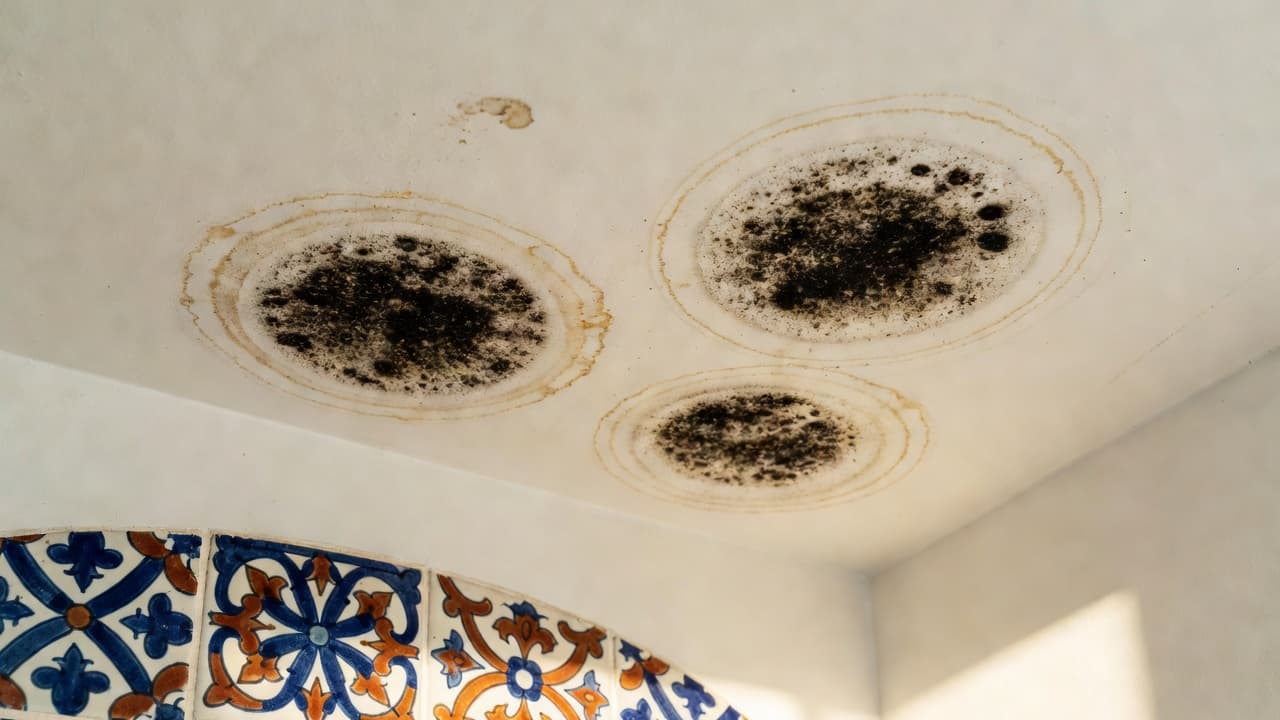
Do not use expanding foam or caulk to seal a burst. These materials can trap water and moisture behind walls, causing hidden damage and mould.
If the burst is in an external pipe or a section you can safely isolate, you might ask a plumber if they can cap it temporarily and reroute water via a secondary pipe. But this requires professional judgment on site—don't improvise.
Stop and call a plumber immediately if:
- The pipe is behind a wall or under the floor. You cannot repair a hidden burst safely. Water will continue leaking into the structure, causing unseen damage even if you've closed the stopcock. A thermal camera or water detection equipment is needed.
- The burst is near the boiler or in a heating pipe. Heating systems operate under pressure and sometimes contain additional risk. Don't touch these; let the plumber assess and refill the system safely.
- Water is dripping onto live electrics, sockets, or light fittings. Turn off the electrics to that circuit at the consumer unit (cuadro) first, then contain the water. Never touch wet electrics.
- You cannot close the main stopcock and water is actively flooding. Call the plumber immediately and explain the situation. Some can locate and shut off the water from the external supply.
- The stopcock is seized or broken. Forcing a stuck stopcock can snap it, making the problem worse. Stop, and call a plumber. They have tools to access the meter isolation valve.
- The burst is on a pressurised pipe connected to a water tank or pressure vessel. These systems require depressurisation before safe work. Don't touch them.
In any of these cases, your role is containment and damage limitation, not repair.
When you call a plumber, tell them:
- The location of the burst (kitchen, bathroom, visible or suspected inside a wall).
- Whether you've closed the main stopcock.
- What's currently leaking (cold water, hot water, heating water).
- Any visible damage (damp walls, soft ceilings, water pooling).
A plumber will typically:
Locate the exact break by following the leak visually or, if it's hidden, using water detection equipment. They'll identify whether the pipe is in a wall, floor, or open.
Decide on repair or replacement. If the break is small and the pipe is accessible, they may repair it with compression fittings or epoxy. If the pipe is old, corroded, or the break is large, they'll replace the damaged section or, in some cases, replace a longer run of pipework. On the coast, full replacement is often more reliable than repair.
Check the water pressure. A burst often indicates that pressure is too high for the pipework. They'll check with a gauge and may install a regulator to prevent future bursts.
Refill and test. After repair, they'll reopen the stopcock, refill the system, and check for leaks elsewhere. They'll run water through each section to clear air and confirm flow.
Provide a receipt and, if applicable, a boletín (electrical safety certificate equivalent for plumbing work). Keep this for insurance and future reference.
The entire job usually takes 1–3 hours for a straightforward repair in an accessible pipe. Hidden bursts or full sections of pipework replacement may take longer and may require follow-up visits.
Once the pipe is fixed:
Ask the plumber about the cause. If it's age, ask about replacing other older sections proactively. If it's corrosion from salt air, ask about protective coatings or alternative materials. If it's pressure-related, ask about a pressure regulator.
In winter, insulate exposed pipes in unheated areas (garages, terraces, meter boxes) with foam wrap. Frozen pipes are preventable.
Monitor your water bill. A sudden spike can indicate a slow leak before it becomes a burst. Check for damp patches, soft ceilings, or musty smells in cupboards regularly.
Know where your stopcock is. Every household member should be able to find and close it. Label it or take a photo and pin it to your phone.
Have a plumber on hand for regular checks. If your property is over 25 years old and the pipework is original, an inspection every 2–3 years can catch corrosion or weak sections before they fail.
A burst pipe is frightening, but the actions are simple and clear. Close the main stopcock, direct water away from electrics, and call a plumber. You can stop the damage from worsening in the first five minutes. The rest is professional work.
If you need a plumber urgently, MyCasa Spain's network of experienced plumbers is available across the Mediterranean coast and can often respond the same day. They speak your language and understand the specific challenges of older Spanish properties and coastal properties.
Don't wait. Act now.