A burning smell from your air conditioning usually stems from one of these causes:
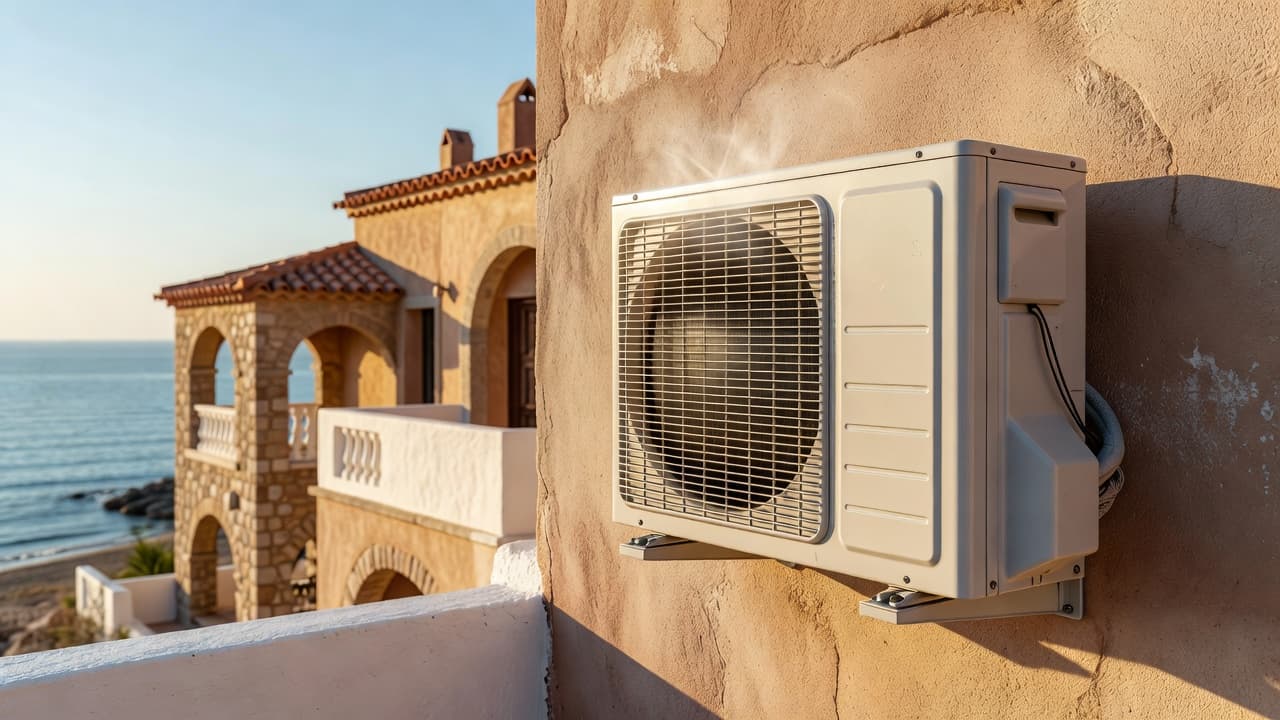
Electrical fault in the compressor or motor. The compressor is the heart of the air conditioning unit, located in the external box. If the motor windings are failing or a wire connection has come loose, the electrical resistance generates heat and a distinctive burnt smell. This is the most common cause and the most urgent.
Burnt-out capacitor. The capacitor is a small component that helps start the compressor motor. When it fails, it can produce a sharp burning smell and sometimes a small popping sound. Capacitors are relatively inexpensive to replace but the unit must be off while repair happens.
Blocked or very dirty filter. If the indoor filter has not been cleaned for months, restricted airflow causes the coils to ice up (even in summer, due to the cooling cycle). When the ice melts and the unit struggles to push air, the motor can overheat and smell burnt. This is less severe than electrical failure but still requires immediate attention.
Dust or debris inside the unit catching fire from internal heat. Occasionally, dust or small debris accumulated inside the external or internal unit can overheat and smoulder. This is rare on the coast, but salt corrosion and moisture can create conditions where this happens.
Corrosion from salt air. If you live near the sea—on the Costa Blanca, Costa del Sol, the Balearics, or any coastal area—salt spray corrodes electrical connections inside the compressor box. Corroded connections generate resistance heat, which produces the burning smell. Coastal properties are at higher risk.
If the burning smell has stopped and you are waiting for the technician to visit, here is what you can safely do:
Leave the unit switched off. Do not run it. Wait.
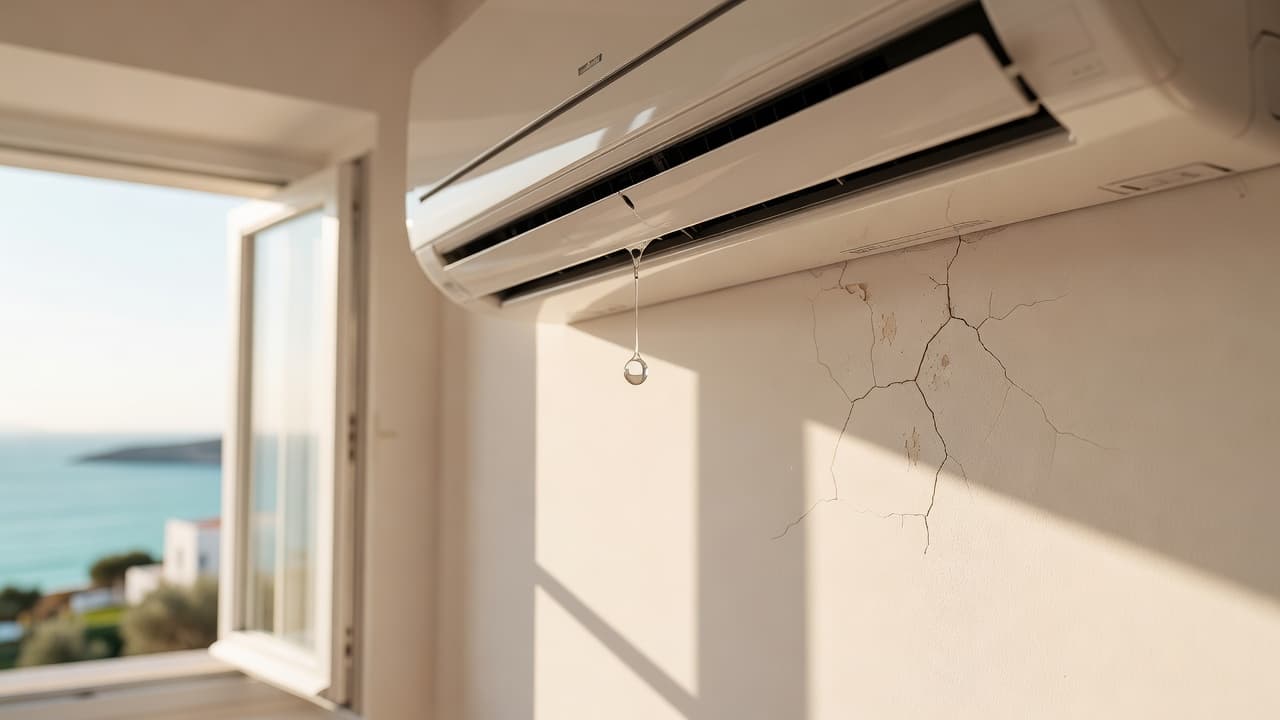
Clean or replace the indoor filter if you know how to do it safely. Locate the filter in the indoor unit (usually a slide-out panel on the front or side of the wall-mounted box). If it is visibly clogged with dust or dirt, gently remove it and rinse it under cold water, or replace it with a new one if you have a spare. This takes 2–3 minutes. Do not force any panel open; if it is stuck, leave it.
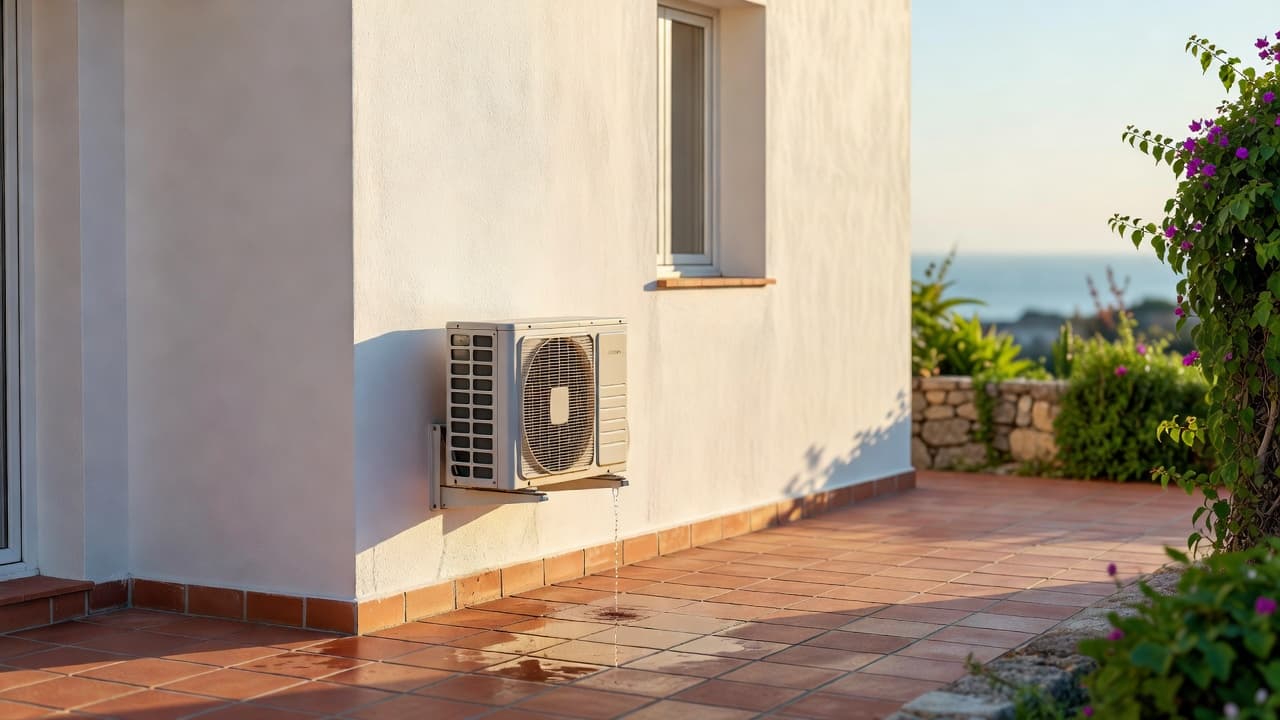
Vacuum gently around the outdoor unit. If the external compressor box is surrounded by leaves, dirt, or debris, carefully brush or vacuum it away from the fan grille. This improves airflow. Do not spray water on the compressor or open any panels.
Note when the smell started. Did it begin during a heatwave when the AC was running 12 hours a day? After you cleaned the filter? After a storm? This detail helps the technician diagnose the fault.
These steps do not fix the underlying problem but reduce the risk of escalation before the professional arrives.
Do not attempt any of the following, even if you are confident:
Do not open the external compressor unit or any control box. There are live electrical components inside that can cause electrocution, even when the unit is switched off. A technician has specialist tools and insulation.
Do not spray water on the compressor or internal components. Water and electricity do not mix. If you believe corrosion is the issue, let the specialist handle it.
Do not replace the capacitor yourself. Even when the AC is off, capacitors store charge and can cause serious shock. This is a technician's job.
Do not ignore a chemical or acrid burnt smell that gets stronger. If the smell is intensifying or you notice a hissing sound, turn off the unit immediately and do not stay in the room. Leave your home and call the technician from outside. This could indicate a refrigerant leak or electrical arc.
Do not assume the smell will go away if you ignore it for a few days. It will not. The fault will usually worsen, and you risk component failure, fire, or toxic fumes.
If you see any of these warning signs, turn off the AC and call for help today: visible smoke, a burning smell that is sharp and chemical, a popping or crackling sound from the compressor, the unit extremely hot to the touch, or the smell accompanied by the AC not cooling the room properly.
When the air conditioning specialist or electrician visits, they will follow a standard diagnostic process.
First, they will inspect the indoor and outdoor units visually, checking for burnt marks, melted plastic, or corroded connections. They will smell the unit themselves to confirm the type of burning and narrow down the cause. They will also ask you when the smell started, whether it is your first summer using the AC, and whether there have been any power cuts or storms recently.
Second, they will use a multimeter to test electrical connections in the compressor motor and capacitor. This tells them whether there is a fault and where. If the capacitor is blown, they will replace it (usually 30–90 minutes of work, depending on access). If the motor windings are damaged, the compressor will likely need replacement, which is more expensive and takes longer.
Third, if the fault is electrical corrosion—common on coastal properties—they may recommend sealing or applying a protective compound to exposed connections, or in severe cases, upgrading to a model with salt-resistant coatings if you live very close to the sea.
Fourth, they will clean the filter and the internal coils if dust was part of the problem. This may be included in the call-out fee or charged separately, depending on how dirty the unit is.
Before they leave, they will test the unit with the AC running for 10–15 minutes to confirm the smell is gone and the cooling function is restored. They will give you a written report (boletín or informe) describing the fault, the repair, and any recommendations. Keep this document; it proves the work was done professionally and is useful if you sell or rent the property later.
If the compressor itself is failing and replacement is needed, expect a larger cost and a longer wait if parts need to be ordered. The technician will provide a quote and timeline.
Prevent future burning smells with these simple habits:
Clean or replace the indoor filter every month during summer. A clogged filter is one of the most preventable causes of overheating and burnt smells. If you use the AC daily, monthly maintenance pays for itself in energy savings and longevity.
Have the outdoor compressor unit professionally serviced once a year, preferably before the hot season starts (April or May). The technician will clean the coils, check electrical connections, and test refrigerant levels. This is not expensive and catches corrosion or wear early.
If you live near the coast, ask the technician about salt-resistant coatings or protective sprays. Some specialists recommend a light annual coating on the compressor box to slow corrosion. It is not mandatory, but on the Costa Blanca or Costa del Sol, it can extend the unit's life by years.
Do not block the outdoor unit with plants, furniture, or shade cloths. The compressor needs airflow. Restricted airflow causes the motor to work harder and overheat.
If the AC is in a holiday home or flat you do not use year-round, run it for 15 minutes every 2–3 weeks, even in winter. This keeps the motor lubricated and prevents the refrigerant from settling unevenly. A unit left idle for months can develop faults.
Keep the area around the compressor clear of leaves, dirt, and salt spray. After storms or windy periods, check the outdoor unit and clear any debris.
If your air conditioning is producing a burning smell, do not delay. Turn it off now, ventilate the room, and contact an air conditioning specialist or electrician today. The cost of early repair is far less than the cost of a burnt-out compressor or a damaged unit that cannot be salvaged. Our network of vetted professionals across Spain's Mediterranean coast can visit within 24 hours in most cases and will diagnose the fault quickly.