Burning plastic smells from electrics typically come from one of three places.
Overloaded outlet or loose connection. When too many appliances draw power through a single outlet, or when a plug doesn't sit flush in the socket, friction generates heat. The plastic around the connection begins to melt or scorch. This is especially common in Spanish coastal properties, where salt air corrodes the metal inside outlets and causes poor contact. It happens more often in summer when air conditioning units push the circuit to its limit.
Faulty appliance. A damaged kettle, toaster, heater, or phone charger can have a short circuit inside. The plastic casing or internal insulation starts to burn as electricity arcs across a damaged component. This is usually contained to that one item and stops once you unplug it.
Damaged wiring in the wall. This is the rarest but most serious scenario. If insulation around copper wiring deteriorates — due to age, moisture, rodents, or installation faults — the bare wire can arc and burn the surrounding plastic coating and wall materials. You won't see this, but you'll smell it.
If you've identified a specific faulty appliance, the solution is simple: don't use it again until it's been checked or replaced. Unplug it, store it safely away from flammable items, and move on.
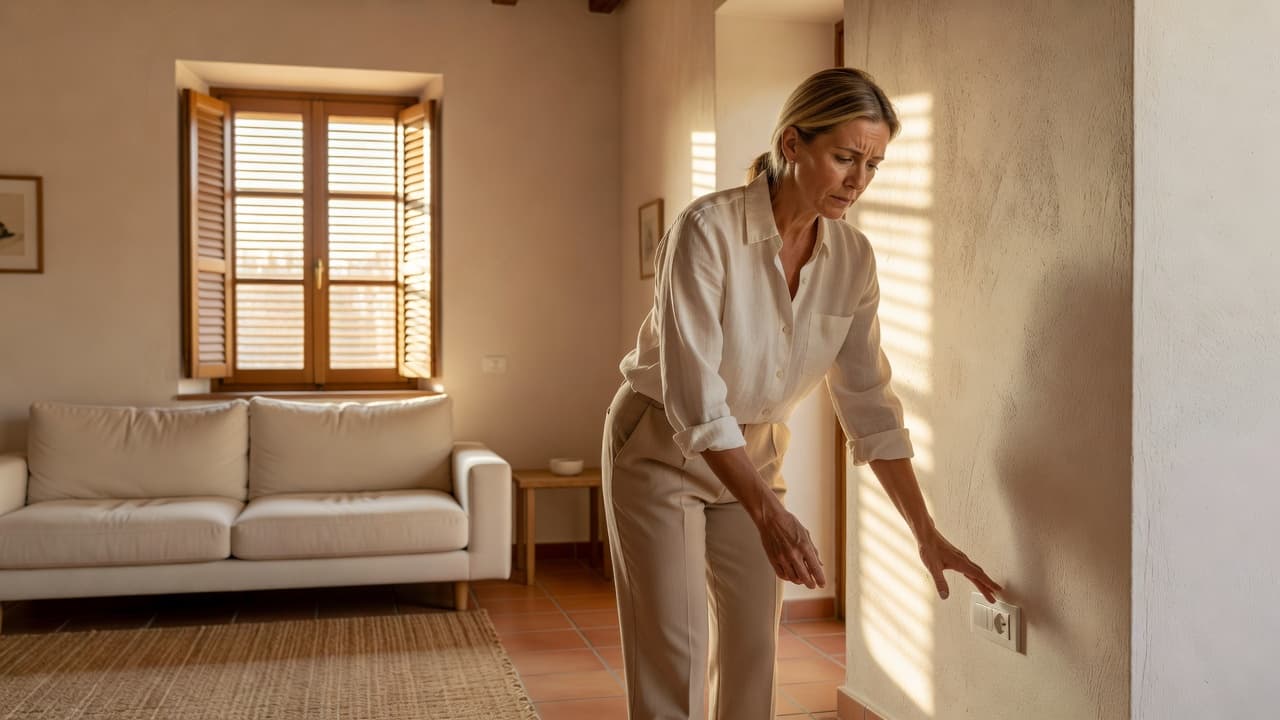
If the smell is gone and you've found no obvious cause, but you suspect a specific outlet or light fitting, unplug everything from that outlet and turn off the circuit breaker (disyuntor) that controls it at the consumer unit if you can identify which one. Turn off the light if the smell was near a light fitting. Leave it off. This isolates the problem until the electrician arrives.
Keep windows open and monitor the smell. If it returns or spreads, switch off the main electrics again.
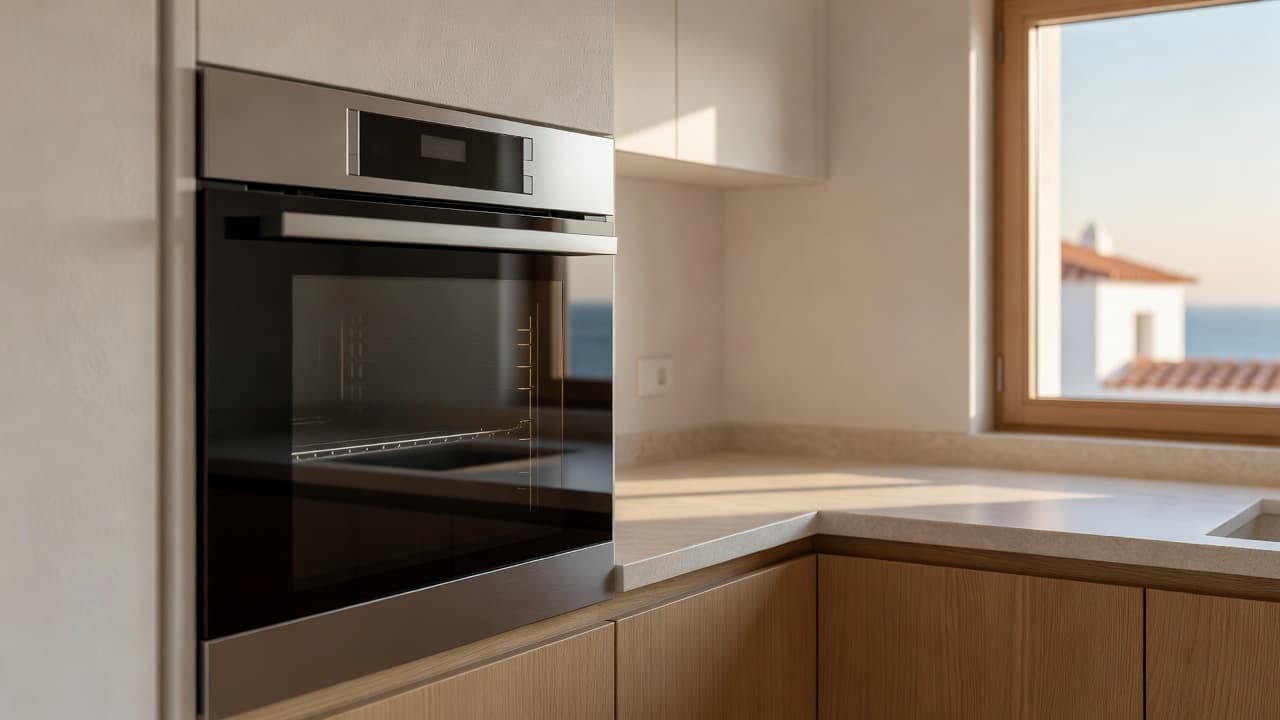
Do not use a hair dryer, immersion heater, oven, or air conditioning unit in the room where the smell originated until an electrician has checked it. These are high-power devices and if there's a fault, they'll make it worse.
Stop immediately and call an electrician if any of these apply:
- The smell is strong and accompanied by visible smoke or scorch marks on outlets, walls, or around light fittings.
- The smell comes from inside the walls, or you hear crackling or hissing sounds.
- You see blackened or discoloured plastic around an outlet or appliance.
- The smell returns after you've switched off the main electrics and fades only slowly, suggesting the source is still active.
- You feel tingling, mild electric shock, or warmth from touching an outlet or switch.
- The smell is in a rented property (contact the landlord or property manager immediately) or in a flat with a shared consumer unit (contact the community administrator, administrador).
- You have any doubt about your safety. Never risk it.
In any of these cases, switch off the main electrics, leave the property if the smell is strong or accompanied by smoke, and call the emergency services (112) and an electrician.
A qualified electrician will begin by inspecting the consumer unit to check for signs of scorching, melted plastic, or loose connections. They'll test the circuits with a multimeter and a circuit tester to identify which one is faulty. They'll then inspect outlets, switches, and light fittings in that circuit, and test all plugged-in appliances to rule them out.
If the fault is in the wiring behind the walls, they may need to use a thermal imaging camera or insulation resistance tester to pinpoint the damage. Depending on the severity, they might need to replace a section of cable, install a new outlet, or recommend a partial rewire of that circuit.
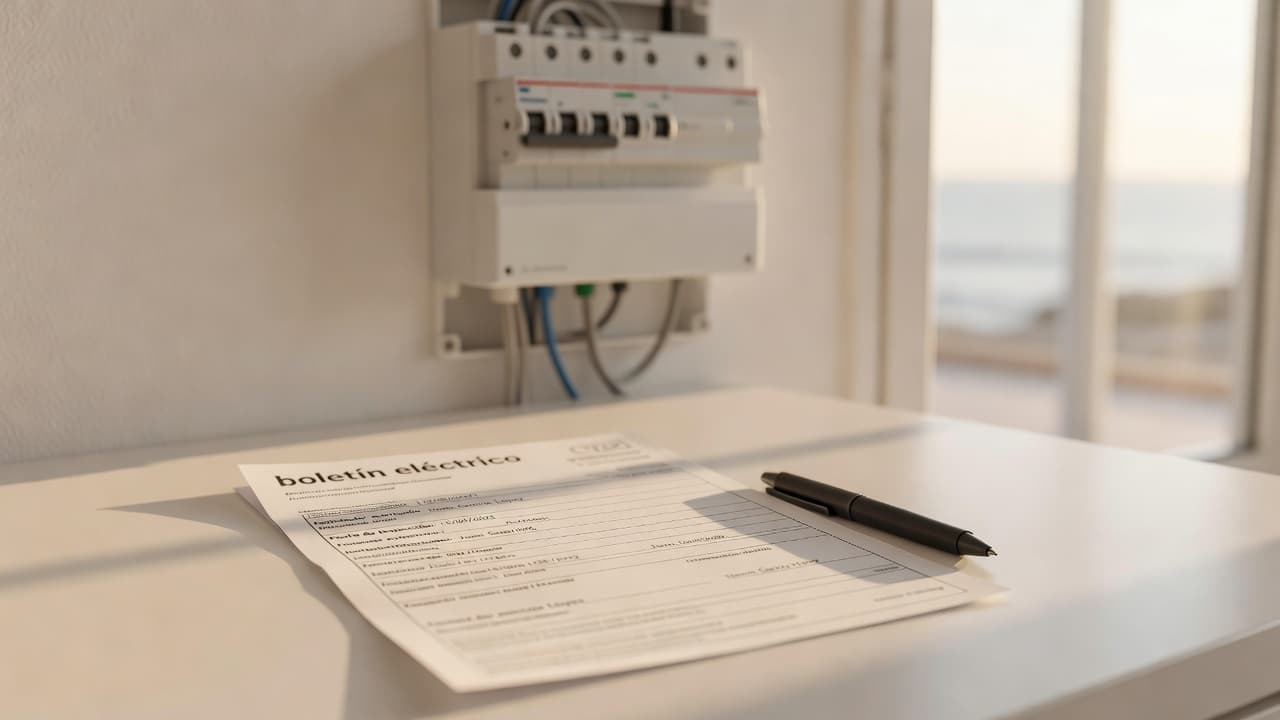
Once repairs are complete, they'll provide you with a signed certificate (boletín de instalación eléctrica) confirming that the work meets Spanish electrical safety standards (REBT). Keep this document. It's proof of compliance and is important if you ever sell or insure the property.
The electrician should also advise on whether your consumer unit needs upgrading — especially in older properties or if you're running multiple high-power devices in summer.
Don't overload outlets. One appliance per socket is safest. If you need more sockets, have the electrician install additional outlets in the right place rather than using multi-plug adapters (regletas).
Check your consumer unit every 6 months. Look for blackening, melted plastic, or a burnt smell near it. If you see damage, call an electrician immediately. Don't wait.
In coastal properties, inspect outlets annually. Salt air causes corrosion inside metal contacts. If an outlet feels loose or warm, have it replaced.
Don't ignore warning signs. A slight burning smell, a tingling sensation from a switch, or an outlet that's always warm are all red flags. Address them immediately, not "when you get around to it".
Test your RCD (residual current device). Most Spanish consumer units have an RCD (a switch marked with a test button, or differential). Test it monthly by pressing the button — the power should cut immediately. If it doesn't, call an electrician. This device is your main protection against electrical shock and fire.
If you've identified a burning plastic smell in your home and can't safely isolate it, don't wait. Our network of qualified electricians across the Mediterranean coast can visit the same day to diagnose and fix the fault. Get a quote now.