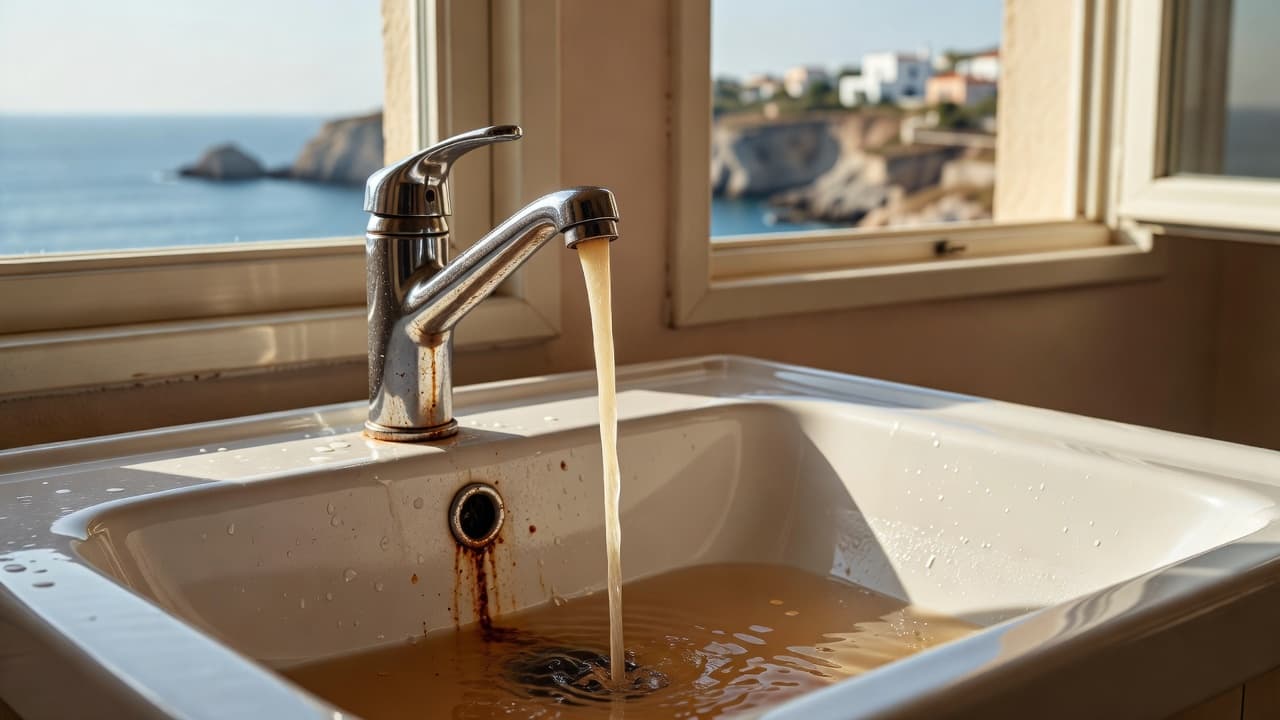
Brown or rusty water usually has one of three causes.
Rust inside your pipes. Older galvanised steel pipes (common in Spanish homes built before the 1980s) gradually corrode from the inside. As rust flakes accumulate, they cloud the water and give it a brownish tint. This is most common in properties that have been empty for weeks, or after any work on the mains.
Sediment in the water supply. The mains water pipes on your street contain harmless sediment (minerals and fine particles). If the water company carries out maintenance work nearby – repairing a leak, replacing a section of pipe, or flushing the main – they stir up sediment. This travels through the street pipes and into your home for a few hours.
Iron bacteria or manganese. Less common, but some areas of Spain have naturally high iron or manganese in the groundwater. This is not harmful but can discolour water and stain white surfaces over time.
Corroded internal pipework. If your home has old copper or brass pipes with worn joints, oxygen in the water can cause slow corrosion. This tends to produce a greenish tint rather than brown, but severe cases can look rusty.
If the water doesn't clear quickly, you can safely contain the problem and continue daily life.
Use water from a different source temporarily. If you have a separate outdoor tap (often on the patio or garden) or a secondary supply, try running that first. Discoloration sometimes affects only part of the internal pipework.
Fill containers of water before use. Rather than running the tap every time you need water, fill buckets or large jugs and let any sediment settle at the bottom. Use the clearer water from the top.
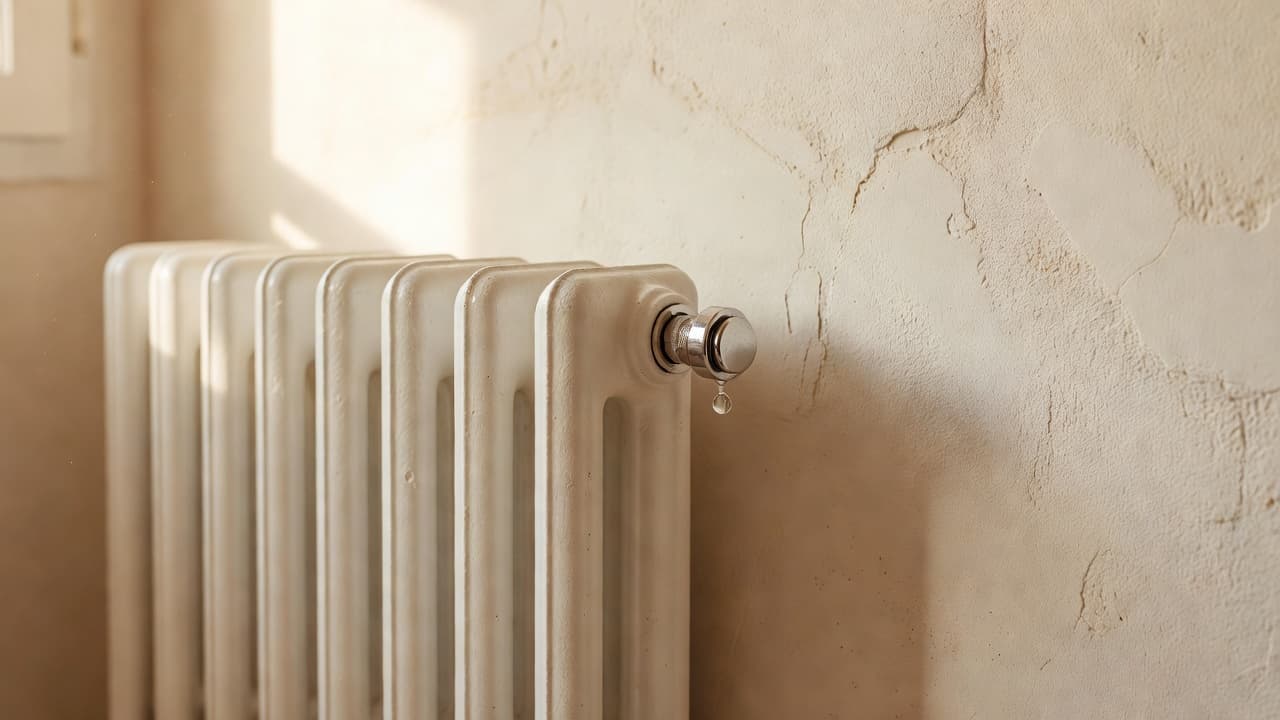
Run the hot tap separately. If you have a storage tank (a termo eléctrico – an electric water heater common in Spanish flats) or a boiler, the brown water may clear faster from the cold supply than the hot. Try both and use whichever clears first.
Use bottled water for drinking and cooking until the tap water runs clear. It's inexpensive and removes any worry about sediment or taste.
Avoid high-temperature washing and heavy machine use. Hot water can accelerate corrosion inside pipes and stir up more sediment. Stick to cool showers and don't run the dishwasher or washing machine until the water clears.
Stop and call a plumber immediately if you notice any of these warning signs:
- The brown water is accompanied by a strong metallic smell, rotten smell, or sulphurous odour. This indicates bacterial growth or serious corrosion, not just surface rust.
- The water remains brown for more than 2 hours of continuous running. This suggests sediment or corrosion deep in your supply pipes.
- The discoloration returns repeatedly over days or weeks, even after running the tap. This is a sign of active pipe deterioration.
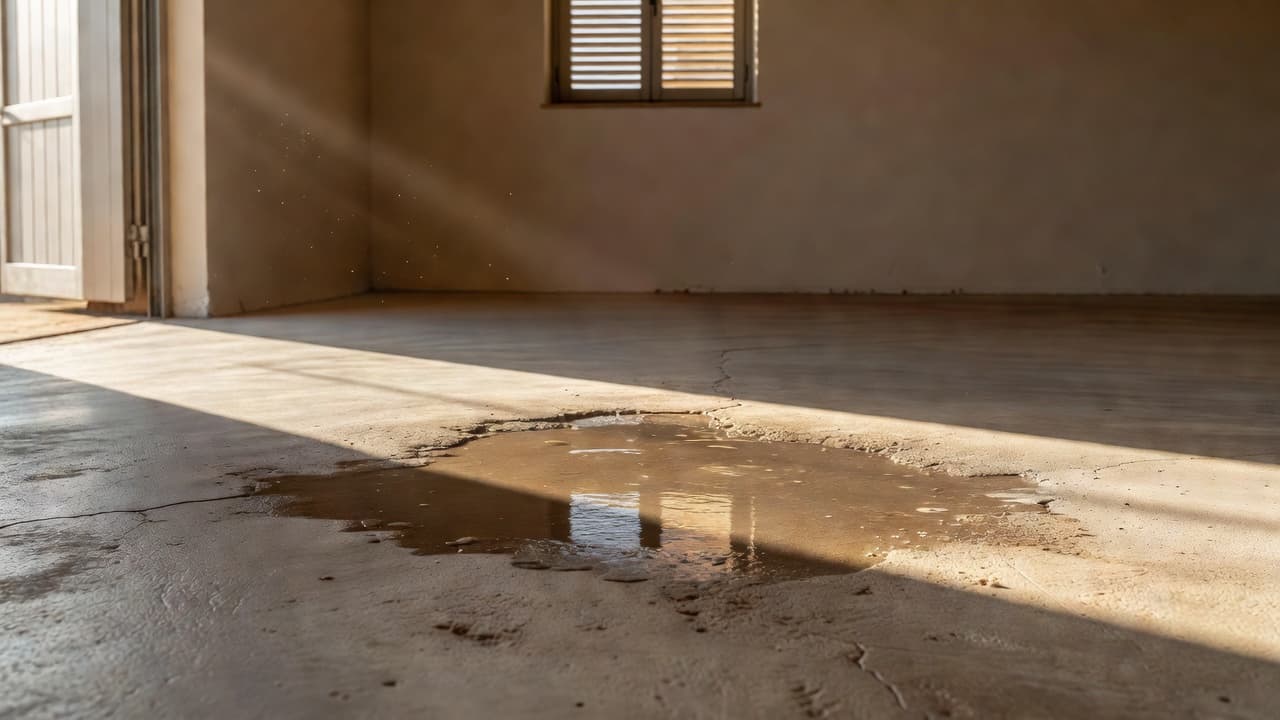
- The water is black or has visible sediment particles rather than simply discoloured. This may indicate a rupture or heavy contamination in the supply.
- You notice low water pressure alongside the brown water. This could mean a blockage or rupture in your main supply.
- The hot water smells worse than the cold water. This suggests a problem inside your boiler or tank, which requires immediate professional inspection.
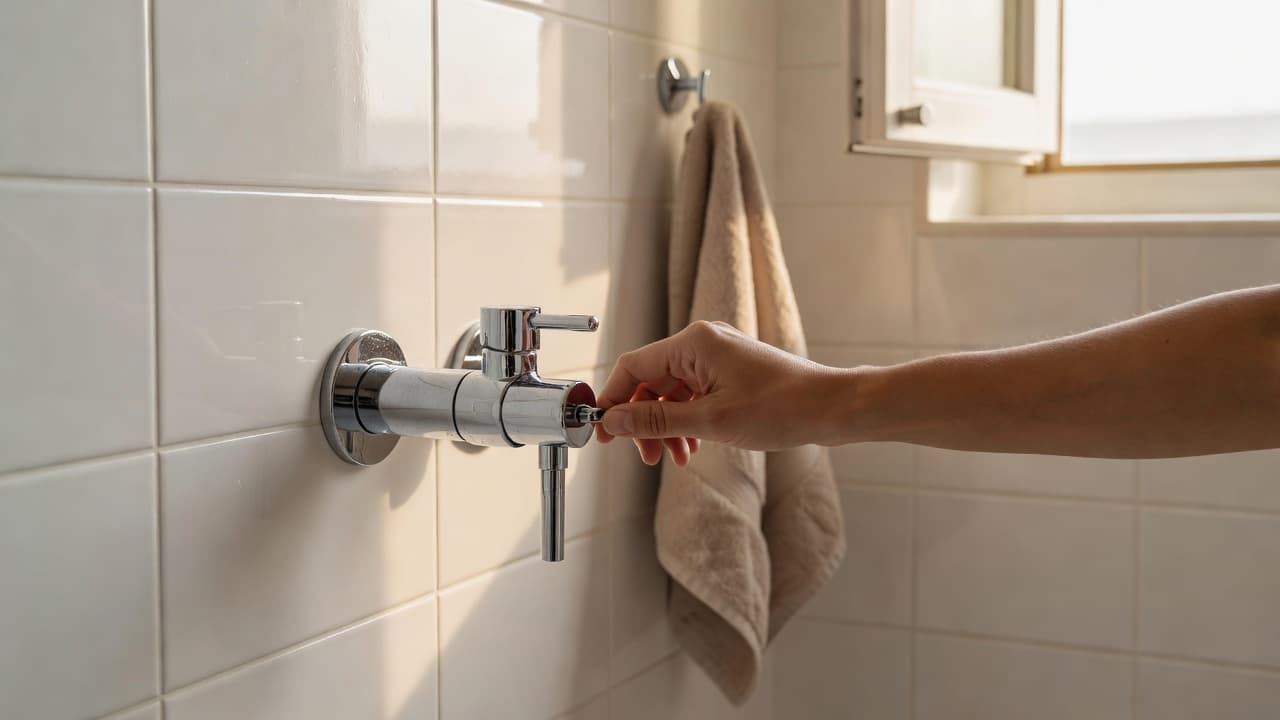
Do not add chemicals to try to clear rust or sediment yourself. Do not open or drain your main stopcock (llave de paso general) without professional guidance.
Your plumber will start by identifying where the discoloration is coming from. They will ask how long it's been happening, whether it affects all your taps or just some, and whether the water company has mentioned any work on the mains.
If the discoloration is coming from the mains supply (often confirmed by checking with neighbours or the water company), the plumber will flush your internal pipework with high-pressure water to clear the sediment, then run the system until the water runs clear. This usually takes 30–45 minutes and costs between €80–€150 for a simple flush.
If the brown water is coming from corroded internal pipes, the plumber will inspect the visible pipework (under sinks, in the kitchen, any exposed sections) and may use a handheld inspection camera to check hidden sections. If pipes are heavily corroded, they will advise on repair or replacement. The cost depends on the extent of corrosion and how much of the system is affected. A local section repair might cost €200–€400, while replacing a significant length of pipework costs more.
If you have an electric water tank (termo eléctrico), the plumber may drain and clean it if sediment has accumulated inside. This is a routine maintenance job that takes about an hour.
In all cases, the plumber will provide a report of what they found and what they did. If pipes are corroded or at risk, they'll recommend a plan for repair.
If you own a holiday home or property left empty for extended periods, run all the taps for 5–10 minutes every 2–3 weeks, even when you're not there. Ask a neighbour or local property manager to do this if you're abroad. Stagnant water in pipes accelerates corrosion and sediment accumulation.
If you have old galvanised steel pipes (a plumber can tell you during inspection), consider replacing them with modern plastic or copper pipes over time. This is a gradual project and doesn't need to be done all at once. Prioritise sections that carry drinking water (kitchen and bathroom).
Have your water tank or boiler serviced annually. This prevents sediment build-up and catches corrosion early.
If the water company has warned of work on the mains, run your taps for 10–15 minutes when work finishes. This clears sediment from your internal supply.
If the brown water doesn't clear in 10 minutes, or if you notice any warning signs, contact a qualified plumber as soon as possible. Most discolorations are harmless and quickly fixed, but persistent brown water usually indicates pipe corrosion that needs professional attention before it becomes a larger problem.
Get a quote from our plumbing professionals