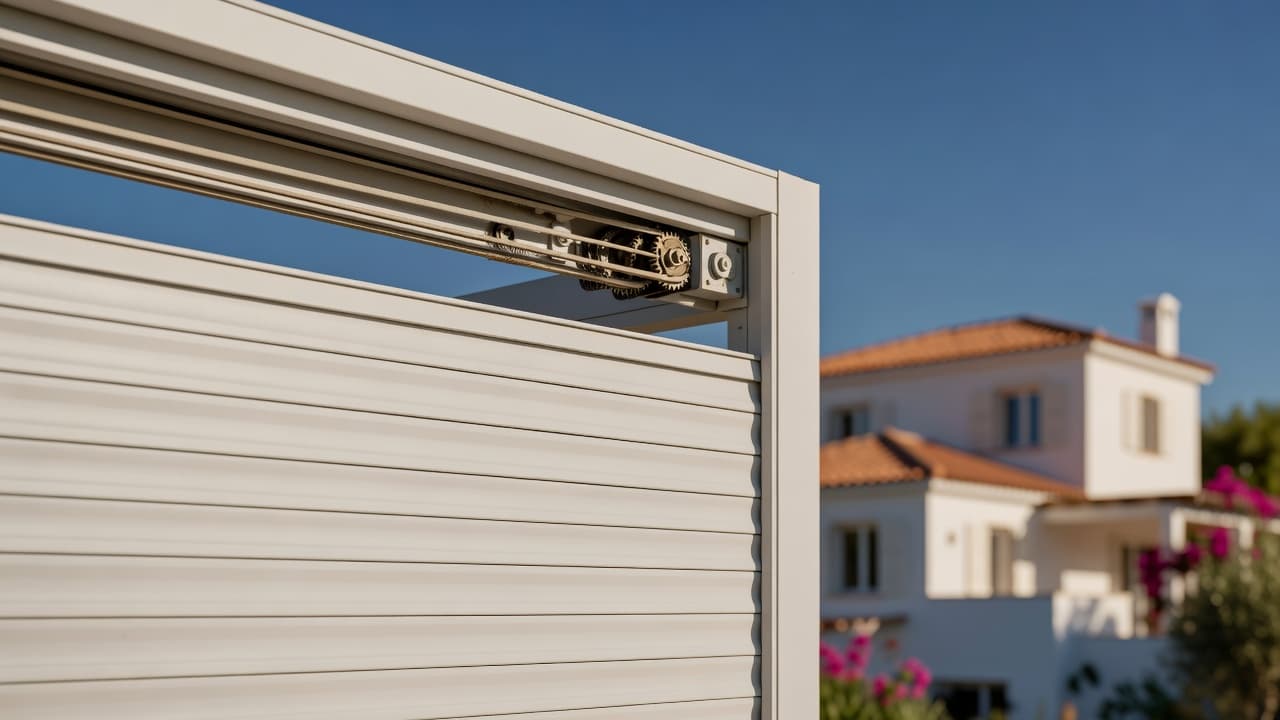
Shutter belts fail for several reasons, and the Mediterranean climate accelerates most of them.
Age and wear. Most shutter belts last 10–15 years with normal use. The belt flexes constantly as it rotates around the drum and pulleys. Over time, the material fatigues and the metal components corrode, especially in homes near the coast where salt air is relentless.
Salt corrosion. If you live on the Costa Blanca, Costa del Sol, or any island property, you already know how salt air affects metal. The belt's internal reinforcement and the drum mechanism degrade faster than in inland homes. You'll notice rust staining on the shutter box.
Heat and thermal stress. Spanish summers are intense. The shutter housing heats up under direct sun, expanding and contracting daily. This cycles the belt and weakens its structural integrity. Shutters in south-facing windows fail earlier.
Jamming or blockage. Sometimes a shutter fails because the belt caught on something — a pebble, paint flakes, or corrosion inside the drum. This sudden shock can snap an already-weakened belt.
Poor maintenance. Shutters that haven't been serviced for years are more prone to failure. A handyman would have spotted early signs and replaced the belt preventatively.
If your shutter is stuck open and you need to close it before a handyman can visit, try these steps.
For a mechanical (cord-operated) shutter:
Find the cord and pull it very slowly and gently. Do not jerk or yank. If you feel resistance, stop immediately.
If the shutter moves slightly but stalls, try pulling at a slightly different angle or position on the cord. Sometimes the mechanism can catch, and a gentler angle frees it.
If it moves only a few centimetres and then stops, leave it there. Do not pull further.
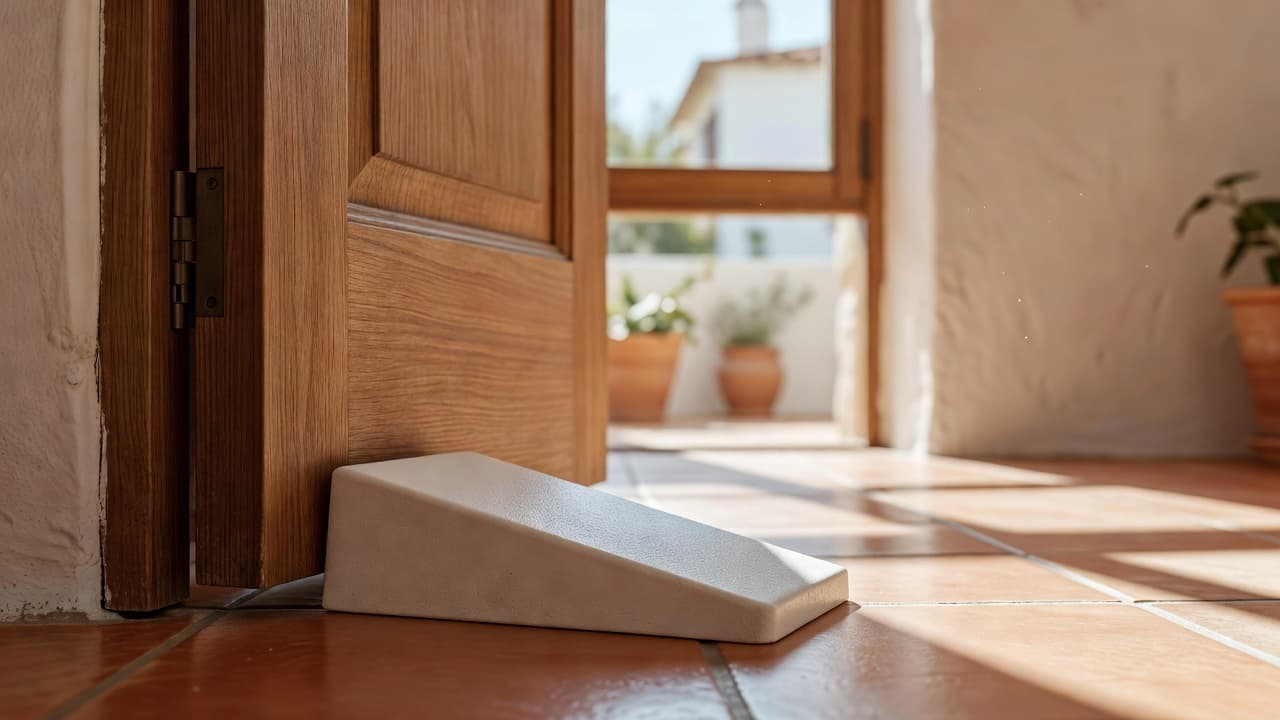
As a temporary measure, if the shutter is stuck fully open, you can secure it with a temporary prop — a broom handle or wooden rod wedged horizontally in the frame — to keep it from flapping in wind. This is not elegant, but it prevents damage while you wait for a professional.
For a motorised shutter:
Do not attempt any temporary fixes. The motor may still be trying to move the shutter, and you risk electrocution or further mechanical damage. Leave it as it is and contact the handyman.
Protecting your home in the meantime:
If the shutter is fully open for more than a day, protect against rain and wind:
- Close the window itself.
- Hang a temporary waterproof sheet or tarpaulin over the outside of the window frame if the shutter won't close.
- Ask a neighbour to keep an eye on it during stormy weather.
Do not attempt a repair if any of these apply:
- The shutter is motorised or electric. Electrocution risk and potential motor damage. Call a professional.
- You can see exposed wires or electrical connections. Stop immediately.
- The shutter is stuck in a fully open position and won't budge despite gentle pulling. This suggests the drum or pulley is also damaged. Forcing it will make the repair far more expensive.
- You hear grinding, clicking, or metal-on-metal sounds when you try to move it. This is not just the belt; other components are involved.
- The shutter is high up (above first floor) and you'd need a ladder to inspect it. Safety first. Use a handyman.
- The shutter housing is cracked, rusted, or visibly corroded. The structural integrity of the mechanism is compromised. Professional assessment needed.
If any of these warning signs apply, leave the shutter alone and contact a handyman. Tell them the symptoms — whether it's stuck, won't move, or makes noise — rather than diagnosing it yourself.
When a handyman comes to repair a broken shutter belt, here's what typically happens.
Inspection. They'll assess the shutter from inside and outside, checking the belt, drum, pulleys, and motor (if electric). They'll confirm it's the belt and not secondary damage. For motorised shutters, they may need to check the electronic controller as well.
Removal. They'll carefully extract the broken belt from the drum and pulleys. For mechanical shutters, this is straightforward. For electric shutters, they may need to partially disconnect the motor.
Replacement. They'll fit a new belt of the correct size and material. Shutter belts come in standard sizes, so they usually carry spares. They'll thread it around the drum and pulleys with correct tension — too loose and it'll slip, too tight and it'll wear quickly.
Testing. They'll operate the shutter several times to ensure smooth movement in both directions. For electric shutters, they'll test the motor and controls.
Documentation. A reputable handyman will give you a receipt with a description of the work, the belt specification, and a warranty (typically 6–12 months on the belt). Keep this for your records.
Time and cost. A straightforward belt replacement takes 30–60 minutes. Cost is usually €80–200 depending on the shutter size and accessibility. If other components are damaged, it will cost more.
Once your shutter is repaired, simple maintenance extends the life of the new belt by years.
Annual inspection. Once a year, usually before summer, check the shutter visually. Look for rust on the housing, damage to the belt, or loose components. A handyman can do this quickly during a routine call.
Keep the track and housing clean. Dust and debris accumulate inside the shutter box, especially in coastal areas. Gently brush it out with a soft brush every few months. Do not use a hose, as water can cause more rust.
Operate the shutter regularly. Use your shutter weekly, not just seasonally. Regular movement keeps the mechanism lubricated and prevents corrosion from setting in.
Protect from salt spray. If you live very close to the sea, consider a protective coating on the shutter housing. A handyman can recommend a corrosion-resistant product suitable for your local climate.
Don't force it. The moment you feel resistance, stop. This is the early warning that something is wrong.
A broken shutter belt is inconvenient but not a crisis. The key is to stop now, avoid forcing the mechanism, and contact a handyman within a day or two. A quick repair will save you money and restore your security and weather protection.
If you need a reliable handyman in your area to assess and repair your shutter, handymen who repair shutters on the Mediterranean coast are ready to help. Get in touch today for a quote.