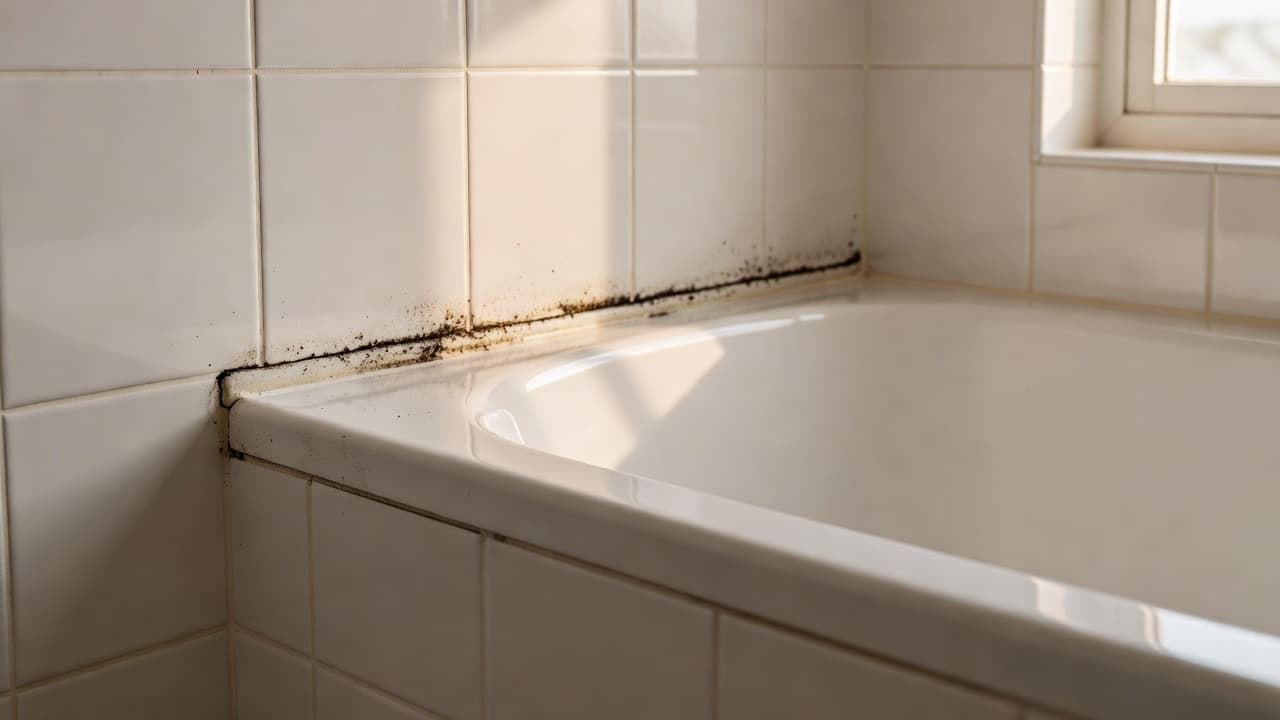
Silicone sealant around baths degrades over time. It's a porous material, and once it begins to break down—from age, movement of the building, or constant water exposure—moisture works its way in. Mould spores, which are everywhere in the air, find a home in that damp silicone. Coastal properties, especially on the Mediterranean, are prone to this because of:
- High humidity in the air year-round, even in winter.
- Poor bathroom ventilation. Many older Spanish properties lack proper extraction fans, or the fans are undersized or rarely used.
- Warm temperatures that keep the bathroom damp and mould-friendly all year.
- Salt spray in properties very close to the sea, which accelerates material degradation.
Once mould has colonised the silicone, cleaning will remove the visible growth but won't stop it returning, because the silicone is already compromised. Think of it like a sponge that's been wetted repeatedly—the damage is done at the material level.
If you can't replace the silicone immediately, these steps will slow the problem and keep the area hygienic:
Weekly cleaning: Spray the mouldy silicone with the weak bleach solution (1 part bleach to 9 parts water) once a week, leave for 10 minutes, scrub gently with an old toothbrush, and rinse thoroughly. Dry immediately with a cloth.
Improve ventilation: Open the bathroom window during and for 30 minutes after every shower. If you have an extraction fan, use it every time. If there's no fan, consider asking a handyman to install one—this is one of the best long-term investments for a damp bathroom.
Squeegee the edge: After every bath or shower, run a squeegee or cloth along the edge of the bath to remove standing water. This simple habit cuts mould recurrence dramatically.
Don't use commercial mould sprays on silicone. Many contain acids or oils that damage sealant further. Weak bleach (1:9 dilution) is safe and effective.
- Do not use undiluted bleach on silicone. It will degrade the material faster.
- Do not scrape aggressively at the silicone with a metal tool. You'll tear it further and expose more surface to water and mould.
- Do not attempt to remove old silicone yourself unless you have experience. Sealant gun technique matters; a poor application will fail within months. Sand, grout saws, and chisel work are best left to professionals.
- Do not ignore the problem if the silicone is also cracked, peeling, or gaps have appeared between the silicone and the bath or wall. Water is already getting behind it. Replacement is urgent to prevent wall damage and damp inside the structure.
When you call a handyman to replace the bath silicone, here's the typical process:
They'll remove all the old sealant using a specialist tool—usually a sealant removal gun or chisel—and clean the joint thoroughly with a degreaser to remove all residue, dust, and mould spores. This is crucial; new silicone won't adhere properly if the surface is dirty or wet.
Once the joint is dry and clean, they'll apply a bead of fresh silicone sealant along the entire edge where the bath meets the wall. They'll smooth it with a wet finger or a smoothing tool to create a consistent, waterproof seal. The new silicone then needs to cure—usually for 24 hours before you can use the bath.
A professional will also advise whether the wall behind the old silicone shows signs of damp or mould growth. If it does, that's a sign water has been getting through for some time, and the wall may need to dry out before new sealant is applied. In coastal properties, this is worth checking.
Replace the silicone every 5–10 years, depending on how damp your bathroom is. Don't wait for mould to return.
Install or improve bathroom ventilation. An extraction fan that runs during and after showers is the single biggest factor. If your bathroom has a window, open it every time. If it doesn't, a fan is essential.
Wipe down the bath edge after every use. A squeegee or old towel takes 30 seconds and cuts moisture dramatically.
Ensure the bath or shower tray isn't cracked or leaking. Water escaping from the bath itself accelerates sealant failure.
Check for leaks from the pipework under the bath or behind the wall. Hidden leaks keep the area perpetually damp.
If the mould is spreading, the silicone is cracked or peeling, or you'd simply rather have it done properly the first time, request a quote from one of our handymen. They'll replace it with fresh sealant, advise on ventilation improvements, and make sure it's done right so you won't see mould again for many years.