Your bed squeaks, creaks or pops every time you shift position or get in and out. It's annoying, it wakes your partner, and it sounds like something is about to collapse. The good news: it almost always isn't. Bed noise is usually caused by loose bolts, worn wooden dowels, or metal parts rubbing against each other — all of which you can find and fix in an hour with basic tools.
Start by identifying which part of the bed is moving. Get someone to sit on different areas of the mattress while you watch and listen from underneath, or do it yourself by moving slowly across the bed and noting where the noise comes loudest. Ninety per cent of the time, the problem is at the corners where the frame bolts together, or where the slats meet the rails. Once you've pinpointed the noise, a socket wrench or Allen key set will usually solve it.
What to do right now
1. Identify the noise source
Get underneath the bed with a torch (phone torch is fine). Have someone sit on the mattress, or gently bounce. Listen closely for where the sound comes from. Is it the corner bolts? The center support bar? The wooden slats? The metal legs?
2. Check all visible bolts and hex screws
Use an adjustable spanner or socket wrench to tighten every bolt you can see on the frame. Start with the corners — these carry the most weight and loosen first. Go around the whole frame, testing each bolt by hand first to feel if it's loose.
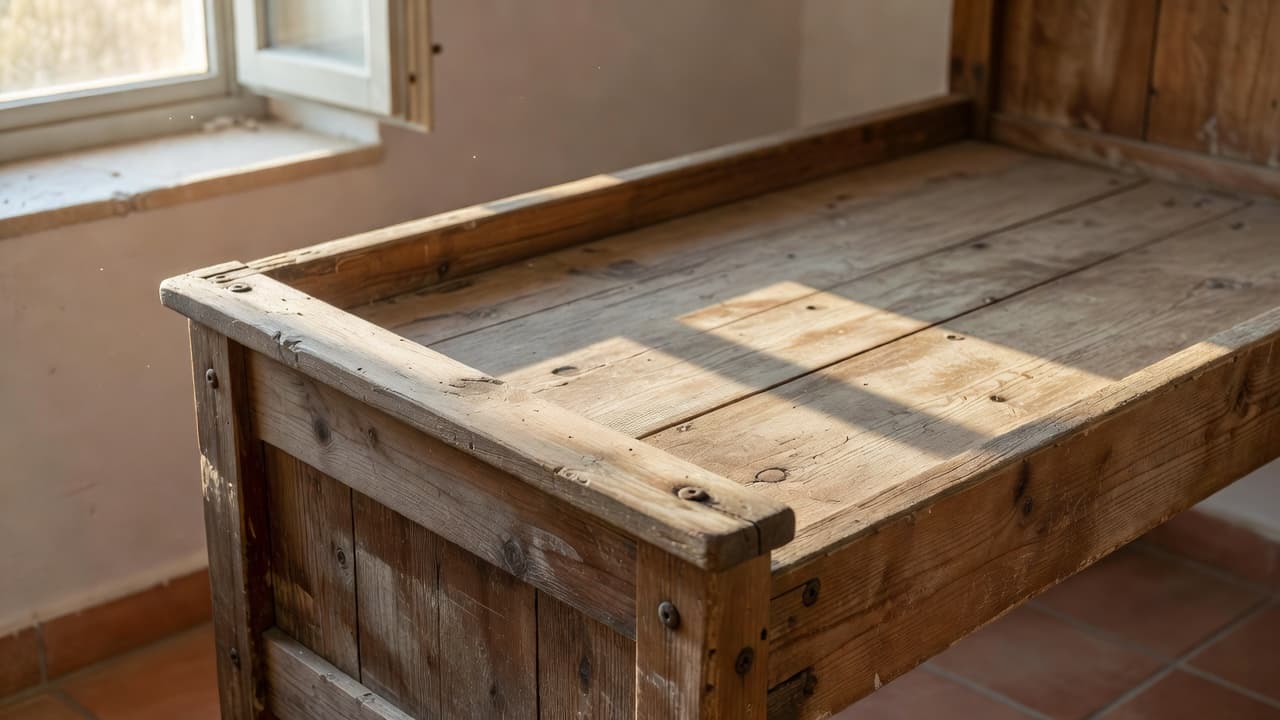
3. Check wooden dowels (if your bed has a wooden frame)
Wooden beds are often held together with thick dowels (wooden pegs) instead of bolts. Gently rock the joint side to side. If there's play in it, the dowel has likely shrunk or the hole has worn. This needs wood glue or a handyman — skip ahead to that section.
4. Listen for metal-on-metal friction
Sometimes noise isn't from loose parts, but from metal legs or rails rubbing against a wooden frame. If you hear grinding rather than creaking, this is the problem. A bit of felt padding (furniture pads) between the metal and wood usually stops it.
5. Check the slats (if applicable)
If your bed has wooden slats instead of a solid base, make sure each slat is properly seated in its supports. Push down on each one while listening. A slat that's half-fallen off its support will rattle.
6. Tighten and test
Once you've tightened everything, have someone lie on the bed and move around while you listen from underneath. The noise should be gone or significantly quieter.