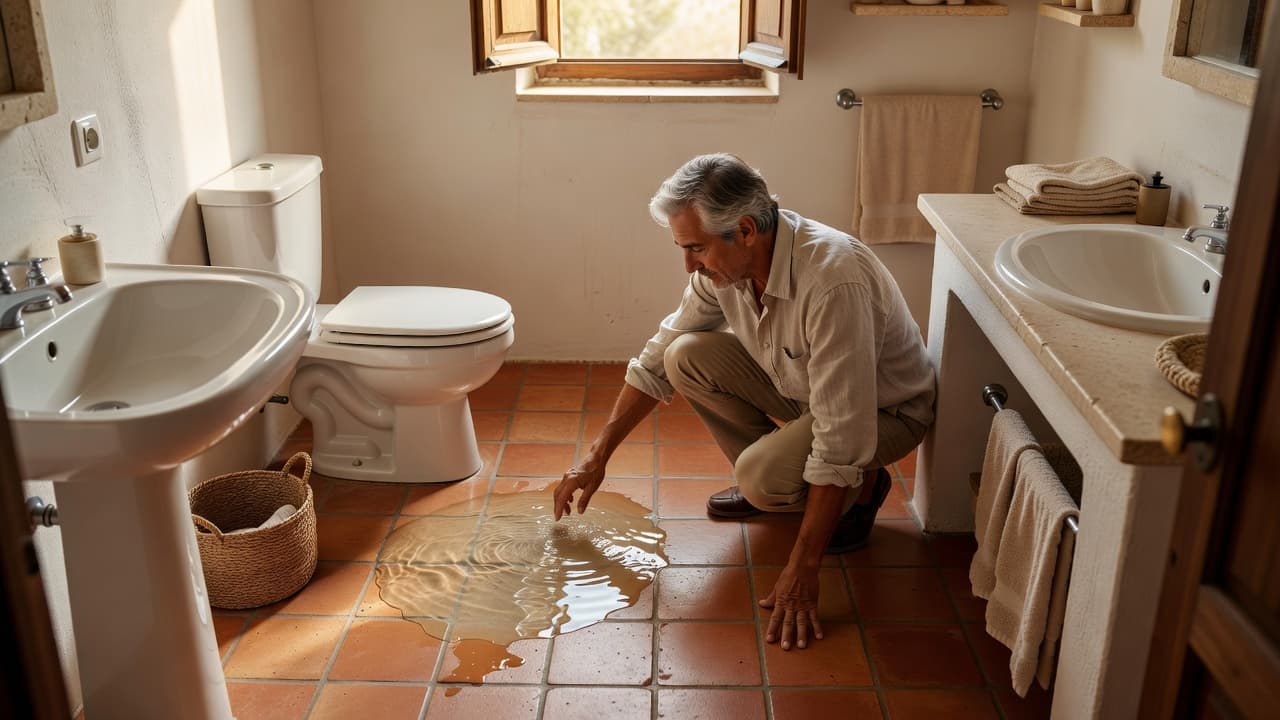
Bathroom flooding usually has one of four causes.
A burst or cracked pipe. Water pipes under sinks, behind toilets, or running through walls can burst due to frost, corrosion, age, or physical damage. In older Spanish properties, copper pipes can corrode from the inside. In newer ones, plastic pipes can crack if fitted poorly or stressed. You'll see water spraying or pooling near the damaged section.
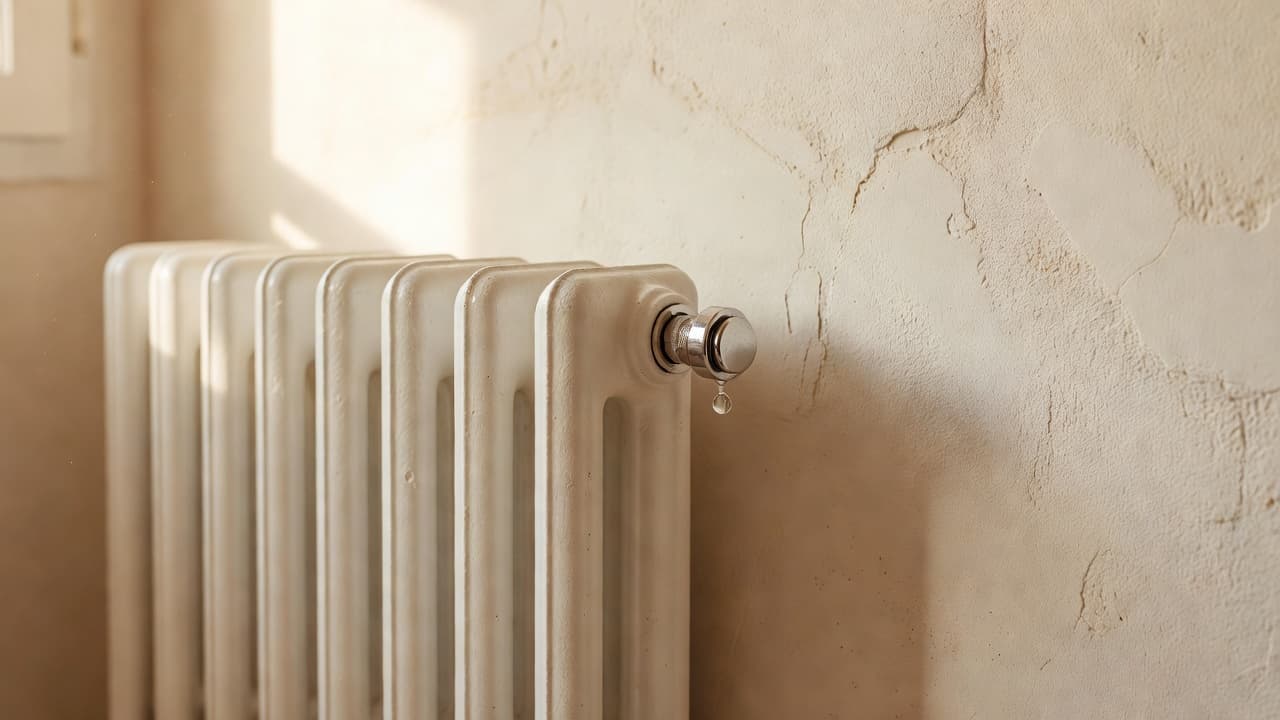
A failed joint or connection. Where two pipes meet (at taps, under sinks, or at the toilet cistern), there are washers and seals that wear out over 10–20 years. The water usually seeps rather than sprays, but it's enough to pool on the floor.
An overflowing toilet. If water is coming from the bowl or cistern, the toilet is either blocked (the bowl won't drain), the cistern is faulty (it won't stop filling), or the wax ring under the base is failed (water escapes around the edges). This is the easiest to diagnose: you'll see water coming directly from the toilet itself.
A failed water heater or tank. If you have a large electric water tank (termo eléctrico) in your bathroom or utility room, a rupture in the tank or its connections can release a large volume of water. These are common in Spanish homes and fail when the internal pressure relief valve sticks or the tank rusts through.
These are not permanent solutions. They keep damage to a minimum until the plumber arrives.
If water is coming from under the sink, place a bucket or mop bucket directly under the leak and check it every few minutes. Keep towels piled around the base of the pipes to catch splashes.
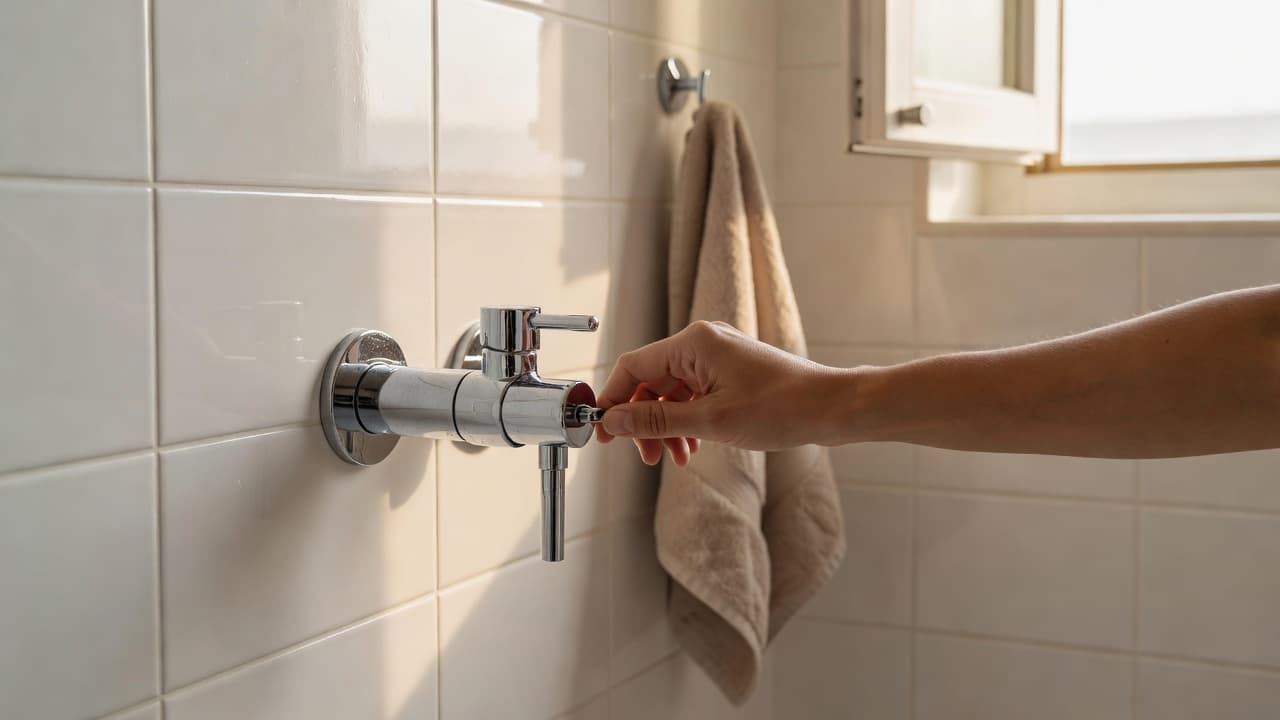
If the toilet is overflowing, do not flush again. Close the water isolation valve behind or above the cistern (turn it clockwise). If there is no isolation valve, close the main stopcock. Leave the bathroom door open and place towels around the base of the toilet to absorb water.
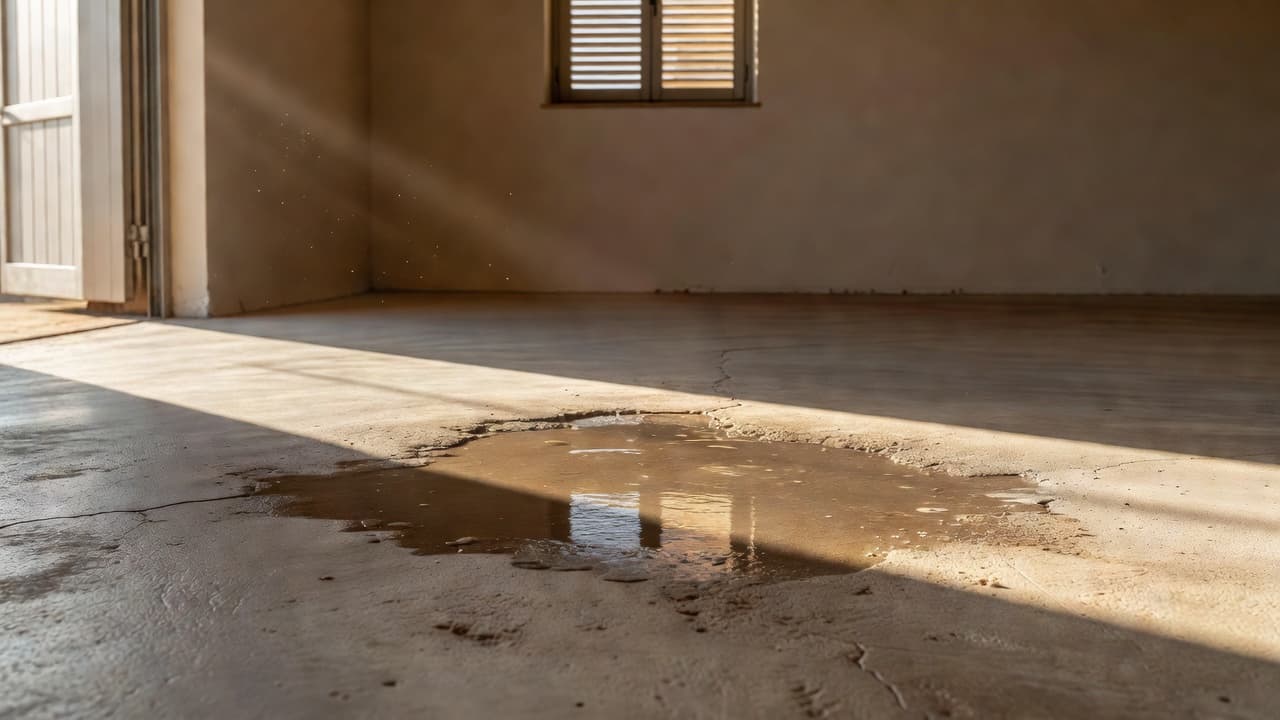
If water is pooling with no obvious source, keep the isolation valve or stopcock closed and continue mopping and placing towels. Open the bathroom window if there is one, and leave the door open—ventilation helps limit damage to the room.
Do not use hairdryers or portable heaters to dry the floor. The bathroom is damp and the risk of electrical shock is high.
Do not paint over wet plaster or turn the power back on until the plumber has confirmed the source is fixed and the room has dried completely.
Do not attempt any repairs if:
Water is spraying forcefully from a pipe. This indicates high pressure and a serious rupture. Leave the isolation valve or stopcock closed and call the plumber.
Water is coming from inside the walls or ceiling. A leak from a hidden pipe requires professional diagnosis. Do not drill or probe the wall.
You smell gas or see discoloured water. Gas leaks are a safety emergency—leave the property and call the emergency services. Discoloured water may indicate contamination.
The water reaches electrical outlets, light switches, or appliances. Do not touch the water. Switch off the electrics to the room or the whole house and wait for a professional.
Your bathroom is in a flat and water is dripping into the room below. This is a structural and legal issue involving your neighbours. Call your plumber, inform the building management (comunidad de vecinos), and notify your insurer.
The flooding started after you tried to fix something yourself or after work was done. Do not attempt further DIY repairs. Document what happened and call a professional.
If any of these apply, close the stopcock and do not proceed. The cost of waiting for a professional is far less than the cost of making it worse.
A plumber will first locate the source of the water. They may ask you to turn the stopcock back on (carefully) while they observe where water appears, or they may use a listening device to find a hidden leak in the pipes.
Once the source is identified, the repair depends on what has failed. A leaking joint might need a new washer and re-tightening, taking 30 minutes. A burst pipe section might need cutting out and replacement, taking 1–3 hours. A faulty toilet might need a new cistern, ballcock, or wax ring, taking 1–2 hours. A failed water heater might need full replacement, taking 4–8 hours and possibly a return visit.
The plumber will turn off the water supply to the damaged area or the house, drain the affected pipes (usually into a bucket), repair or replace the faulty component, and then pressurise the system to check for leaks. They'll run water at the tap for 10–15 minutes and inspect all joints to confirm the repair holds.
Before they leave, they should give you a written invoice and, if they've replaced any major components, an updated circuit diagram or maintenance record. This is important for insurance claims and for the next plumber who might work on your home.
Have isolation valves fitted to your bathroom if they're not already there. These are small, cheap, and invaluable in an emergency. They should be under the sink (hot and cold) and behind or above the toilet. Ask your plumber to fit them during the emergency visit or at your next opportunity.
Check pipes annually for signs of corrosion or damage. Look under sinks and behind toilets for white, green, or blue deposits (oxidation) or visible cracks. Report these to a plumber before they leak.
Don't ignore slow leaks. A drip under the sink that you notice is not a minor problem—it's a warning sign that the washer or seal is failing. Get it fixed within a week.
If you live on the coast or in a humid area, have pipes inspected every 5 years. Salt air and humidity accelerate corrosion in older copper pipework. This is especially important if your home is over 30 years old.
Know where your main stopcock is. In an emergency, every second counts. If you've never located it, find it today and make sure everyone in the household knows where it is.
Your bathroom is flooding right now—close the stopcock, mop, and call a professional plumber on the Mediterranean coast. You've done the essential work by containing the water. The rest is their job. Most repairs are straightforward once a plumber can see the problem, and acting fast prevents far more expensive damage to walls, ceilings, and the rooms below.