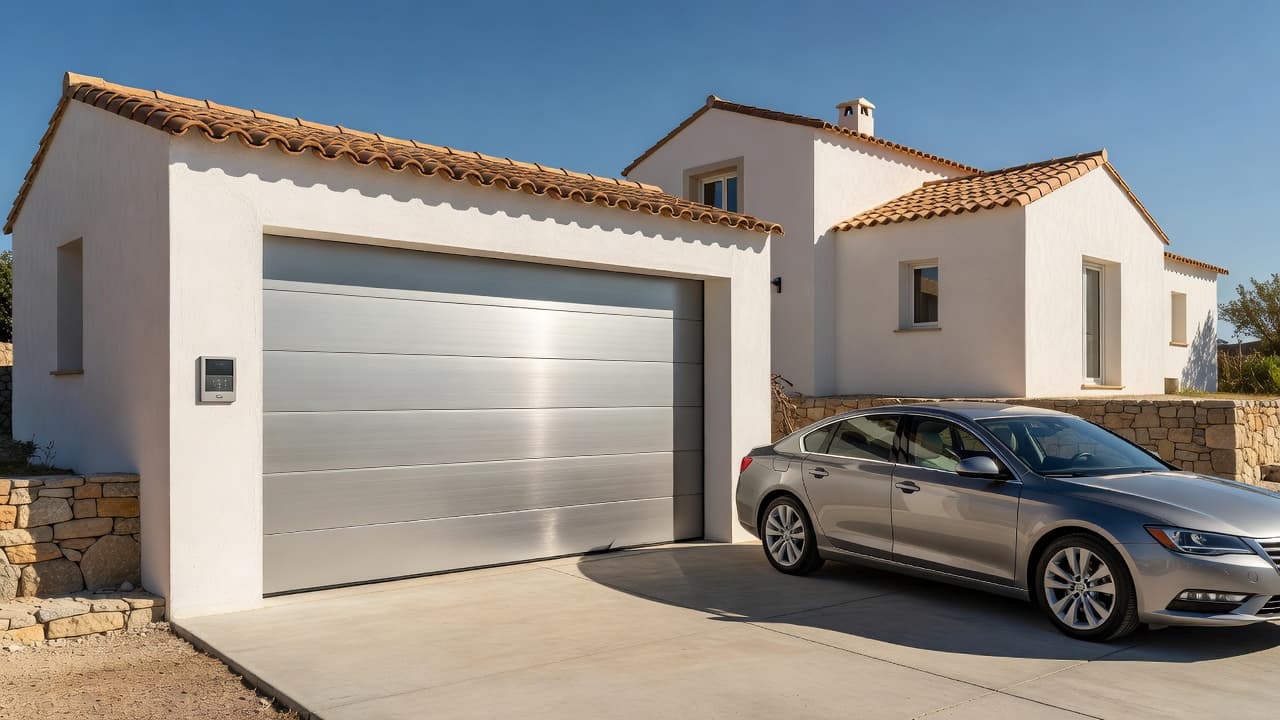
Electric garage doors jam for one of five main reasons:
1. Misaligned tracks. The metal guide rails on either side become bent or twisted, usually from a car bumping the door frame or vibration from heavy vehicles nearby. The rollers can't glide smoothly and the motor stalls.
2. Broken rollers or hinges. The small wheels that run inside the tracks wear out over time. On the Mediterranean coast, salt air corrodes metal faster than inland, and humidity causes rust. A broken roller feels like the door has hit a wall.
3. Motor overheating or tripped safety limit. Modern garage doors have a built-in cut-off that stops the motor if it detects resistance. Heat, dust, or a partial blockage can trigger this. The door stops and won't respond to the button.
4. Obstacle in the track. Leaves, dust, hardened grease, or debris physically block the door. Common in coastal properties where wind and salt spray leave residue.
5. Loss of electrical power to the motor. A blown fuse, tripped circuit breaker, or failed wiring means the motor receives no signal. The door won't move in either direction.
Summer jamming is more common on the coast. Aluminium tracks expand slightly in heat, salt deposits increase friction, and the motor works harder on hot days, leading to thermal shutdown.
You cannot safely fix the underlying problem yourself. But you can stop the jam from worsening:
- Keep the emergency release cord pulled. This prevents anyone from pressing the button and activating the stuck motor again.
- Do not apply lubricants or WD-40 to the tracks. Oil attracts dust and makes the problem worse.
- Do not hammer the door or the tracks. You risk bending them further.
- Prop the door in the raised position if it's stuck half-open. Use a sturdy wooden support (a 2x4 timber, not a chair) to safely prevent it dropping suddenly.
- Move your car away from the door if it's trapped underneath. If you're able to, pull it out through the emergency release method. If you cannot, leave it and move others safely.
Once the locksmith arrives, they'll diagnose the exact cause and tell you whether it's a track adjustment (an hour's work), a roller or motor replacement (half a day), or something more complex.
Stop immediately and call a locksmith if:
- The door is stuck halfway up and won't lower by hand even after the emergency release. There may be a spring under extreme tension.
- You see a broken or dangling cable above the door. This is a high-tension component and can snap dangerously.
- The emergency release handle is jammed or pulls away without disconnecting the motor.
- The door is stuck in the open position and you cannot secure it. It could fall suddenly.
- Your electric door opener smells of burning plastic or is making a grinding noise when you operate it. The motor is failing.
- You live in a flat in an urbanisation and the shared garage door is broken. Contact your community administrator (administrador de la comunidad) before calling a locksmith — they may have an existing contract with a technician.
In any of these scenarios, do not attempt a manual fix. Call a professional. A jammed garage door is not usually an emergency requiring the fire service, but it is a job for someone trained in door mechanisms.
A locksmith experienced in garage door systems will first inspect the door in both the open and closed positions. They'll check the tracks for alignment, examine the rollers and hinges for damage, and test the motor's response.
Depending on what they find:
- If it's debris: they'll clear it, check that the door moves freely, and test the full cycle. Cost is minimal, usually a call-out fee.
- If it's a misaligned track: they'll adjust the mounting bolts and realign the rails. This takes an hour or two and costs between €150 and €300 depending on severity.
- If a roller, hinge, or motor component is broken: they'll order a replacement part and fit it. This typically costs €300–600 including labour.
- If it's an electrical fault: they'll test the wiring and safety sensors, reset the motor's limit switches, and retest. Cost depends on the fault.
When the job is done, ask the locksmith for a brief explanation of what caused the jam and what they've done to fix it. If a part was replaced, ask whether there's a warranty. Most reputable locksmiths offer a 12-month warranty on labour and components.
If your door is old (more than 15 years) and the locksmith says the motor is failing, it's often cheaper to replace the entire door and mechanism rather than keep repairing aging parts. They can advise you on options.
- Test your door manually once every three months. Pull the emergency release, close the garage, and check that the door lifts smoothly and doesn't bind or stick. If it feels stiff, call a locksmith before it jams.
- Keep the garage entrance clear of debris. Sweep leaves and dust away from the bottom of the door weekly.
- If you live near the coast, have the rollers and tracks inspected annually. Salt air is harder on metal. A quick inspection costs little and can prevent jamming.
- Don't leave heavy objects or vehicles parked against the door. Impact damage is a common cause of misalignment.
- If the door is old and has been repaired multiple times, budget for replacement. A new sectional aluminium door with a modern motor costs €2,000–4,000 but is more reliable and often more secure than patching an old one.
If your automatic garage door is jammed and you've tried the steps above without success, you need a professional. Our network of locksmiths on the Mediterranean coast has experience with all types of garage door systems. Use the quote form to describe what's happened — mention whether your car is trapped, how long the door has been stuck, and whether you heard any sounds before it jammed. A locksmith will contact you within a few hours with a time estimate and rough cost.
Don't wait for the problem to get worse. Jammed doors that are repeatedly forced can cause motor burnout, which is expensive to repair. Call now and get it sorted.