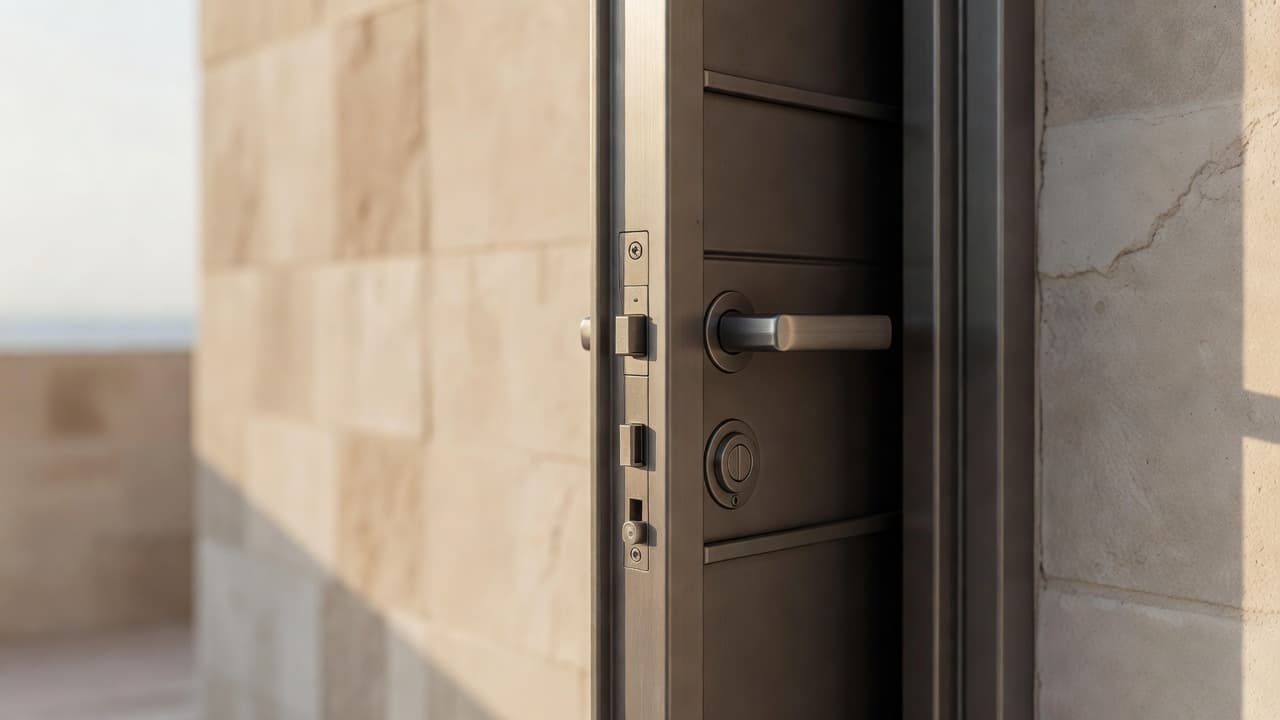
Hinge misalignment is the most common culprit. Armoured doors are heavy — several times heavier than a standard door. Over months or years, the weight causes the top hinge to weaken slightly, and the door sags. The latch no longer meets the strike plate (the metal plate on the frame with the holes).
A twisted or bent frame is less common but serious. It usually happens after an attempted break-in, a heavy impact, or if the door was installed slightly out of plumb (not perfectly vertical). The frame may be twisted so that one corner is pushed inward.
Swollen door edge happens in coastal areas where salt air and humidity cause the steel edge to swell microscopically. Rare, but real on the Mediterranean coast.
Lock mechanism wear means the latch no longer protrudes far enough to engage the strike plate. This is gradual and usually only visible when combined with slight misalignment.
Thermal expansion occurs when the steel door expands in summer heat (especially on south-facing doors) and contracts in winter. Usually corrects itself, but can expose underlying hinge problems.
Check and tighten the hinges. This is the safest first step and solves most problems.
- Locate the hinge screws (usually three per hinge on armoured doors — two visible from outside, one or more from inside).
- Use an appropriate screwdriver or Allen key (usually 4–5mm for armoured doors). Turn gently but firmly until snug. Do not over-tighten.
- Try closing the door. Is it better aligned?
If one side is still lower than the other, you can adjust the top hinge slightly. Use a very small adjustment — a quarter-turn of a hex screw moves the door noticeably. This requires patience.
If the door is closing but the locks won't engage:
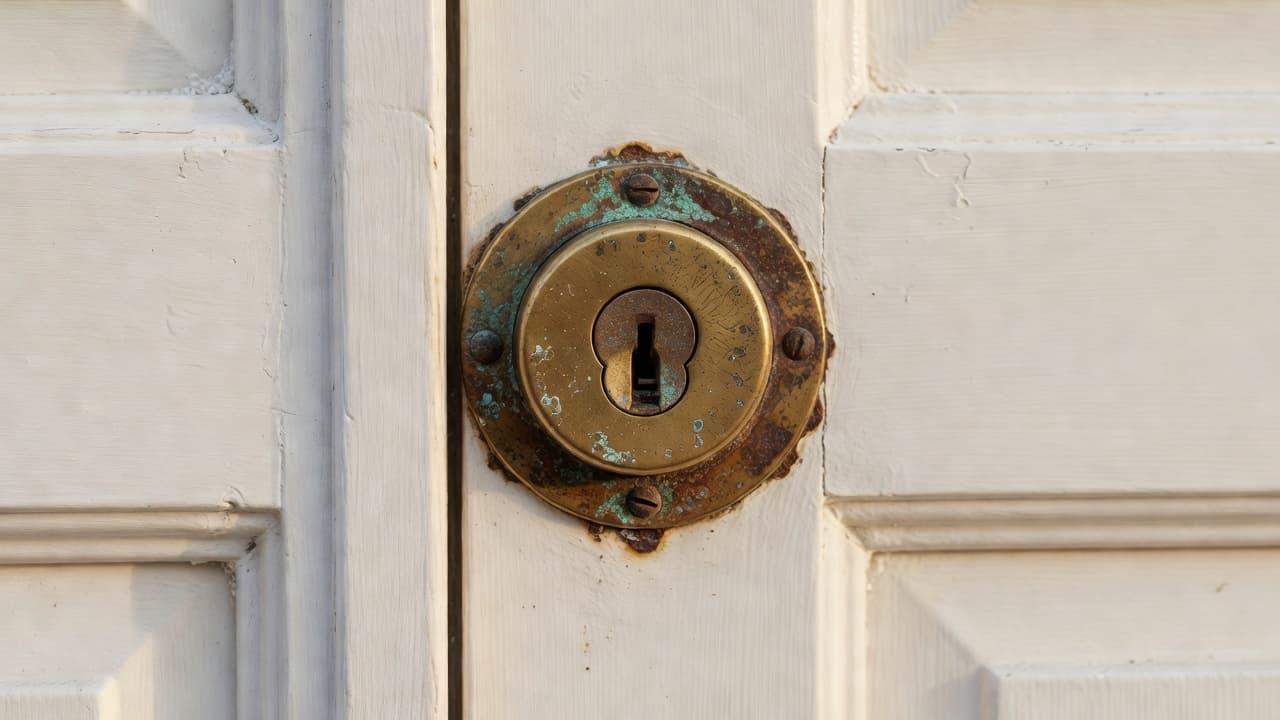
The strike plate (on the frame) may be misaligned with the latch. Look through the keyhole or the lock opening and see if the latch hole lines up with the strike plate hole. If it's off by 2–3 millimetres, a locksmith can adjust the strike plate with shims (thin metal sheets) under the plate.
Do not attempt to bend the frame yourself. If the frame is visibly twisted, only a locksmith with the right tools should fix it.
Temporary security measure: If you must leave the door unfixed for a day or two, ensure the door locks fully engage (even if the fit isn't perfect). Use an internal chain or bolt as a secondary barrier at night.
Stop and call a professional immediately if:
- The frame is visibly bent or twisted (one corner of the door sits further from the wall than the others).
- The door will not close at all, even with gentle pushing.
- The hinges are broken or cracked (not just loose).
- There is a large gap (more than 10mm) between the door and the frame along its height.
- The door was damaged in an attempted break-in. Even if it closes, a locksmith must inspect the frame and mechanism for hidden damage.
- The lock cylinder is damaged or the key won't turn smoothly.
- The door is in a listed building or has heritage status (incorrect adjustment could affect its listed status).
In any of these cases, forcing the issue risks further damage and makes the final repair much more expensive.
When the locksmith arrives, they'll follow a similar diagnostic process but with professional tools.
First, they'll assess the alignment using a level and measuring the gaps on all four sides. This tells them if the door has sagged (common) or if the frame is twisted (more serious). They'll engage and test each lock individually to confirm which are working.
Most straightforward jobs — hinge adjustment and strike plate realignment — take 30–45 minutes and cost between €80 and €180, depending on your region. If hinges need replacing or the frame requires adjustment, add €100–200.
More complex repairs (bent frames, damage from attempted break-ins, or locks that need replacement) require more time and can cost €250–400 or more. The locksmith will explain the issue clearly and give you a quote before starting work. They'll also provide a receipt and, if applicable, a certificate confirming the door is secure.
- Have hinges checked annually if you live in a coastal area or a humid climate. Salt air and moisture weaken metal faster.
- Avoid slamming the door. It's tempting when it sticks, but repeated impact accelerates hinge wear.
- Don't hang heavy objects on the door or lean objects against the frame.
- Keep the lock mechanism clean. Occasionally use a dry graphite powder lubricant (made for security locks, not general oil), but don't overdo it.
- Check the frame after extreme weather (storms, heavy wind). Coastal properties can shift slightly in bad weather.
If your building is part of an urbanisation or has a shared building manager (common on the coast), alert them to the problem. Insurance and structural integrity issues might be their concern.
An armoured door that won't close properly is worth addressing quickly. The fixes are often simple and affordable, and the sooner you act, the less likely you are to need expensive repairs later. If your inspection shows the problem is beyond hinge tightening, contact a professional locksmith who specialises in armoured doors. They'll diagnose it accurately, give you a clear quote, and restore your home's security in a single visit.
Get a quote from a locksmith today