This is the single most common cause. The filter traps dust, salt residue, and pollen. On the Mediterranean coast, salt spray from the sea accelerates corrosion and clogging. A blocked filter means the cold air the unit is producing can't reach the room. The compressor works harder, the evaporator coil cools excessively, and frost forms inside. The unit may shut itself down for protection.
The refrigerant is the liquid that absorbs heat from inside your home and transfers it outside. If the system has a leak (often from corrosion in coastal properties or age-related wear), the refrigerant level drops. Without enough refrigerant, the unit runs but produces little or no cold air. This requires a technician to find and repair the leak, then refill the system.
The evaporator coil is inside the indoor unit. If airflow is blocked (by a dirty filter) or refrigerant is too low, the coil gets too cold and moisture on it freezes solid. The AC shuts down or produces barely any cold air. The coil must thaw and the underlying cause must be fixed.
The compressor is the engine of the system. It's outside the home in the outdoor unit. If it fails, the AC won't cool. You'll often hear unusual grinding, squealing, or rattling noises from the outdoor unit. This is a major repair and only a technician can diagnose and fix it.
Some air conditioning units have an internal thermostat or temperature sensor that tells the system to stop cooling once a certain temperature is reached. If it's faulty, it may shut off cooling prematurely or fail to signal the compressor to run. A technician can test this with diagnostic tools.
If the outdoor unit isn't running (no fan noise, no vibration), there may be a power problem. A tripped circuit breaker, a loose connection, or a blown capacitor can prevent the compressor from starting. Check your home's electrical board (cuadro eléctrico) for any switches in the off position, but don't attempt to reset anything without understanding the layout — ask an electrician if you're unsure.
- Turn off the air conditioning.
- Open the front panel of the indoor unit. There are usually two plastic clips or screws on either side.
- Slide out the filter. It's a flat, pleated rectangle, often white, grey, or light blue.
- Hold it up to the light. Can you see light through it, or is it heavily clogged with dust?
- If it's clogged, replace it with a new one of the same size (check the dimensions printed on the edge of the old filter). Most hardware stores and online retailers sell standard sizes. Cost is usually €8–20.
- If you don't have a replacement filter available right now, you can temporarily rinse the old filter under warm running water to remove loose dust. Let it dry completely (at least 2 hours) before putting it back. This is not a permanent fix — order a new filter.
- Refit the filter and close the panel.
- Turn the AC back on and wait 10 minutes. If cold air now flows, the filter was the problem.
If the outdoor unit is accessible and you can see debris around it:
- Do not touch the unit itself or any pipes. Only clear debris away from it.
- Turn off the AC.
- Remove leaves, dirt, dead insects, or branches blocking the front or sides of the outdoor unit. Use your hands or a soft brush — never a high-pressure hose or jet wash, which can damage the delicate metal fins.
- If you see salt crust (white powdery or crusty deposit, common on the coast), gently wipe it away with a damp cloth. Don't spray water directly into the unit.
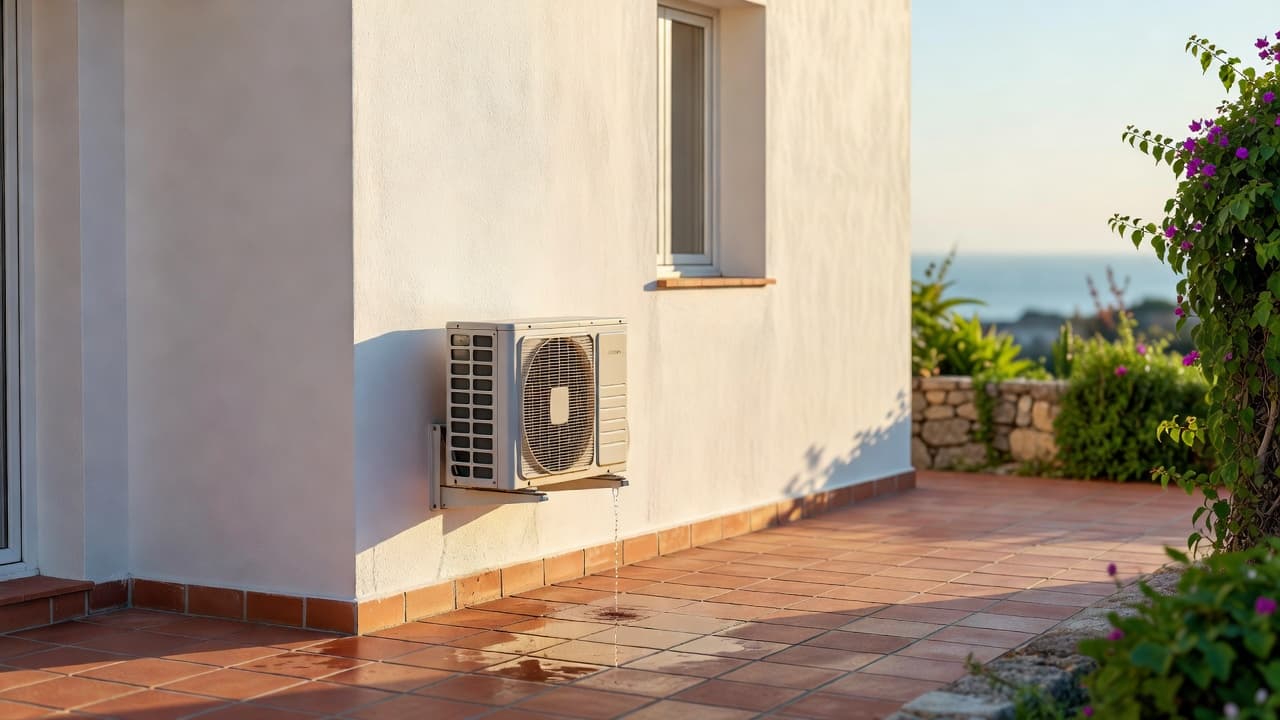
- Make sure there's at least 30 cm of clear space on all sides of the outdoor unit.
- Turn the AC back on and test for cold air.
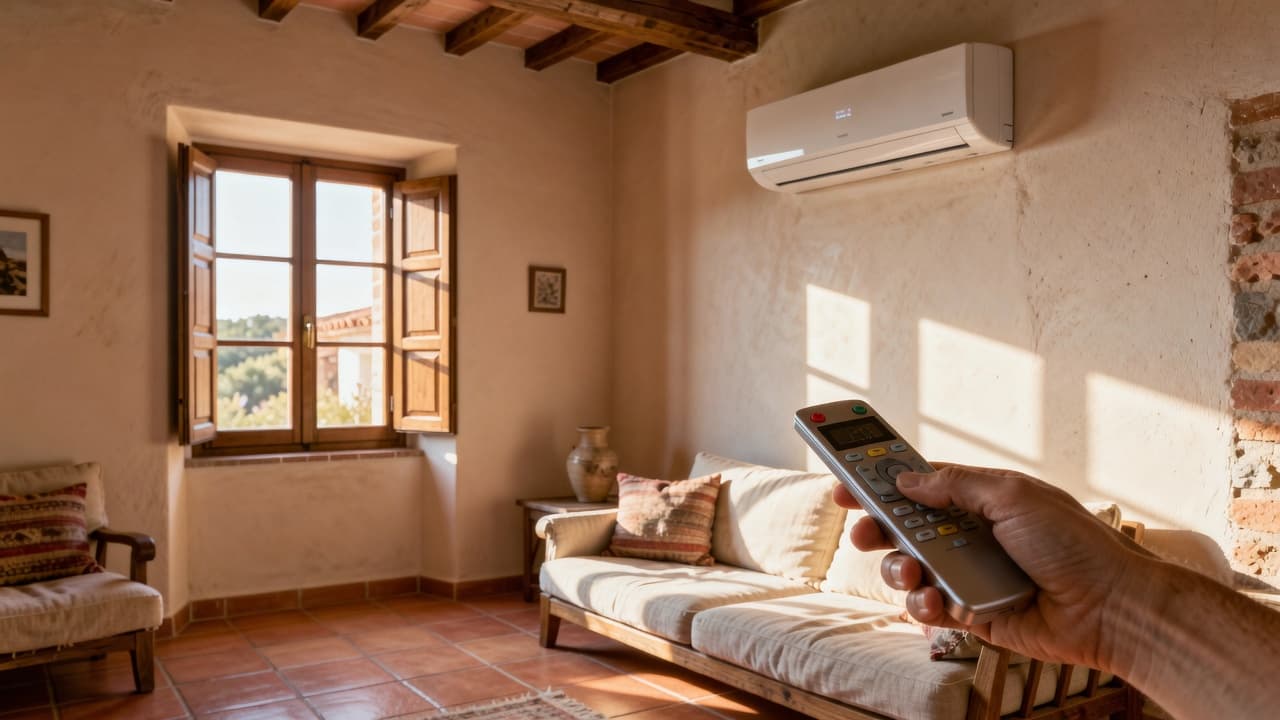
- Remove the batteries from the remote control.
- Insert new batteries (usually AAA or AA, check the compartment).
- Press the cool button and check that the indoor unit responds (you should hear a beep or see the mode change on the display).
If the remote now works and cold air flows, the batteries were dead.
Stop immediately and call a technician if:
- You see ice or frost inside the indoor unit. Don't try to thaw it or scrape it off — you'll damage the coil.
- The outdoor unit makes grinding, squealing, or loud rattling noises (sign of compressor failure).
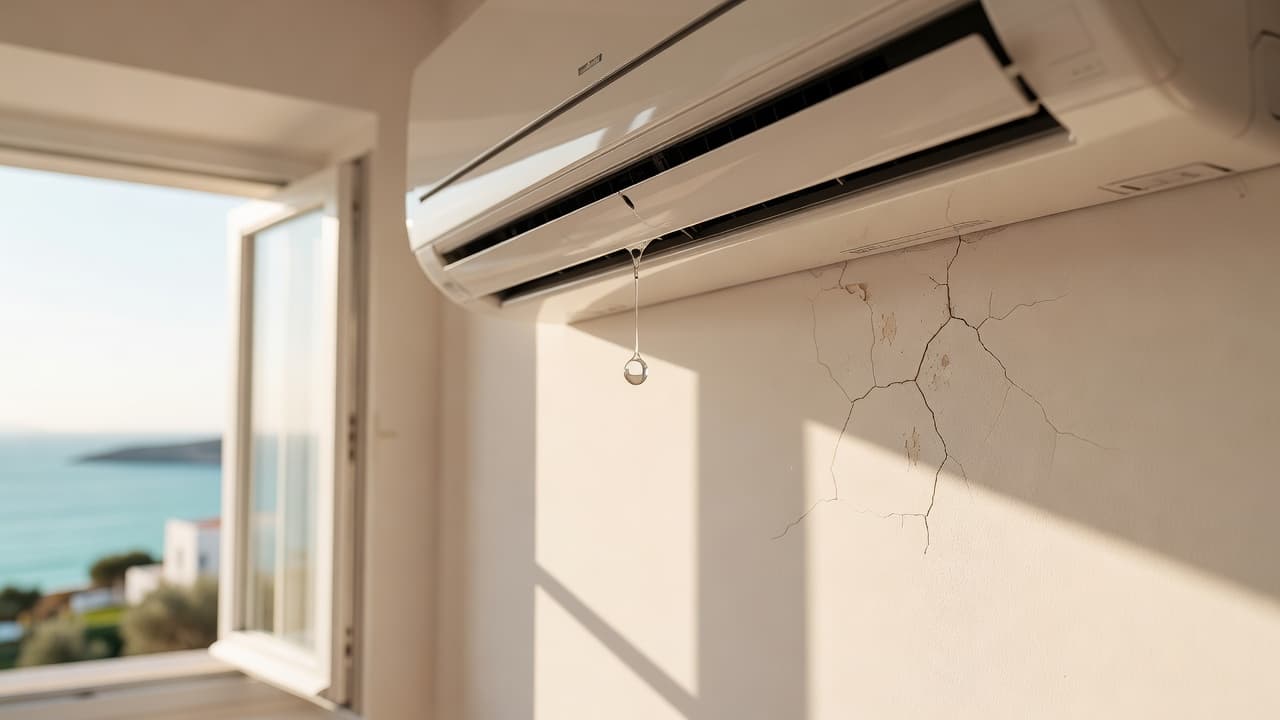
- There's water leaking from the indoor unit that doesn't stop when you turn off the AC (sign of a blocked drain pipe or refrigerant leak).
- You smell a burnt or chemical odour coming from the AC unit (sign of electrical fault or refrigerant leak).
- The circuit breaker for the AC keeps tripping when you turn it on (sign of an electrical fault).
- The outdoor unit is on the roof or at height and you can't access it safely.
- You've checked the filter and cleared the outdoor unit, but there's still no cold air after 15 minutes. Running the AC further may damage the compressor.
- You notice refrigerant pooling or oily residue around pipes (sign of a leak).
Never:
- Try to refill refrigerant yourself. This requires special certification, equipment, and knowledge of quantities. Incorrect refrigerant levels can damage the compressor.
- Open sealed pipes or tubing. Refrigerant is under pressure and can cause injury.
- Use compressed air on the outdoor unit fins — you'll bend them and reduce efficiency.
- Spray water directly into the outdoor condenser unit — you'll cause electrical short circuits.
- Ignore a non-cooling AC unit and keep running it hoping it will fix itself. Each hour you run it increases the risk of compressor damage.
When you book a technician through MyCasa Spain, here's roughly what they'll do:
Initial inspection. They'll listen to the unit, check the filter (if you haven't already), look at the indoor and outdoor units for visible damage, and use a thermometer to measure the temperature difference between the air coming in and the air coming out. This tells them if the cooling circuit is working.
Diagnostic test. For many faults, they'll need to use specialist equipment: a pressure gauge to measure refrigerant levels, a multimeter to test electrical circuits, and a thermal imaging camera to check if the condenser is working. This takes 15–30 minutes and doesn't cost extra — it's part of the service call.
Repair. Depending on the diagnosis:
- If it's the filter, they'll replace it (€10–30, plus labour).
- If it's a frozen coil, they'll thaw it, find the cause (usually low refrigerant or blockage), and fix it.
- If refrigerant is low, they'll find the leak, seal it, and refill the system (€60–200 plus labour, depending on the size of the leak and the refrigerant type).
- If the compressor or capacitor has failed, they'll advise on replacement cost (usually €300–800 for the compressor, plus labour).
- If it's an electrical fault, they'll trace it and repair or replace the faulty component.
Documentation. A qualified technician will hand you a work report (albarán) showing what was repaired, what parts were used, labour time, and cost. This is your warranty proof and receipt. Keep it — if something goes wrong within 30 days, you can claim under the guarantee.
- Replace or clean the filter every 2–4 weeks in summer, or if you live on the coast or near a busy road. Salt spray and dust accumulate faster. A blocked filter is the leading cause of AC failure.
- Have the system serviced once a year, ideally in spring before summer heat peaks. A technician will clean the coils, check refrigerant levels, and test all electrical connections.
- Keep the outdoor unit clear. Check it monthly for leaves, dirt, or salt crust, especially after windy or salty weather.
- Use a programmable thermostat to avoid running the AC when you're away. Continuous running on very hot days can overstress the system.
- Don't set the temperature too low. Setting it to 16°C on a 35°C day forces the compressor to work much harder. A setting of 24–26°C is comfortable and reduces strain.
- Close shutters and curtains during the hottest part of the day (11 a.m. to 6 p.m.). This reduces the cooling load and helps the AC work more efficiently.
Your air conditioning not cooling when the remote is set to cool is frustrating, but it's almost always fixable. Start by checking the filter — that solves the problem in about 40% of cases. If the filter is clean and the outdoor unit is clear, you need a technician. Don't keep running a broken AC in the hope it will repair itself. The sooner you get it checked, the less damage occurs and the smaller the repair bill.
Ready to get it fixed? [Get in touch with a certified AC technician](/air