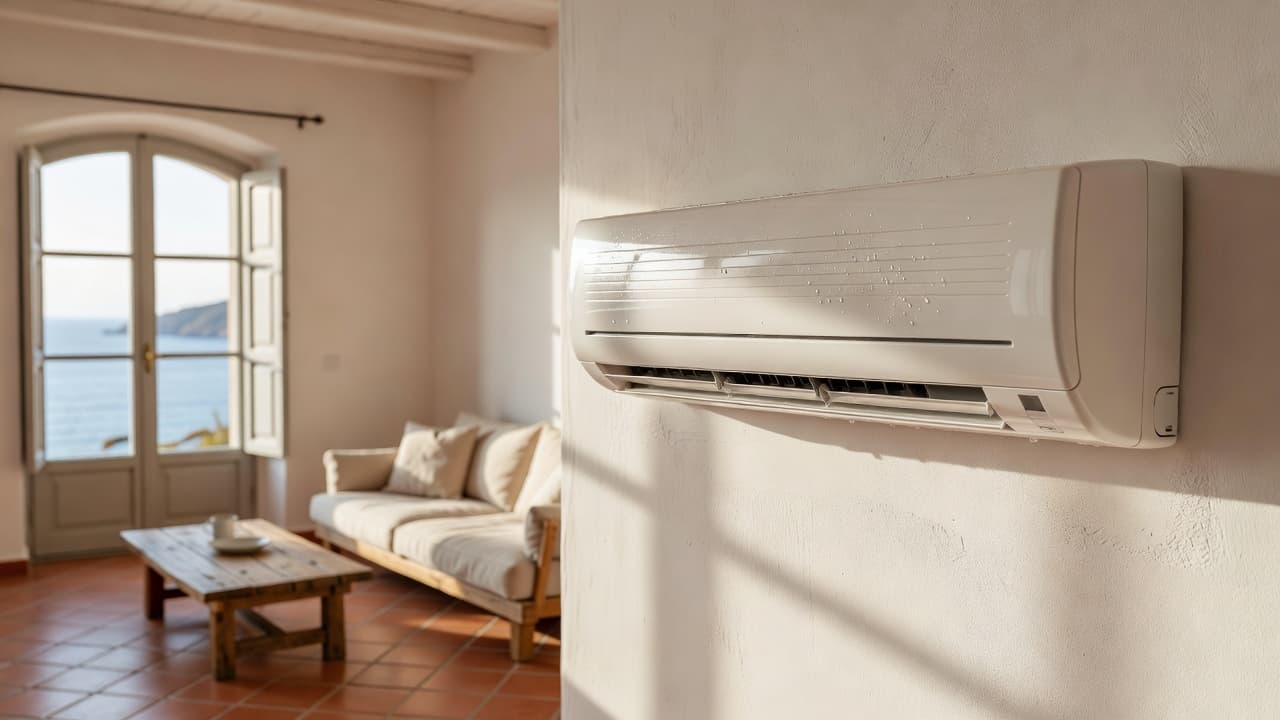
Your split air conditioning unit works by drawing warm, humid air from the room across a cold evaporator coil. That coil cools the air, and moisture condenses out of it, like droplets forming on a cold window. That water has to go somewhere, so it drains down a thin plastic pipe (usually running to the outside of your home or into a hidden drain).
The problem: that evaporator coil and the drainage pipe stay damp and warm — ideal conditions for bacteria and mould. Over weeks or months, colonies build up. When you run the unit, air blows across those colonies, carrying the smell into your room.
This is not a sign of a broken unit. It's normal wear, especially in humid Mediterranean climates where condensation is heavier. It happens faster on the coast due to salt air and moisture, and it's worse during peak summer when the unit is running constantly.
The smell itself isn't the unit breaking — it's a hygiene issue inside the cooling circuit.
Clean the filter weekly while you're waiting for professional service. A clogged filter reduces airflow, traps more moisture, and makes the smell worse.
Leave the unit running for 20–30 minutes after you turn off the cooling. This is called the "dry run" function on many split units. If your remote has a "dry" or "ventilation" mode, use it. It runs the fan without cooling, which helps evaporate moisture from the coil. Don't leave it running all day, but a few minutes daily helps prevent wet buildup.
Open windows and doors frequently to ventilate the room naturally. Don't rely on the air con alone while the smell is present.
Do not spray bleach, vinegar, or any chemical directly into the unit. You can't reach the evaporator coil safely, and chemicals can damage the internal pipework or create a toxic residue when the unit runs.
Stop and call a professional air conditioning technician immediately if:
- The smell is accompanied by the unit not cooling properly or making unusual noises (whistling, rattling, humming). This suggests a mechanical fault, not just a hygiene issue.
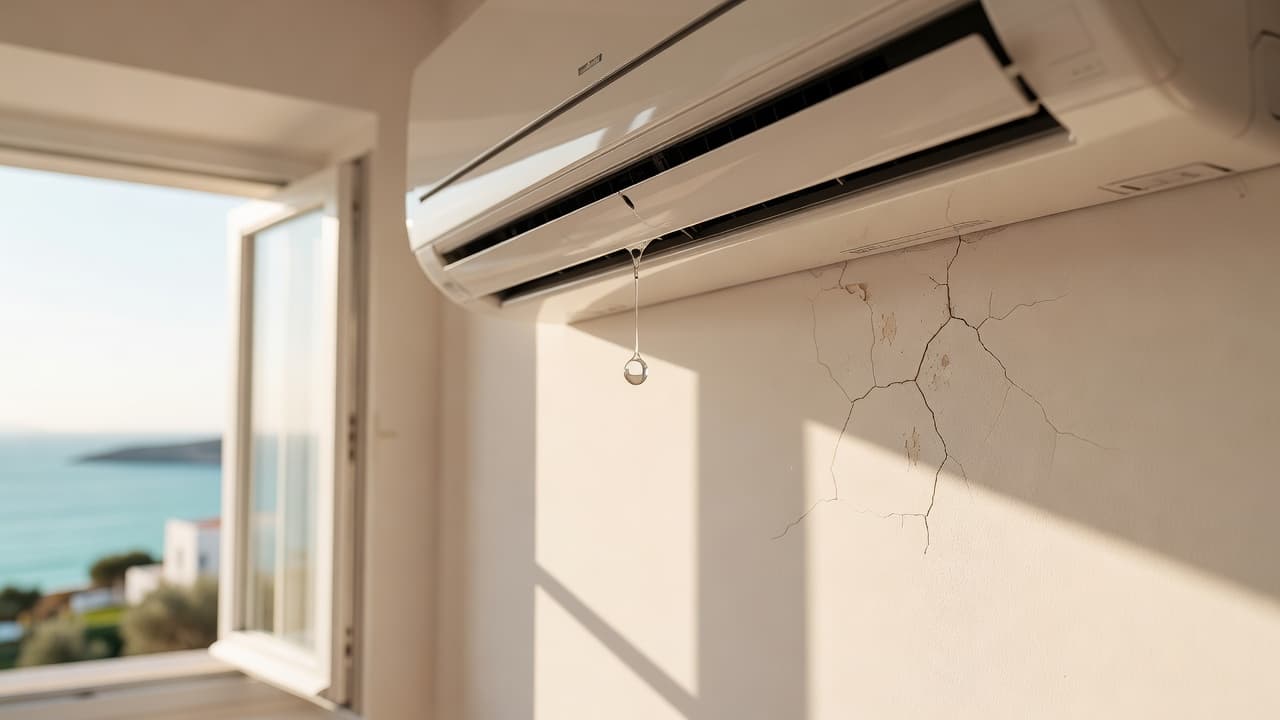
- Brown or black liquid is dripping from the indoor unit or the external drainage pipe. This is concentrated mould or bacterial growth and requires professional cleaning.
- You have respiratory symptoms (coughing, wheezing, shortness of breath) that started after the smell began. This could indicate mould spores being released in large quantities. Stop using the unit and get professional help.
- The smell returns within a few days of cleaning the filter, despite running the dry function. This means internal contamination is severe and needs expert cleaning equipment.
- You are elderly, have asthma, or have a weakened immune system. Don't wait for the smell to worsen. Call a technician as a precaution.
In all these cases, stop using the unit, open your windows, and book a professional AC service.
A qualified air conditioning technician will inspect your unit and likely recommend a chemical cleaning of the evaporator coil and internal drainage system. This is not a DIY job — the evaporator is a delicate aluminium component that can be damaged by incorrect handling.
The technician will:
- Isolate the unit (switch off the power and cut off the refrigerant circuit if necessary).
- Access the evaporator coil inside the indoor split head. Depending on the unit design, this may involve opening a service panel.
- Apply specialised coil cleaner (a biocide solution designed for air conditioning systems, not household bleach) to dissolve mould and bacteria.
- Flush the internal drainage pipe to clear blockages and stagnant water.
- Reassemble and test the unit, then hand you a certificate or service record.
The whole job usually takes 1–2 hours. Cost typically ranges from 80–150 euros, depending on how much buildup there is and your region.
After cleaning, the smell should be gone immediately. You'll also notice the unit cools more efficiently because the coil is no longer clogged with organic matter.
Check and clean the filter every 2–4 weeks during summer. Don't wait for it to look grey. A preventative clean every month keeps fresh air flowing and reduces moisture buildup.
Use the dry function for 15–20 minutes after you switch off the cooling in the evening. Many units do this automatically if you have a good remote, but check your manual.
Keep the room well ventilated. Open windows or doors for 10–15 minutes daily, even in summer. This lowers the overall humidity and reduces the moisture load on the air con.
Service the unit annually before summer. A professional check every year, with a coil clean if needed, prevents the problem from getting established.
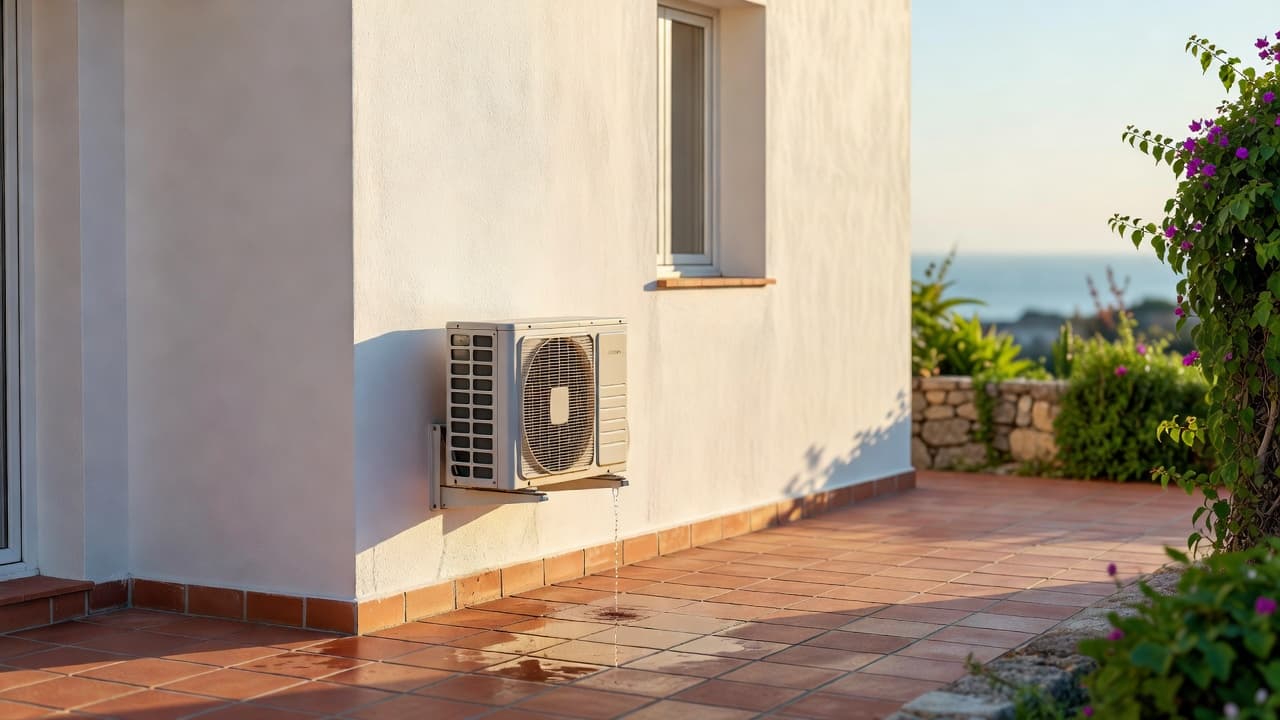
Ensure the drainage pipe runs downhill and isn't kinked. If your external drainage pipe bends upward or gets pinched, water backs up into the unit. Check outside your home — the pipe should exit cleanly with a slight downward slope.
If your unit has a condensate trap or U-bend in the drain line, keep it topped up with water. Some systems have a small U-shaped section in the drain that should contain a little water to block air coming back into the unit. If it dries out, it can allow bacteria to breed. Check your manual or ask your technician to show you where it is.
If your air conditioning unit smells despite cleaning the filter, or if the smell returns quickly, book a professional service. A qualified technician can clean the internal components properly and confirm that the smell is just a hygiene issue and not a sign of mechanical damage. In most cases, a single professional clean resolves the problem completely.
Get a quote from an air conditioning specialist