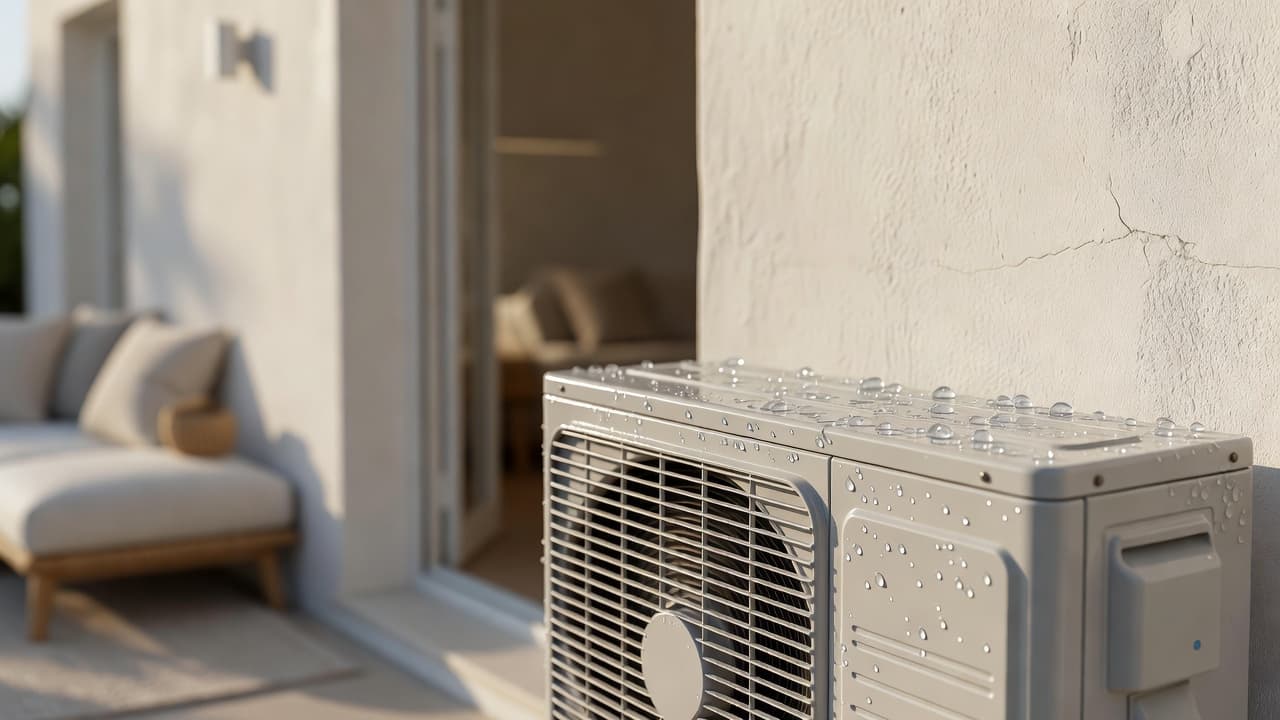
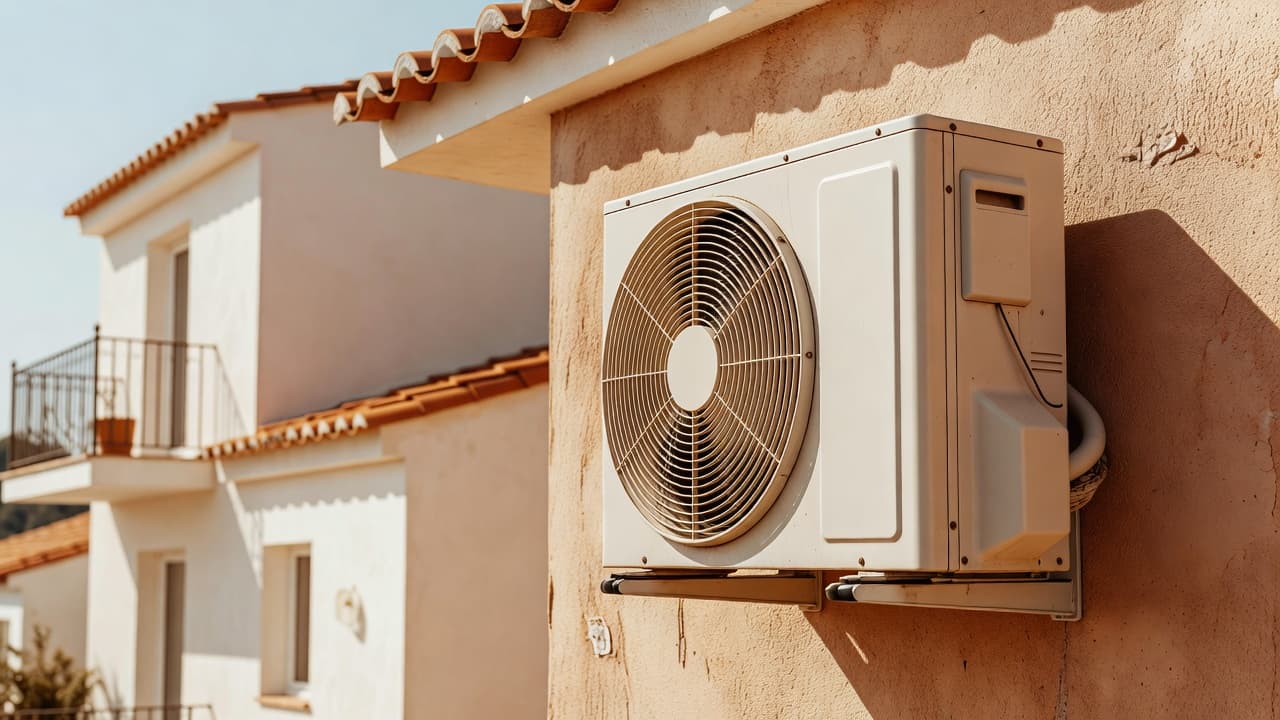
Refrigerant doesn't "run out" like petrol. The gas is sealed in a closed loop inside the system. If the cooling is dropping, there's a hole or crack letting it escape.
The most common causes in Mediterranean homes:
Corroded copper pipes. Salt air and humidity corrode the copper pipes that carry the refrigerant, especially in coastal areas on the Costa Blanca, Costa del Sol, or the Balearics. A tiny perforation develops over 5–10 years and gas escapes slowly.
Vibration damage. If the outdoor unit isn't secured properly or is mounted on a loose bracket, vibration over months can fatigue the pipe joints and crack them. This is especially common in older installations.
Poor installation. If the system was installed badly — pipes kinked, connections not sealed properly, or wrong joint types used — leaks can appear within months.
Compressor seal failure. Less common, but the internal seal in the compressor itself can weaken, especially if the unit has been running for 10+ years. This type of leak is inside the engine and can't be patched; the compressor must be replaced.
Accidental damage. If building work is done nearby, a pipe can be punctured. Similarly, some people accidentally hit or dent the outdoor unit, which can crack pipes inside.
There is no safe way to top up the refrigerant yourself. But you can make the room more bearable:
- Use fans actively. Even a small portable fan circulating air makes a big difference in how the room feels.
- Reduce heat sources. Switch off unnecessary lights, avoid using the oven, and don't use heat-generating appliances.
- Create shade. If you have European-style external shutters (persianas), close them during the day.
- Open strategically. Open north-facing windows and close south-facing ones to minimise direct sun heat gain.
- Manage humidity. In humid coastal areas, high humidity makes the room feel hotter. Opening a window to let air circulate (if it's cooler outside) helps.
These are not permanent solutions — you need the unit repaired. But they'll keep you comfortable for a few days.
Do not attempt any of the following:
- Do not open the refrigerant circuit. The pipes are sealed for a reason. Opening them without special equipment lets moisture in and causes more damage.
- Do not buy refrigerant cylinders and try to refill the system. In Spain and most of Europe, you need a certified refrigeration technician to handle refrigerant. It's illegal and dangerous.
- Do not use stop-leak additives. Some products claim to seal small leaks from inside. They don't work reliably and can clog the system, making professional repairs harder and costlier.
- Do not ignore an oily smell from the outdoor unit. While not an emergency, this usually indicates the leak is getting worse. Call the professional sooner rather than later.
- Do not continue running the unit for more than a few days without refrigerant. The compressor will overheat and fail. Replacing a compressor costs €400–800 minimum; avoiding that is worth the repair call.
When the air conditioning engineer arrives, they'll follow a standard process:
1. Test and diagnose. They'll use electronic equipment to detect exactly where the leak is. For small leaks, this can take 20–40 minutes. They'll check the pipes, joints, and compressor.
2. Locate and repair the leak. Depending on where the leak is:
- If it's a small pinhole in accessible copper pipework, they'll isolate that section, dry it out, and seal it or patch the pipe.
- If it's a joint connection, they'll drain the remaining refrigerant (into a recovery bottle, which is required by law), clean the joint, and resolder it.
- If the leak is in the compressor or an internal component, that part must be replaced.
3. Evacuate the system. Before refilling with new refrigerant, they'll remove all air and moisture from the pipes using a vacuum pump. This takes time but is essential — moisture inside the system causes further corrosion and reduces efficiency.
4. Refill with refrigerant. Once the leak is fixed and the system is dry, they'll add the correct amount of refrigerant back in. The amount depends on the size of your unit (usually marked on the outdoor unit's label).
5. Test the repair. They'll run the unit for 10–15 minutes and check that cooling is back to normal. They should also give you a receipt and a note of what was done.
The whole job typically takes 1–3 hours. Costs vary:
- Small leak repair in exposed pipework: €150–300.
- Joint reseal or pipe section replacement: €300–500.
- Compressor replacement: €600–1,500.
- Full unit replacement (if the unit is old and repairs aren't worthwhile): €1,500–3,000+.
Always ask the professional for a written estimate before they start work if the repair is expected to cost more than €300.
- Service the unit annually, ideally before summer starts. A service includes checking refrigerant levels and inspecting pipes for corrosion.
- Ensure the outdoor unit is properly installed. If you're replacing the unit or installing a new one, make sure it's securely mounted and not in a location where it's buffeted by wind or exposed to direct salt spray (if you're very close to the coast).
- Clean or replace the filters every 2–4 weeks during the cooling season. A blocked filter makes the unit work harder and can cause pressure problems that worsen small leaks.
- Don't expose the unit to impact. If renovation or building work is planned, ask the contractor to protect the unit or isolate it from activity.
- In coastal areas, consider a protective cover for the outdoor unit during the off-season to reduce salt corrosion. Your engineer can advise on the best type.
If your air con has stopped cooling properly and you suspect a refrigerant leak, the next step is straightforward: stop using the unit and contact an air conditioning professional in your area. The longer you wait, the closer the compressor gets to failure. A repair now costs hundreds; a replacement costs thousands.
Get a quote from a qualified air conditioning engineer near you.