Air conditioning failures in holiday lets fall into a few predictable categories.
Electrical overload. Summer on the Mediterranean is hot, and guests often run the air con at full blast alongside a washing machine, dishwasher, and hairdryer. The circuit breaker (called the ICP or diferencial in Spanish homes) trips to protect the wiring. This is a safety feature, not a fault. Restarting the breaker usually solves it immediately.
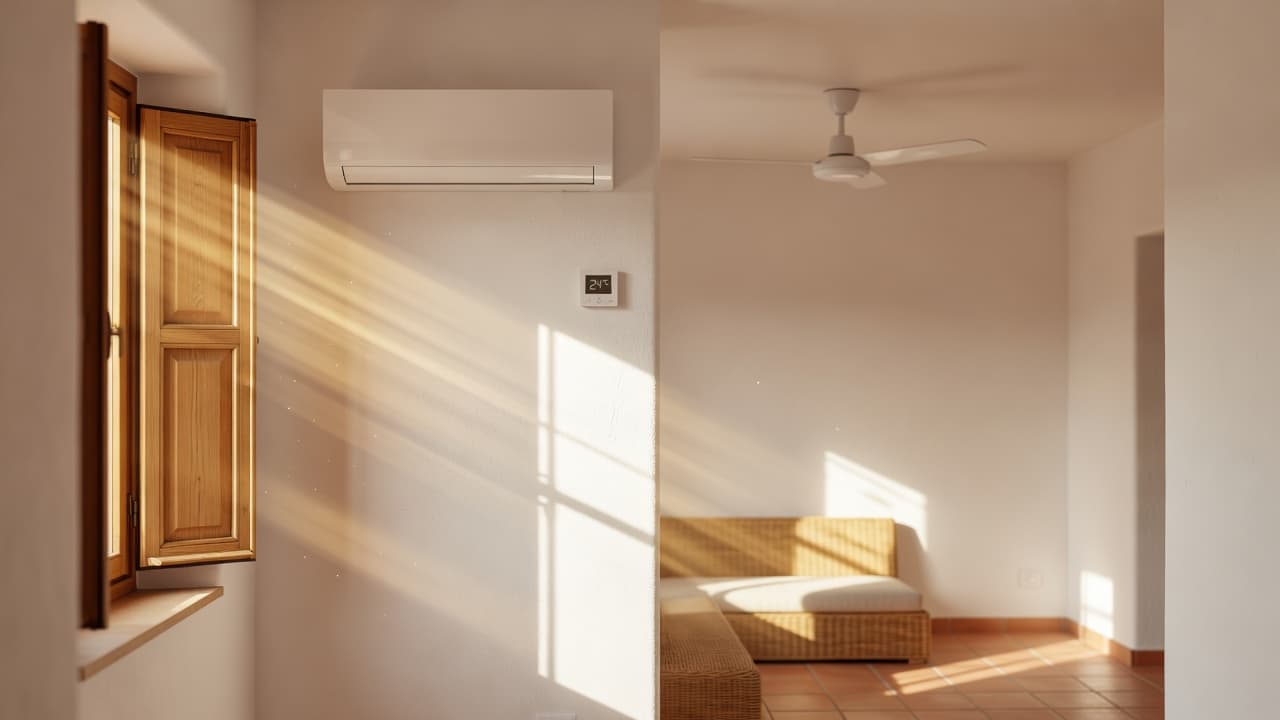
Thermostat confusion. Guests unfamiliar with European systems often set the thermostat to "heat" or "fan" instead of "cool", or dial it to 30°C thinking the air con will work harder. Once corrected, the unit cools normally.
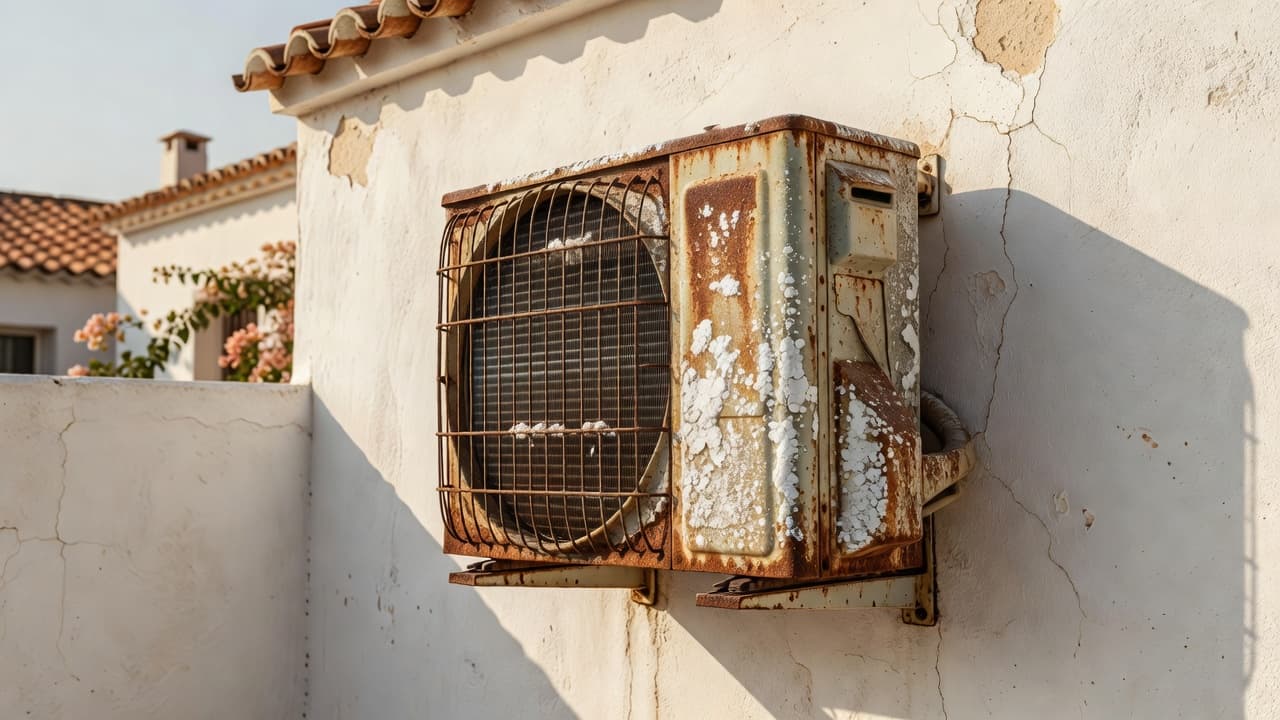
Filter blockage. If the air con hasn't been cleaned in months, the filter clogs with dust (this happens fast near the coast, where salt and humidity accelerate dust buildup). The unit runs but cooling output drops dramatically. A technician will clean or replace the filter — usually a 20-minute job.
Refrigerant leak or compressor failure. If the unit is running but not cooling, or if it's making unusual noises, the problem is inside the unit. These need a technician with diagnostic equipment.
Low voltage or faulty capacitor. Older units sometimes fail to start because an internal capacitor has failed. It's not a guest error. A technician will replace the capacitor.
While waiting for professional help, your guest can make the situation more bearable.
Close all shutters and blinds during daylight hours. Heat enters through windows faster than air con can remove it. Mediterranean shutters (persianas) are excellent for this — keeping them closed mid-day can drop the temperature by 3–5°C without power.
Turn off unnecessary electrical appliances. The washing machine, dishwasher, oven, and unnecessary lights all add heat. This reduces the load on the electrical system and helps if the circuit is borderline overloaded.
Open windows at night (if the neighbourhood is safe and not too noisy). The coastal breeze often drops 10–15°C at night. Opening a window in a bedroom and closing others creates cross-ventilation and can cool the flat to a liveable temperature overnight.
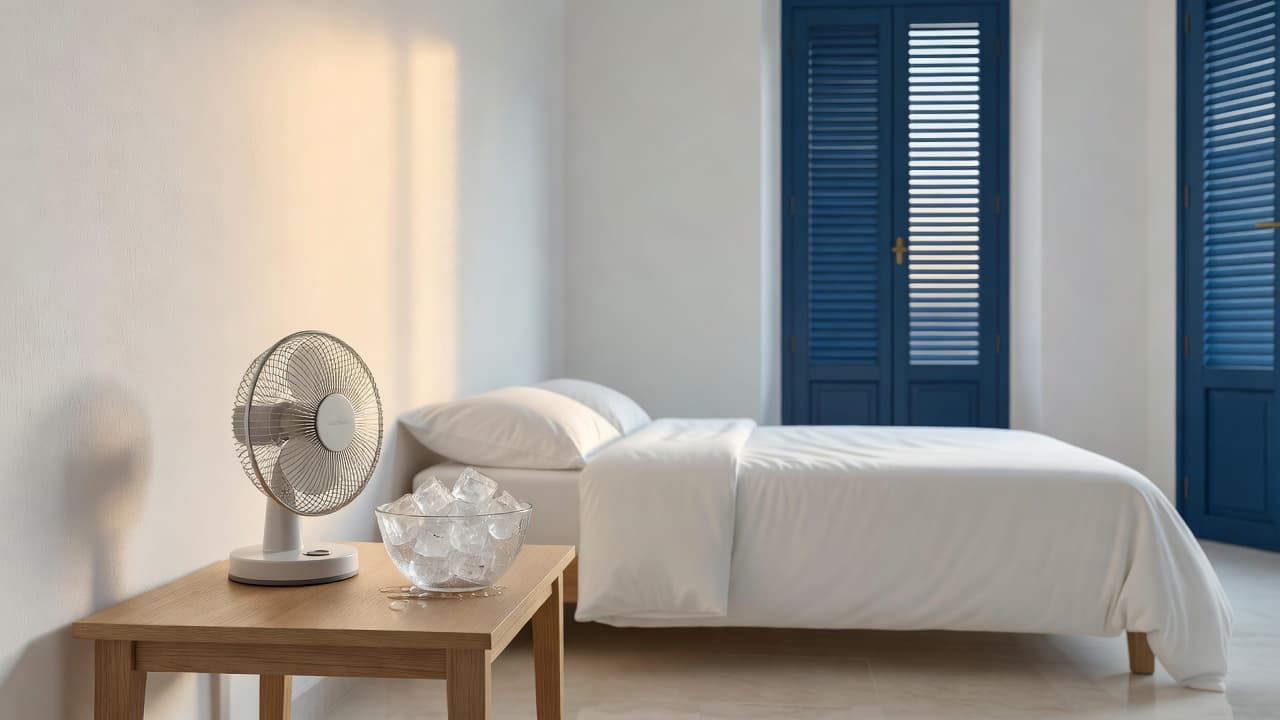
Use a portable fan. If the guest has access to one, a simple pedestal or table fan moving air around makes the temperature feel more bearable, even if it's not actually cooler.
Stay in the coolest rooms. Usually the north-facing rooms or those shaded most of the day. Concentrate the guest in one or two rooms rather than trying to cool the entire flat.
Avoid using the oven and hob. These generate intense heat. Suggest cold meals or takeaway for the day or two it takes for a technician to arrive.
Stop immediately and call a professional if:
- The unit is making loud grinding, squealing, or banging noises. This suggests a compressor or motor problem. Running it further could cause damage.
- There's liquid (refrigerant or oil) leaking from the indoor or outdoor unit. Do not touch it. Refrigerant is hazardous. Call a technician and keep the area clear.
- The unit smells of burning, gas, or chemicals. Switch it off and open windows immediately. Call a technician and explain the smell.
- You see sparks, smell burning from the electrical panel, or the breaker keeps tripping immediately after you reset it. There's an electrical fault. Do not reset the breaker again. Call an electrician or air conditioning technician.
- The guest reports feeling faint, dizzy, or nauseous from the heat. This is heat exhaustion and is a medical concern, not an air con problem. Advise them to drink water, rest in the shade, and seek medical attention if symptoms worsen. Call the technician urgently but treat the health issue first.
- You've tried restarting twice and the problem persists. Multiple restart attempts suggest a fault that requires diagnosis. Stop and call help.
Once you've called an air conditioning specialist, here's what typically happens.
The technician will run through the same basic checks (thermostat, breaker) and then inspect the unit more thoroughly. They'll check the refrigerant pressure using a gauge, listen to the compressor, inspect the filter, and test the electrical connections. Most modern split units (the type with an indoor wall-mounted unit and an outdoor box) can be diagnosed in 30–60 minutes.
Common repairs on the spot: filter replacement (10 minutes), capacitor replacement (20 minutes), restarting the system after checking for faults (5 minutes), clearing blockages in the drainage line (15 minutes).
Repairs that need parts ordered: compressor replacement, refrigerant recharge if there's a leak, replacement of the indoor or outdoor unit. These take 24–48 hours depending on parts availability.
The technician will explain what they've found and what they've done. If they've replaced parts, they should hand you a receipt or work certificate (factura). Keep this for your records and for warranty purposes.
If the unit is more than 10 years old and the repair costs more than 40–50% of a replacement unit, ask the technician for their opinion on whether repair or replacement makes financial sense.
- Have the unit cleaned and serviced annually. Spring is ideal, before the summer rush. A technician will clean the filter, check refrigerant levels, inspect electrical connections, and test the thermostat. This costs €80–150 and prevents most summer breakdowns.
- Tell guests to avoid overloading the circuit. A note in the welcome pack saying "please don't run the washing machine and air con at the same time" is worth a mention.
- Don't set the thermostat too low. 22–24°C is cool enough and uses less electricity. Setting it to 18°C makes the unit work harder and can trip the breaker.
- Check the filter every two weeks in summer. A blocked filter is often why guests complain the air con "isn't cooling properly". If you have a property manager on-site, this is part of their routine checks.
- Keep guest instructions simple. Provide a card in the flat with a photo of the thermostat and instructions: "Cool mode, set to 22°C, use remote to adjust". Guests who know how to use the system cause fewer problems.
Air conditioning failures are stressful for both you and your guest, but most are simple enough to troubleshoot remotely. The key is acting quickly: check the thermostat, try a restart, look for a tripped breaker, and if none of that works, call a professional immediately. Your guest will forgive a breakdown that's fixed within a few hours far more readily than they'll forgive a slow response.
If you need a qualified air conditioning technician on the Mediterranean coast, our air conditioning specialists are available across the region and can often visit within 24 hours. Contact us for an emergency appointment.