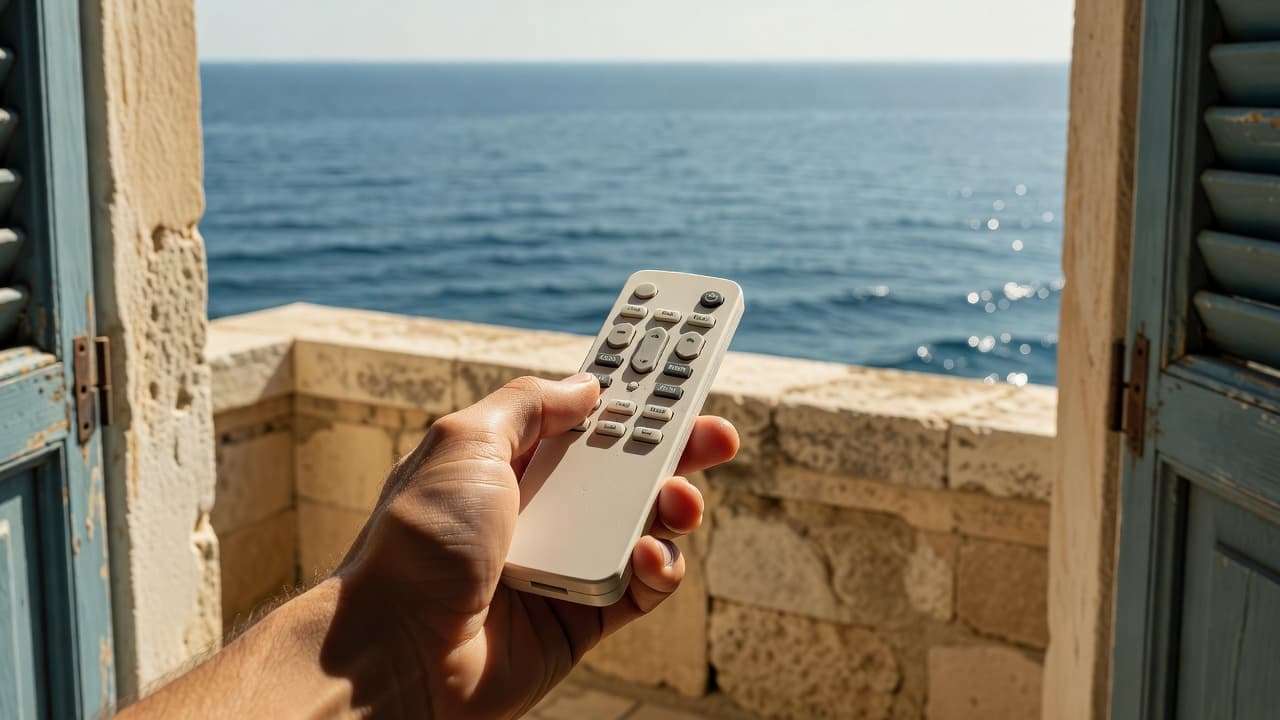
Most air conditioning remits have a main power button (usually a large circular symbol) and a separate standby button (often a crescent moon or a smaller icon). Many people confuse these.
Power button: switches the unit completely off. No electricity use (except a tiny amount for the remote receiver circuit). This is what you want when you leave the house or go to bed.
Standby or eco standby: keeps the unit ready to start instantly but not actively cooling. It still draws electricity. On a hot day, standby mode might cost 5–15 euros a month across a flat. Over three months, that's money wasted.
If your remote is wireless (battery-powered), check the batteries. Weak batteries can cause the remote to send weak signals, forcing the indoor unit to work harder or fail to register commands. Replace them once a year, or if buttons feel sluggish.
This is not a guessing game. Here's what the physics tells you: each degree of cooling below 24°C adds roughly 6–8% to your energy consumption.
Set to 20°C: 100% consumption (your baseline).
Set to 22°C: 113% consumption.
Set to 24°C: 127% consumption.
Set to 26°C: 141% consumption.
Wait — that looks backwards. Let me flip it. If you're running at 20°C and raise the setting to 24°C, you'll cut consumption by about 15–20%. The compressor doesn't need to run as hard, and it switches off sooner.
On the Mediterranean coast, where outside temperatures often hit 35–40°C in July and August, there's a temptation to set the thermostat to 18°C or below. Resist it. Your body won't notice the difference between 22°C and 20°C, but your bill will be 50 euros higher.
A practical rule: set it to 24–25°C during the day when you're home, and 26–27°C at night or when you're out. This is cool enough to sleep and work comfortably, and warm enough to keep costs sane.
Your remote has several buttons or settings you might be ignoring:
Fan speed (usually shown as wind symbols or "low / medium / high"):
- High speed: cools the room fastest, but uses the most electricity. Use this only when the room is very hot and you want rapid cooling.
- Medium speed: a good compromise. The room cools within 15–20 minutes without excessive power draw.
- Low speed: uses 30% less electricity than high. Most people find it sufficient once the room is already cool. At night, switch to low and you'll barely notice the difference in comfort.
- Auto fan: the unit adjusts speed automatically. This is efficient if it works well with your remote's responsiveness, but if your remote batteries are weak, it can misbehave.
Operating mode (cooling, fan-only, dry, sleep, eco):
- Cooling mode: the default. The compressor runs actively. Use this when the room is hot and you want to cool it down.
- Dry mode: removes humidity without much cooling. On coastal days when it's muggy but not scorching (say, 27–28°C), dry mode feels comfortable and uses about 50% of the energy of cooling mode. This is particularly useful in spring and autumn on the Mediterranean, or in early morning when humidity is high but temperature is moderate.
- Fan-only mode: no cooling, just air circulation. Use this on mild evenings or when outside temperature is lower than inside temperature. It costs almost nothing.
- Sleep mode (if available): reduces fan noise and gradually raises the target temperature 1–2°C per hour, so you don't wake up cold. It's comfortable and saves energy.
- Eco or smart mode: the unit decides between cooling, dry, and fan modes based on the current temperature and humidity. Set it and forget it. This is one of the easiest ways to save without thinking about it.
If your summer bill arrived and shocked you, here's what you can adjust with your remote right now, without waiting for a technician:
Raise the thermostat by 2 degrees and live with it for a week. Notice whether you're actually uncomfortable, or whether it feels fine. You'll probably be fine. That's 12–16% savings.
Switch to eco or smart mode. Leave it there for two weeks. Write down your daily consumption from the unit's display (if it shows this) or from the meter. Compare to last month.
Use dry mode in the late afternoon and evening if humidity is high but temperature is moderate. This alone can save 20–30 euros a month if you're using the air con 6+ hours a day.
Set a timer or schedule (if your remote has one, or via a smartphone app if the unit supports it). Program the AC to turn off at 23:00 and turn back on at 07:00. This prevents all-night cooling. Over a month, this saves 50–100 euros.
Turn off the unit when you leave the house, even for just 2 hours. It costs less electricity to cool the room again from 28°C when you return than to maintain 24°C all day while you're out.
Close internal doors and curtains in rooms you're not using. This isn't a remote setting, but it makes the cooled area smaller, so the AC works less. The remote's temperature sensor will reach 24°C faster, and the compressor will cycle off sooner.
Stop and call a professional if you notice any of these:
- The unit is making a hissing, whistling, or grinding noise that wasn't there before. This could indicate a refrigerant leak or mechanical fault. Adjusting the remote won't fix it; the technician needs to inspect and possibly refill the system.
- The remote stops responding to any buttons. Don't keep pressing it. The indoor unit might be receiving incorrect signals. Get the remote checked or replaced.
- The air coming out is warm or lukewarm even when set to cooling mode at 20°C. This is not a settings problem. The compressor might have failed, or refrigerant might be low. A professional needs to diagnose and repair.
- Water is dripping inside the unit or from pipes outside. This is usually a drainage fault. Adjusting the thermostat won't stop it. Call a technician.
- The unit is tripping the circuit breaker (the electrical switch in your fuse box) every time you turn it on. This is an electrical fault. Don't keep trying. Call an electrician or the AC service provider.
- You smell a chemical or burning odour near the unit. Turn it off immediately and call a professional. This could be a serious issue.
In all these cases, turn the unit off at the main power button and leave it off until the technician arrives. Continuing to run it could cause more damage.
If you do decide to book a professional visit because energy consumption is still unusually high, here's what they'll typically do:
First, they'll ask to see your last three electricity bills and your thermostat settings. If your usage has spiked suddenly, the issue might not be the unit at all — it could be that you're running two units, heating water simultaneously, or using an electric heater you forgot about.
If the unit itself is the issue, the technician will check:
- Refrigerant level: low refrigerant (often caused by a slow leak) means the compressor works harder and uses more electricity. A refill or leak repair fixes this.
- Filter cleanliness: a clogged filter makes the unit work harder. A simple clean can reduce consumption by 5–10%.
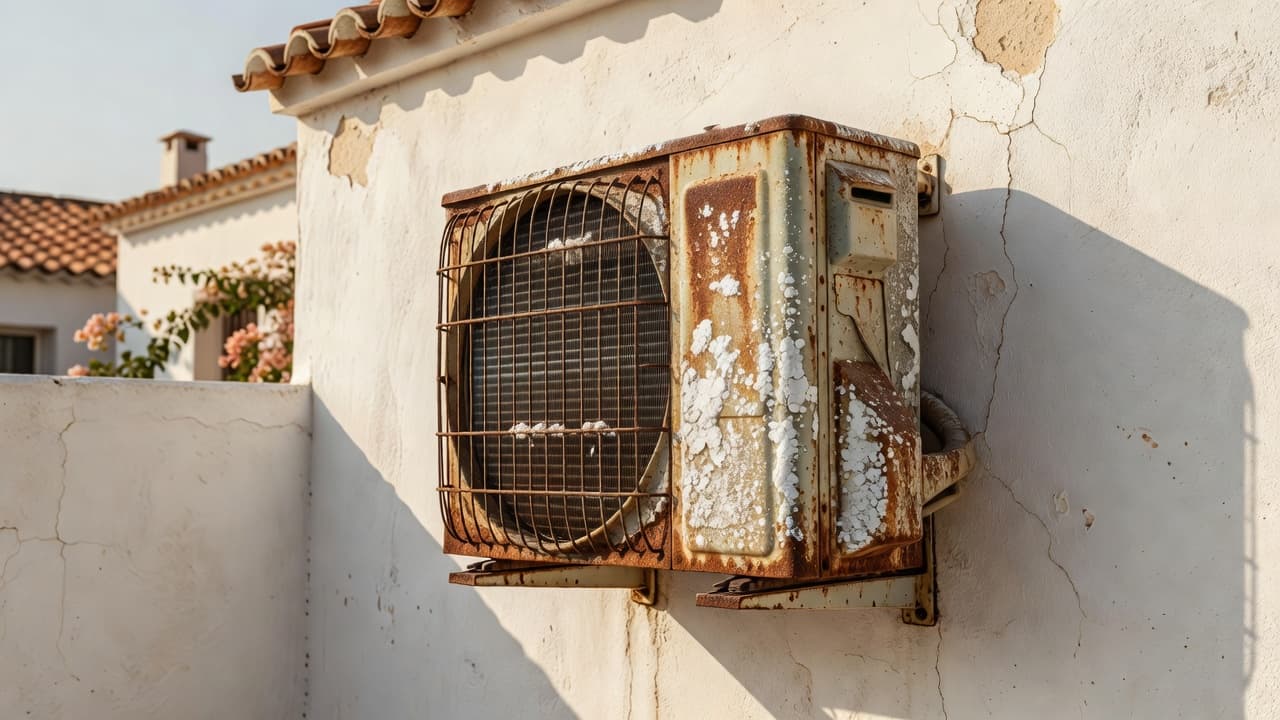
- Condenser coils outside: salt air on the coast corrodes these coils faster. Cleaning them improves efficiency significantly.
- Thermostat calibration: sometimes the sensor reads incorrectly, causing the unit to overshoot or undershoot the target temperature.
The visit usually costs 80–150 euros. If the technician finds a leak or needs to refill refrigerant, expect an additional 150–400 euros depending on the coolant type and the size of the system.
Energy consumption on the Mediterranean coast in summer is inevitable. But you can manage it:
- Set your thermostat to 24–25°C as your default, not 20°C.
- Use eco or smart mode whenever possible. It's designed to balance comfort and efficiency.
- Turn the unit off when you're out for more than 2–3 hours. If you have a modern unit with a mobile app or WiFi control, set it to cool the house 30 minutes before you arrive home.
- Maintain the filter: check it every two weeks in summer. A clean filter costs nothing and cuts consumption by 5–10%.
- Have the unit serviced once a year, ideally before the summer rush. A technician will clean the outdoor condenser and check refrigerant levels.
- Close curtains and blinds during the day to keep the sun out. This reduces the load on the AC by 15–20%.
- Avoid blocking the outdoor unit with plants or furniture. It needs to expel heat; obstruction makes it work harder.
If you've tried all these adjustments and your bill remains unexpectedly high, a professional inspection is worthwhile. A qualified air conditioning technician can identify whether the unit itself is losing efficiency or whether external factors (a second unit running, a water heater, or simply an exceptionally hot summer) are driving costs up. Don't guess; get it checked.