When you turn off your air conditioner, the refrigerant inside doesn't stop moving immediately. It continues to circulate and equalise pressure between the indoor and outdoor units. As it cools and settles, it can create distinct sounds:
Bubbling and gurgling: Refrigerant moving through narrow copper pipes and small orifices as pressure drops. This is especially noticeable in the first 2–3 minutes after shutdown.
Dripping or pattering: Condensation (water that collected on the cold evaporator coil inside) running down channels and dripping into the internal drain pan. In a properly installed unit, this water is directed through a drain pipe to the outside or a nearby drain.
Hissing or popping: Small air pockets or pressure differences creating micro-releases of gas. Sounds more dramatic than it is.
These sounds are more audible on the Mediterranean coast because split units (the most common type in coastal urbanisations and holiday homes) have longer refrigerant pipes running between the indoor wall unit and the outdoor condenser. The noise travels down those pipes and can echo slightly within the plastic casing.
For noise that stops within 5 minutes:
Nothing needs to be done. This is the unit cooling down. Avoid turning it on and off repeatedly in quick succession, as this amplifies the settling process.
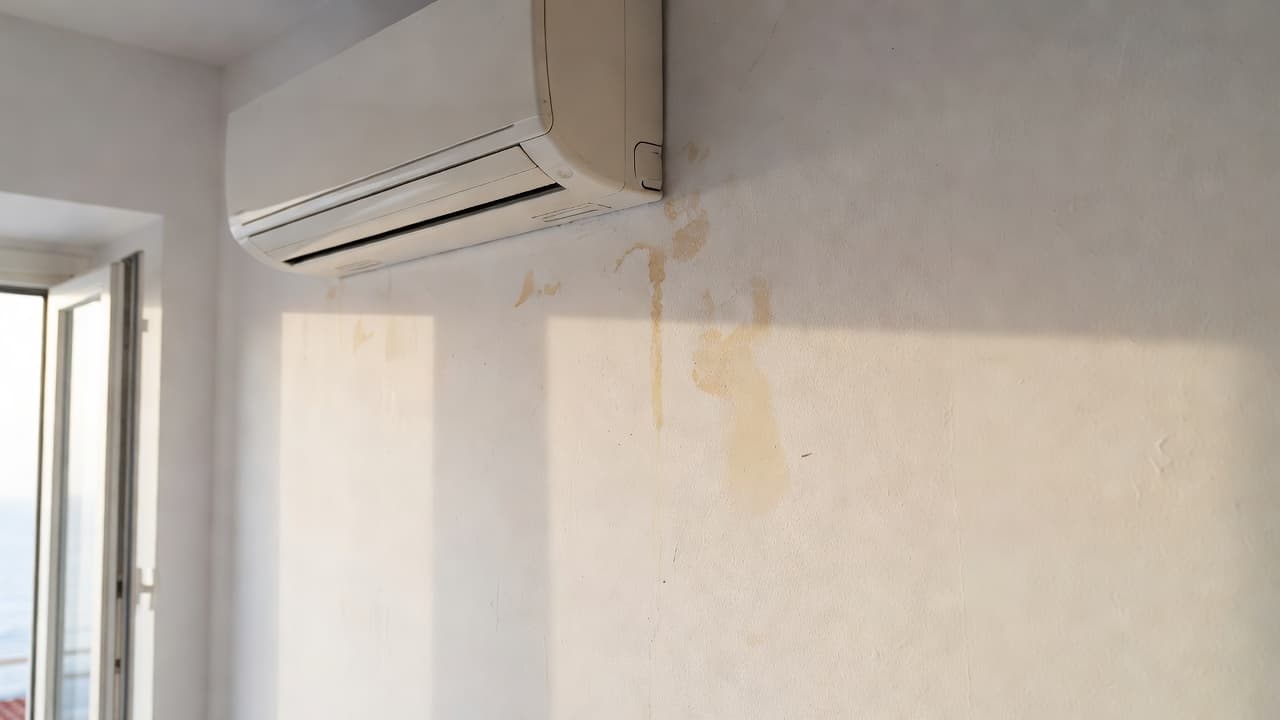
For water pooling below the unit:
Place a shallow container or tray under the dripping point to catch the water, and empty it daily until the leak is fixed. Do not block the drain opening yourself — the drainage system is sealed and designed to work a specific way.
For persistent bubbling while the unit is off:
Ensure the unit is completely powered off (not just on standby). Some units have a delay function that keeps internal components active for a few seconds after you press the off button. Wait 10 minutes and listen again.
To reduce noise generally:
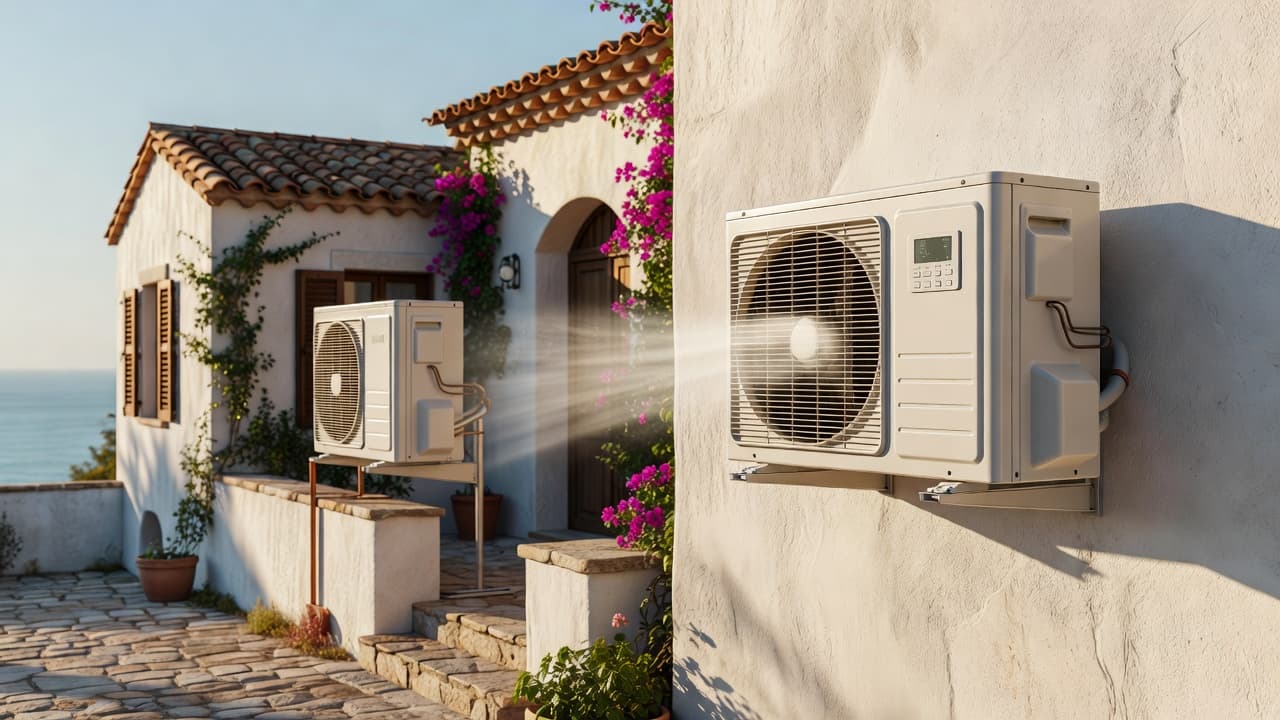
Make sure the outdoor unit (normally mounted on a balcony railing, on the wall, or on a ground stand in villas and houses) is secure and not vibrating against its mounting brackets. Loose outdoor units can amplify internal sounds through the refrigerant pipes. Do not tighten brackets yourself — this requires correct tools.
Stop and call a technician immediately if you notice any of the following:
- The bubbling or dripping noise occurs while the unit is running (actively cooling). This suggests internal blockage or a refrigerant circulation problem.
- Water is leaking from the unit at a rate of more than one drip per 5 seconds, or pooling on the floor faster than it would from normal condensation. This indicates a blocked internal drain line.
- You see water leaking from the outdoor unit or from the refrigerant pipes connecting the two units. Refrigerant leaks are serious and require immediate professional attention.
- The noise is extremely loud — a violent rattling, banging, or hammering rather than a quiet bubble or drip.
- The unit is hot to the touch when off, or feels unusually warm during normal operation.
- You smell a chemical odour (sharp, slightly sweet, or "refrigerant-like") coming from the unit. This can indicate a refrigerant leak.
- The bubbling sound is paired with the unit not cooling properly, even though it was working fine a week ago.
Do not attempt to open the casing, inspect internal components, or add refrigerant yourself. Air conditioning systems are sealed and require certification to service. Opening a unit voids your warranty and can be dangerous.
When you call an air conditioning technician, they'll perform a methodical check:
Listen to the noise while the unit is off and running, to confirm it's a normal post-shutdown sound or something that needs attention.
Inspect the internal drain line by checking that water can flow freely from the indoor unit to the drainage point (usually a small pipe running down the wall or through the ceiling to a drain outside). A blocked drain line is one of the most common causes of water pooling — and it's easily cleared.
Check the refrigerant pressure using specialised gauges. High or low pressure readings suggest a leak, blockage, or compressor issue.
Inspect the condenser coil on the outdoor unit for dirt, salt spray (common on the coast), or debris that might be restricting airflow and causing the system to work harder, producing more noise.
Clean the filters and coils if they're clogged, which is common in coastal areas where salt air deposits corrode fins and attract dust.
Test the system through a full cooling cycle and monitor the noise pattern to confirm it's normal operation.
If everything checks out, you'll be reassured and won't pay for unnecessary work. If there's a genuine fault, they'll explain it clearly and provide a repair quote. Keep the invoice — it's your proof of service and important for warranty purposes.
Have the unit serviced once a year, ideally in spring (April to May) before the summer cooling season begins. This includes cleaning the filters, checking refrigerant levels, and clearing the drain line.
Keep the area around the outdoor unit clear of debris, leaves, and salt spray (if your home is within 500 metres of the sea). Corrosion and blockages increase noise and reduce efficiency.
Don't turn the unit on and off repeatedly in a short space of time. Let it cycle naturally — constant on-off creates more audible pressure changes.
Check the internal drain pan if your unit has an accessible one (some holiday homes do). If it's visibly dirty or full, contact a technician to clean it. Do not attempt to empty it yourself.
Ensure the unit is properly installed — if you're renting or have recently bought a home with AC, ask the agent or owner for the installation certificate (sometimes called a "boletín"). Poor installation can cause excessive noise and drainage problems.
If your air conditioning unit is making unusual noises and you've ruled out normal post-shutdown sounds, or if you're seeing water pooling on the floor, don't wait. A simple drain-line cleaning now can prevent a more expensive compressor problem later. Get in touch with a qualified air conditioning technician on the Mediterranean coast — they can diagnose the issue in 15 minutes and often fix it on the same day.