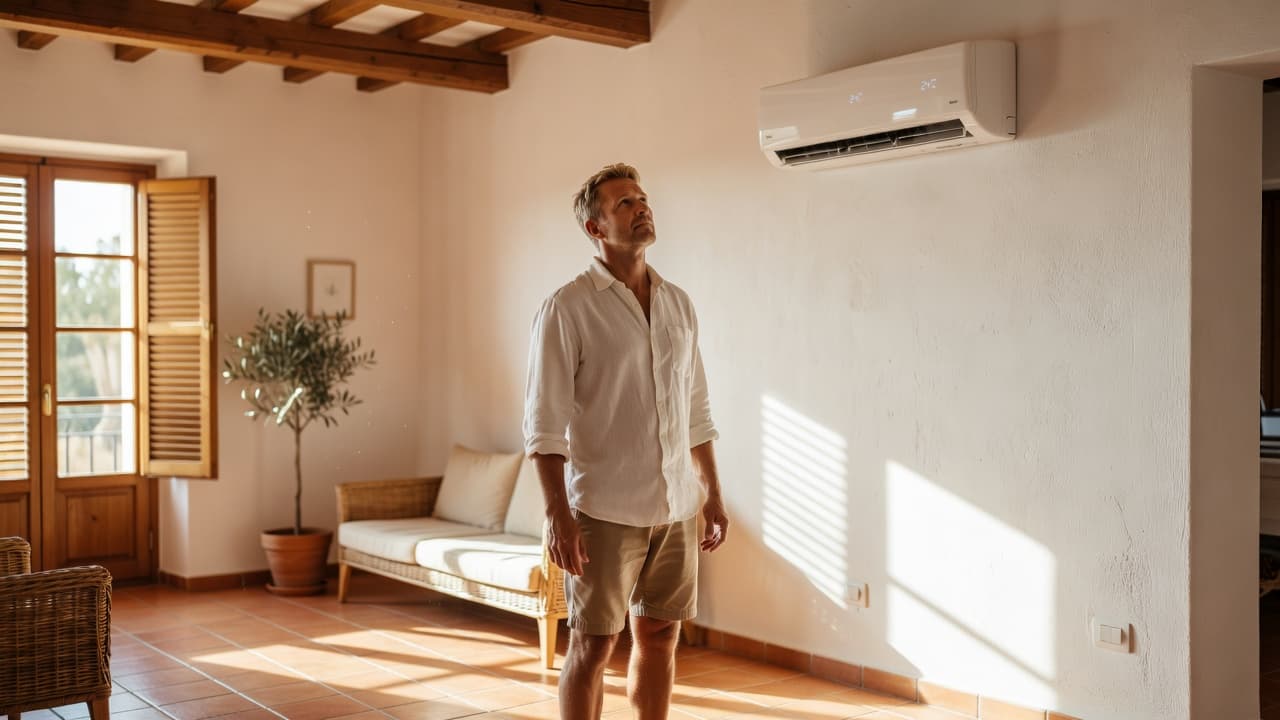
After months of being switched off—especially in the heat of a Mediterranean summer—several things can go wrong, most of them straightforward.
Power supply issues are the most common culprit. A circuit breaker trips (the switch flips to OFF) either because the AC drew a large inrush of current when you tried to start it after a long rest, or because there was a minor fault in the system that the breaker detected. This is actually a safety feature—the breaker is protecting your home. Equally, the remote control's batteries will always be flat after three months or more.
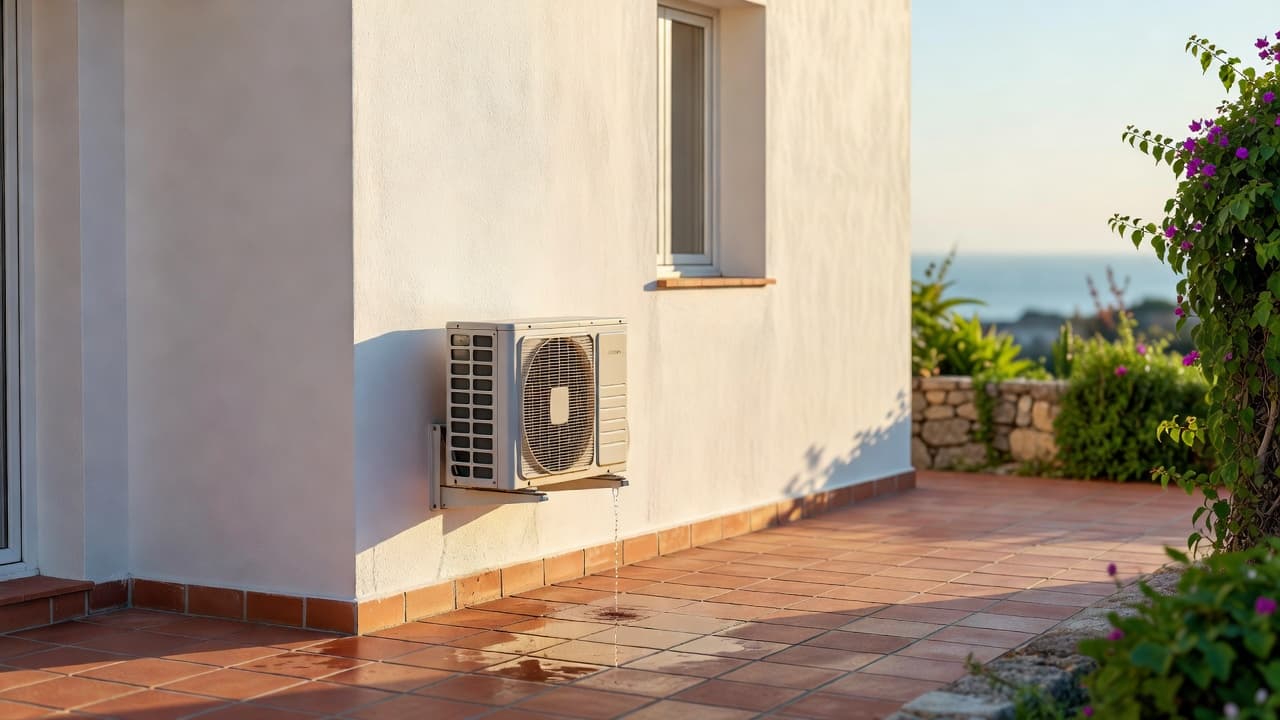
Dust and debris buildup happens naturally. Even if your home is sealed well, months of stillness mean dust settles on the filter and, if the outdoor unit is partially exposed (typical in villas and semi-detached houses on the coast), leaves, insects, and salt-air residue can accumulate on the fins, blocking airflow. This causes the system to shut down to prevent overheating.
Refrigerant pressure drop can occur if there's a very small leak in the system. After months of inactivity, the pressure inside the circuit may have dropped slightly, and the unit won't function until a professional recharges it.
Compressor lock-up, the worst-case scenario, happens rarely but can occur if the AC hasn't been run for many months. Oil in the compressor can settle and thicken, preventing the motor from turning over. This is why seasonal properties should ideally be switched on for a few minutes every month or two, even in winter.
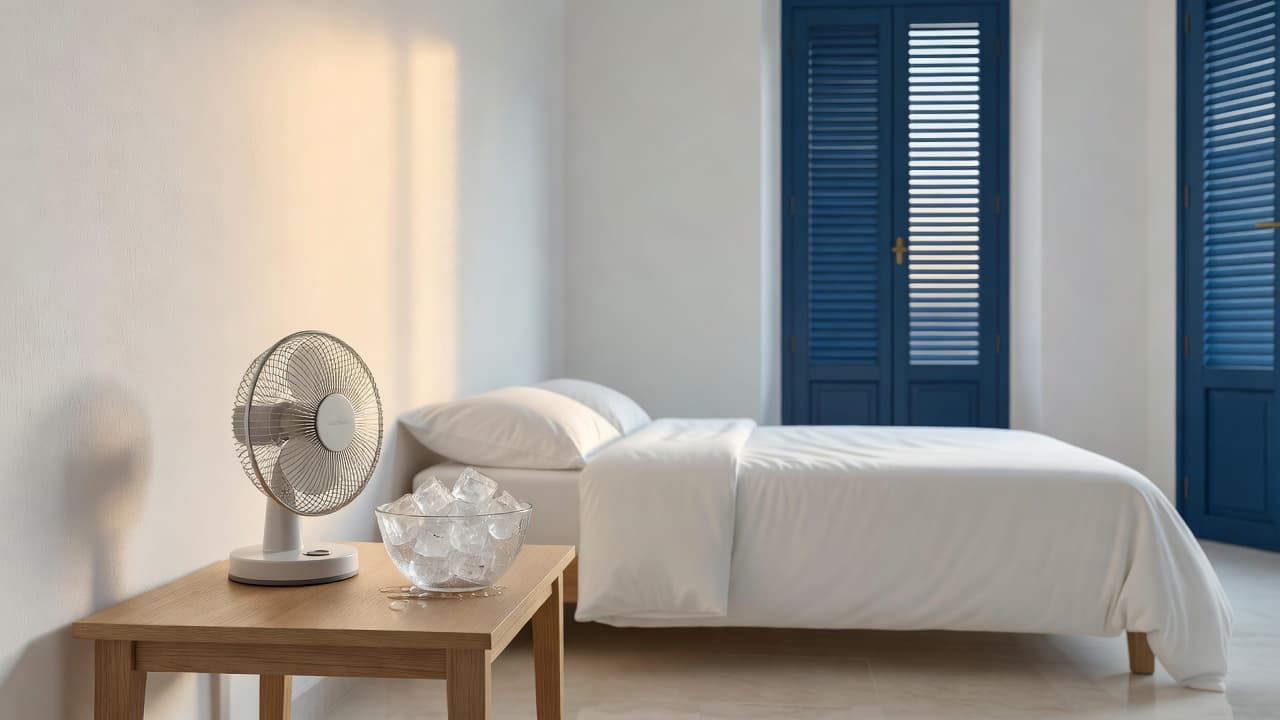
Once you've done the checks above, here's what you can do to make the situation tolerable while you wait for an engineer or while the system settles.
Open all the shutters and windows on the shady side of the property. Flip the blinds fully open on the sunny sides. You'd be surprised how much difference this makes, especially if the house faces north-east. The sea breeze will flow through, and you'll drop the temperature by 2–3 degrees in 20 minutes.
Turn off unnecessary heat sources. Unplug the oven, dishwasher, and any appliances you're not using. The fridge and water heater (termo eléctrico) will run, but microwave and kettle use is minimal at this point.
Close internal doors to rooms you're not using, trapping cool air in your living space and bedroom.
Run a cold shower and use a damp flannel or towel around your neck and forehead. It's basic, but it works—your body will regulate more efficiently, and you'll be comfortable enough to assess the AC situation without panic.
Do NOT try to force the system. If the remote doesn't work after two attempts, or if the wall switch doesn't respond, stop. Repeated attempts can trip the compressor's thermal overload protection or cause damage.
Stop immediately and call a professional if:
The circuit breaker trips again within 5 minutes of you flipping it back on. This indicates an electrical fault, possibly in the compressor or the wiring. Do not flip it again.
You smell a burnt odour or acrid smoke coming from the outdoor unit or the wall panel. Switch off the system entirely and wait for the engineer.
The remote control melts or the wall panel is warm to the touch (warmer than the wall around it). This suggests an electrical fault or overheating in the control board.
The outdoor unit is completely encased in salt crust (common in beachfront properties) or has visible damage, rust, or a large dent. This needs professional cleaning and inspection.
The unit makes a loud banging, grinding, or metal-on-metal noise when you turn it on. This suggests compressor damage.
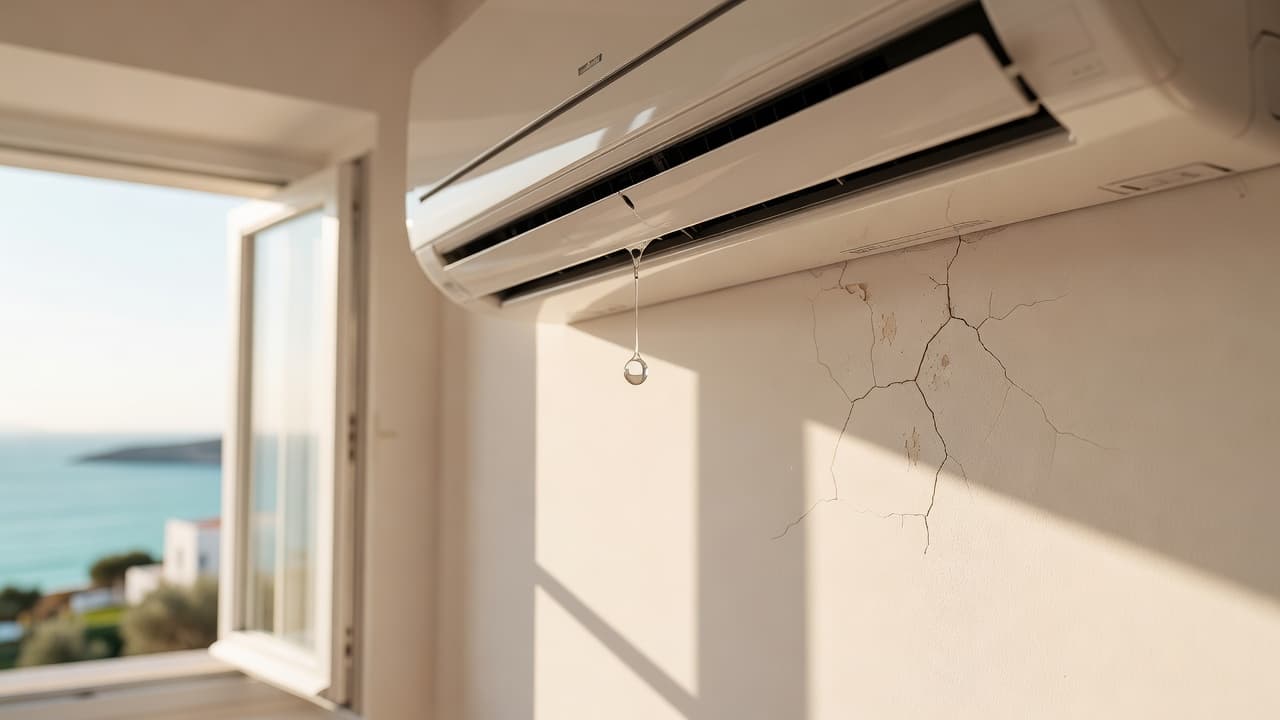
Water is actively dripping inside the house from the indoor unit. This could indicate a blocked drainage pipe or a refrigerant leak. Stop the system and wait.
You don't know where the circuit breaker is, or it's locked, or the labelling is in Spanish and unclear. Call an electrician rather than guessing which switch controls the AC.
When you call an air conditioning professional, they'll arrive with a multimeter, refrigerant gauges, and a thermal imaging camera if needed. Their first steps mirror yours: they'll check the power supply, inspect the filter, and look at the outdoor unit for blockages.
If the issue is straightforward—a clogged filter, tripped breaker, or dead remote batteries—they'll fix it in 20–30 minutes and charge you a basic call-out fee (usually €50–120 on the Mediterranean coast, depending on the time of year and how remote your property is).
If the problem is more complex, they'll check the refrigerant pressure using a manifold gauge, listen to the compressor for unusual noises, and use a thermal camera to verify that hot gas is being expelled correctly from the outdoor unit. If the refrigerant level is low, they'll recharge the system, which usually costs €100–300 depending on the size of your unit (most residential ACs require between 1–5 kg of refrigerant). They may also clean the outdoor condenser coils if salt spray has caked them.
In the unlikely event that the compressor is damaged, the engineer will explain your options: repair or replacement. A new compressor typically costs €400–800 plus labour. Some engineers offer a temporary refrigeration solution while you decide—a portable AC unit or fan rental.
Whichever path the professional takes, they'll explain what they've done and give you a receipt with details of the work performed. Keep this for your records and for any future engineers who might service the unit. They should also advise you on how often to clean the filter and whether your unit needs an annual maintenance visit before you close the house again.
Before you close the house for the next season, run the AC for 15–20 minutes on a day when the outdoor temperature is at least 15°C (so late April through October on the coast, or year-round in the Canaries). This keeps the compressor oil circulating and prevents lock-up.
Clean the filter before you leave. A dusty filter not only reduces cooling efficiency, it can trip safety mechanisms if the unit sits dormant for months.
Check the outdoor unit for debris. Remove any leaves, dead insects, or accumulated salt crust with a soft brush. If you're on the coast, give the fins a gentle rinse with a hose once a year.
If your property is unoccupied for six months or more, ask your local handyman or a trusted neighbour to turn the AC on for 10 minutes once a month. The cost of a monthly visit is negligible compared to a compressor replacement.
Keep the remote control in a dry place and replace its batteries before you leave, not when you arrive. This way, you won't discover flat batteries just as you're desperate for cooling.
If you've worked through the checks above and the AC still won't start, or if you've spotted one of the warning signs, don't delay. A non-functioning AC in a Mediterranean home during summer isn't a luxury problem—it's a health issue, especially for older residents or those with respiratory conditions.
Contact an air conditioning professional in your area today. Most will offer a same-day or next-morning appointment during high season. Have your property address, the make and model of your AC unit (usually written on the outdoor unit or the indoor panel), and a description of what happened when you tried to start it ready to give them.
Your home will be cool again soon.