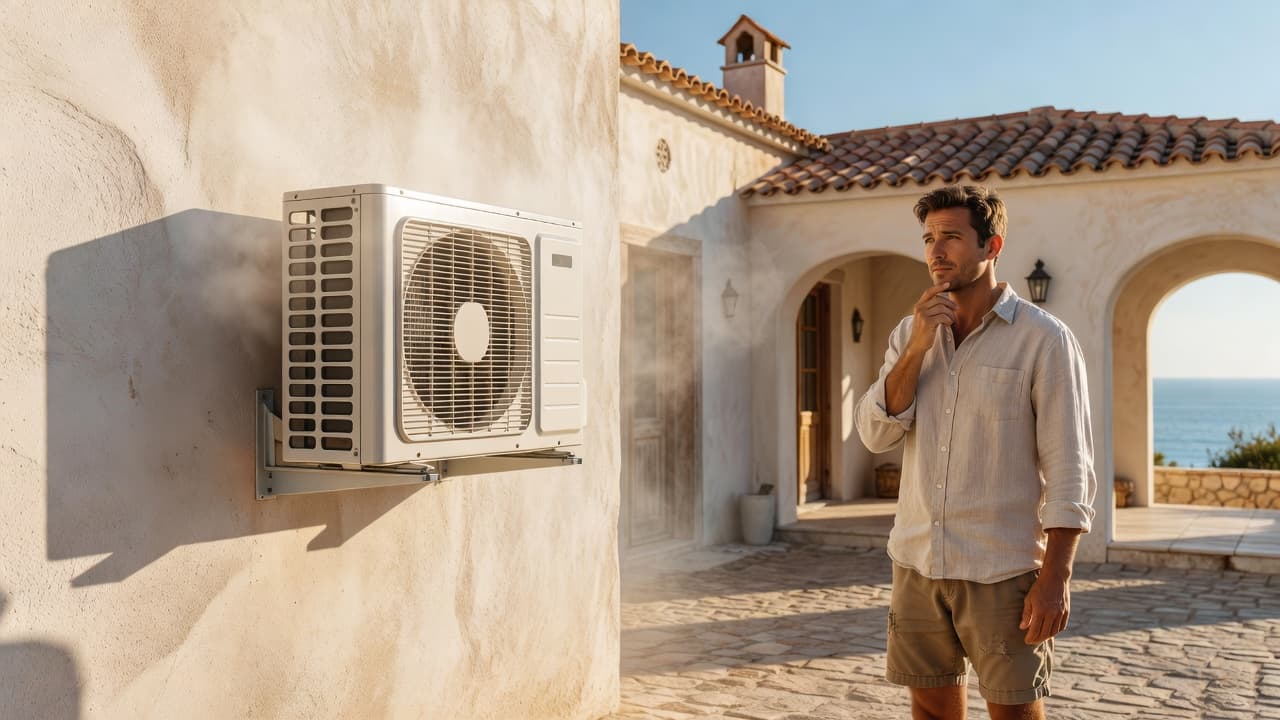
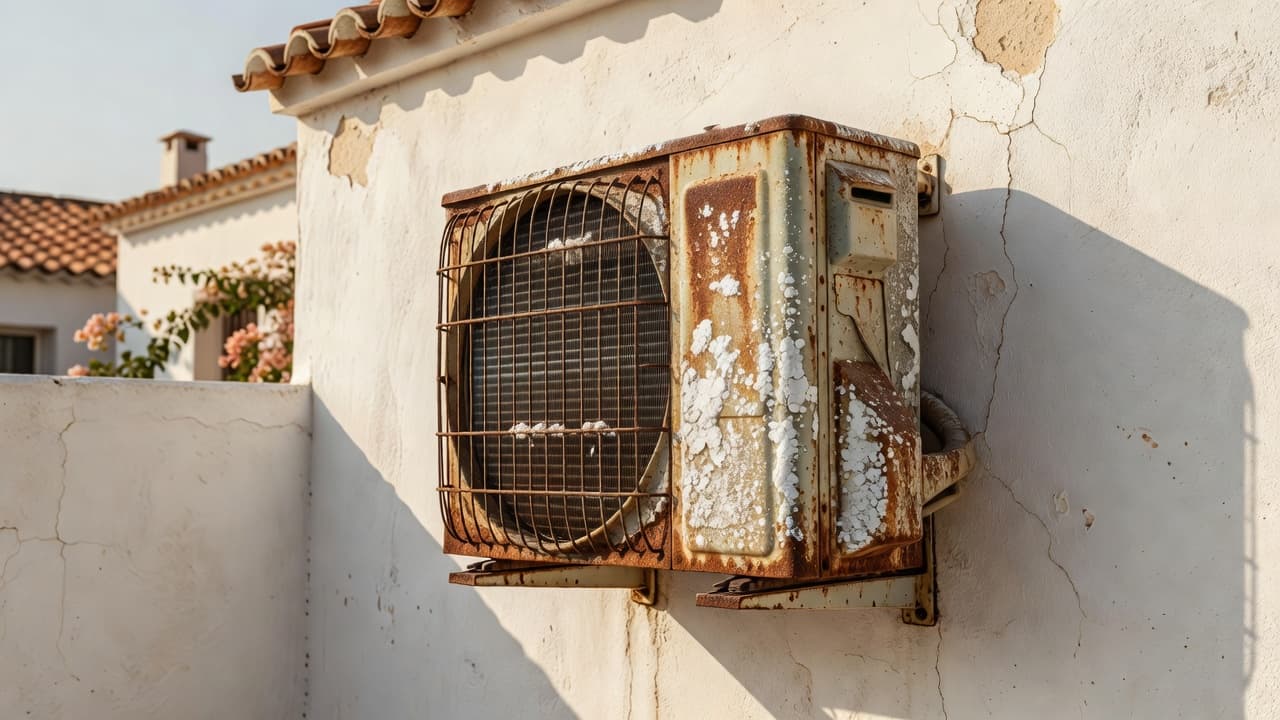
Coastal humidity is relentless, even when your home is empty. Salt-laden air corrodes metal components inside the compressor and condenser unit. Stagnant air in the ducts becomes a breeding ground for mould and the bacteria that causes that distinctive unpleasant smell in holiday homes. If your AC is left running at a low temperature with no one there to benefit, the compressor works for nothing, racks up an electric bill and can develop problems from extended light-load operation.
Inland homes have it easier, but humidity still accumulates. A switched-off, properly prepared system sits safely dormant.
If something feels wrong in those final hours, and you're not sure if it's normal:
Condensation pooling near the indoor unit: This usually means a blocked drain. Locate the drain outlet outside (should be a small pipe exiting the wall) and check if water is coming out. If not, the pipe is blocked. A simple flush with water from a hose, or a gentle prod with a wire, usually clears it. Do this before you leave.
Unusual noise or rattling: Ensure the unit is securely mounted and nothing is loose. A rattling sound can be a vibrating pipe or a debris item caught in the outdoor unit. Check visually, but if you can't spot anything obvious, don't force it — it's a sign the system needs a professional look before you leave for months.
Warm air even in cooling mode: This might be a refrigerant issue or a failed compressor, both beyond a temporary fix. You shouldn't leave a broken AC running. Have it checked, or switch it off and accept the loss of cooling for your absence.
Smell coming from the indoor unit: If there's already a musty odour, the system has mould or bacterial growth. Switch it off, clean the filter, clear the drain, and ventilate the room. A professional clean of the ducts before you leave is worth the cost if you're departing for months.
Don't open the outdoor unit or compressor. These contain pressurised refrigerant. Opening them is dangerous, illegal in most countries, and voids your warranty. Only qualified technicians handle these.
Don't try to unblock a drain with pressure washers or harsh chemicals. You'll crack the pipe or damage the internal coils. A gentle flush with clean water is safe; anything more is a professional job.
Don't seal the outdoor unit completely. Airflow is essential. If you wrap it in plastic sheeting, you trap moisture and condensation inside, which speeds up corrosion and damage.
Don't leave the system running at a very low temperature to "keep the house cool" while you're away. This wastes electricity, stresses the compressor with months of light-load running, and doesn't prevent mould — it makes conditions worse.
If you see water leaking inside, hear grinding noises, or the system won't turn on at all, stop and call an air conditioning specialist. These are signs of real problems that will get worse if left alone over months.
When you switch the system back on after months away, it's normal to see a brief puff of dust. The first run after a long shutdown may sound slightly louder than usual. This settles within a minute or two.
If you've prepared it properly — clean filter, clear drain, system switched off — your AC should restart without issue. The first cooling cycle might feel slightly slower than you remember, but the system will reach normal operating temperature within 10–15 minutes.
If you notice a musty smell when you first run the AC, don't panic. It usually means minor surface mould in the ducts, not a catastrophic problem. Ventilate the property, run the system for an hour, and the smell typically fades. If it persists or is strong, a professional air-duct clean (a routine service) will remove it.
If the system doesn't switch on, makes loud noises, or produces only warm air, then you have a fault that needs diagnosis. This is when you contact an air conditioning specialist. Having done proper preparation before leaving actually helps the technician — they know the system wasn't run improperly while you were away, so the problem is likely localised to a specific component.
Set a calendar reminder for a week before your next trip away. Repeat the filter check and drain clear. It takes 15 minutes and saves you weeks of repair stress.
Before you leave for any period over a month, budget for a professional pre-departure AC check if the system is over five years old or has ever given you trouble. It costs around 80–120 euros and gives you confidence that nothing will be waiting to break on your return.
If you're in a flat or urbanisation, check your community rules. Some communities restrict AC use in winter months or have shared air-handling systems. Knowing this in advance prevents disputes and ensures you're preparing your system in line with building regulations.
Service the outdoor unit annually, ideally in spring. A brief professional clean of the condenser coils removes salt spray and coastal grime. On the Mediterranean, this single step extends unit life by years.
If your air conditioning system is more than ten years old, or if you've noticed problems in the past, have a professional air conditioning specialist visit before you leave. A brief health check takes an hour and costs 100–150 euros — a small price compared to returning to a non-functional unit or a mould-filled home.
For peace of mind before a long absence, contact an air conditioning specialist in your area. They can perform a pre-departure preparation and check in less than an hour.